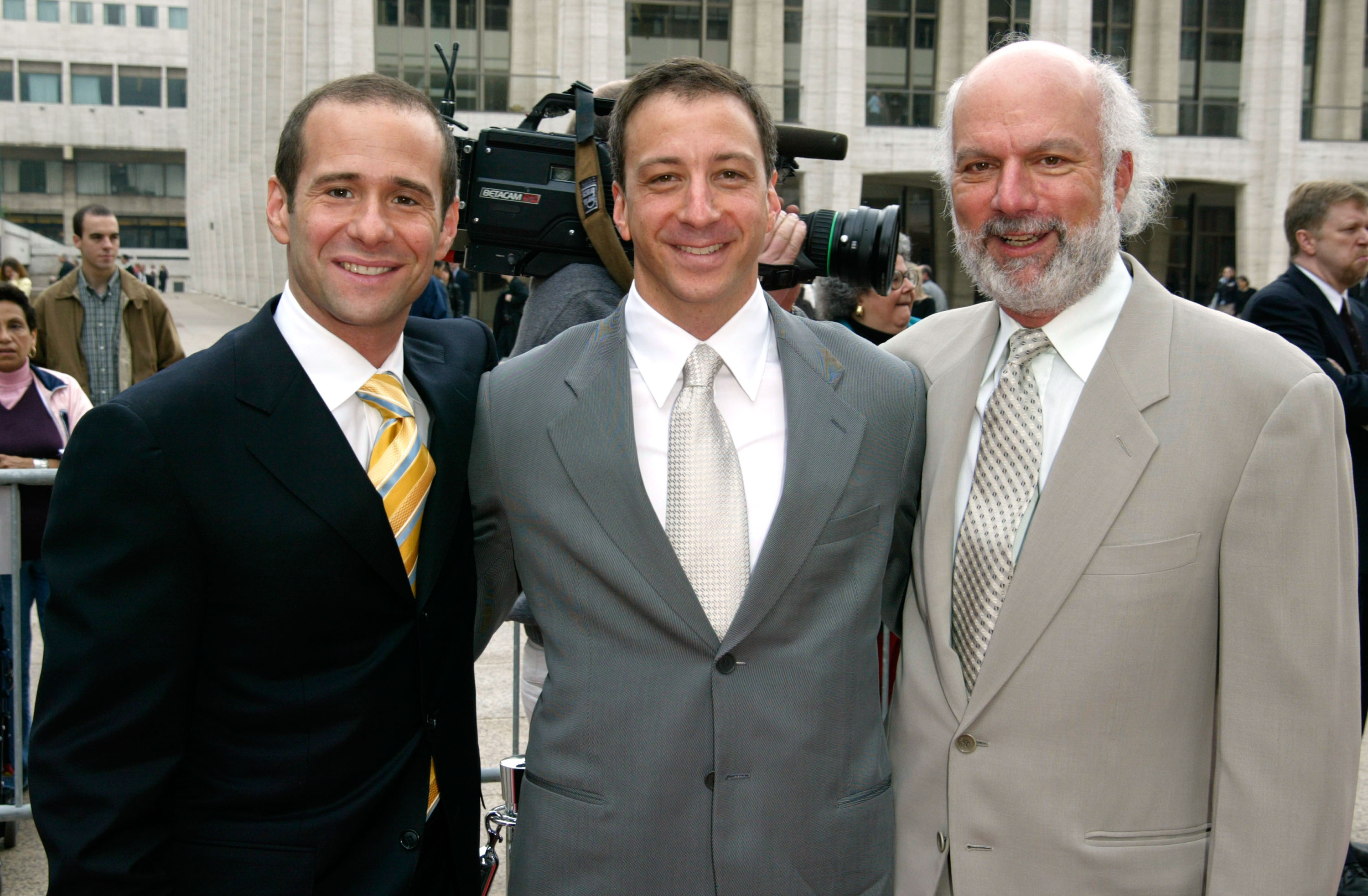
Max Mutchnick and David Kohan, the acclaimed co-creators of the hit series ‘Will & Grace,’ recently delivered a heartfelt eulogy for legendary television director James Burrows. At a private memorial service held in late 2025, they celebrated Burrows’ profound influence on their careers and his unparalleled contributions to the landscape of television comedy. Their tribute included personal anecdotes and reflections on his meticulous approach to directing, particularly during the formative years of ‘Will & Grace.’
Burrows, whose career spanned decades, directed episodes for some of the most iconic sitcoms in history, including ‘Taxi,’ ‘Cheers,’ ‘Friends,’ and ‘Will & Grace.’ His distinctive directorial style became synonymous with the multi-camera comedy format. Mutchnick and Kohan’s eulogy offered an intimate perspective from collaborators who witnessed his genius firsthand, detailing his ability to elevate comedic performances and shape the very rhythm of a show.
The Early Encounters: A Legend’s Influence
Max Mutchnick and David Kohan first encountered James Burrows as their careers in television writing and producing began to ascend. These initial meetings were more than professional introductions; they were formative experiences that profoundly shaped the creative trajectories of both men. Burrows, already a seasoned veteran, commanded every set with an aura of authority and expertise.
The creators of ‘Will & Grace’ frequently recounted their initial awe at the prospect of working with a director of Burrows’ stature. He had already helmed pivotal episodes of seminal comedies such as ‘Cheers,’ which ran from 1982 to 1993, and ‘Taxi,’ which aired from 1978 to 1983. This extensive resume positioned him as a living legend within the industry, a figure whose presence could both inspire and, at times, intimidate aspiring talent.
Mutchnick and Kohan quickly discovered that Burrows’ formidable reputation was entirely justified. His discerning eye for comedic timing, his deep understanding of character dynamics, and his unparalleled ability to orchestrate complex ensemble performances were immediately apparent. These early interactions laid the crucial groundwork for a collaborative relationship that would come to define one of the most successful sitcoms of the late 20th and early 21st centuries.
Crafting ‘Will & Grace’: Burrows’ Visionary Direction
James Burrows directed numerous episodes of ‘Will & Grace,’ most notably the pilot episode, which aired in September 1998. He continued his pivotal involvement throughout the show’s original run from 1998 to 2006, and again during its revival from 2017 to 2020. His directorial hand was crucial in establishing the series’ signature fast-paced dialogue, its unique blend of physical comedy, and the undeniable chemistry among its four lead actors: Eric McCormack (Will Truman), Debra Messing (Grace Adler), Megan Mullally (Karen Walker), and Sean Hayes (Jack McFarland).
Mutchnick and Kohan consistently credited Burrows with helping to define the show’s visual language and its distinctive comedic rhythm. He possessed an innate understanding of how to frame a joke for maximum impact, how to utilize camera blocking to enhance a punchline, and how to create a dynamic and energetic environment for comedic performances. This expertise was particularly vital for a show that relied heavily on verbal sparring, rapid-fire exchanges, and precise physical comedy.
The collaboration between the creators and Burrows was a testament to his adaptability and unwavering commitment to the material. He was never merely a technician; he functioned as a true creative partner who grasped the intricate nuances of character and story. His directorial decisions frequently amplified the comedic intent of the writers, solidifying ‘Will & Grace’s’ status as a benchmark for modern sitcoms and earning it 18 Primetime Emmy Awards during its initial run.
A Mentor and a Friend: Personal Tributes from the Eulogy
Beyond his extensive professional contributions, Max Mutchnick and David Kohan’s eulogy revealed the deep personal connection they shared with James Burrows. They spoke of him not merely as a director, but as a mentor, a trusted guide, and a cherished friend. This deeper, personal relationship underscored the profound impact Burrows had on their lives, both professionally and personally.
The eulogy included several poignant anecdotes that highlighted Burrows’ generosity with his vast knowledge and his consistent willingness to nurture emerging talent. He was known for his directness and his high standards, but also for his unwavering support of the actors and crew members he worked with. Many within the industry regarded him as a true leader, someone capable of commanding a set with authority while simultaneously fostering a collaborative and highly creative atmosphere.
Mutchnick and Kohan’s words painted a vivid picture of a man who was deeply passionate about his craft and equally dedicated to the people he collaborated with. The private memorial service, held in late 2025, became an occasion not solely for mourning his passing, but for celebrating a life lived with immense purpose and a career that enriched the lives of millions globally. The mixture of laughter and tears shared at the service reflected the complex emotions evoked by his indelible legacy.
The Burrows Blueprint: What Defined a Master Director?
James Burrows developed a directorial style that became instantly recognizable and widely emulated across the television industry. His innovative approach to multi-camera sitcoms was characterized by several key, enduring elements:
- Precision in Blocking: Burrows was a master at choreographing actors’ movements within a scene, ensuring that every gesture, glance, and physical interaction contributed directly to the comedic effect and advanced the narrative.
- Rhythm and Pacing: He possessed an exceptional ear for comedic timing, expertly guiding actors to deliver lines with perfect rhythm and pacing. He often accelerated dialogue to heighten humor or used strategic pauses for maximum impact.
- Ensemble Chemistry: Burrows excelled at fostering strong ensemble chemistry among casts. He allowed each actor to shine individually while meticulously maintaining a cohesive and believable group dynamic. His sets were frequently described as spaces where actors could truly connect and build authentic relationships.
- The Live Audience Integration: He understood and leveraged the critical importance of the live studio audience. Burrows expertly staged scenes to maximize their reactions, incorporating their laughter and energy directly into the final product, making them an integral part of the show’s comedic success.
- Subtlety in Performance: Despite the often broad nature of sitcoms, Burrows consistently encouraged subtlety and nuance in performances. He allowed characters to convey complex emotions and humor through understated expressions and reactions, adding depth to the comedic portrayals.
These elements combined to create a distinctive directorial signature that made his shows not just funny, but enduringly watchable, critically acclaimed, and consistently popular. His remarkable ability to consistently produce hit after hit across different networks and with diverse casts solidified his status as an unparalleled television icon.
A Pantheon of Comedies: Burrows’ Extensive Filmography and Awards
James Burrows’ filmography reads like a definitive history of American television comedy. Beyond ‘Will & Grace,’ he directed over 1,000 episodes of television, a record unsurpassed by any other director. His credits include:
- ‘Taxi’ (1978-1983): Directed 75 episodes, helping to launch the careers of Danny DeVito, Christopher Lloyd, and Andy Kaufman.
- ‘Cheers’ (1982-1993): Directed 243 episodes, including the pilot, and co-created the series. He was instrumental in establishing its iconic ensemble cast and setting the standard for bar-centric sitcoms.
- ‘Friends’ (1994-2004): Directed 15 episodes, including the pilot, establishing the visual style and comedic rhythm for one of the most successful sitcoms of all time.
- ‘Frasier’ (1993-2004): Directed 32 episodes, including the pilot, contributing to its critical acclaim and numerous awards.
- ‘Mike & Molly’ (2010-2016): Directed all 127 episodes, showcasing his continued relevance and mastery of the multi-camera format well into the 21st century.
- ‘The Big Bang Theory’ (2007-2019): Directed 14 episodes, including the pilot, helping to define the early tone of the hugely popular series.
Throughout his illustrious career, Burrows earned 11 Primetime Emmy Awards for Outstanding Directing for a Comedy Series, a testament to his consistent excellence and innovative contributions. His work profoundly influenced generations of directors, writers, and performers, establishing a template for how multi-camera sitcoms are conceived, written, and executed.
The Lasting Legacy: Burrows’ Imprint on Television
The eulogy delivered by Max Mutchnick and David Kohan at the late 2025 memorial service underscored the comprehensive and lasting legacy of James Burrows. His impact extended far beyond the individual episodes he directed; he helped to define the very genre of the American sitcom. He was a craftsman who understood the mechanics of laughter and a visionary who could translate written humor into dynamic, memorable television.
Burrows’ ability to nurture talent, his unwavering commitment to comedic precision, and his unparalleled work ethic created an environment where creativity flourished. Actors thrived under his direction, writers saw their scripts brought to life with enhanced comedic timing, and audiences worldwide found joy and connection in the worlds he helped create.
His passing marked the end of an era, but his influence continues to resonate throughout television production. Every multi-camera sitcom produced today, whether directly or indirectly, bears the imprint of James Burrows’ pioneering work. His contributions to the art form are immeasurable, ensuring his status as a permanent fixture in the pantheon of television greats. He left behind a body of work that will continue to entertain and inspire for generations.
Writers gathered. Actors gathered. Directors gathered. A legend.