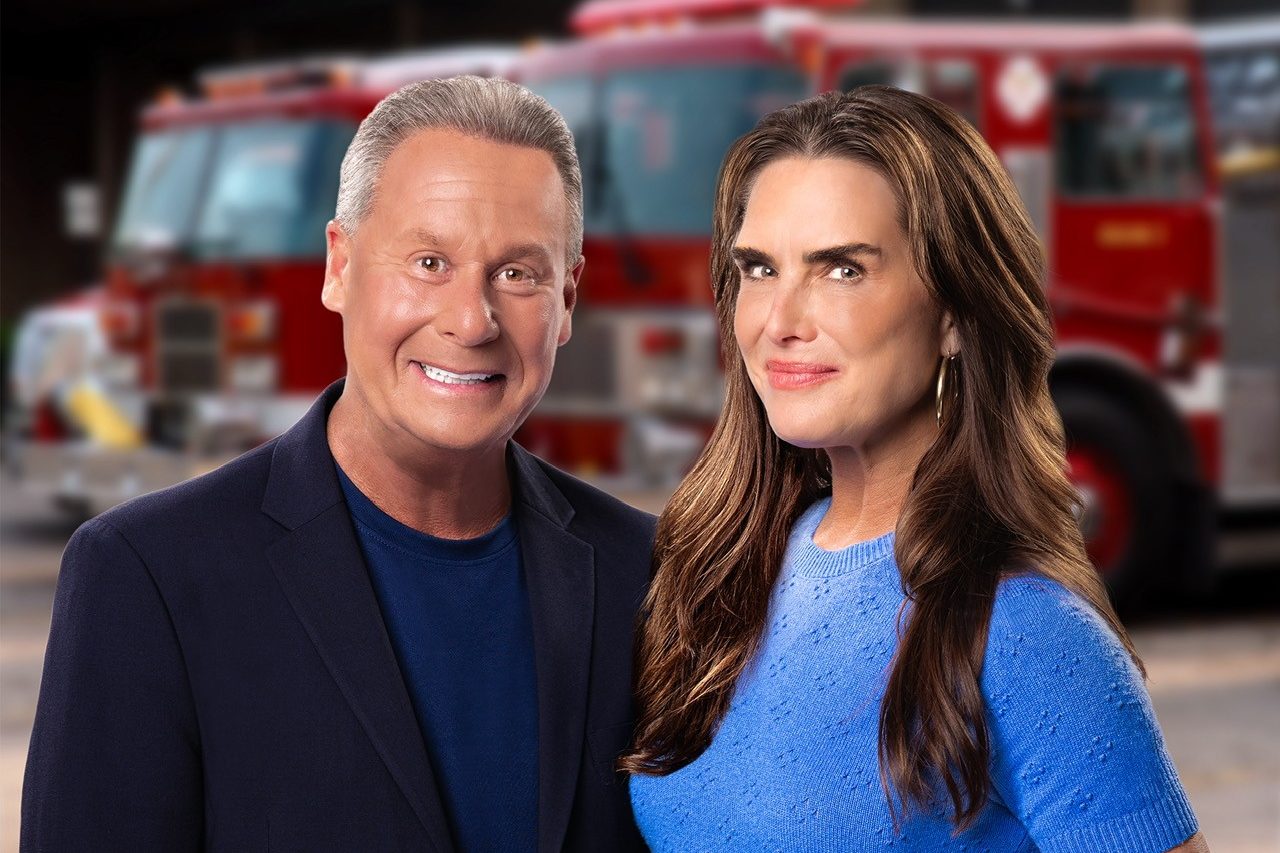
Brooke Shields is the new host of the first responders television series Hearts of Heroes. The announcement, confirmed by Variety in June 2026, places the veteran actor at the helm of a program dedicated to emergency personnel and natural disaster rescues. It is a distinct pivot. A Hollywood fixture is stepping into the realm of public service broadcasting. The move signals a broader industry trend where legacy celebrities lend their gravity to unscripted, civic-minded television.
The role requires a specific tone. It demands empathy, authority, and a steady presence. Shields steps into a format that relies entirely on real-world stakes. There are no scripts to memorize for the subjects. There are no second takes for the rescues. The show documents the harrowing realities faced by firefighters, paramedics, and police officers.
In many ways, the transition makes perfect sense. Shields has spent decades navigating the public eye. She has evolved from a heavily scrutinized child star into a respected industry veteran. Now, she turns the camera away from herself. She points it toward local heroes.
Inside the Mission of Hearts of Heroes
Hearts of Heroes is not a traditional reality show. It is an educational and informational program. The series focuses on extreme weather events and the emergency management professionals who respond to them. Hurricanes. Tornadoes. Flash floods. The show highlights the science behind the storms and the bravery required to survive them.
The format relies heavily on actual footage. Dashcams. Bodycams. Helicopter aerials. The host serves as the narrative anchor. They guide the viewer through the chaos. They explain the meteorological phenomena driving the disaster. They introduce the men and women who risk their lives to pull civilians from the wreckage.
Shields will serve as that anchor. Her voice will guide audiences through the anatomy of a rescue. The show frequently partners with local municipalities and federal agencies. It highlights the coordination required between the Coast Guard, local fire departments, and emergency medical technicians.
The series occupies a specific and highly regulated space in television broadcasting. It airs primarily on weekend mornings. It fulfills a critical mandate for network affiliates. It provides family-friendly, educational content that satisfies federal broadcasting requirements while maintaining high production values.
The Evolution of Brooke Shields
To understand the significance of this hosting gig, one must look at the longevity of Shields’ career. She has been a fixture in American pop culture for nearly half a century. Her trajectory is one of continuous reinvention.
She began as a child model. She gained international controversy and fame through films like Pretty Baby and The Blue Lagoon. She became the face of Calvin Klein jeans in the 1980s. The culture consumed her image. The media dictated her narrative.
From Sitcom Anchor to Documentary Subject
Shields eventually took control of her own career trajectory. She went to Princeton University. She pivoted to comedy. She anchored the NBC sitcom Suddenly Susan in the late 1990s. She proved she had timing. She proved she had staying power.
In recent years, she has focused on legacy and truth. The acclaimed Hulu documentary Pretty Baby: Brooke Shields allowed her to reframe her early career. It explored the exploitation of child stars. It showcased a woman who had survived the Hollywood machine and emerged with her perspective intact.
This new role on Hearts of Heroes feels like a natural extension of that grounded perspective. She is no longer interested in the superficial. She is drawn to stories of substance. Real people. Real stakes. Real survival.
The Economics of Weekend Morning Television
The landscape of weekend television has fundamentally changed over the last three decades. The era of Saturday morning cartoons is dead. It was replaced by a highly lucrative, highly regulated block of educational programming.
The Federal Communications Commission (FCC) requires broadcast television stations to air a minimum amount of educational and informational (E/I) programming for children and teens. Networks had to adapt. Syndication companies stepped in to fill the void.
Companies like Hearst Media and Litton Entertainment built empires on this mandate. They produced high-quality, live-action shows focused on science, nature, and civic duty. Hearts of Heroes is a crown jewel in this ecosystem. It satisfies the FCC mandate. It attracts family viewership. It brings in steady advertising revenue from brands looking for safe, wholesome environments.
Securing a name like Brooke Shields is a major coup for this specific television block. It elevates the prestige of the time slot. It draws in an older demographic. Parents who grew up watching Shields will tune in alongside their children.
The Cultural Shift Toward Real-World Heroism
The timing of this announcement in June 2026 is not coincidental. The cultural appetite for unscripted heroism is peaking. Audiences are exhausted by manufactured reality television. They are tired of artificial drama.
Furthermore, climate change has made extreme weather events a constant reality. Wildfires ravage the West Coast. Hurricanes batter the Gulf. Atmospheric rivers flood the Northeast. Natural disasters are no longer rare occurrences. They are regular news cycles.
Hearts of Heroes bridges the gap between the evening news and narrative storytelling. It humanizes the headlines. When a town is destroyed by a tornado, the news shows the rubble. Hearts of Heroes shows the hands that pulled the survivors out.
Shields steps into this environment as a trusted voice. The audience knows her. They trust her longevity. When she introduces a local fire chief who saved a family from a rising river, her presence validates the importance of the story.
The Legacy of the Celebrity Host
There is a rich history of legacy actors pivoting to host civic-minded television. It is a respected television tradition. The host does not overshadow the subject. The host elevates the subject.
- William Shatner brought Shakespearean gravity to Rescue 911 in the 1990s, turning 911 dispatch calls into gripping national television.
- Morgan Freeman lent his iconic voice to science and historical documentaries, giving weight to complex subjects.
- John Walsh turned personal tragedy into a national crusade with America’s Most Wanted, utilizing the broadcast network to catch fugitives.
Shields joins this lineage. She is not playing a character. She is acting as a conduit. She is the bridge between the viewer sitting in their living room and the swift-water rescue team operating in a flooded ravine.
The Production Cycle and Syndication Reach
Producing a show like Hearts of Heroes requires massive logistical coordination. Field teams deploy across the country. They embed with local agencies. They secure rights to municipal footage. They interview survivors who have experienced profound trauma.
The post-production process is equally rigorous. The narrative must be tight. The educational components regarding meteorology and emergency response must be accurate. The final product is polished, packaged, and distributed across network affiliates nationwide.
Shields will likely record her hosting segments in a controlled studio environment. She will provide voiceovers. She will record on-camera introductions and conclusions. Her involvement streamlines the marketing. A network affiliate in Ohio can run a promo featuring Brooke Shields. A station in Florida can do the same. The star power guarantees a baseline level of tune-in.
What This Means for the Audience
For the audience, the appeal is twofold. First, there is the inherent drama of the rescues. The footage is compelling. The stakes are literally life and death. The resolution is almost always positive, providing a necessary catharsis in a chaotic world.
Second, there is the comfort of the host. Shields represents survival in her own right. She navigated the treacherous waters of 20th-century fame. She emerged grounded. Her presence on the screen is reassuring.
The audience will share these clips on social media. They will express admiration for the first responders. They will also express admiration for Shields. Her decision to take this role is a statement of values. It prioritizes public service over vanity projects. It prioritizes community over celebrity.
The television landscape continues to fragment. Streaming algorithms dictate most viewing habits. But broadcast television still holds a unique power. It can unify an audience on a Saturday morning. It can remind a country of its better angels.
The storms will continue to form. The rivers will continue to rise. The dispatchers will continue to answer the call. The cameras will roll. A Hollywood veteran will step to the microphone. Shields.