International visitors arriving in the United States for the 2026 FIFA World Cup are encountering a uniquely American economic reality: a mandatory-feeling tipping culture where 20 percent is the baseline, and digital screens frequently prompt for up to 30 percent on everyday transactions. The tournament spans 11 U.S. host cities this summer. Millions of fans from Europe, South America, and Asia are flooding into American restaurants, bars, and hotels. They are meeting the American service economy. It is a system built on unwritten rules, hidden service fees, and the rigid expectation of a gratuity.
For a tourist arriving from Madrid, London, or Buenos Aires, the transaction is jarring. In most of the world, the price on the menu is the price paid. Service is baked into the operating model. In the United States, the menu price is merely a starting bid. Taxes are added later. Service is added last. The final bill is often 30 percent higher than the listed numbers.
This is not a suggestion. It is an economic load-bearing wall. The American hospitality industry does not function without the tip. Millions of visitors are learning this in real time.
The Culture Shock of the Pivot Screen
The modern American transaction is defined by a single physical movement. The cashier taps a screen. The cashier pivots the screen. The customer is faced with a choice. This is the point-of-sale terminal, dominated by tech companies like Square, Toast, and Clover. It has changed the psychology of American commerce.
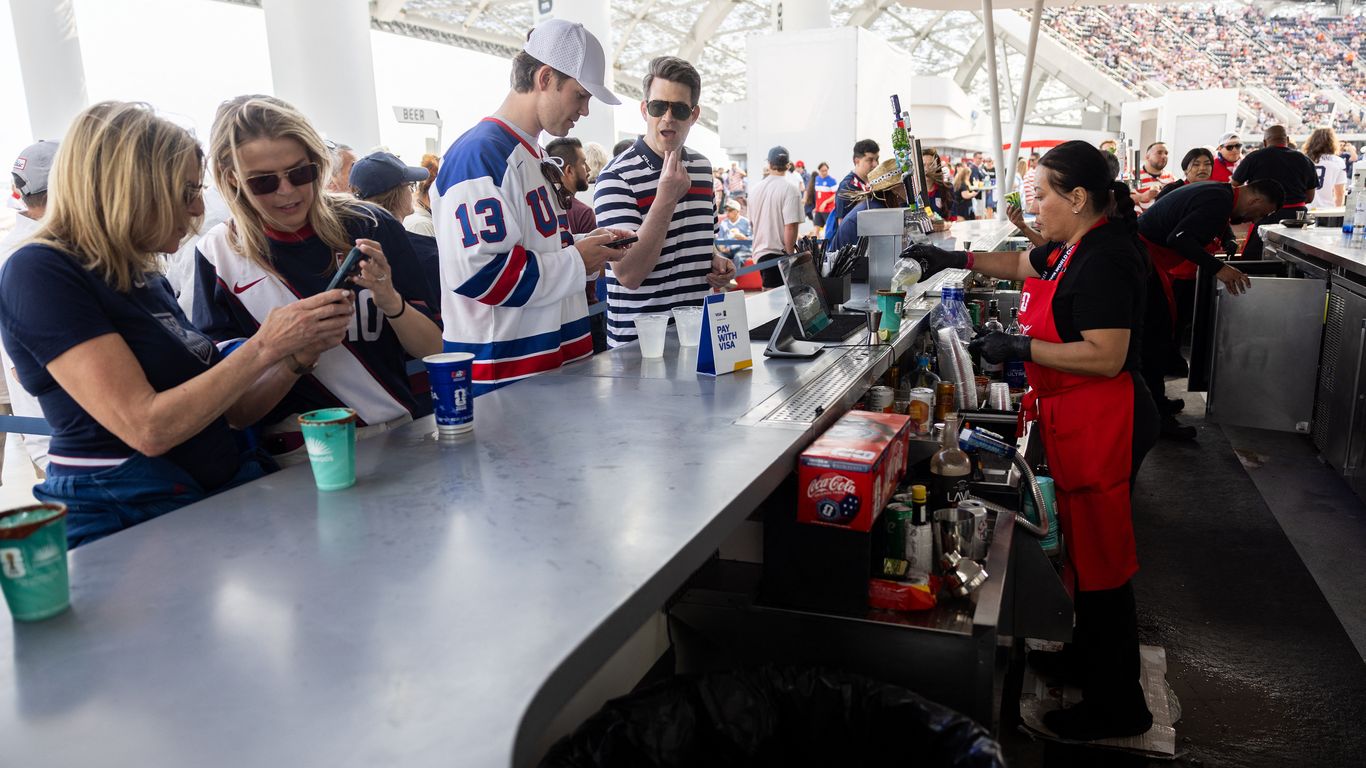
A decade ago, tipping was largely confined to sit-down restaurants, bartenders, and bellhops. In 2026, the pivot screen is everywhere. It is at the bakery. It is at the coffee shop. It is at the merchandise stands inside MetLife Stadium in New Jersey and SoFi Stadium in Los Angeles. The options are pre-calculated. Eighteen percent. Twenty percent. Twenty-five percent. Sometimes higher.
For domestic consumers, this phenomenon is known as tipflation. Americans have spent the post-pandemic years wrestling with gratuity fatigue. For international tourists, it is simply baffling. A fan buying a $14 beer at a fan fest in Dallas is suddenly asked to add a $3 tip for a transaction that took four seconds. The pressure is social. The employee is watching. The line is waiting. The button is pressed.
The data backs up the shift. Point-of-sale providers report that digital nudges significantly increase both the frequency and the size of tips. The friction of calculating math has been removed. The friction of looking a worker in the eye and pressing No Tip has been added. It is a highly engineered behavioral loop.
The $2.13 Load-Bearing Wall
To understand the American tipping system, visitors must understand American labor law. The gratuity is not a bonus for exceptional service. It is the worker’s primary wage. This is the fundamental disconnect between the American server and the European tourist.
Under the Fair Labor Standards Act, the federal tipped minimum wage is $2.13 per hour. It has been frozen at this number since 1991. While some states have eliminated the tip credit, requiring employers to pay the full state minimum wage before tips, the vast majority of the country still operates on the tipped wage model. Employers are legally required to make up the difference if a worker’s tips do not bring them up to the standard minimum wage, but enforcement is notoriously lax.
When a tourist from Germany leaves a two-euro coin on a fifty-euro dinner bill in Berlin, it is a polite gesture. When that same tourist leaves two dollars on a fifty-dollar bill in Atlanta, it is an economic penalty. The server is often required to tip out the bartender, the busser, and the host based on total sales, not total tips. A server can actively lose money serving a table that does not tip.
The National Restaurant Association has long defended this model. They argue it keeps menu prices artificially lower and allows skilled servers to earn far more than a standard hourly wage. For the worker, it is a high-risk, high-reward system. During the 2026 World Cup, the risk is magnified. Millions of tables are being occupied by guests who do not know the rules.
The Frontlines of the Host Cities
The 2026 World Cup is distributed across 11 U.S. cities. New York, Los Angeles, Dallas, Miami, Atlanta, Philadelphia, Seattle, Houston, San Francisco, Boston, and Kansas City. These are massive, complex hospitality markets. The service workers in these cities are the frontline ambassadors for the tournament.
In the months leading up to June 2026, the hospitality industry mobilized. Union leaders and restaurant groups issued internal memos. The warning was clear: prepare for a massive influx of non-tipping guests. The language barrier is one hurdle. The cultural barrier is another. The economic barrier is the most immediate.
Bartenders in Miami are serving fans from Colombia and Brazil. Servers in Philadelphia are waiting on fans from England and France. The interactions are largely positive, driven by the festive atmosphere of the tournament. But the close-out process is fraught. Explaining the concept of a 20 percent tip through Google Translate is a uniquely modern American friction point.
The Rise of the Automatic Gratuity
To protect their workforce, many American restaurants have adopted a defensive posture for the duration of the tournament. The automatic gratuity has become the standard mechanism in tourist-heavy zones.
Historically reserved for large parties of six or more, the automatic 18 or 20 percent service charge is now being applied to individual checks in areas surrounding the stadiums and fan zones. Menus carry fine-print disclaimers. Receipts bear stamped warnings. The strategy is simple: do not leave the worker’s wage up to a cultural misunderstanding.
This creates a secondary problem. The double-tip. Tourists who are unaware of the automatic gratuity often look at the final total, assume the tip is still required, and add another 20 percent on top of the already inflated bill. When the mistake is realized, disputes follow. Restaurant managers spend hours reversing credit card charges. It is an imperfect solution to a structural problem.
Hidden Fees and the FTC Crackdown
The tip is only one piece of the American pricing puzzle. The 2026 World Cup visitor is also navigating an unprecedented era of junk fees. The hospitality industry has fractured its pricing model to maintain the illusion of lower baseline costs.
A hotel room advertised at $250 a night carries a $45 daily resort fee, a $15 destination fee, and a web of municipal hospitality taxes. A restaurant check includes a 4 percent wellness fee to cover employee healthcare, or a 3 percent kitchen appreciation fee that does not technically qualify as a tip under federal law. These fees are legally distinct from gratuities, meaning they belong to the house, not the worker.
The Biden administration and the Federal Trade Commission have spent years attempting to crack down on these hidden fees. New rules requiring all-in pricing have been proposed and debated. But in the trenches of the June 2026 hospitality boom, the fees remain prevalent. The regulatory machinery moves slower than the point-of-sale software.
For the visitor, the distinction between a service fee, a wellness surcharge, and a tip is meaningless. It is all money leaving the wallet. But for the worker, the distinction is everything. A 20 percent service fee kept by the owner does not pay the server’s rent. The burden falls on the consumer to read the fine print and adjust their gratuity accordingly. It is a math test at the end of every meal.
Beyond the Dining Room
The web of American gratuity extends far beyond the restaurant. It is a sprawling ecosystem. The World Cup visitor is interacting with it at every turn.
Rideshare apps like Uber and Lyft prompt for tips at the end of every journey to the stadium. Hotel bellhops expect two to five dollars per bag. Housekeeping staff rely on daily cash tips left on the nightstand. Tour guides in San Francisco and Boston expect a percentage of the ticket price at the end of the excursion. Even self-service kiosks at airports sometimes ask for a tip.
There is no central authority dictating these rules. There is no guidebook handed out at customs. The system operates entirely on social pressure, historical precedent, and the quiet desperation of the American service worker.
The Terminal Drop
The games continue. The stadiums fill. The hospitality engine grinds forward. Millions of transactions are processed every hour. The economic reality of the American service sector is on full global display.
Tourists landed. The screens pivoted. The bills came due. America.