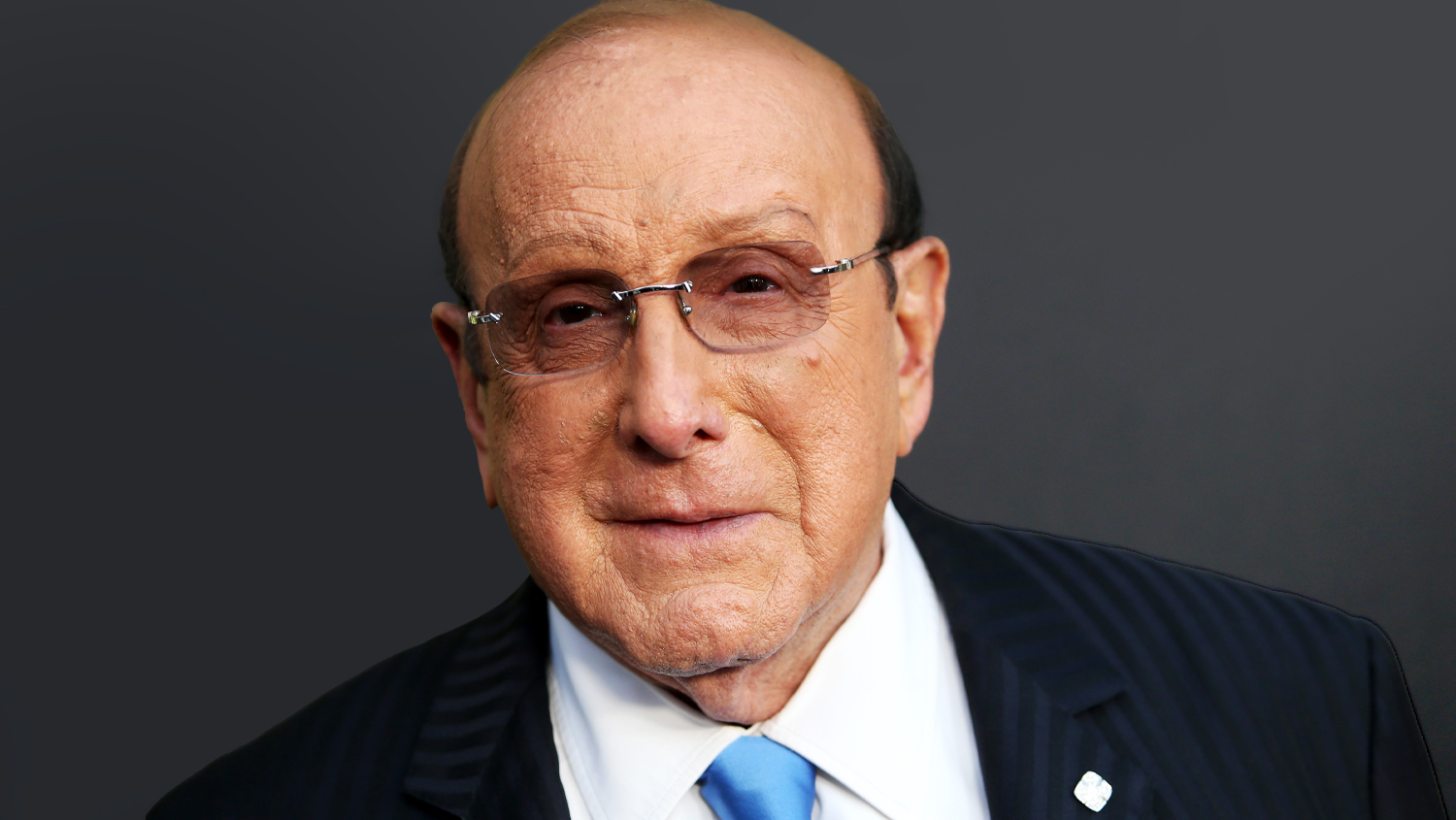
Clive Davis, the towering music industry executive who founded Arista Records, discovered Whitney Houston, and engineered the soundtracks of multiple generations, died at the age of 94. His passing on June 22, 2026, marks the end of an era for a business he fundamentally reshaped over a six-decade career. Davis did not play an instrument. He did not write lyrics. He possessed a different kind of genius: the ability to hear a hit before it was recorded, and the relentless drive to bend the machinery of pop culture to ensure the world heard it too.
For more than half a century, Davis was the center of gravity in the American music industry. He transitioned from a corporate lawyer at CBS Records to the most recognizable A&R executive in history. He built empires at Columbia, Arista, and J Records. He signed Janis Joplin, Bruce Springsteen, Billy Joel, and Aerosmith. He orchestrated the defining comebacks of Aretha Franklin and Carlos Santana. He bridged the gap between corporate boardrooms and the recording studio.
In many ways, the modern concept of the superstar was a Clive Davis invention. He did not just sign artists; he cast them. He paired vocalists with songwriters, matched producers with projects, and micromanaged tracklists until they yielded multi-platinum results. What looks like modern pop music architecture actually started with a lawyer from Brooklyn who decided to trust his gut at a rock festival in 1967.
The Lawyer Who Learned to Listen
Clive Jay Davis was born on April 4, 1932, in Brooklyn, New York. He was not a child of the music business. He was a child of the Depression, raised in a middle-class Jewish family. Tragedy struck early. Both of his parents died within a year of each other when Davis was a teenager. Left an orphan with no financial safety net, he relied on scholarships and sheer academic force.
He earned a full scholarship to New York University, graduating magna cum laude. He then secured a full scholarship to Harvard Law School. Davis was building a life of predictable, secure corporate law. In 1960, he was hired as an assistant counsel at Columbia Records, a subsidiary of CBS. His job was to draft contracts, negotiate terms, and protect the corporation from liability. He was a suit in a building full of suits.
By 1965, his sharp legal mind and corporate political instincts earned him a promotion to administrative vice president. In 1967, CBS appointed him president of Columbia Records. It was a corporate restructuring move. The board wanted a lawyer to manage the business. They did not expect him to manage the music. Davis was 35 years old. He listened to Broadway cast recordings and classical music. He knew nothing about rock and roll.
The Monterey Epiphany
The pivot point of Clive Davis’s life, and the trajectory of American popular music, occurred in June 1967. Davis attended the Monterey International Pop Music Festival in California. He wore a tennis sweater. He was surrounded by the counterculture. He felt entirely out of place.
Then, Janis Joplin took the stage with Big Brother and the Holding Company. Davis watched the raw, electric, unpolished performance. He later described it as a physical reaction, a tingling in his spine. He had never heard anything like it. He realized immediately that Columbia Records, a label built on Andy Williams and Barbra Streisand, was entirely unprepared for the cultural revolution happening in the streets.
He moved aggressively. He signed Big Brother and the Holding Company. He signed Blood, Sweat & Tears. He signed Chicago. He signed Santana. He pushed Columbia into the rock era. He trusted a young talent scout named John Hammond and backed the signing of an unknown, wordy singer-songwriter from New Jersey named Bruce Springsteen. He signed a piano player from Long Island named Billy Joel. He signed Aerosmith. Under Davis’s leadership, Columbia Records doubled its market share. He was no longer a lawyer. He was the most powerful ear in the business.
The Ouster and the Birth of Arista Records
The Columbia era ended in sudden, shocking controversy. In 1973, CBS fired Davis. He was accused of using company funds to bankroll a lavish bar mitzvah for his son and of using corporate expense accounts for personal travel. The scandal rocked the industry. Davis fiercely denied the allegations, insisting he was the victim of a corporate witch hunt orchestrated by executives threatened by his immense power.
He was indicted for tax evasion, eventually pleading guilty to a minor charge to avoid a prolonged trial. Many assumed his career was over. The music business is notoriously unforgiving to executives who lose their corporate backing. But Davis was not finished. He was just getting started.
In 1974, Columbia Pictures (a separate entity from CBS) hired Davis to take over its struggling music division, Bell Records. Davis demanded total creative control and a new name. He renamed the label Arista Records, after the honor society he belonged to in high school. Arista became his masterpiece.
He needed an immediate hit to legitimize the new label. He found a young commercial jingle writer who was working as Bette Midler’s piano player. His name was Barry Manilow. Davis brought Manilow a song called “Brandy,” originally recorded by Scott English. Davis suggested changing the title to “Mandy” to avoid confusion with the Looking Glass hit “Brandy (You’re a Fine Girl).” Manilow recorded it. It went to number one. Arista was on the map.
At Arista, Davis built a roster that spanned every genre. He signed Patti Smith, bringing punk to a major label. He signed the Grateful Dead. He signed Lou Reed. He signed The Kinks. He signed Alan Jackson, building a massive country music division. But his greatest triumph at Arista was the meticulous, calculated construction of the ultimate pop superstar.
The Whitney Houston Blueprint
In 1983, an Arista A&R executive named Gerry Griffith urged Davis to visit a Manhattan nightclub called Sweetwater’s. A 19-year-old background singer was performing alongside her mother, Cissy Houston. Davis sat in the audience and watched Whitney Houston sing “The Greatest Love of All.” The spine-tingling sensation he felt at Monterey returned.
Davis signed Houston to a worldwide contract. But he did not rush her into the studio. He spent two years carefully collecting material. He rejected dozens of songs. He commissioned specific writers. He paired her with producers like Narada Michael Walden and Kashif. He personally oversaw every vocal arrangement, every track sequence, every piece of cover art.
When Houston’s self-titled debut album was finally released in 1985, it was a flawless commercial product. It generated three number-one singles: “Saving All My Love for You,” “How Will I Know,” and “The Greatest Love of All.” It sold tens of millions of copies. Davis had not just launched a career; he had established a new paradigm for pop-R&B crossover success.
The Davis-Houston partnership defined the next decade. He guided her through the blockbuster success of The Bodyguard soundtrack in 1992. He championed her recording of Dolly Parton’s “I Will Always Love You,” insisting on the a cappella opening that became iconic. Houston became the voice of her generation, and Davis was the architect of the platform she stood on.
The Architect of the Comeback
Davis possessed a unique ability to see value where other executives saw obsolescence. He became the industry’s premier resurrection specialist. In 1980, Aretha Franklin was languishing. Her run of historic hits at Atlantic Records had dried up. Davis signed her to Arista and modernized her sound. He paired her with Luther Vandross and later George Michael. Hits like “Freeway of Love” and “I Knew You Were Waiting (For Me)” returned the Queen of Soul to the top of the charts.
He performed a similar miracle for Dionne Warwick, guiding her to massive success with “That’s What Friends Are For.” But his greatest comeback narrative occurred at the turn of the millennium.
Carlos Santana was a rock legend, but by the late 1990s, he had not had a major hit in decades. Davis, who had originally signed Santana to Columbia in 1969, reunited with the guitarist at Arista. Davis conceived a project that would pair Santana’s signature guitar tone with contemporary pop, rock, and hip-hop vocalists. The result was the 1999 album Supernatural.
Davis personally orchestrated the collaboration between Santana and Matchbox Twenty frontman Rob Thomas. The resulting single, “Smooth,” spent 12 weeks at number one on the Billboard Hot 100. Supernatural sold over 30 million copies worldwide and won nine Grammy Awards, including Album of the Year. It was a staggering validation of Davis’s commercial instincts.
J Records and the Hip-Hop Expansion
As the industry shifted toward hip-hop and contemporary R&B in the 1990s, Davis adapted. He formed joint ventures with specialized labels. He partnered with Antonio “L.A.” Reid and Babyface to create LaFace Records, which launched TLC, Outkast, Toni Braxton, and Usher. He partnered with Sean “Puff Daddy” Combs to distribute Bad Boy Records, bringing The Notorious B.I.G., Mase, and Faith Evans into the Arista fold.
But corporate politics intervened again. In 2000, Arista’s parent company, BMG, decided Davis was too old to lead the label. They forced him out, replacing him with L.A. Reid. Davis was 68 years old. Once again, the industry assumed he would retire.
Instead, BMG immediately realized they had made a mistake. To keep him in the corporate family, they gave him $150 million to start a new label, J Records. Davis launched J Records with a teenage piano prodigy he had signed just before leaving Arista. Her name was Alicia Keys. Her debut album, Songs in A Minor, driven by the massive hit “Fallin’,” sold over 12 million copies and won five Grammy Awards.
At J Records, Davis also embraced the reality television era. He partnered with Simon Fuller and Simon Cowell to release the music of American Idol winners. He guided Kelly Clarkson, Carrie Underwood, and Leona Lewis to global stardom. He proved that his ear was not bound by the era in which he was raised. He understood the math of a pop hit in 1975, and he understood it in 2005.
The Beverly Hilton and the Pre-Grammy Gala
Beyond the recording studio, Davis’s power was most visible once a year at the Beverly Hilton Hotel. In 1976, he hosted a dinner party the night before the Grammy Awards. Over the decades, the Clive Davis Pre-Grammy Gala evolved into the most exclusive, powerful, and heavily guarded room in the entertainment industry.
To receive an invitation was to be acknowledged as relevant. Presidents, billionaires, movie stars, and musical icons crowded into the ballroom. Davis served as the master of ceremonies, reading lengthy introductions from a binder, dictating who was important and why. He used the party to launch new artists and honor legacy acts.
The gala was forever altered by tragedy in 2012. Hours before the party was set to begin, Whitney Houston was found dead in her suite upstairs at the Beverly Hilton. The industry was paralyzed. Davis made the controversial decision to proceed with the party, dedicating the evening to Houston’s memory. It was a stark reminder of the brutal intersection of personal tragedy and show business machinery. Davis grieved, but the show went on.
The Legacy of the Golden Ear
Clive Davis outlasted the vinyl era, the cassette era, the CD boom, and the piracy crash. He survived the transition to streaming. He survived corporate coups and changing tastes. He survived because he understood that while formats change, the fundamental human desire for a melody does not.
He was a relentless self-promoter. He was demanding. He was often criticized by artists who felt he prioritized commercial viability over artistic expression. Kelly Clarkson famously clashed with him over the direction of her music. But the results were indisputable. His artists sold billions of records. His artists won hundreds of Grammys. His artists defined the culture.
The music industry is now run by algorithms. Playlists are curated by data. Viral trends dictate A&R decisions. The era of the omnipotent record executive, the singular tastemaker who could pick a hit out of a stack of demos and force it onto the radio through sheer will and capital, is over.
Lawyers drafted the contracts. Producers mixed the tracks. Clive Davis built the icons. He listened.