On June 22, 2026, San Antonio Mayor Manny Pelaez formally called for the cancellation of Kanye West’s scheduled July 4th concert at the Alamodome. The mayor cited an unmanageable $400,000 security burden and deep cultural friction surrounding the artist’s recent public behavior. The announcement, made just twelve days before the event, sets up a high-stakes legal collision between municipal authority, Live Nation Entertainment, and First Amendment protections at a city-owned venue.
The concert was supposed to be a massive economic driver for the holiday weekend. Instead, it has become a municipal crisis. The city now faces a choice between absorbing massive security costs or fighting a global entertainment conglomerate in federal court.
The July 4th Flashpoint at the Alamodome
The Alamodome sits on the eastern edge of downtown San Antonio. It is a massive, city-owned structure capable of holding 65,000 people. Since opening in 1993, it has hosted Final Fours, NBA championships, and global pop stars. It is the crown jewel of the city’s large-scale event infrastructure.
Live Nation Entertainment booked the venue for July 4, 2026. The headliner was Kanye West, now legally known as Ye. The date was intentional. Independence Day draws massive crowds to the River Walk and downtown hospitality sectors. A stadium-level hip-hop show was projected to supercharge the weekend economy.
Tickets went on sale in early May. They sold out in forty-eight hours. The demand was undeniable. But as the date approached, the logistical reality of hosting the controversial artist began to strain city resources.
The Press Conference on Military Plaza
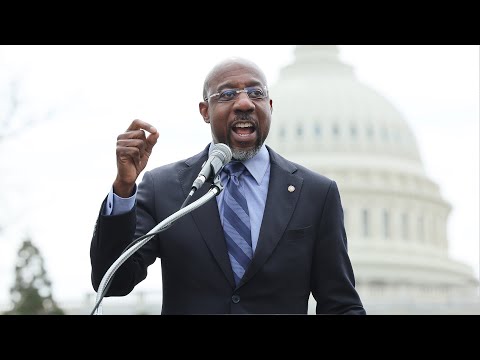
The breaking point arrived on a Monday morning. Mayor Manny Pelaez stepped to the podium outside City Hall on Military Plaza. He did not mince words. He stated that the city could not guarantee the safety of the attendees, the protesters, or the surrounding neighborhoods.
“Municipal resources are not infinite. We cannot ask the taxpayers of Bexar County to subsidize the security apparatus for an event that presents this level of operational risk,” the mayor stated.
The mayor pointed directly to the cultural temperature. Ye’s recent public statements and erratic touring history in 2026 had generated intense backlash. Protest groups had already secured permits to demonstrate outside the Alamodome. Counter-protesters signaled their intent to arrive. The physical footprint of the event was expanding beyond the stadium walls.
The mayor called on Live Nation to voluntarily cancel the show. He called on the Alamodome management to review the force majeure clauses in the contract. He drew a hard line in the South Texas sand.
Security Costs and the Taxpayer Burden
Large concerts always require police presence. The promoter typically pays for a baseline level of security. But when threat assessments escalate, the city must deploy additional resources. Those resources cost taxpayer money.
The San Antonio Police Department (SAPD) conducted a threat assessment in mid-June. Chief William McManus reviewed the intelligence. The findings were stark. Securing the July 4th concert would require a massive deployment of off-duty and on-duty officers.
The estimated cost for the enhanced security perimeter reached $400,000. This figure included overtime pay, tactical unit staging, and traffic control along I-35 and Commerce Street. Live Nation’s contract did not require the promoter to cover these peripheral municipal costs.
The SAPD Deployment Strategy
The police department’s plan was extensive. It required pulling resources from other Independence Day celebrations across Bexar County. The deployment strategy included specific operational mandates.
- Perimeter Defense: The deployment of 150 SAPD officers for traffic control and crowd management along the primary arteries leading to the stadium.
- Tactical Response: Staging mobile command units and rapid response teams near the Alamodome’s northern and southern entrances.
- Crowd Management: Erecting secondary steel barricades to physically separate ticket holders from anticipated protest groups on the stadium plaza.
The mayor argued this deployment was an unacceptable drain on public safety. The city needed those officers patrolling neighborhoods, not babysitting a volatile entertainment event.
Live Nation and the Contractual Gridlock
Calling for a cancellation is easy. Executing one is legally treacherous. Live Nation Entertainment holds a signed, binding contract with the City of San Antonio. The corporation operates out of Beverly Hills. It possesses a legal department designed to enforce venue agreements.
Municipal contracts are rigid. A city cannot simply cancel an event because the political winds shift. To breach the contract, San Antonio would need to prove an imminent, unavoidable threat to public safety. A generic fear of protests does not meet the legal threshold for force majeure.
If the city locks the doors to the Alamodome, Live Nation will sue. The damages would include lost ticket revenue, vendor guarantees, and artist fees. The financial penalty for a unilateral cancellation could dwarf the $400,000 security estimate. The city attorney’s office spent the weekend reviewing every comma in the venue agreement.
The Legal Reality of City-Owned Venues
The Alamodome is not a private club. It is a municipal building. Because it is owned by the government, it is subject to the constraints of the United States Constitution. This turns a contract dispute into a civil rights issue.
The First Amendment severely limits a government’s ability to restrict speech based on viewpoint. When a city leases a venue to a performer, it creates a designated public forum. The government cannot cancel the lease simply because it finds the performer’s past speech offensive or culturally damaging.
Legal precedent in Texas is clear. If a city attempts to silence a controversial figure by denying them a public stage, the courts will intervene. The mayor’s office knows this. That is why the official justification leans heavily on security costs and operational risks, rather than the content of Ye’s character or music.
Ye’s 2026 Touring Controversies
The context surrounding the artist cannot be ignored. Ye’s 2026 touring schedule has been marked by chaos. Earlier in the year, dates in Miami and Los Angeles faced similar municipal pushback. The friction is a feature, not a bug, of his current public persona.
The cultural divide is sharp. Supporters argue that art should not be subject to municipal censorship. They view the mayor’s actions as political grandstanding. Detractors argue that platforming a figure with a history of inflammatory rhetoric normalizes toxic behavior. They view the mayor’s actions as a necessary defense of community values.
The artist himself thrives on this exact type of conflict. The threat of cancellation operates as free marketing. It amplifies the narrative of an outsider battling the establishment. For Ye, the San Antonio standoff is just another chapter in a long history of institutional friction.
The Economic Calculus for San Antonio
While politicians debate constitutional law, local business owners are looking at their ledgers. The Alamodome does not exist in a vacuum. It feeds the entire downtown ecosystem.
A sold-out stadium show brings 65,000 people into the urban core. Many of those attendees travel from Austin, Houston, and Dallas. They book hotel rooms. They eat at restaurants. They buy drinks on the River Walk.
Downtown Businesses and the River Walk
The San Antonio Chamber of Commerce projected the July 4th concert would generate roughly $2.5 million in localized economic impact. The hospitality sector was banking on that revenue. Summer is traditionally a slower season for downtown conventions. A mega-concert bridges the financial gap.
Hotels like the Grand Hyatt San Antonio and the Marriott Rivercenter saw a massive spike in bookings the day tickets went on sale. Restaurant managers along Alamo Street staffed up for a holiday rush. If the concert is canceled, those reservations disappear. The economic ripple effect would be immediate and severe.
Business leaders are caught in the middle. They want the revenue. They do not want the property damage that could accompany a massive, poorly secured protest. The financial calculus is a delicate balance of risk and reward.
The Cultural Divide Over Celebrity Accountability
The debate in San Antonio mirrors a broader national conversation. Municipalities are increasingly weaponizing venue contracts to enforce cultural standards. The line between public safety and ideological censorship is blurring.
City council members are fielding thousands of calls. Some constituents demand the city hold the line and cancel the show. Others demand the city honor the contract and let the music play. The issue has fractured the local electorate along generational and ideological lines.
The mayor’s ultimatum forced everyone to pick a side. There is no neutral ground when a stadium event becomes a referendum on celebrity accountability. The local news cycle is entirely consumed by the standoff. The national media is watching closely. The outcome in Texas will set a precedent for how other cities handle controversial arena tours.
The Countdown to Independence Day
The clock is ticking. July 4 is approaching rapidly. The logistical window to either secure the venue or dismantle the production is closing. Live Nation shows no signs of backing down. The mayor shows no signs of retracting his demand.
The stage equipment is currently sitting in trucks on the interstate. The off-duty police officers are waiting for their final deployment orders. The ticket holders are refreshing their email inboxes, waiting for an update. The entire apparatus of a modern stadium tour is frozen in place.
Lawyers drafted briefs. Police chiefs reviewed deployment maps. Promoters checked ticket algorithms. The city waited. San Antonio.