
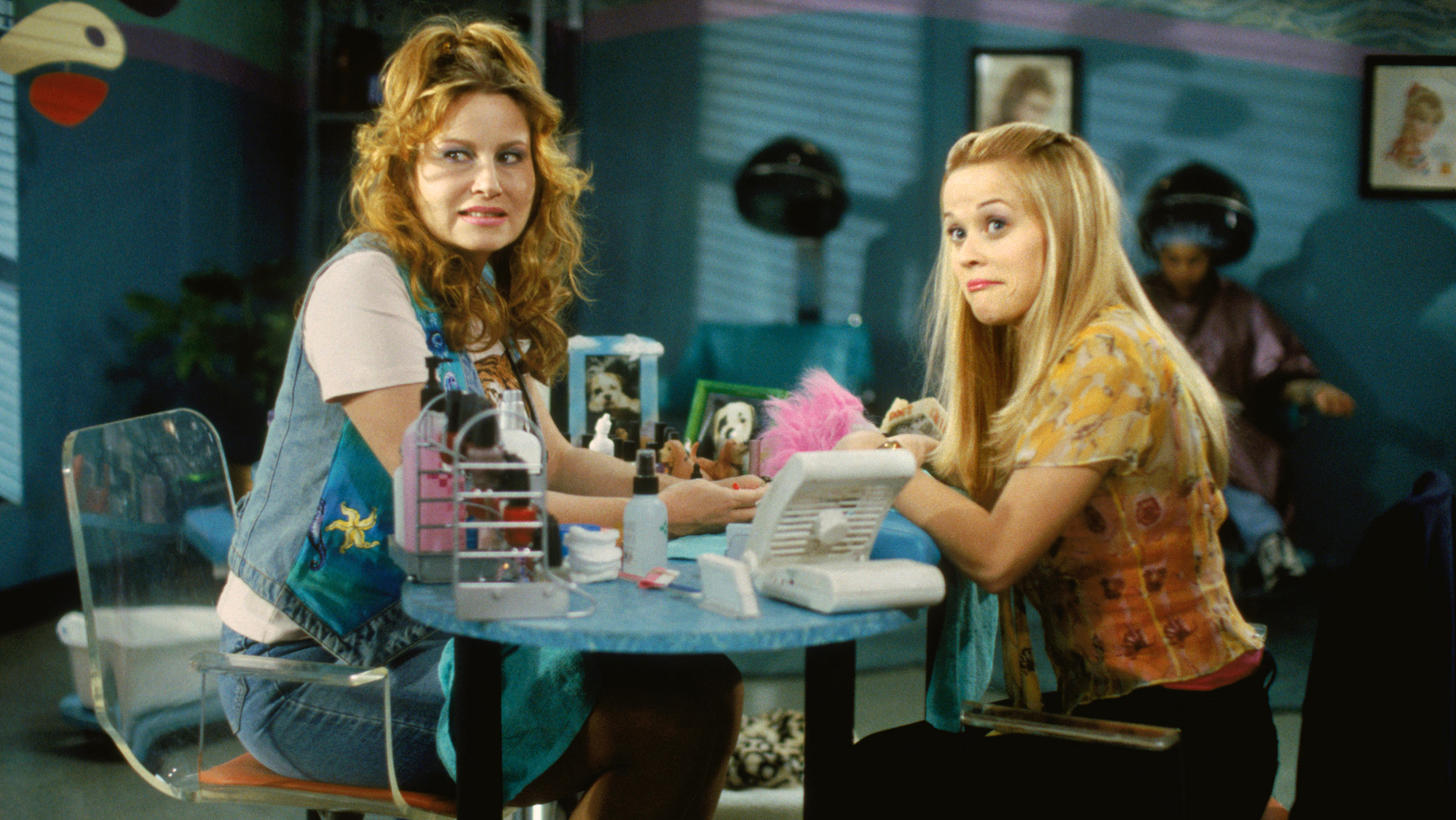
In June 2026, actress Jennifer Coolidge revealed a decades-old Hollywood secret: she arrived at her audition for the 2001 comedy Legally Blonde believing she was reading for the lead role of Harvard-bound sorority girl Elle Woods. The role ultimately went to Reese Witherspoon. Coolidge instead secured the supporting part of Paulette Bonafonté, the Boston manicurist who became one of her signature characters.
The admission surfaced in a report by Deadline Hollywood. Coolidge described the misunderstanding as a “stupid” mistake. She walked into the Metro-Goldwyn-Mayer casting room prepared to channel a bubbly, twenty-something fashion merchandising major.
The reality of Hollywood casting quickly set in. The casting directors steered her toward the quirky, vulnerable salon worker. The misstep altered comedy history. Had Coolidge not walked into that room under false pretenses, the cinematic landscape of the early 2000s would look fundamentally different.
The Anatomy of a 2000 Casting Room Error
The year was 2000. Metro-Goldwyn-Mayer was actively assembling the cast for a new comedy based on Amanda Brown’s novel. The script, penned by Karen McCullah and Kirsten Smith, required a precise comedic tone.
Director Robert Luketic was making his feature film debut. Casting director Joseph Middleton was tasked with finding the perfect ensemble. The search for Elle Woods was exhaustive. The studio needed an actress who could balance high-fashion frivolity with genuine intellectual grit.
Coolidge received the audition materials. In the pre-digital era of Hollywood, sides were often faxed or couriered by agencies. Miscommunications were common. Coolidge, fresh off her breakout role in the 1999 teen comedy American Pie, read the script and assumed the studio wanted her for the lead.
She prepared for Elle Woods. She memorized the dialogue intended for a character fourteen years her junior. She walked into the audition room ready to defend a fictional murder suspect using the rules of haircare.
The casting team quickly realized the error. They did not dismiss her. Instead, they recognized her unique comedic rhythm. They handed her the sides for Paulette Bonafonté. A supporting character was born.
From Stifler’s Mom to Boston Manicurist
To understand the audacity of the misunderstanding, one must look at Coolidge’s career in the late nineties. She was a working actor fighting against immediate typecasting.
In 1999, Universal Pictures released American Pie. Coolidge played Jeanine Stifler, globally recognized as “Stifler’s Mom.” The role was iconic but limiting. It cemented her as a hyper-sexualized comedic caricature.
Hollywood executives rarely view character actors as leading ladies. The industry relies on established hierarchies. Coolidge wanted to break the mold. Auditioning for Elle Woods, even by mistake, represented a desire to step into the center of the frame.
The pivot to Paulette proved to be a masterclass in scene-stealing. Paulette was not a caricature. She was a deeply insecure woman recovering from a toxic relationship with her ex-husband, Dewey. She just wanted to keep her dog, Rufus.
Coolidge grounded the absurdity of the film. When Elle Woods enters the Neptune Beauty Salon, the movie shifts gears. The dynamic between the hyper-confident sorority girl and the defeated manicurist became the emotional anchor of the narrative.
The Creation of a Cultural Phenomenon
Legally Blonde hit theaters on July 13, 2001. Metro-Goldwyn-Mayer took a calculated risk on the summer release. The gamble paid off immediately.
The film grossed $141.7 million worldwide against a modest $18 million production budget. It dominated the cultural conversation. It spawned a cottage industry of pink merchandise, legal parodies, and quotable dialogue.
Coolidge’s performance generated one of the most recognizable sequences in modern cinema. The “Bend and Snap” routine. Choreographed in the middle of the salon, the move was designed to attract the attention of the UPS delivery man, played by Bruce Thomas.
The scene is a masterclass in physical comedy. Coolidge executes the move with catastrophic results, breaking the delivery man’s nose. It remains one of the most frequently referenced moments in early 2000s pop culture. It does not exist without her specific comedic timing.
The Economics of Early 2000s Comedies
In the early 2000s, the mid-budget studio comedy was a reliable economic engine. Metro-Goldwyn-Mayer needed a summer hit. The film’s $141.7 million theatrical gross was only the beginning.
The early 2000s marked the golden age of the DVD market. Home video sales and rental revenue from Blockbuster Video frequently doubled a film’s theatrical take. Legally Blonde became a staple of home entertainment.
This repetition cemented the characters in the public consciousness. Paulette Bonafonté was no longer just a character in a movie theater. She was a fixture in millions of living rooms.
Reese Witherspoon and the Fight for Elle
While Coolidge was accidentally auditioning for the lead, Reese Witherspoon was actively fighting for it. Her path to Elle Woods was not guaranteed.
Witherspoon had recently starred in the 1999 dark comedy Election. She played Tracy Flick, an intensely unlikable, overachieving high school student. Studio executives at Metro-Goldwyn-Mayer conflated the actor with the character. They feared Witherspoon was too abrasive to play the effervescent Elle Woods.
Producer Marc Platt championed Witherspoon. He understood that Elle required a formidable intelligence hidden beneath a superficial exterior. Witherspoon met with studio head Marcel Sarmiento. She dressed the part. She proved she could carry the picture.
The contrast between Witherspoon and Coolidge in the audition process highlights the subjective nature of casting. One actor had to prove she wasn’t too serious. The other actor didn’t realize she wasn’t supposed to be the star. Both ended up exactly where the film needed them.
The Mechanics of Pre-Digital Casting
In the year 2000, Breakdown Services delivered character descriptions to talent agencies via printed daily packets. Agents scoured these physical pages for opportunities.
When a match was found, physical scripts were dispatched. There were no secure PDF watermarks. There were no digital audition links. Information passed through assistants, receptionists, and managers.
A simple miscommunication over the phone could result in an actor preparing for the wrong role. Coolidge’s representation likely submitted her for the project without clarifying the specific character track. The actor received the script, saw a prominent female lead, and made a logical, if incorrect, assumption.
The Legacy of Amanda Brown’s Source Material
The foundation of the film rests on the real-life experiences of Amanda Brown. Brown attended Stanford Law School. She compiled letters detailing her experiences surrounded by peers who dismissed her fashion-conscious personality.
Those letters formed the manuscript for the novel Legally Blonde. The journey from unpublished manuscript to Metro-Goldwyn-Mayer feature film was swift. Producer Marc Platt secured the rights before the book was even published.
The adaptation process required flattening some of the novel’s sharper edges to fit the Hollywood comedy mold. The character of Paulette in the novel is slightly different from the cinematic version. Coolidge’s interpretation brought a specific working-class Boston energy that contrasted sharply with Elle’s Bel Air background. This class contrast became a central comedic engine for the film.
The White Lotus Renaissance and Retrospective Truths
The June 2026 revelation arrives at a specific moment in Coolidge’s career. She is no longer just a supporting player. She is a recognized powerhouse.
Her collaboration with creator Mike White on the HBO anthology series The White Lotus changed her industry standing. Playing the wealthy, erratic Tanya McQuoid earned Coolidge two Primetime Emmy Awards. It triggered a massive career renaissance.
This elevated status grants her a new level of candor. Actors rarely share stories of audition failures or misunderstandings early in their careers. It signals vulnerability. It invites mockery from industry gatekeepers.
But a multi-award-winning actor in 2026 can laugh at a mistake made in 2000. Coolidge framing the audition error as “stupid” is a flex of her current security. She survived the Hollywood machine. She outlasted the executives who typecast her.
The Enduring Power of the Supporting Character
The Hollywood ecosystem relies heavily on character actors. While leading stars secure the box office funding, supporting actors provide the texture. Coolidge’s career is a testament to this dynamic.
For decades, she elevated mediocre material and anchored great material. Her work in Christopher Guest’s mockumentaries, including Best in Show (2000) and A Mighty Wind (2003), proved her improvisational genius. Legally Blonde placed that genius inside a mainstream studio vehicle.
The impact of the 2001 comedy continues to expand. The film spawned a 2003 sequel, Legally Blonde 2: Red, White & Blonde. It generated a highly successful 2007 Broadway musical, which introduced a new generation to the characters.
Amazon MGM Studios continues to develop the intellectual property. Discussions of a third film, Legally Blonde 3, have circulated for years. The franchise refuses to fade into obscurity.
At the center of that endurance is the chemistry of the original cast. The magic of the first film relies on the specific alchemy of its performers. Luke Wilson as Emmett Richmond. Selma Blair as Vivian Kensington. Victor Garber as Professor Callahan.
And Jennifer Coolidge as Paulette. A role she never intended to read for. A role she only secured after failing to land the lead.
Hollywood operates on a foundation of planned precision. Budgets are calculated. Demographics are targeted. Marketing campaigns are focus-grouped months in advance.
Yet the art itself often relies on accidents. A misread fax. A misunderstood phone call. An actor walking into a room with the wrong lines memorized.
The scripts printed. The actors read. The cameras rolled.
Hollywood.