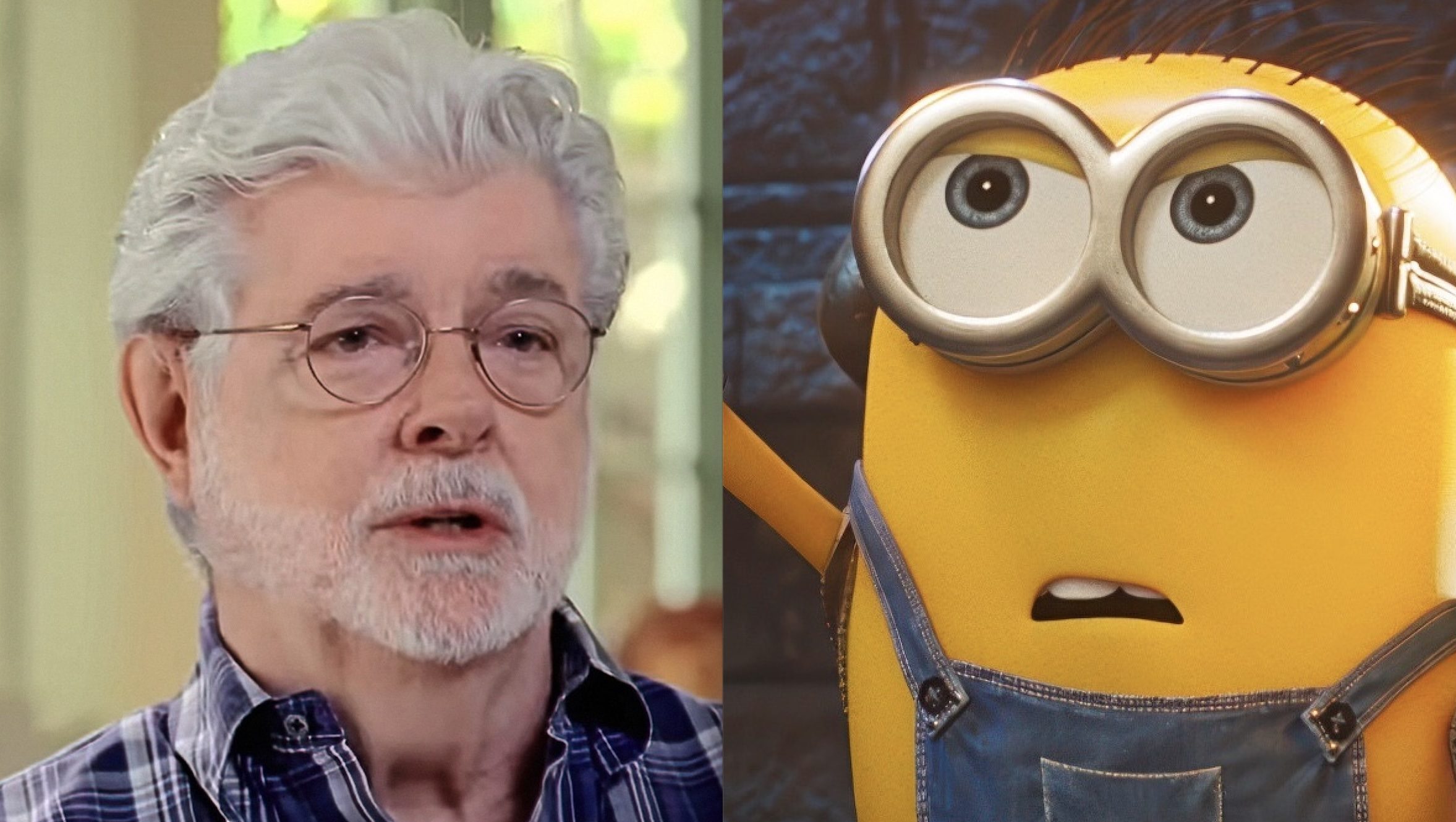
George Lucas is returning to Hollywood in an unexpected capacity. The 82-year-old creator of Star Wars and Indiana Jones has signed on to provide voice work for the upcoming animated feature Minions & Monsters. Deadline confirmed the casting on June 21, 2026. The announcement marks Lucas’s first official billed role in a major studio project since he sold his empire to The Walt Disney Company in 2012. For a filmmaker who spent his career building cinematic universes from behind the camera, the decision to step into the vocal booth represents a fascinating late-career pivot.
The implicit question surrounding this news is simple. Why now? Lucas has spent fourteen years entirely divorced from the machinery of the modern blockbuster. He has watched his creations evolve under the stewardship of Bob Iger and Kathleen Kennedy. He has directed his vast fortune toward philanthropy and fine art. Yet, the appeal of a lighthearted, low-stakes animated role has drawn him back into the fold.
What looks like a simple casting announcement actually reflects a broader trend in 2026 Hollywood. Legacy filmmakers are finding new ways to interact with pop culture. They are bypassing the grueling schedules of live-action production. They are choosing projects that offer maximum cultural resonance with minimal physical strain. Minions & Monsters is the latest beneficiary of this shift.
A Rare Return to the Studio System
The timeline of George Lucas’s departure from Hollywood is well-documented. On October 30, 2012, Lucas sold Lucasfilm to Disney for $4.05 billion. The deal included the rights to Star Wars, Indiana Jones, and the revolutionary technology companies Industrial Light & Magic and Skywalker Sound. Lucas stepped away. He handed over his treatments for a sequel trilogy. He retreated to his home in Marin County, California.
Since that sale, Lucas has maintained a strict distance from the day-to-day operations of the film industry. He has visited the sets of projects like The Mandalorian to offer advice to Jon Favreau and Dave Filoni. He has attended premieres. He has occasionally offered brief, diplomatic reviews of new Star Wars installments. But he has not worked for a major studio. He has not taken a paycheck to perform a service for a Hollywood conglomerate.
This makes his involvement in Minions & Monsters highly unusual. Universal Pictures and Illumination Entertainment, the studios behind the project, have managed to secure a name that carries immense historical weight. Illumination CEO Chris Meledandri has built a billion-dollar empire on the backs of the Despicable Me franchise and the Minions. Bringing Lucas into that ecosystem bridges the gap between classic cinematic history and modern, hyper-kinetic animation.
The Scope of Minions & Monsters
The animation landscape in 2026 is dominated by established intellectual property. Minions & Monsters represents a continuation of Illumination’s core strategy. The studio excels at pairing its globally recognized yellow mascots with new, high-concept scenarios. While plot details remain heavily guarded, the title suggests a classic monster-movie homage filtered through the slapstick lens of the Minions universe.
Casting Lucas in this specific environment is a masterstroke of four-quadrant marketing. The primary audience for a Minions film is Gen Alpha and younger Gen Z viewers. These demographics engage with the physical comedy and bright visuals. The secondary audience consists of the parents and grandparents buying the tickets. The name George Lucas on a marquee or a poster instantly commands the attention of Gen X and Baby Boomer audiences.
The specific character Lucas will voice remains undisclosed. Industry analysts speculate he will portray an elder statesman, a mad scientist, or a creator figure within the monster universe. Illumination has a history of tailoring animated avatars to match the real-world personas of their celebrity voice actors. Whatever the role, the studio will likely lean into Lucas’s legacy as a world-builder.
The Maker on the Mic: A Brief History
This is not the first time George Lucas has recorded lines for a film. However, his previous vocal performances have been strictly relegated to the realm of Easter eggs. In 2005, Lucas made a brief on-screen cameo in Star Wars: Episode III – Revenge of the Sith. He played Baron Papanoida, a blue-skinned Pantoran dignitary standing outside the Coruscant opera house.
Five years later, in 2010, the character of Baron Papanoida was expanded in the Star Wars: The Clone Wars animated television series. Lucas briefly provided the voice for the character in the episode “Sphere of Influence.” His performance was heavily modulated, blending into the dense audio mix of the series. He also provided uncredited breathing sounds for General Grievous in Revenge of the Sith.
Minions & Monsters is different. This is not a hidden cameo in his own universe. This is a contracted, billed performance in a competing studio’s flagship franchise. It requires a different level of public engagement and promotional visibility.
The $4 Billion Sabbatical
To understand the weight of this return, one must look at what Lucas has been doing since 2012. He has not been idle. In 2013, he married Mellody Hobson, the co-CEO of Ariel Investments and former chairwoman of DreamWorks Animation. The couple welcomed a daughter later that year. Lucas shifted his focus from running a production company to managing a massive philanthropic portfolio.
His primary endeavor has been the Lucas Museum of Narrative Art. Funded entirely by a $1 billion endowment from Lucas himself, the museum represents his ultimate legacy project. After facing zoning and political hurdles in San Francisco and Chicago, the museum finally broke ground in Los Angeles’s Exposition Park. The futuristic, Ma Yansong-designed building is dedicated to the history of visual storytelling.
The museum’s collection houses everything from Norman Rockwell paintings to original cinematic props. It is a serious, academic institution designed to elevate narrative art to the level of fine art. The contrast between this monumental, billion-dollar cultural institution and a voice role in Minions & Monsters is stark. It suggests a man who, having secured his serious legacy, is finally allowing himself to simply have fun.
The Philosophy of Sound
Lucas’s pivot to voice acting is less surprising when viewed through the lens of his filmmaking philosophy. Lucas famously stated that sound is fifty percent of the moviegoing experience. He revolutionized cinematic audio in the 1970s. He hired sound designer Ben Burtt to create the organic, lived-in soundscape of the original Star Wars. He founded Skywalker Sound. He pushed the industry standard forward with the creation of the THX certification system.
For Lucas, the audio booth is just as important as the camera lens. He spent thousands of hours in mixing rooms at Skywalker Ranch in Marin County. He understands the technical requirements of ADR (Automated Dialogue Replacement). He knows how a single vocal inflection can change the emotional trajectory of a scene.
By stepping into the booth for Minions & Monsters, Lucas is returning to an environment where he has always felt comfortable. He does not have to worry about lighting, blocking, or weather conditions. He only has to focus on the pure delivery of narrative through sound. It is a distillation of the filmmaking process down to its most fundamental auditory elements.
The Tradition of the Auteur Voice
Lucas is joining a long and eccentric tradition of legendary directors taking unexpected voice acting roles. The history of animation is dotted with these bizarre, delightful crossovers. Filmmakers who spend their lives dictating the actions of others often find a strange liberation in simply reading lines for someone else.
In 1986, Orson Welles provided the voice of the planet-eating robot Unicron in The Transformers: The Movie. It was his final film role. In 2004, Martin Scorsese voiced the hyper-active pufferfish Sykes in DreamWorks Animation’s Shark Tale. Werner Herzog, the uncompromising German auteur, has lent his distinctive, chilling cadence to episodes of Rick and Morty and The Simpsons. David Lynch voiced a recurring character on The Cleveland Show.
Directors make excellent voice actors. They understand the mechanics of a scene. They know what the editor needs. They understand timing, rhythm, and pacing. When Universal Pictures puts George Lucas in a recording booth, they are not just getting a famous name. They are getting a master of cinematic rhythm who knows exactly how to deliver a line to make it cut together perfectly in post-production.
The Mechanics of Modern Animation Casting
The practical realities of voice acting in 2026 make it the ideal medium for an 82-year-old billionaire. Live-action filmmaking is a grueling physical endurance test. It requires fourteen-hour days. It demands early morning makeup calls. It involves standing in the harsh desert sun of Tunisia or the freezing snow of Norway. Lucas left that world behind for a reason.
Voice acting requires none of that. A modern animated performance can be recorded almost anywhere. Universal Pictures can send a high-end recording rig directly to Skywalker Ranch. Lucas can record his lines in a climate-controlled studio over the course of a few afternoons. If the director needs a different read, Lucas can hop on a secure video call and record a pickup line in ten minutes.
This ease of production is why animation continues to attract high-profile talent who would otherwise decline live-action roles. It offers the cultural impact of a major theatrical release with the time commitment of a minor hobby. For Lucas, it is the perfect balance. He gets to participate in the magic of moviemaking without the crushing responsibility of being the Maker.
The Nostalgia Economy in 2026
The Deadline announcement of Lucas joining Minions & Monsters immediately triggered a wave of online discourse. This reaction is the currency of the modern nostalgia economy. Studios know that casting a legacy figure generates free marketing. The news cycle sustains itself on the sheer novelty of the pairing.
In 2026, the entertainment industry relies heavily on these cross-generational touchstones. The original Star Wars generation is aging. The prequel generation is now in their thirties and forties. To these audiences, George Lucas is more than a director. He is a mythological figure. He is the architect of their childhood imaginations.
Hearing his voice in a new context provides a sudden, unexpected jolt of recognition. It bridges the gap between the monumental epics of the twentieth century and the fast-paced digital entertainment of the twenty-first. Minions & Monsters will benefit from this collision of eras. The film gains an immediate layer of prestige, simply by association.
Ultimately, this casting news serves as a reminder of Lucas’s enduring presence in the cultural consciousness. He does not need to direct another film to remain relevant. He does not need to write another script. His legacy is entirely secure, housed in the archives of Lucasfilm and the halls of his Los Angeles museum. This new venture is not about building an empire. It is about enjoying the medium he helped revolutionize.
The industry shifts. The technology evolves. The audiences change. The cameras stop rolling. The scripts are archived. The museum doors open. The Maker speaks.