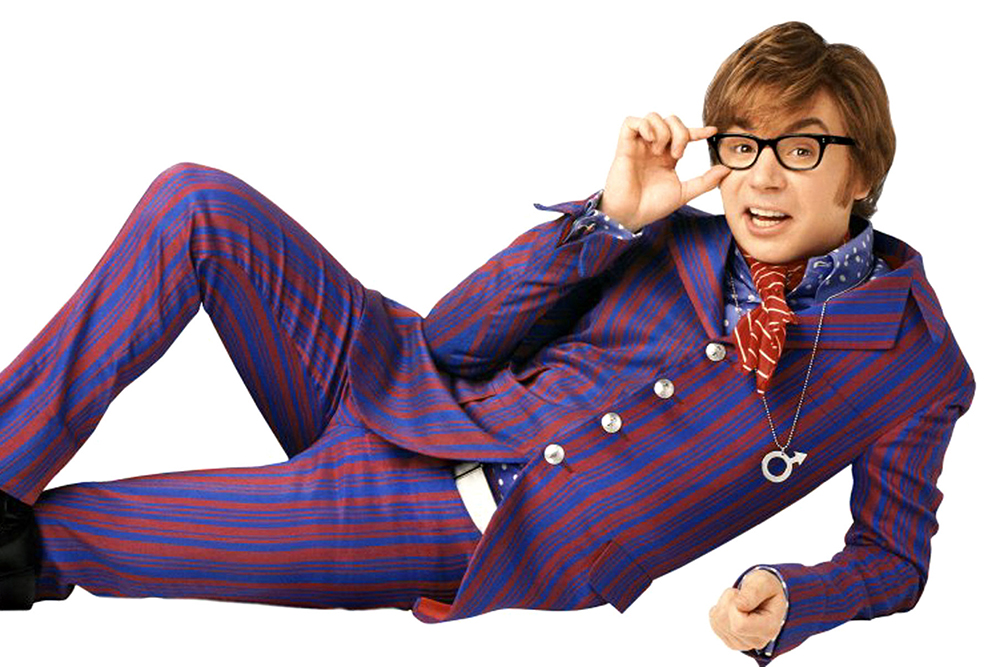
Mike Myers has officially confirmed that Austin Powers 4 is in development, answering “yes” when asked about the sequel during a 2026 interview with Variety. The comedian declined to provide further details regarding a production timeline, a script, or returning cast members. The confirmation ends twenty-four years of speculation surrounding the return of the International Man of Mystery to the big screen.
The silence surrounding the franchise has been absolute since 2002. Myers has spent two decades dodging the question on red carpets and late-night talk shows. He offered vague hopes. He offered non-committal smiles. Now, the definitive answer shifts the conversation from a hypothetical reunion to an active Hollywood production.
But a single word does not make a movie. The mechanics of bringing a 1990s comedy icon into the modern cinematic landscape require heavy lifting. The cultural landscape has shifted. The original cast has aged. Key players have passed away. Yet, the financial incentive for Warner Bros. Discovery to revive a dormant, billion-dollar intellectual property remains immense.
The Long Road to a Single Word
The confirmation arrived without fanfare. Variety posed the question during a broader retrospective on Myers’ career. The reporter asked if a fourth Austin Powers film was happening. Myers looked up. He said, “Yes.” He then immediately shut down any follow-up inquiries.
This brevity is intentional. Myers operates with strict secrecy regarding his creative projects. He spent years quietly developing The Pentaverate for Netflix before its 2022 release. He operates outside the traditional Hollywood press cycle. When he speaks, the industry listens.
Rumors of a fourth film actually began before the third film left theaters. In 2005, reports circulated that Myers was co-writing a script with Michael McCullers. That script reportedly shifted the focus entirely to Dr. Evil. It framed the narrative from the villain’s perspective. The project stalled.
In 2018, Myers hinted at the Dr. Evil spin-off concept again. He appeared on The Tonight Show Starring Jimmy Fallon in character as Dr. Evil. He appeared in a General Motors Super Bowl commercial in 2022, reuniting with Seth Green, Mindy Sterling, and Rob Lowe. The commercial served as a proof of concept. The audience still recognized the characters. The audience still laughed.
The Billion-Dollar Spy Parody
To understand the weight of Myers’ confirmation, one must look at the financial history of the franchise. Austin Powers is not a cult classic. It is a box office leviathan.
The first film, Austin Powers: International Man of Mystery, arrived in May 1997. New Line Cinema took a modest risk on the $16 million production. It grossed $67 million globally. The numbers were respectable, but the true explosion happened on home video. VHS and DVD rentals turned the character into a cultural phenomenon. Catchphrases infiltrated schools, offices, and television.
The sequel capitalized on that momentum. Austin Powers: The Spy Who Shagged Me opened in June 1999. It shattered expectations. The film grossed $312 million worldwide. It introduced Verne Troyer as Mini-Me. It featured a chart-topping soundtrack led by Madonna. It became the definitive comedy of the late 1990s.
Austin Powers in Goldmember followed in July 2002. The third installment added Beyoncé Knowles and Michael Caine to the roster. It grossed $296 million globally. Over five years, Myers generated over $675 million in ticket sales alone. Merchandise, syndication rights, and physical media sales pushed the franchise value past the billion-dollar mark.
The Verne Troyer Factor
Any discussion of Austin Powers 4 must address a profound absence. Verne Troyer, the actor who portrayed Dr. Evil’s clone, Mini-Me, died in April 2018. He was 49 years old.
Troyer was not just a supporting player. He was the emotional anchor of the Dr. Evil storyline. The dynamic between Myers and Troyer provided the franchise with its most memorable physical comedy. His death left a massive void in the ensemble.
Director Jay Roach addressed this hurdle directly in 2019. Roach stated that making a fourth film without Troyer felt nearly impossible. He noted that Myers would have to write a script that explicitly honored Troyer’s legacy. The story would have to acknowledge the loss. It could not simply recast the role or ignore the character’s absence.
Hollywood legacy sequels often struggle with the deaths of original cast members. Ghostbusters: Afterlife dedicated its entire narrative to the passing of Harold Ramis. Black Panther: Wakanda Forever rebuilt its foundation around the loss of Chadwick Boseman. Myers faces a similar narrative challenge. Dr. Evil without Mini-Me requires a fundamental shift in the villain’s psychological makeup.
Who Will Return to the Evil Empire?
A legacy sequel relies on familiar faces. If Myers is writing the script, the calls to the original ensemble have likely already begun.
- Seth Green: Green played Scott Evil, Dr. Evil’s rebellious son. In the final moments of Goldmember, Scott embraced his dark side. He began losing his hair. He declared his intention to take over the evil empire. Green has expressed absolute willingness to return to the role.
- Mindy Sterling: Sterling played Frau Farbissina, the terrifying enforcer and mother to Scott Evil. She reunited with Myers for the 2022 Super Bowl commercial. Her return is highly probable.
- Robert Wagner: Wagner portrayed Number Two, Dr. Evil’s cycloptic financial mastermind. Wagner is currently in his nineties. His participation would likely be limited, potentially opening the door for Rob Lowe to reprise his role as the younger version of the character permanently.
- Michael York: York played Basil Exposition, Austin’s intelligence handler. York has publicly battled amyloidosis in recent years, which affects his mobility and speech. His involvement remains uncertain.
The female leads present another question mark. Elizabeth Hurley, Heather Graham, and Beyoncé Knowles each anchored one film. The franchise traditionally rotates its “Bond Girl” parody with every installment. A fourth film could bring back a previous star or introduce an entirely new counterpart.
Jay Roach and the Directorial Chair
Jay Roach directed all three original films. His visual style defined the franchise. He embraced the bright colors, the split screens, and the kinetic editing of the 1960s. Since 2002, Roach’s career has taken a dramatic turn.
He pivoted away from broad comedy. He directed tense political dramas. He helmed Recount in 2008. He directed Game Change in 2012. He directed the Fox News sexual harassment drama Bombshell in 2019. He became a prestige filmmaker.
Yet, Roach has never closed the door on Austin Powers. He has repeatedly stated that he and Myers brainstorm concepts every few years. If Myers has officially committed to the project, Roach is the most logical choice to direct. Bringing in a new director risks losing the specific, chaotic tone that made the original trilogy successful.
The Changing Landscape of Comedy
The comedy genre has evolved drastically since 2002. The broad, theatrical studio comedy is nearly extinct. Audiences now look to television and streaming for comedic storytelling. Theatrical releases are dominated by action blockbusters and horror films.
Furthermore, the specific target of Myers’ parody has changed. The original films skewered the Sean Connery and Roger Moore eras of James Bond. They mocked the sexism, the ridiculous gadgets, and the megalomaniacal villains of the Cold War era.
But James Bond changed. Daniel Craig took over the role in 2006. The 007 franchise became gritty, realistic, and emotionally devastating. The villains became cyber-terrorists and shadow-organization bureaucrats. Parodying the modern Bond requires a different comedic toolkit. Myers cannot simply recycle jokes about lasers and sharks. He must address the modern spy thriller.
The Legacy Sequel Era
Warner Bros. Discovery is heavily invested in legacy intellectual property. The studio recognizes that nostalgia is a powerful financial driver. Audiences are willing to return to theaters for characters they loved decades ago.
Tom Cruise proved this with Top Gun: Maverick. Eddie Murphy proved this with Beverly Hills Cop: Axel F. Michael Keaton proved this with Beetlejuice Beetlejuice. The formula is established. Bring back the original star. Blend practical effects with modern technology. Hit the familiar emotional beats while introducing a younger generation to carry the torch.
Myers is currently 62 years old. He is no longer the energetic thirty-something who danced through the streets of London in a velvet suit. A modern Austin Powers film must acknowledge the passage of time. It must lean into the joke of an aging swinger trying to navigate a world that has completely passed him by.
The confirmation is real. The machinery of Hollywood is moving. The scripts are being drafted. The contracts are being negotiated. The fans are waiting.
The rumors stopped. The studio waited. The comedian spoke. Yes.