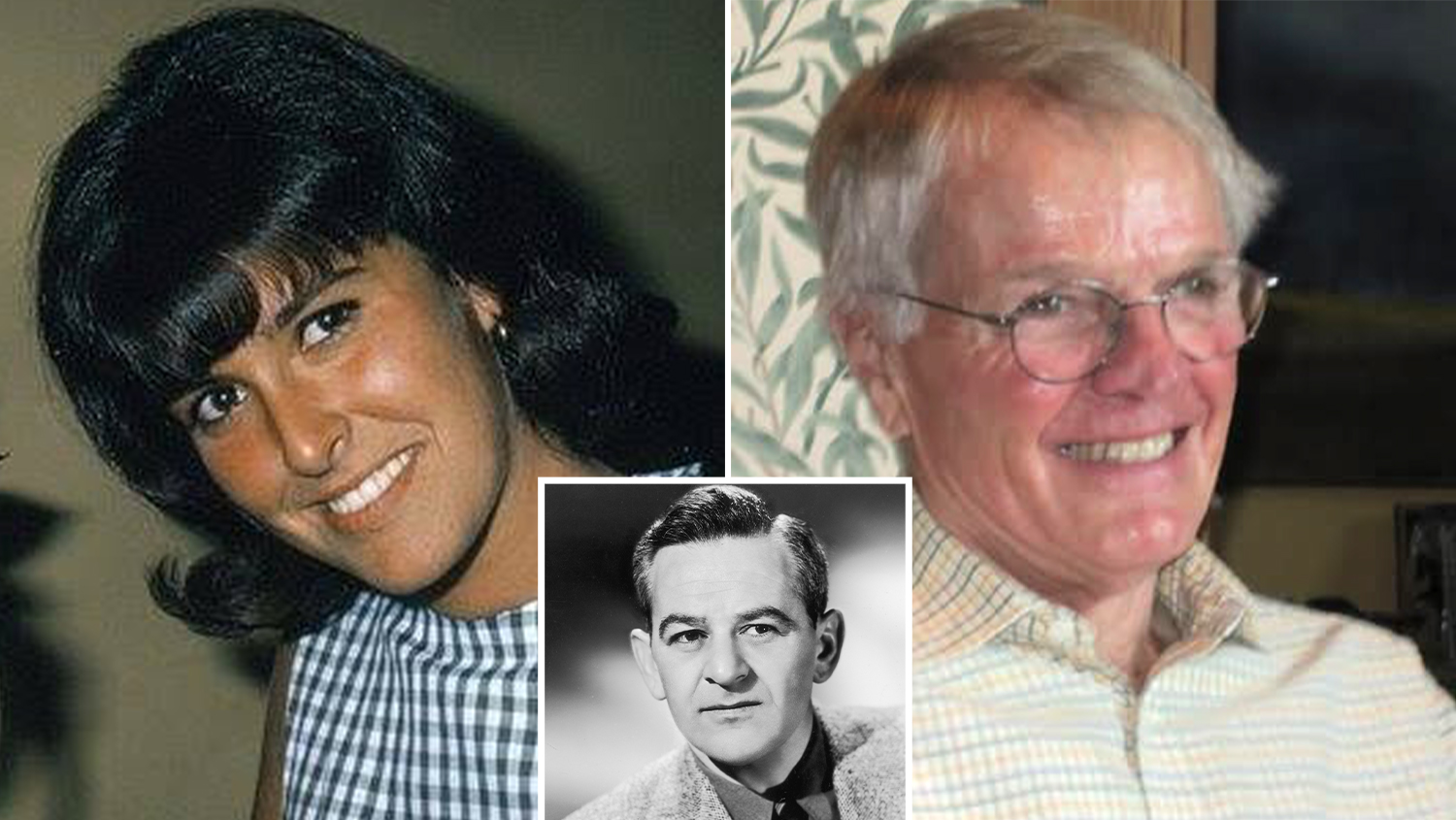
Judith Sheldon, the 84-year-old daughter of three-time Academy Award-winning director William Wyler, was found dead alongside her husband inside a running vehicle on a California highway roadside in June 2026. Authorities discovered the couple after passing motorists reported an idling car parked erratically on the shoulder. First responders found both occupants unresponsive. The engine was still running. Pronouncement of death occurred at the scene.
The discovery abruptly ends the life of one of the last direct links to Hollywood’s Golden Age. Sheldon was not a movie star. She was a custodian. For decades, she managed the historical footprint of a father who shaped modern American cinema. Now, her sudden death triggers a complex jurisdictional investigation.
What looks like a routine traffic welfare check has become a high-profile forensic puzzle. The California Highway Patrol secured the perimeter. The county coroner took jurisdiction of the remains. The Hollywood community awaits answers. But the story of Judith Sheldon is much larger than the tragic circumstances of her final hours.
The Discovery on the Highway
The timeline of the discovery remains under active investigation by California authorities. A vehicle was spotted pulled over on the shoulder of a state highway. The engine was engaged. The exhaust system was active. Passing drivers initially assumed it was a standard breakdown. Hours passed. The vehicle did not move.
California Highway Patrol units eventually approached the car. Officers observed two individuals slumped inside the cabin. The doors were locked. The windows were rolled up. Entry was forced. Medical personnel arrived shortly after, but no life-saving measures could be deployed. Rigor mortis had reportedly begun.
Investigators immediately look for environmental clues in these scenarios. A running vehicle with closed windows presents a high risk of carbon monoxide accumulation, especially if the exhaust pipe is obstructed or the vehicle’s internal ventilation system fails. Odorless and colorless, carbon monoxide binds to hemoglobin with deadly efficiency. Victims simply fall asleep.
Alternatively, authorities must rule out a dual medical emergency. If the driver suffered a sudden cardiac event, a passenger of advanced age might be unable to intervene, call for help, or exit the vehicle safely. Foul play is not currently the primary focus. Toxicology reports and full autopsies will dictate the final narrative. Until then, the scene remains a quiet tragedy on a sunbaked strip of asphalt.
A Childhood Among Hollywood Royalty
To understand Judith Sheldon, one must understand the shadow in which she grew up. William Wyler was not merely a director. He was an institution. Born in Alsace-Lorraine in 1902, Wyler emigrated to the United States and became the most nominated director in Academy Award history. He secured twelve Best Director nominations. He won three times.
Judith was born in 1942 to Wyler and his wife, actress Margaret Tallichet. Her childhood coincided with her father’s absolute peak. She grew up in a Beverly Hills home where the industry’s most powerful figures gathered. Bette Davis was a frequent collaborator. Charlton Heston was a family friend. Audrey Hepburn owed her breakout role to Wyler’s eye.
Wyler was known on set as “40-Take Wyler.” He was a relentless perfectionist. He drove actors to the brink of exhaustion to capture the exact emotional truth of a scene. He directed Mrs. Miniver. He directed The Best Years of Our Lives. He directed the sprawling, monumental epic Ben-Hur.
Judith witnessed this perfectionism firsthand. She watched celluloid history being crafted. She saw the toll it took on her father, and she saw the accolades it brought him. The Wyler household was a museum of mid-century American culture. Oscars sat on the mantel. Scripts littered the study. It was a life of immense privilege, anchored by an intense work ethic.
The Custodian of the Wyler Archives
William Wyler died in 1981. His passing left a massive archival void. Directors of his era rarely kept meticulous, digitized records. Their legacy lived in physical film prints, handwritten production notes, and fading photographs. Judith Sheldon stepped into the breach.
She became the fierce protector of the Wyler estate. She understood that Hollywood has a short memory. Without active preservation, even a giant like Wyler could fade into footnotes. Sheldon partnered with the Academy of Motion Picture Arts and Sciences. She donated crucial materials to the Academy Film Archive.
Sheldon was a staple at the Turner Classic Movies (TCM) Classic Film Festival. She provided audio commentaries for DVD and Blu-ray releases of her father’s work. She sat for interviews. She corrected biographers. She ensured that the narrative surrounding “40-Take Wyler” remained accurate, nuanced, and respectful.
Her work extended to her father’s World War II service. Wyler flew combat missions to film the documentary The Memphis Belle: A Story of a Flying Fortress. He lost his hearing in one ear due to the roar of bomber engines. Sheldon worked tirelessly to ensure his military sacrifices were remembered alongside his Hollywood triumphs. She viewed her father not just as an entertainer, but as an American patriot. She protected that dual legacy until the day she died.
The Mechanics of an Unattended Highway Death
The tragic nature of Sheldon’s death forces a hard look at vehicular safety and the vulnerabilities of aging motorists. The California Highway Patrol handles thousands of roadside incidents annually. A significant percentage involve elderly drivers experiencing sudden medical episodes.
When a vehicle is found running with deceased occupants, protocol dictates a hazardous materials approach. First responders must assume the presence of toxic gases. Carbon monoxide detectors are deployed before the cabin is fully breached. The vehicle’s exhaust system is inspected for damage, rust, or blockage. A cracked manifold or a blocked tailpipe can force exhaust fumes into the passenger compartment within minutes.
If carbon monoxide is ruled out, investigators pivot to environmental exposure. Even with an engine running, air conditioning systems can fail. In the California summer, a sealed car becomes an oven. Hyperthermia can claim a life rapidly. Conversely, if the air conditioning is blasting but the occupants suffer a medical crisis, the running engine merely masks the tragedy until the fuel tank runs dry.
The coroner’s office will conduct blood tests to measure carboxyhemoglobin levels. They will examine the hearts and brains of both victims. They will reconstruct the final 48 hours of their lives. Did they stop for gas? Did they make a phone call? Where were they heading? The answers exist in cell phone tower pings, credit card receipts, and forensic pathology.
The Fading Footprint of the Golden Age
The death of Judith Sheldon marks another severed tie to the studio system era. The children of the 1930s and 1940s Hollywood titans are aging. Many have already passed. They were the last generation to witness the factory-like production of classic cinema before television and corporate conglomerates altered the landscape forever.
These offspring occupied a unique cultural space. They were not the creators, but they held the keys to the creators’ memories. They possessed the intimate, off-camera anecdotes that biographers crave. They knew what the legends were like at the breakfast table. When a figure like Sheldon dies, a library burns.
The Wyler estate will likely transition to a trust or be fully absorbed by academic and cinematic institutions. The Academy Film Archive already holds the bulk of the physical media. The legacy is secure. But the human voice that championed that legacy is gone.
Hollywood is an industry built on ghosts. It projects the dead onto screens and calls them immortal. But the machinery behind those projections was built by mortals. William Wyler was a mortal. Judith Sheldon was a mortal. Their story, which began in the glittering heights of Beverly Hills royalty, has ended on a quiet stretch of asphalt.
The Final Investigation
Law enforcement continues to process the vehicle. The California Highway Patrol will issue a final incident report. The local coroner will sign the death certificates. The physical evidence will be cataloged and eventually released.
There is no glamour in a roadside death. It is stark. It is clinical. It stands in harsh contrast to the sweeping, orchestrated dramas William Wyler put on film. In a Wyler movie, every detail was controlled. Every shadow was placed with purpose. Every ending was meticulously scripted.
Reality offers no such control. A car pulls over. An engine idles. Time stops.
The highway patrolmen finished their notes. The coroner’s van departed the scene. The idling engine was finally silenced. The road remained.