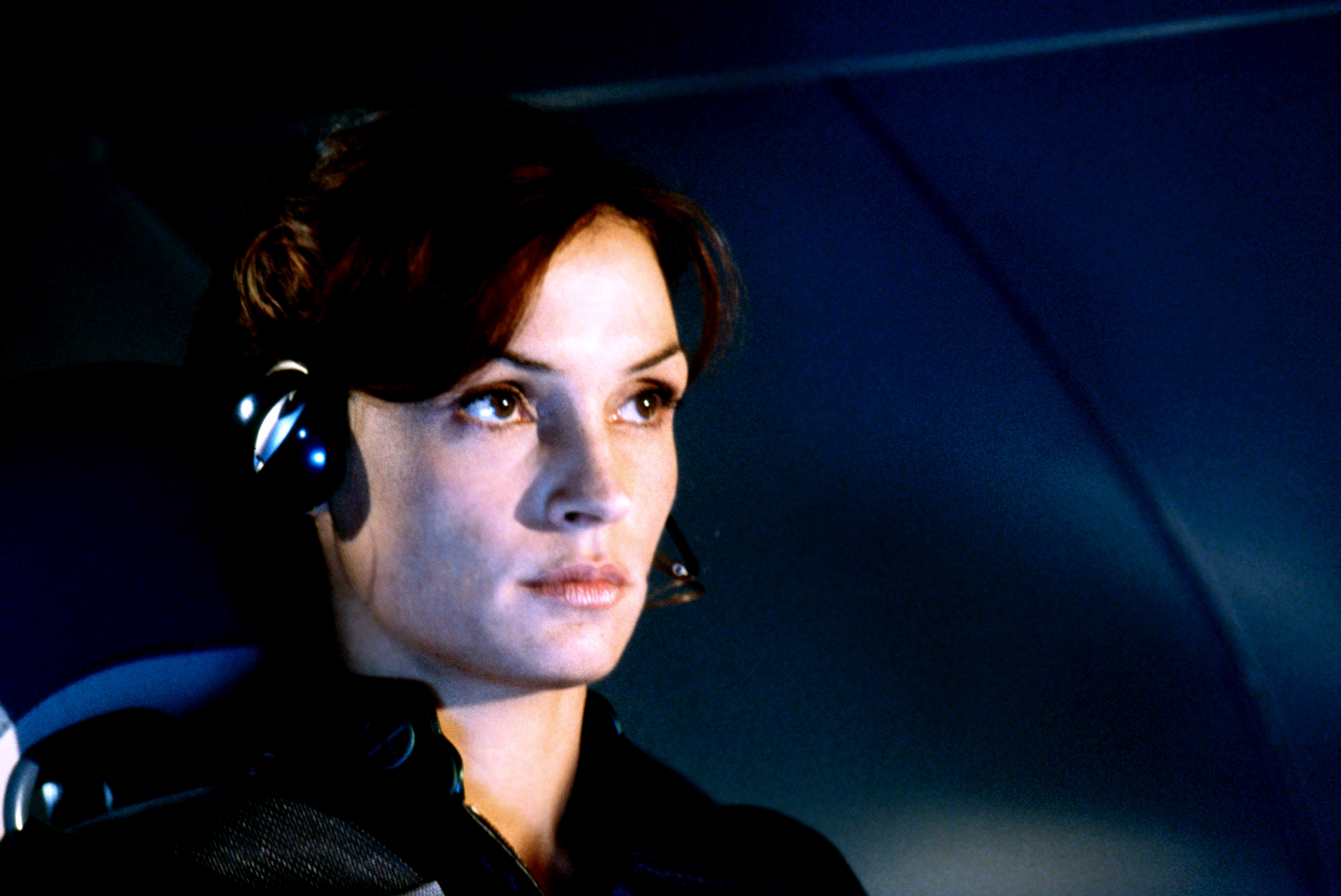
Rory Kennedy’s new documentary, Freefall: A Reckoning For Boeing, premiered at the 2026 DC/DOX festival with a definitive and alarming thesis: the American aerospace giant has not fixed the systemic safety and manufacturing defects that led to fatal crashes and mid-air blowouts. The film argues that despite leadership shakeups, billions in regulatory fines, and relentless congressional scrutiny, Boeing’s corporate culture remains dangerously misaligned, prioritizing financial engineering over aeronautical integrity.
The story of Boeing was once the story of American industrial supremacy. The company built the machines that won wars. They built the jets that shrank the globe.
But the narrative has fractured. What looks like a modern crisis of quality control actually started decades ago in corporate boardrooms. Kennedy’s documentary traces the rot from the C-suite directly to the factory floor.
The Premise of Freefall
Documentary filmmaker Rory Kennedy is no stranger to corporate malfeasance. Her lens focuses on the human cost of institutional failure. With Freefall, she returns to the subject of Boeing to ask a single, terrifying question.
Has anything actually changed?
The film answers with a resounding negative. Kennedy compiles interviews with aviation whistleblowers, former Boeing engineers, and grieving family members. They paint a picture of a company still trapped in a cycle of denial.
The documentary argues that the foundational issues that caused the 737 MAX tragedies were never rooted out. Instead, they were papered over with public relations campaigns and executive reshuffling. The culture of silence remains. The pressure to maintain production speed over safety persists.
The Original Sin of the 737 MAX
To understand the current crisis, one must understand the origin of the 737 MAX. In 2011, American Airlines was poised to order hundreds of new, fuel-efficient A320neo jets from Boeing’s European rival, Airbus.
Boeing panicked. Designing a brand-new airplane from scratch would take a decade and cost upwards of $15 billion. They did not have the time. They did not want to spend the money.
Instead, they decided to update the 737, an airframe that first flew in 1967. They strapped massive, modern LEAP-1B engines onto a jet designed in the era of the slide rule.
Because the 737 sits so low to the ground, the new engines would not fit under the wings. Boeing had to mount them further forward and higher up. This changed the aerodynamics of the plane. In specific flight conditions, the new engine placement caused the nose of the aircraft to pitch upward, risking a stall.
To fix this physical hardware problem, Boeing created a software patch. That patch was the Maneuvering Characteristics Augmentation System, or MCAS.
The system relied on a single Angle of Attack (AoA) sensor. If that single sensor failed and fed erroneous data to the flight computer, MCAS would activate. It would force the nose of the plane down, fighting the pilots until the aircraft hit the ground.
There was no redundancy. In aviation engineering, relying on a single point of failure is considered a cardinal sin. Boeing committed that sin to save time and secure market share.
The Tragedies That Broke the Trust
The modern reckoning for Boeing began in the Java Sea. On October 29, 2018, Lion Air Flight 610 plunged into the water shortly after takeoff from Jakarta. All 189 people on board died.
Boeing initially pointed fingers at pilot error. They issued bulletins. They defended their hardware.
Then, on March 10, 2019, Ethiopian Airlines Flight 302 crashed under nearly identical circumstances minutes after taking off from Addis Ababa. Another 157 people died. The global aviation community grounded the 737 MAX.
Boeing did not tell pilots the MCAS system existed. They did not require simulator training. They hid the system to save money. Southwest Airlines and other carriers wanted jets that required zero additional pilot training. Boeing delivered. The cost was 346 lives.
The Shift from Seattle to Wall Street
Freefall does not treat the MCAS failure as an isolated software glitch. Kennedy frames it as the inevitable symptom of a diseased corporate culture.
Aviation historians point to 1997 as the turning point. Boeing acquired its struggling rival, McDonnell Douglas. But the executives from McDonnell Douglas ended up running the combined company.
Harry Stonecipher, the former McDonnell Douglas CEO, brought a ruthless focus on shareholder value. The engineering-first culture of Seattle was systematically dismantled.
In 2001, Boeing moved its corporate headquarters from Seattle, Washington, to Chicago, Illinois. In 2022, they moved again, this time to Arlington, Virginia. The executives were placed physically closer to Wall Street and the Pentagon. They were placed thousands of miles away from the engineers building the planes in Everett and Renton.
Stock buybacks became the priority. Between 2010 and 2019, Boeing spent nearly $40 billion buying back its own stock to inflate the share price. That money was not spent on research and development. It was not spent on designing a clean-sheet replacement for the aging 737 airframe.
The 2024 Wake-Up Call
Boeing promised the world they had learned their lesson. The 737 MAX was ungrounded in late 2020. The company paid a $2.5 billion settlement to the Department of Justice to resolve a criminal charge of conspiracy to defraud the United States.
Then came January 5, 2024.
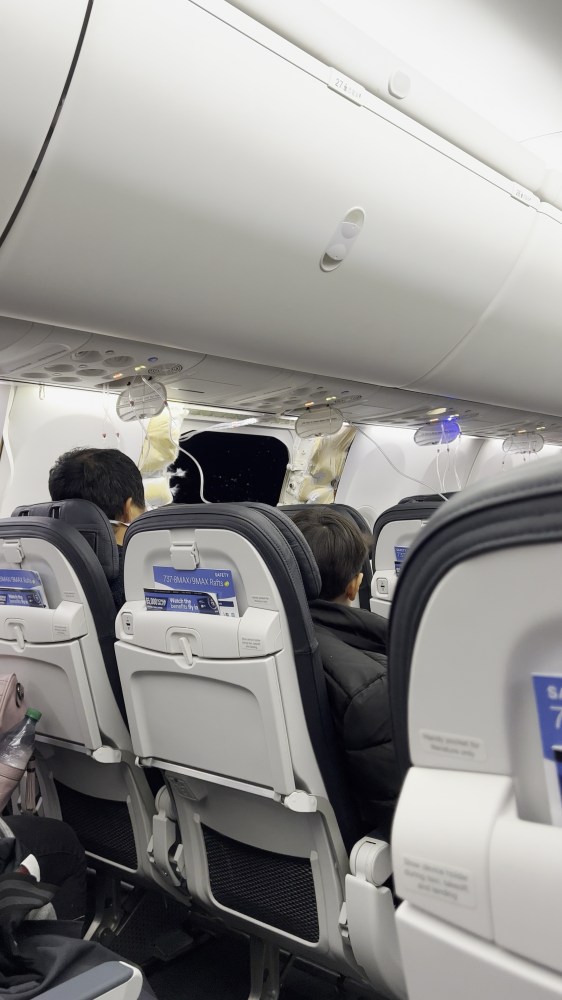
Alaska Airlines Flight 1282 was climbing out of Portland, Oregon. At 16,000 feet, a door plug blew out of the fuselage. The cabin depressurized instantly. Wind rushed through the cabin. By sheer luck, the seats next to the blowout were empty.
The National Transportation Safety Board (NTSB) investigated. They found that the door plug had been removed at Boeing’s Renton factory to fix damaged rivets. When the plug was reinstalled, Boeing workers failed to replace four critical retaining bolts.
The plane left the factory without the bolts holding the door in place.
Freefall uses the Alaska Airlines incident as the ultimate proof of its thesis. Five years after the MAX crashes, Boeing was still incapable of basic quality control. The manufacturing process was fundamentally broken.
The Whistleblowers’ Toll
The most harrowing segments of Kennedy’s documentary belong to the whistleblowers. These are the men and women who tried to warn the public.
John Barnett worked as a quality manager at Boeing’s 787 Dreamliner plant in North Charleston, South Carolina, for decades. He repeatedly raised concerns about metal shavings left near flight control wires and defective oxygen masks. Boeing ignored him.
In March 2024, Barnett was found dead in a hotel parking lot in Charleston from an apparent self-inflicted gunshot wound. He was in the middle of giving deposition testimony in a whistleblower retaliation lawsuit against Boeing.
Sam Salehpour, a Boeing quality engineer, testified before the United States Senate in April 2024. He warned that the company was taking shortcuts in assembling the 787 Dreamliner and the 777. He stated that sections of the fuselage were improperly fastened together, risking catastrophic failure as the planes aged.
Salehpour testified that his supervisors told him to shut up when he raised these concerns. He received physical threats. The culture of intimidation was a feature, not a bug.
Regulatory Capture and the FAA
A central pillar of the documentary’s argument is the failure of government oversight. The Federal Aviation Administration (FAA) is tasked with keeping the flying public safe. For years, they abdicated that responsibility.
Through a program called Organization Designation Authorization (ODA), the FAA essentially allowed Boeing to certify its own airplanes. Boeing employees acted as FAA representatives. The conflict of interest was absolute.
When the MCAS system was being developed, Boeing pressured its ODA representatives to downplay the system’s power to the FAA. The regulators signed off without understanding the risks.
Following the 2024 door plug blowout, FAA Administrator Mike Whitaker admitted the agency’s oversight had been too hands-off. The FAA capped Boeing’s production of the 737 MAX. They placed inspectors directly on the factory floors in Renton and at Spirit AeroSystems in Wichita, Kansas.
But Freefall asks a lingering question. Can a chronically underfunded federal agency truly police a $100 billion corporate behemoth that holds massive political sway in Washington?
The DOJ Steps In
In May 2024, the Department of Justice made a stunning announcement. They determined that Boeing had violated the terms of the 2021 deferred prosecution agreement. The company had failed to design, implement, and enforce a compliance and ethics program to prevent and detect violations of U.S. fraud laws.
The DOJ demanded Boeing plead guilty to criminal fraud. The company accepted a plea deal in mid-2024, agreeing to pay an additional $243.6 million fine and submit to an independent compliance monitor for three years.
For the families of the 346 victims, the fine was an insult. It amounted to a fraction of Boeing’s quarterly revenue. Paul Cassell, an attorney representing the victims’ families, called the plea deal a sweetheart deal that allowed corporate executives to escape personal accountability.
Freefall highlights this legal theater. The documentary suggests that deferred prosecution agreements and corporate fines are merely the cost of doing business. They do not deter systemic negligence. They simply price it into the quarterly earnings report.
The Supply Chain House of Cards
Kennedy also dissects the hyper-outsourced nature of modern aircraft manufacturing. Boeing does not build planes so much as it assembles parts built by thousands of subcontractors.
Spirit AeroSystems, the company that built the fuselage for the Alaska Airlines jet, was spun off from Boeing in 2005. It was a financial maneuver designed to reduce costs and shift liabilities.
The result was a fractured supply chain. Miscommunications multiplied. Quality control became a game of hot potato. Boeing eventually recognized the error of this spin-off and initiated an acquisition to bring Spirit AeroSystems back in-house in 2024. But the damage to the institutional knowledge base was already done.
Experienced engineers retired. They were replaced by cheaper, less experienced labor. The tribal knowledge of how to build a safe airplane evaporated.
The Premiere at DC/DOX
The choice to premiere Freefall at the DC/DOX festival in Washington, D.C., is heavily symbolic. The festival takes place blocks away from the Capitol, the FAA headquarters, and the Department of Justice.
The audience at the June 2026 screening included lawmakers, aviation regulators, and corporate watchdog groups. Kennedy brought the evidence directly to the doorstep of the people tasked with holding Boeing accountable.
The film serves as a cultural defense mechanism. It weaponizes documentary filmmaking to combat corporate amnesia. When the news cycle moves on from the latest mid-air emergency, Freefall ensures the underlying causes are not forgotten.
The Financial Reckoning
The consequences of these failures are staggering. Boeing has bled billions of dollars.
Airlines are furious. United Airlines CEO Scott Kirby publicly expressed his frustration with Boeing’s inability to deliver planes on time. Carriers have been forced to pause hiring and cut routes because the jets they ordered are sitting half-finished on tarmacs in Washington state.
Dave Calhoun, who took over as CEO in January 2020 with a mandate to fix the company, announced his resignation in early 2024 amid the Alaska Airlines fallout. The board of directors underwent a massive overhaul.
Yet, the stock price remains the ultimate metric for success in Arlington. Until the financial incentives change, Freefall argues, the manufacturing realities will not.
The Terminal Drop
Rory Kennedy’s documentary offers no simple solutions. There is no triumphant music at the end. There is only the stark reality of an industry that has lost its way.
The planes are still flying. The executives are still collecting bonuses. The whistleblowers are still testifying.
The passengers wait. The regulators wait. The families of the fallen wait.
Boeing.