The Statement Heard Across the Multiverse
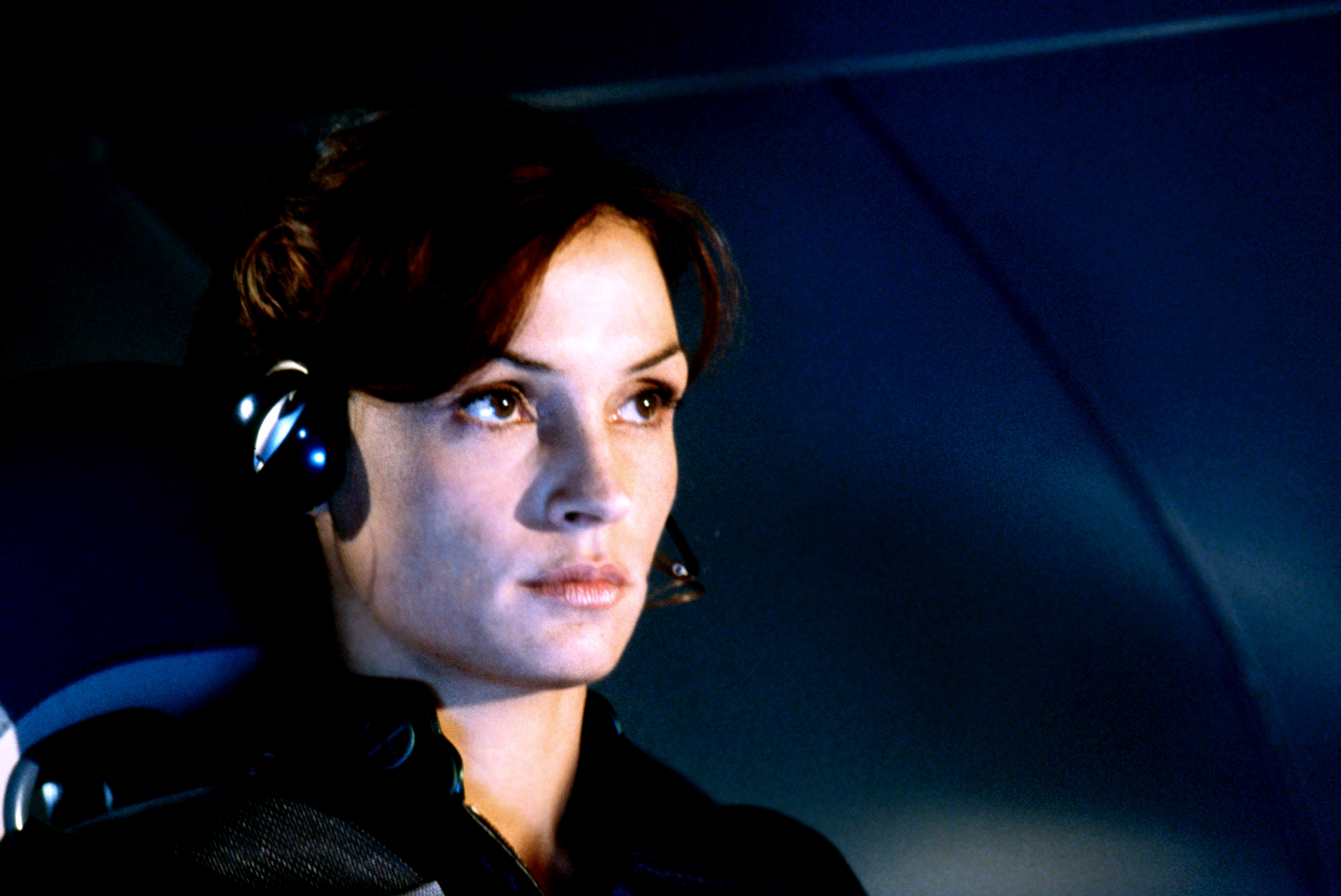
Famke Janssen, the actress who originated the live-action role of Jean Grey in 20th Century Fox’s X-Men franchise, publicly stated in June 2026 that Marvel Studios “made a mistake” by not inviting her to reprise her character in the upcoming crossover film Avengers: Doomsday.
The declaration arrived during a press tour, cutting through the usual studio-approved talking points. Janssen did not mince words. She pointed directly at the ongoing integration of legacy mutant characters into the Marvel Cinematic Universe. The actress noted her foundational role in establishing the modern superhero genre. She noted the fans who still associate her face with the Phoenix force. And she noted the silence from Marvel Studios president Kevin Feige.
For a studio that has built its recent financial strategy on the architecture of nostalgia, the omission is glaring. Marvel has spent the better part of five years opening dimensional rifts to retrieve actors from defunct cinematic timelines. Janssen’s exclusion raises questions about how the Walt Disney Company curates its legacy assets. It also exposes the friction between the human beings who build a franchise and the corporate entities that ultimately own it.
A Legacy Forged in the Year 2000
To understand the weight of Janssen’s claim, one must look back to July 14, 2000. Bryan Singer’s X-Men arrived in theaters. The superhero genre was not the dominant cultural force it is today. It was a risky financial gamble by 20th Century Fox. The film grossed $296 million worldwide. It proved that comic book adaptations could be grounded, serious, and highly profitable.
Janssen was central to that success. Her portrayal of Dr. Jean Grey provided the emotional anchor for the film. She balanced the stoicism of Patrick Stewart’s Professor Charles Xavier and the feral unpredictability of Hugh Jackman’s Wolverine. She was not a supporting player. She was a load-bearing pillar of the franchise.
She returned in 2003 for X2: X-Men United, a film that grossed $407 million globally. The climax of that movie featured Jean Grey sacrificing herself at Alkali Lake. It remains one of the most critically acclaimed sequences in comic book cinema. In 2006, she anchored X-Men: The Last Stand. The film tackled the legendary Dark Phoenix saga. Despite mixed critical reception, it pulled in $460 million. Janssen later provided pivotal cameos in The Wolverine in 2013 and X-Men: Days of Future Past in 2014. For fourteen years, she was the definitive live-action Jean Grey.
The Architecture of a Multiverse
The cinematic landscape shifted dramatically on March 20, 2019. The Walt Disney Company completed its $71.3 billion acquisition of 21st Century Fox. The rights to the X-Men, the Fantastic Four, and Deadpool reverted to Marvel Studios. Kevin Feige gained control of the board.
Marvel did not immediately reboot the mutants. Instead, they weaponized nostalgia. The studio introduced the concept of the multiverse. This narrative device allowed them to cherry-pick popular actors from previous, non-Disney franchises and fold them into the Marvel Cinematic Universe.
The strategy proved wildly lucrative. In December 2021, Spider-Man: No Way Home brought back Tobey Maguire and Andrew Garfield. The film grossed $1.9 billion. In May 2022, Doctor Strange in the Multiverse of Madness featured Patrick Stewart returning as Professor X. In November 2023, Kelsey Grammer reprised his role as Beast in the post-credits scene of The Marvels. And in July 2024, Deadpool & Wolverine shattered box office records by pairing Ryan Reynolds with a returning Hugh Jackman.
The precedent was set. If an actor helped build a Marvel property in the early 2000s, a lucrative return cameo was on the table. The multiverse was an open door. But for Famke Janssen, the door remained shut.
The “Doomsday” Calculations
This brings the timeline to 2026. Avengers: Doomsday is currently the crown jewel of Marvel’s Phase 6 slate. Directed by Anthony and Joe Russo, the film is designed to be a massive crossover event. It features Robert Downey Jr. returning to the franchise, this time portraying the villainous Victor Von Doom. The stakes are existential. The budget is astronomical. The cast list is a closely guarded secret.
Rumors have circulated for months that Doomsday will feature a coalition of heroes from across the multiverse. Fans expected the original X-Men cast to assemble one last time before Marvel formally reboots the mutant team with new, younger actors. Janssen’s public statement shatters that expectation. If she was not asked to return, it signals a specific editorial choice by Marvel Studios.
The Sophie Turner Factor
Complicating matters is the existence of a second cinematic Jean Grey. In 2016, 20th Century Fox cast Sophie Turner to play a younger version of the character in X-Men: Apocalypse. Turner reprised the role in 2019’s Dark Phoenix. That film was a critical and commercial failure. It grossed just $252 million against a $200 million production budget. It marked a bitter end to the Fox era of mutants.
Marvel Studios operates with ruthless precision. Kevin Feige is known for distancing his brand from recent cinematic failures. While Janssen’s era of X-Men is viewed through a lens of fond nostalgia, the character of Jean Grey carries the recent baggage of the 2019 flop. Industry analysts suggest Marvel may be resting the character entirely to cleanse the palate before a complete reboot.
The Economics of Nostalgia
There is also a financial reality to consider. Avengers: Doomsday is already carrying an unprecedented talent budget. Robert Downey Jr.’s return commands a massive salary. The Russo Brothers demand premium compensation. Bringing back legacy actors is not cheap.
Actors of Janssen’s caliber, with established ties to billion-dollar intellectual property, require significant negotiation. They require favorable scheduling. They require backend compensation. The Walt Disney Company, under the mandate of CEO Bob Iger, has spent the last two years aggressively cutting costs across its entertainment divisions. Marvel Studios has been instructed to reduce its output and tighten its budgets. Every cameo must be mathematically justified by the box office bump it provides.
Hugh Jackman moves the needle. Patrick Stewart moves the needle. The studio executives in Burbank clearly ran the numbers and determined that Famke Janssen’s Jean Grey did not offer a sufficient return on investment for Avengers: Doomsday. Janssen’s assertion that this is a “mistake” is a direct challenge to that corporate calculus.
Accountability in the IP Era
Janssen’s comments tap into a broader anxiety within the entertainment industry. We are living in the era of supreme intellectual property. The character is king. The actor is merely a temporary vessel.
In the 1990s, movie stars sold tickets. Tom Cruise, Julia Roberts, and Will Smith were the draw. Today, the brand sells the tickets. Audiences show up for the Marvel logo. They show up for the Batman emblem. The studios know this. They hold the leverage.
When a studio acquires a legacy franchise, they acquire the history of the actors who built it. But they have no legal or moral obligation to employ those actors again. Famke Janssen spent a decade and a half giving life to Jean Grey. She endured the grueling makeup processes. She participated in the exhausting global press tours. She helped build the foundation upon which Kevin Feige now stands. Yet, when the ultimate reunion was scheduled, her phone did not ring.
It is a stark reminder of the transactional nature of Hollywood. An actor can define a character for a generation. They can become synonymous with a beloved hero. But they do not own the copyright. When the corporation decides to move on, the actor is left behind.
The Final Verdict on the Phoenix
Whether Marvel actually made a mistake will be determined by the box office receipts of Avengers: Doomsday. If the film clears two billion dollars, the absence of Famke Janssen will be a footnote in Hollywood trade publications. If the film underperforms, fans will inevitably point to the missing pieces of the legacy puzzle.
Janssen has moved forward. Her career spans decades of independent film, television, and other studio projects. She does not need the Marvel Cinematic Universe to validate her resume. But her willingness to speak publicly about the slight is rare in an industry that usually demands quiet compliance from its veterans.
She planted her flag. She claimed her legacy. She reminded the public who built the house.
The fans watched. The executives calculated. The multiverse expanded. Without the Phoenix.