
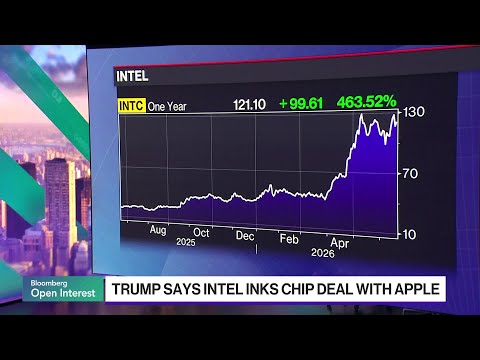
In 2024, former President Donald Trump asserted that Intel Corporation would commence manufacturing chips for Apple Inc. within the United States. This declaration, made during a period of heightened focus on domestic industrial policy, positioned the alleged agreement as a significant step toward bolstering American economic defense and reducing reliance on foreign supply chains for critical technology components. The statement quickly became a point of discussion among industry analysts, policymakers, and the public, given the intricate global landscape of semiconductor production.
The announcement from Donald Trump reignited a long-standing debate. This debate centers on the necessity and feasibility of bringing advanced manufacturing, particularly in the semiconductor sector, back to American soil. The United States government, under both Republican and Democratic administrations, has increasingly recognized semiconductors as a strategic national asset. Their importance extends beyond consumer electronics to military applications, artificial intelligence, and critical infrastructure.
The Global Semiconductor Landscape
The semiconductor industry operates on a profoundly globalized model. Design, fabrication, assembly, testing, and packaging often occur in different countries. Taiwan Semiconductor Manufacturing Company (TSMC) dominates the leading edge of chip fabrication. TSMC is the primary supplier for Apple’s most advanced processors, including the A-series chips for iPhones and M-series chips for Macs.
This reliance on a single, geopolitically sensitive region, Taiwan, has raised significant concerns. These concerns intensified during the COVID-19 pandemic. Supply chain disruptions exposed vulnerabilities across numerous industries. These disruptions underscored the need for more diversified and resilient manufacturing capabilities, especially for semiconductors.
Intel, historically a leader in chip manufacturing, has faced challenges in recent years. The company has struggled to keep pace with TSMC’s advancements in process technology. However, Intel has embarked on an aggressive strategy to regain its manufacturing edge. This strategy includes massive investments in new fabrication plants, or ‘fabs,’ within the United States and Europe.
Intel’s Reshoring Efforts and US Investment
Intel has committed billions of dollars to expand its manufacturing footprint in the United States. In Arizona, Intel is investing approximately $20 billion to build two new fabs, designated Fab 52 and Fab 62, at its Ocotillo campus. These facilities are expected to create thousands of high-paying jobs and significantly increase domestic chip production capacity.
Furthermore, Intel announced plans in January 2022 to invest more than $20 billion in two new leading-edge chip factories in Ohio. This project, located near Columbus, represents the largest single private sector investment in Ohio’s history. The Ohio fabs are projected to create 3,000 Intel jobs and 7,000 construction jobs. They aim to establish a new ‘Silicon Heartland’ in the Midwest.
These investments align with the broader objectives of the CHIPS and Science Act. This bipartisan legislation, signed into law by President Joe Biden in August 2022, allocates $52.7 billion to boost domestic semiconductor research, development, and manufacturing. The act aims to strengthen American competitiveness, innovation, and national security.
Apple’s Manufacturing Strategy
Apple’s strategic decisions regarding chip manufacturing are complex. The company has long prioritized access to the most advanced process technology available. This has consistently led them to TSMC, which has maintained a technological lead in producing the smallest, most power-efficient chips. Shifting this production to a different foundry, especially one that may not yet offer comparable cutting-edge processes, represents a significant undertaking.
Apple has, however, expressed support for domestic manufacturing. In 2022, Apple CEO Tim Cook confirmed that Apple would be a customer of TSMC’s new Arizona plant. This plant is under construction and expected to begin production in 2024. While this represents a step towards US-based chip sourcing, it is still TSMC manufacturing, not Intel.
The specific details of any potential Intel-Apple chip manufacturing deal, as alluded to by Donald Trump, remained largely unconfirmed by either company. Industry analysts noted that for such a deal to materialize, Intel would need to demonstrate its ability to produce chips at a technological node comparable to TSMC’s leading edge. This would also require Intel to meet Apple’s stringent quality, cost, and volume requirements.
The Politics of Economic Nationalism
Donald Trump’s statement about Intel and Apple chips fits within a broader political narrative of economic nationalism. This ideology emphasizes prioritizing domestic industries, jobs, and economic self-reliance. During his presidency, Trump advocated for policies aimed at bringing manufacturing jobs back to the United States. He often critiqued companies for offshoring production.
The semiconductor industry became a focal point for these discussions due to its strategic importance. The idea of ‘Made in America’ chips resonates with voters concerned about economic security and global competition. The political appeal of such announcements is significant, regardless of the immediate logistical or technological feasibility.
The claim also highlights the ongoing interplay between government policy, corporate strategy, and international relations. Governments around the world are actively competing to attract semiconductor investments. They offer substantial incentives and subsidies to secure a piece of this critical industry. The United States, through the CHIPS Act, is a prominent player in this global competition.
Challenges and Opportunities for Domestic Chip Production
Technological Hurdles
Bringing advanced chip manufacturing back to the US faces several challenges. One primary hurdle is the sheer complexity and capital intensity of modern fabs. Building and equipping a single leading-edge fab can cost tens of billions of dollars. The technological expertise required is immense, demanding a highly skilled workforce.
Maintaining a technological lead is also a continuous race. Process nodes shrink every few years, requiring constant research, development, and investment. Intel’s current roadmap aims to regain process parity and leadership, but this is a multi-year effort.
Workforce Development
Another significant challenge is workforce development. The US needs a robust pipeline of engineers, technicians, and skilled labor to staff these new fabs. Educational institutions and industry must collaborate to train the next generation of semiconductor professionals. Programs are emerging to address this gap, but it will take time to build the necessary talent pool.
Economic Viability
The economic viability of domestic chip production is also a concern. Manufacturing costs in the US are generally higher than in Asia. This is due to labor costs, regulatory environments, and other factors. Government subsidies, like those provided by the CHIPS Act, are designed to offset these cost differentials and make US production more competitive.
Despite these challenges, the opportunities are substantial. Increased domestic production enhances national security. It reduces vulnerability to geopolitical shocks and supply chain disruptions. It also fosters innovation, creates high-value jobs, and strengthens the US position as a global technology leader.
The Future of American Semiconductors
The push for domestic semiconductor manufacturing is a long-term strategic imperative for the United States. While Donald Trump’s specific claim about an Intel-Apple deal generated immediate headlines, it underscored a broader national commitment. This commitment aims to rebuild and expand the US’s capacity for producing advanced chips.
Companies like Intel, TSMC (with its Arizona plant), and Samsung (with its Texas plant) are making significant investments in the US. These investments are critical steps toward a more resilient and geographically diversified semiconductor supply chain. The success of these initiatives will depend on sustained government support, continued private sector investment, and a dedicated focus on technological innovation and workforce development.
The geopolitical landscape continues to evolve. The importance of technological independence will only grow. The United States aims to secure its future in the digital age. This requires a robust, domestic semiconductor ecosystem. The discussions initiated by claims such as Donald Trump’s contribute to this ongoing national dialogue.
Why Domestic Chip Manufacturing Matters for National Security
The argument for domestic chip manufacturing extends beyond mere economic considerations. It is fundamentally a matter of national security. Modern military systems, from advanced fighter jets to cybersecurity infrastructure, rely heavily on cutting-edge semiconductors. A disruption in the supply of these chips could severely compromise national defense capabilities.
Moreover, the ability to control the supply chain for critical components ensures that chips used in sensitive applications are free from tampering or vulnerabilities. This ‘trusted foundry’ concept is paramount for government and defense contractors. Relying on foreign manufacturers, particularly from potential adversaries, introduces inherent risks.
The US government has identified semiconductors as a key area for strategic investment. This identification reflects a recognition that economic power and national security are increasingly intertwined in the 21st century. The ability to design and manufacture the most advanced chips is a cornerstone of geopolitical influence.
The Role of Government Incentives
Government incentives, such as the CHIPS and Science Act, are crucial for catalyzing domestic semiconductor production. Without these subsidies, the higher costs associated with manufacturing in the US would make it difficult for companies to compete globally. The act provides grants, tax credits, and other support mechanisms to encourage investment.
These incentives are not unique to the US. Countries and regions worldwide, including the European Union, Japan, and South Korea, have implemented similar programs. This global competition for semiconductor investment highlights the strategic value placed on the industry by major economic powers. The US strategy aims to ensure American companies can compete effectively and secure a significant share of future production.
The long-term success of these incentive programs will be measured not just by the number of fabs built, but by the creation of a sustainable, innovative, and competitive domestic semiconductor ecosystem. This includes not only manufacturing but also research, development, and a skilled workforce.
Policymakers debated. Industry leaders calculated. Workforce programs initiated. A new era for American manufacturing.
Semiconductors.