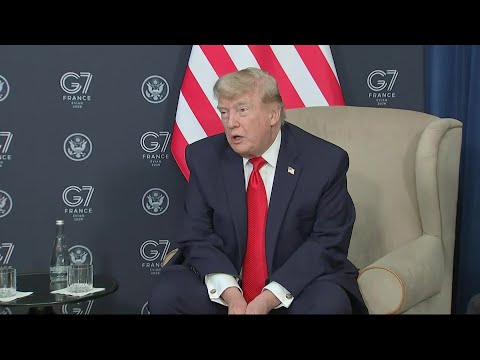
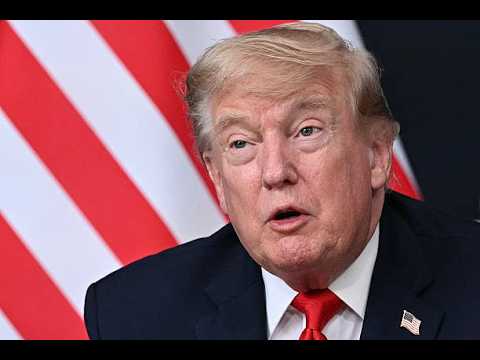
Former President Donald Trump publicly stated that Israeli Prime Minister Benjamin Netanyahu should exhibit greater responsibility in his dealings with Lebanon. The comments, made during an interview, focused on the potential for regional escalation and referenced past conflicts. Trump’s remarks signify a notable divergence in public discourse from historical U.S. support for Israeli policy, particularly concerning actions along its northern border.
This assertion by a former U.S. head of state introduces a complex dimension to international relations. It suggests a critical perspective on leadership decisions in a highly volatile geopolitical landscape. The implications extend beyond rhetoric, touching upon strategic alliances and the pursuit of regional stability.
The Context of Trump’s Remarks
Donald Trump’s statements emerged amidst heightened tensions in the Middle East. The region has experienced significant instability, particularly following recent events involving Israel and its neighbors. Observers note that such public admonishments are uncommon from former U.S. presidents regarding Israeli leadership.
The specific reference to the 2006 Israel-Lebanon conflict served as a cautionary tale. That 34-day military confrontation resulted in significant casualties and infrastructure damage on both sides. Trump’s invocation of this history implies a concern that current strategies might lead to a similar, or even more severe, outcome.
The 2006 Israel-Lebanon Conflict
The 2006 conflict began on July 12, 2006, with a cross-border raid by Hezbollah. Two Israeli soldiers were captured, and eight were killed. Israel responded with extensive air strikes and a ground invasion of southern Lebanon. Hezbollah, a Lebanese Shi’a Islamist political party and militant group, retaliated with rocket attacks into northern Israel.
The conflict lasted until August 14, 2006, when a United Nations-brokered ceasefire went into effect. Resolution 1701 of the UN Security Council called for a full cessation of hostilities. Estimates of fatalities varied, but Lebanese sources reported over 1,100 Lebanese deaths, mostly civilians, and Israeli sources reported 165 Israeli deaths, including 44 civilians.
The war caused widespread destruction in Lebanon, particularly in the south and parts of Beirut. It also led to significant displacement of populations. The economic impact was substantial, with reconstruction efforts costing billions of dollars.
Netanyahu’s Role and Historical Perspective
Benjamin Netanyahu has served multiple terms as Israel’s Prime Minister, first from 1996 to 1999, and then continuously since 2009, making him the longest-serving prime minister in Israeli history. His tenure has been marked by a consistent focus on national security. This includes confronting threats from various regional actors, including Hezbollah in Lebanon.
Netanyahu’s approach to national security is often characterized by a strong stance against perceived threats. His political career has been defined by a commitment to protecting Israeli borders and citizens. This perspective frequently leads to robust military responses to aggression.
U.S. Presidential Relations with Netanyahu
Relations between U.S. presidents and Benjamin Netanyahu have been varied. Historically, U.S. administrations have maintained a strong alliance with Israel, providing significant military and financial aid. However, disagreements have emerged at different points.
During the Obama administration, tensions arose over the Iran nuclear deal, which Netanyahu strongly opposed. President Obama and Netanyahu had a famously strained relationship. Conversely, the Trump administration saw a period of close alignment, with significant policy shifts such as the relocation of the U.S. embassy to Jerusalem in 2018 and the recognition of Israeli sovereignty over the Golan Heights in 2019.
Trump’s recent comments therefore represent a shift from his own previous public posture toward Netanyahu. This shift suggests a re-evaluation of regional strategy or a desire to project a more balanced approach to the intricate conflicts of the Middle East.
The Broader Implications of Escalation
An escalation of conflict between Israel and Lebanon carries significant regional and international implications. The Middle East is a geopolitical flashpoint, with numerous state and non-state actors vying for influence. A full-scale war could draw in other nations, leading to a wider regional conflagration.
Such a conflict would inevitably impact global energy markets. The region is a major oil producer, and disruptions could lead to spikes in crude oil prices, affecting economies worldwide. Furthermore, humanitarian crises, including mass displacement and refugee flows, would likely intensify.
International Responses and Diplomacy
International bodies, such as the United Nations, consistently advocate for de-escalation and peaceful resolution. Various diplomatic efforts have been deployed over decades to manage the Israel-Lebanon border. The UN Interim Force in Lebanon (UNIFIL) has been stationed in southern Lebanon since 1978, tasked with monitoring the border and ensuring the cessation of hostilities.
The prospect of renewed conflict often triggers swift diplomatic interventions from major global powers. These interventions typically aim to prevent a full-blown war through negotiation, sanctions, or the deployment of peacekeeping forces. The United States, due to its historical ties and strategic interests, often plays a central role in these diplomatic endeavors.
Domestic Political Considerations in the U.S.
Donald Trump’s comments also carry domestic political weight within the United States. Foreign policy statements by presidential candidates or former presidents often resonate with specific voter bases. These remarks can influence public opinion on international affairs and the role of the U.S. abroad.
For some, Trump’s call for responsibility might be seen as a pragmatic approach to foreign policy, prioritizing de-escalation. For others, it could be viewed as a departure from traditional Republican support for Israel. The comments will likely fuel debate among foreign policy experts and political commentators.
The Role of Presidential Rhetoric
Presidential rhetoric, whether from an incumbent or a former officeholder, significantly shapes national and international perceptions. Such statements are analyzed for their potential impact on diplomatic relations, military strategies, and economic stability. When a former president criticizes a key ally, it can send ripples through global diplomatic circles.
The words of a former U.S. President are often interpreted as reflecting a potential future policy direction, especially if that individual is considering another presidential run. This adds a layer of scrutiny to any public pronouncements on sensitive international issues.
The Future of Israel-Lebanon Relations
The relationship between Israel and Lebanon remains highly volatile. The two nations are technically still at war, with no formal peace agreement. The presence of Hezbollah, a powerful non-state actor with significant military capabilities, complicates any efforts toward lasting peace.
Hezbollah’s influence in Lebanese politics and its military arsenal, largely supplied by Iran, pose a continuous challenge to Israeli security. Any future conflict could involve advanced weaponry and tactics, potentially leading to a more destructive outcome than previous engagements.
Paths to De-escalation
De-escalation efforts typically involve multiple pathways. These include direct or indirect negotiations facilitated by international mediators, confidence-building measures, and clear communication channels to prevent misunderstandings. Economic incentives and disincentives can also play a role in influencing regional actors.
The international community consistently seeks to reinforce the authority of the Lebanese state. This is seen as crucial for controlling non-state actors and ensuring adherence to international resolutions. However, Lebanon’s internal political and economic fragilities often complicate these efforts.
Farmers gathered. Soldiers gathered. Diplomats gathered. Leaders gathered. The world watched. The tension built. A former president spoke. Responsibility.
FAQ Section
-
What did Donald Trump say about Benjamin Netanyahu and Lebanon?
Donald Trump stated that Israeli Prime Minister Benjamin Netanyahu should be more responsible in his approach to Lebanon, referencing the 2006 Israel-Lebanon conflict as a mistake that should not be repeated. -
Why did Trump reference the 2006 Israel-Lebanon conflict?
Trump referenced the 2006 conflict to illustrate the potential negative consequences of military escalation in the region, suggesting that a similar outcome would be undesirable and could lead to wider instability. -
What are the potential implications of renewed conflict between Israel and Lebanon?
Renewed conflict between Israel and Lebanon could lead to significant regional instability, humanitarian crises, and disruptions to global energy markets, potentially drawing in other state and non-state actors. -
How has Benjamin Netanyahu’s relationship with U.S. presidents evolved?
Benjamin Netanyahu has experienced varied relationships with U.S. presidents, including strained periods with Barack Obama and close alignment with Donald Trump, though Trump’s recent comments indicate a shift in public rhetoric. -
What is the role of Hezbollah in the Israel-Lebanon dynamic?
Hezbollah is a powerful Lebanese Shi’a Islamist political party and militant group that significantly influences Lebanese politics and poses a continuous security challenge to Israel due to its military capabilities, often complicating de-escalation efforts.