
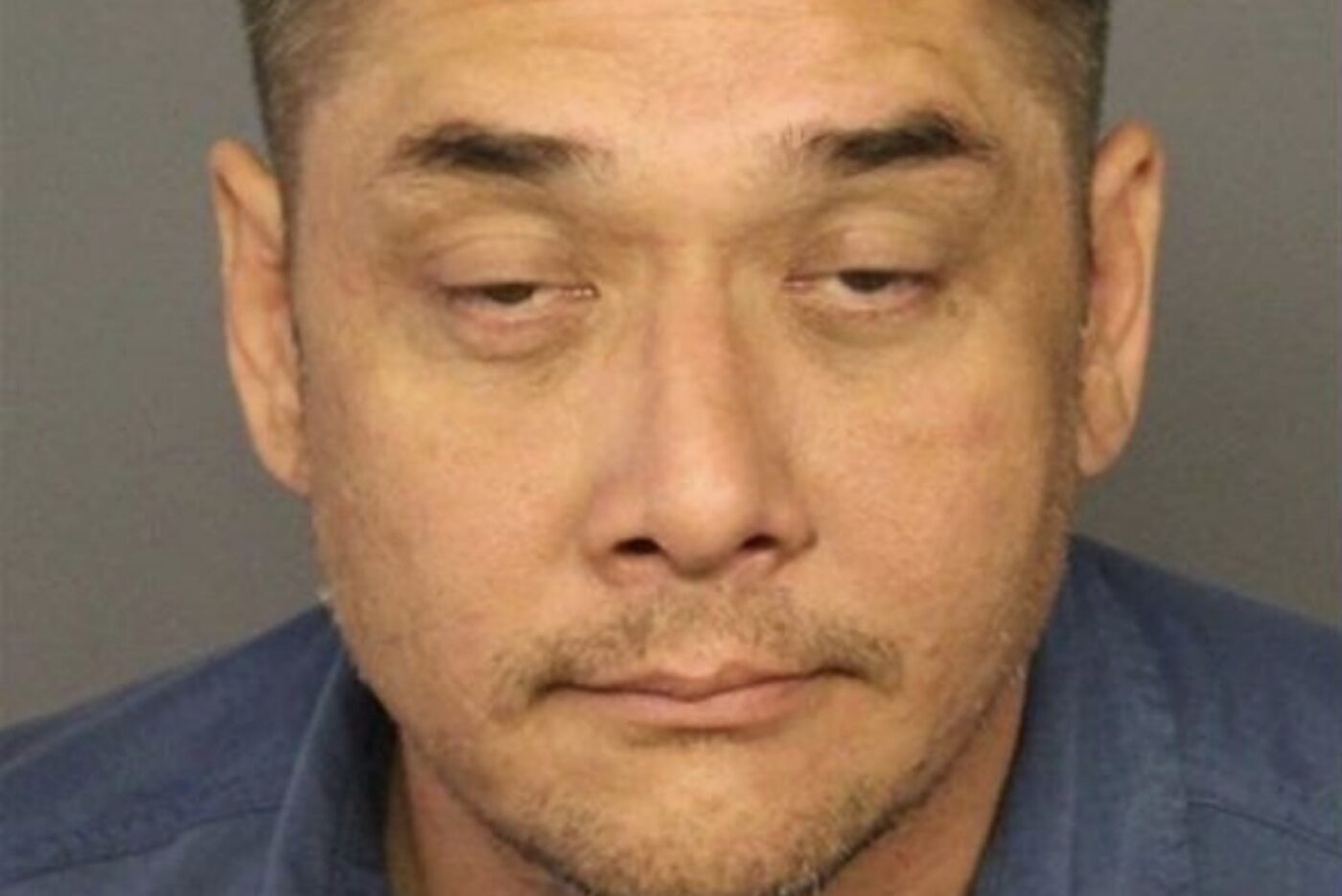
On June 14, 2026, Aaron William Apostol, the estranged half-brother of Grammy-winning bluegrass musician Billy Strings, was convicted of second-degree murder in Denver District Court for the October 2024 shooting of local guitarist Elias Thorne. The verdict arrived after just four hours of jury deliberation. The decision brings a definitive legal close to a tragedy that shook the Colorado music community and cast a localized shadow over one of modern bluegrass music’s biggest names.
The outcome bridges a localized tragedy with the periphery of international music stardom. Thorne was a staple of the Denver jam band circuit. Apostol was a man living quietly, and troubled, in the background. The intersection of those two lives ended violently on a sidewalk off Colfax Avenue. Now, the legal system has provided its final assessment.
The Verdict in Denver District Court
Judge Marian Reston presided over the two-week trial. The courtroom in downtown Denver remained packed throughout the proceedings. Local musicians filled the gallery. National music journalists occupied the back rows. The presence of a famous sibling hovered over the docket, though Billy Strings himself was never present.
The jury found Apostol guilty of second-degree murder and illegal discharge of a firearm. They acquitted him of the more severe charge of first-degree murder, indicating they did not believe the act was premeditated. The distinction carries massive sentencing implications. Apostol now faces between 16 and 48 years in the Colorado Department of Corrections.
Deputy District Attorney Samuel Vance delivered the closing arguments for the state. Vance painted a picture of a sudden, senseless escalation. He relied heavily on surveillance footage and eyewitness testimony. The defense, led by Denver attorney Marcus L. Corcoran, argued self-defense. The jury rejected that narrative.
The clerk read the verdict at 2:14 p.m. Apostol showed no visible emotion. The family of Elias Thorne wept quietly in the front row. The gavel sounded. The deputies moved in. Apostol was remanded to custody without bail pending his August sentencing date.
The Night on Colfax Avenue
The timeline of October 12, 2024, is now a matter of public record. The events unfolded rapidly in the early hours of a Sunday morning.
Elias Thorne had just finished a gig at The Bluebird Theater. He was 34 years old. He was carrying his custom Martin acoustic guitar in a hard case. He walked west down Colfax Avenue toward a late-night diner. Apostol was already at the diner. The two men did not know each other prior to that night. There was no deep-seated rivalry. There was only proximity.
Security cameras captured the initial interaction. It occurred at 1:45 a.m. The footage shows a brief verbal altercation outside the diner’s entrance. The audio is unavailable, but witnesses testified that the dispute began over a spilled drink and escalated into a shouting match. Thorne turned to walk away. Apostol followed.
- 1:45 a.m. – The initial verbal altercation occurs outside the diner.
- 1:48 a.m. – Thorne walks away, heading toward his parked vehicle on a side street.
- 1:51 a.m. – Apostol pursues Thorne down the poorly lit street.
- 1:53 a.m. – Three gunshots are recorded on a nearby residential security camera.
Denver Police arrived at 1:58 a.m. They found Thorne unresponsive on the pavement. He was pronounced dead at Denver Health Medical Center at 2:30 a.m. Apostol was apprehended three blocks away. He still possessed the 9mm handgun used in the shooting. The weapon was legally registered in his name.
Two Paths Diverged
The juxtaposition of the two brothers is stark. Billy Strings, born William Lee Apostol, has spent the last decade ascending to the absolute pinnacle of acoustic music. He sells out arenas. He wins Grammy Awards. He collaborates with Willie Nelson and Post Malone. He represents a generational talent who pulled himself out of poverty and addiction through sheer musical force.
Aaron Apostol walked a different road. The brothers shared a turbulent early life in Michigan, marked by the systemic poverty and substance abuse that Billy Strings has frequently chronicled in his songwriting. But while William found the guitar, Aaron found different coping mechanisms.
Court records and background interviews reveal a man who struggled to hold steady employment. Aaron moved to Colorado in 2018. He worked sporadic construction jobs in Aurora and Commerce City. He had minor run-ins with local law enforcement, mostly misdemeanor public intoxication charges. Nothing in his record suggested impending lethal violence.
“The tragedy of this case is the randomness of it. Two men from entirely different worlds, colliding on a sidewalk in Denver. One man loses his life. The other loses his freedom. And a famous name gets dragged into the headline. But the name didn’t pull the trigger.”, Deputy District Attorney Samuel Vance, closing statements.
The brothers had been entirely estranged for over a decade. Representatives for Billy Strings confirmed to the press early in the investigation that the musician had not spoken to his half-brother since 2014. There was no financial support. There was no relationship. The connection was purely biological and historical.
The Trial and the Testimony
The trial began on June 1, 2026. The prosecution’s case was methodical. They did not need to prove intent for first-degree murder, but they needed to prove that Apostol knowingly caused the death of another person without the justification of self-defense.
The medical examiner, Dr. Aris Thorne (no relation to the victim), testified on day three. The autopsy revealed two gunshot wounds. One struck Elias Thorne in the shoulder. The fatal shot struck his chest. The trajectory of the bullets, Dr. Thorne explained, indicated that the victim was turning away when the final shot was fired. This forensic detail severely damaged the defense’s claim that Apostol was facing an imminent, deadly threat.
The defense called only two witnesses. They attempted to portray Elias Thorne as the aggressor. They highlighted Thorne’s own blood alcohol level that night, which was slightly above the legal driving limit. Attorney Corcoran argued that Apostol felt threatened by the heavy guitar case Thorne was swinging during the argument.
The jury did not buy it. The security camera footage, though grainy, showed Apostol closing the distance between them. The legal standard for self-defense in Colorado requires a reasonable belief of imminent serious bodily injury or death. The jury determined that an argument over a spilled drink did not meet that threshold.
Remembering Elias Thorne
While the national media focused on the famous sibling, the local media focused on the victim. Elias Thorne was not a superstar, but he was the glue of a specific community.
He moved to Denver from Austin, Texas, in 2015. He was a session musician. He played pedal steel, mandolin, and acoustic guitar. He taught lessons at a local music shop in Englewood. He was known for his patience, his encyclopedic knowledge of Tony Rice solos, and his willingness to play for free at local charity events.
Following his death, the Denver music scene mobilized. A tribute concert at the Ogden Theatre raised over $45,000 for Thorne’s aging parents. Local luthiers auctioned off custom instruments. The community demanded justice, not because of who the shooter was related to, but because of who the victim was.
His absence leaves a hole in the Tuesday night bluegrass jams at local breweries. It leaves a roster of students without their mentor. The trial provided a verdict, but it did not provide a replacement for the music that was lost.
The Ripple Effect in the Industry
The bluegrass and jam band communities are notoriously tight-knit. The news of the arrest in 2024 sent shockwaves through message boards and festival campgrounds. The tension was palpable. How do fans reconcile their love for an artist with the actions of his estranged family member?
The consensus has largely been one of separation. Fans and fellow musicians have rallied around Billy Strings, recognizing that the actions of an estranged half-brother do not reflect on the artist. Strings has maintained a strict public silence on the matter. He has not issued a statement. He has not mentioned it from the stage. He has continued to tour, play, and record.
Public relations experts note that this is the only viable strategy. To speak on it is to invite the tragedy into his own narrative. To remain silent is to let the legal system handle its own business. The separation of the artist from the relative is complete.
Looking Toward Sentencing
Judge Reston has scheduled the sentencing hearing for August 12, 2026. The prosecution has indicated they will seek a sentence in the upper range of the 16 to 48-year guideline, citing the senseless nature of the pursuit and the lack of remorse shown during the trial.
The defense is expected to argue for the minimum, citing Apostol’s lack of a prior violent criminal record and his struggles with mental health and substance abuse, which were briefly alluded to during the trial but not formally entered as an insanity defense.
Victim impact statements will be read. Elias Thorne’s mother is expected to travel from Texas to address the court. Apostol will be given the opportunity to speak. The final chapter of the legal process is imminent.
The story of the two brothers from Michigan has reached its final divergence. One stands under the bright lights of stadium stages, holding a guitar. The other sits in a cell at the Denver County Jail, waiting to find out how many decades he will spend behind bars. The contrast is absolute. The tragedy is permanent.