
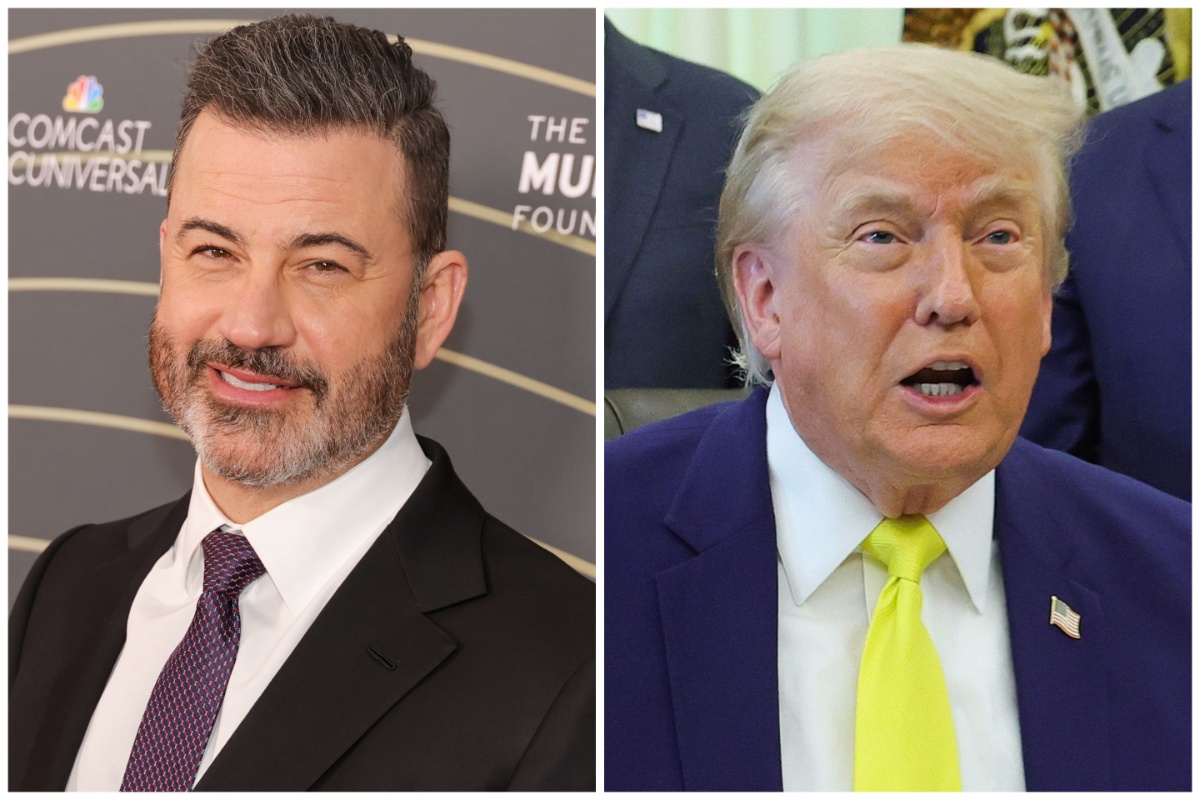
On June 14, 2026, ABC late-night host Jimmy Kimmel marked Donald Trump’s 80th birthday by broadcasting a custom-designed, Jeffrey Epstein-inspired birthday card during his opening monologue on Jimmy Kimmel Live!. The segment immediately triggered a polarized cultural response, blending late-night comedy with the dark legacy of the convicted sex offender. The broadcast utilized historical photographs of Trump and Epstein from the 1990s, weaponizing the past social association between the two men for political satire.
The visual landed exactly as intended. The studio audience at the El Capitan Entertainment Centre in Hollywood erupted. Social media platforms fractured along predictable partisan lines. Variety reported on the segment within hours, cementing its status as a viral media event.
But the story does not begin with a single monologue in 2026. What looks like a spontaneous late-night joke is actually the culmination of a decade-long media war. It is a story about the changing mechanics of television, the weaponization of scandal, and the total collapse of the neutral American broadcaster.
The Broadcast from Hollywood
The mechanics of the modern late-night monologue are highly engineered. The writing staff of Jimmy Kimmel Live! works hours before the 11:35 PM EST broadcast to isolate the day’s most flammable political topics. On June 14, the target was obvious.
Donald Trump’s birthday has long served as a focal point for both his supporters and his political detractors. Kimmel chose to bypass traditional political critiques regarding policy or legal battles. Instead, he reached for the most radioactive cultural figure of the 21st century.
Jeffrey Epstein died at the Metropolitan Correctional Center in Manhattan on August 10, 2019. His legacy as a financier and convicted sex offender continues to cast a long shadow over global elites. By linking Trump’s milestone birthday to Epstein, Kimmel bypassed standard comedy. He deployed a deliberate, associative attack.
The card displayed during the broadcast featured well-documented imagery. It relied on photographs taken at Mar-a-Lago and various Manhattan social events during the late 1990s and early 2000s. These images show Trump and Epstein in close proximity, often accompanied by Ghislaine Maxwell.
Kimmel delivered the punchline with practiced precision. The camera cut to the custom graphic. The joke was brief. The cultural fallout was immediate.
A Decade of Hostility
Jimmy Kimmel and Donald Trump were not always adversaries. During the early 2000s, Trump was a frequent guest on late-night television. He promoted The Apprentice, discussed real estate deals, and participated in lighthearted banter. The relationship was transactional and mutually beneficial.
The dynamic fractured permanently in 2015. When Trump descended the escalator at Trump Tower to announce his presidential campaign, the late-night ecosystem shifted. By the time Trump assumed the presidency in January 2017, hosts like Kimmel, Stephen Colbert, and Seth Meyers had transformed their programs into nightly opposition broadcasts.
The feud between Kimmel and Trump became deeply personal. It transcended standard political satire. Trump frequently targeted Kimmel on Twitter, and later on Truth Social. He mocked Kimmel’s ratings. He criticized his hosting abilities. He labeled the comedian a partisan hack.
Kimmel returned fire consistently. He dedicated vast portions of his nightly monologues to dissecting Trump’s administration. The conflict reached a historic peak on March 10, 2024.
“Has there ever been a worse host than Jimmy Kimmel at the Oscars?”
Trump posted that question on Truth Social during the 96th Academy Awards. Kimmel, hosting the live broadcast on ABC, read the post to a global audience of nearly 20 million viewers. He followed it with a direct jab at Trump’s legal troubles. The exchange proved that the feud had become a permanent fixture of American pop culture.
The 2026 birthday card was simply the latest ammunition in an ongoing war. It was designed to provoke. It succeeded.
The Epstein Association as Political Weapon
The use of Jeffrey Epstein as a comedic weapon requires specific context. Epstein was a fixture of high society. His contact book, often referred to as the “black book,” contained the names of politicians, scientists, actors, and billionaires.
Both Bill Clinton and Donald Trump had documented social interactions with Epstein. This bipartisan proximity made Epstein a unique figure in modern political warfare. Opposing political camps frequently use Epstein’s memory to attack their rivals.
For Kimmel, the strategy was clear. The visual evidence of Trump and Epstein socializing in Palm Beach provides undeniable fodder. Trump’s defenders routinely point out that Trump banned Epstein from Mar-a-Lago after a dispute over real estate, long before Epstein’s 2008 conviction in Florida.
Late-night comedy does not concern itself with nuanced timelines. It concerns itself with impact. The image of the two men laughing together in the 1990s is a potent visual. Kimmel’s writing team understood the algorithm. They knew the image would generate millions of impressions across X, TikTok, and YouTube.
The birthday card was not just a prop. It was a calculated piece of viral engineering.
The Economics of Outrage
Late-night television is an expensive enterprise. Producing five hours of original content a week requires massive capital. In 2026, linear television ratings continue to decline. Networks like ABC, owned by The Walt Disney Company, rely heavily on digital distribution to justify the costs.
A standard monologue joke might generate a few hundred thousand views on YouTube. A highly polarized, controversial attack generates millions. It drives engagement. It forces media outlets like Variety to write aggregation pieces. It creates a self-sustaining news cycle.
The Epstein birthday card was engineered for this ecosystem. The moment it aired, it was clipped and distributed. Conservative commentators shared the clip to express outrage, accusing Kimmel of crossing a line of decency. Progressive commentators shared the clip to applaud Kimmel’s willingness to attack the former president aggressively.
Both reactions serve the same master. Both reactions generate ad revenue. Both reactions keep Jimmy Kimmel relevant in a fractured media landscape.
- The Linear Broadcast: Captured the older, traditional television demographic.
- The YouTube Upload: Captured the morning-after office crowd and international viewers.
- The TikTok Cut: Captured Gen Z users through aggressive algorithmic pushing.
- The News Cycle: Captured the political media class, ensuring the joke lived for 48 hours instead of 10 minutes.
The Walt Disney Company maintains a delicate balance. They operate theme parks built on family-friendly intellectual property. They also operate a television network that relies on highly partisan, aggressive political comedy to maintain cultural relevance. The Epstein card tested the limits of that balance.
The Death of the Neutral Monologue
To understand the gravity of the broadcast, one must look at the history of the medium. Johnny Carson hosted The Tonight Show for 30 years. He was the undisputed king of late night. His political jokes were mild. He mocked the president, regardless of party, for basic incompetence or physical stumbles. He never alienated half his audience.
Jay Leno followed the same playbook. He was a populist. He wanted everyone in the tent.
Jon Stewart changed the paradigm. With The Daily Show, Stewart proved that an audience craved sharp, ideologically driven satire. He proved that you did not need everyone in the tent. You only needed a fiercely loyal demographic.
Jimmy Kimmel adopted this model out of necessity. When he launched his show in 2003, he was a former co-host of The Man Show. He was known for frat-boy humor. Over two decades, he reinvented himself. He became an emotional, highly political voice for the American center-left.
The transition was complete by the time Trump entered politics. Kimmel’s tearful monologues about healthcare policy in 2017 established his new brand. The 2026 Epstein birthday card solidified it. There is no longer any attempt to appeal to the broad American public. The goal is to rally the base.
The Cultural Fallout
The aftermath of the broadcast followed a predictable script. Political action committees drafted fundraising emails referencing the joke. Cable news panels spent hours debating the ethics of using a convicted sex offender as a punchline. The Federal Communications Commission received a minor spike in routine complaints.
None of it changed the trajectory of the culture. The outrage cycle is baked into the business model. The controversy is not a byproduct of the broadcast. The controversy is the product.
Jimmy Kimmel understood the assignment. The writers understood the assignment. The network executives understood the assignment. They delivered exactly what the 2026 media environment demands. They provided friction.
They took a birthday. They added a scandal. They pressed broadcast. The machine did the rest.
Writers drafted the script. Hosts delivered the lines. Audiences picked their sides. Television.