
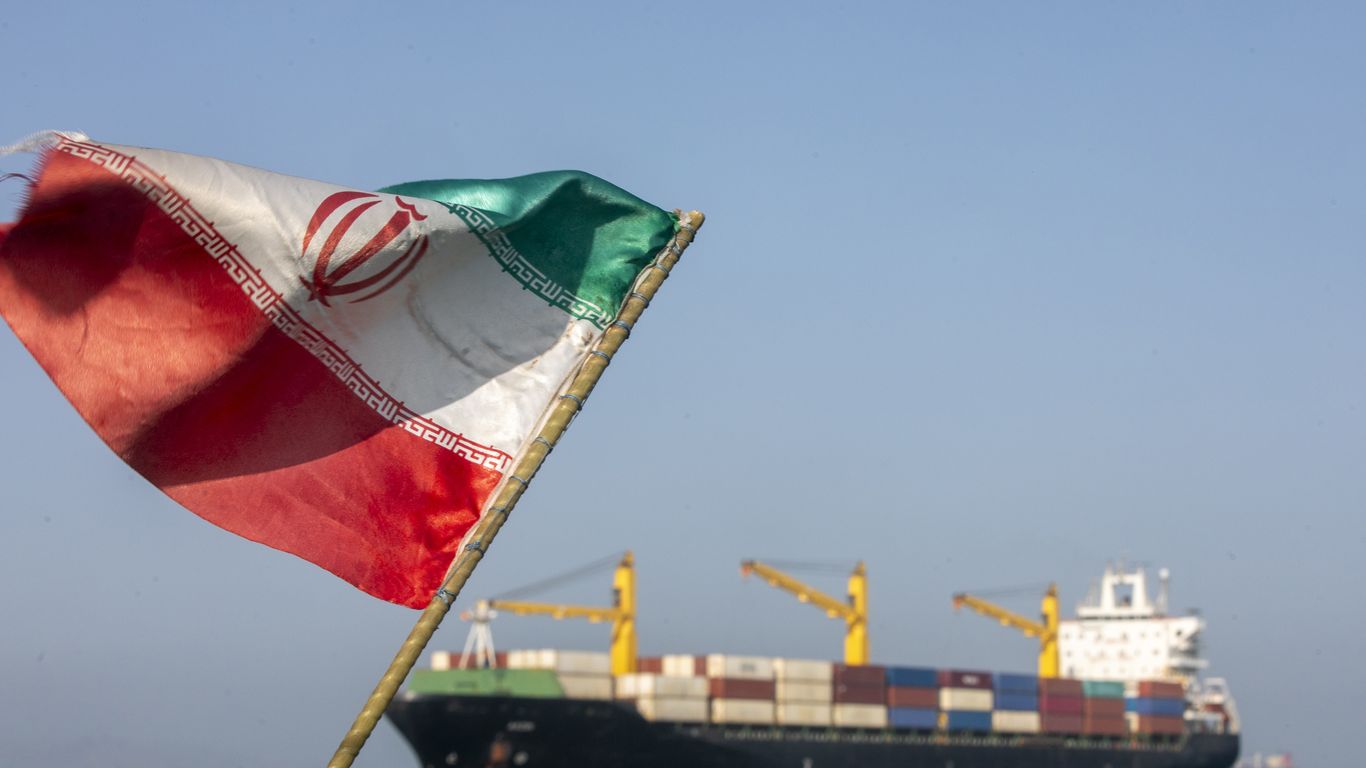
On June 14, 2026, a comprehensive agreement to end the military conflict between the United States and Iran was officially secured, extending an existing ceasefire and mandating the immediate reopening of the Strait of Hormuz. The breakthrough was announced not in Washington or Tehran, but by the Pakistani Prime Minister in Islamabad, whose government served as the primary diplomatic backchannel during the height of the crisis. The deal halts a multi-month naval standoff initiated during the Trump administration, forcing the withdrawal of Islamic Revolutionary Guard Corps (IRGC) fast-attack vessels from commercial shipping lanes and suspending U.S. retaliatory strikes along the Iranian coast.
The conflict had paralyzed the global energy supply chain. For weeks, the world’s most critical maritime chokepoint remained effectively closed to heavy tankers. Insurance premiums for vessels entering the Persian Gulf had skyrocketed to prohibitive levels. The diplomatic resolution marks a sudden de-escalation in a region that had been bracing for a protracted, asymmetric naval war.
The Islamabad Declaration
The announcement arrived on a Tuesday morning. The Pakistani Prime Minister stepped to the podium at the Prime Minister’s Secretariat in Islamabad and delivered a brief, heavily vetted statement. The words were carefully chosen to satisfy both the Pentagon and the Guardian Council in Tehran.
A deal was “now in place.” The war was over.
Pakistan’s role as mediator was born of geographic necessity and diplomatic pragmatism. Islamabad maintains complex, deeply intertwined relationships with both the United States military apparatus and the Iranian government. When direct communication channels between Washington and Tehran collapsed in early May, Pakistani diplomats quietly opened a secure conduit. Delegations from the U.S. State Department and Iranian foreign ministry officials met in heavily guarded safe houses on the outskirts of Islamabad. They did not sit in the same room. Pakistani officials shuttled paper between them.
The core of the negotiation was sequencing. Neither side wanted to be the first to publicly stand down. The resulting framework relied on simultaneous, verifiable actions. The U.S. Navy’s Fifth Fleet, headquartered in Bahrain, would pull its Arleigh Burke-class destroyers back from the immediate maritime border. Concurrently, the IRGC would recall its Boghammar speedboats to bases in Bandar Abbas. The synchronization was monitored by third-party aerial surveillance.
“The cessation of hostilities is comprehensive and immediate. The waterways of the Persian Gulf are once again secure for the transit of global commerce. Diplomacy has prevailed over the specter of a wider regional war.”
Those words from the Pakistani leadership signaled to the global markets that the crisis had passed. Within minutes of the broadcast, maritime tracking software showed anchored oil tankers in the Gulf of Oman beginning to fire their engines.
The Geography of the Chokepoint
To understand the severity of the 2026 conflict, one must look at a map of the Strait of Hormuz. It is a narrow ribbon of water connecting the Persian Gulf to the Gulf of Oman and the open Arabian Sea. At its narrowest point, the strait is only 21 miles wide. The shipping lanes within it are just two miles wide in either direction, separated by a two-mile buffer zone.
Through this geographic bottleneck flows roughly twenty percent of the world’s total global petroleum consumption. It is the jugular vein of the modern industrial economy.
When the conflict escalated, Iran leveraged its geographic advantage. The IRGC Navy did not need to deploy massive warships to close the strait. They utilized asymmetric naval warfare tactics. Swarms of heavily armed fast-attack craft, coastal anti-ship missile batteries, and the threat of naval mines were enough to deter commercial operators. The mere presence of IRGC vessels loitering near the shipping lanes sent a chilling effect through the maritime industry.
The U.S. response involved a heavy deployment of maritime power. Carrier strike groups were positioned in the Arabian Sea. Unmanned aerial vehicles maintained constant surveillance over the Iranian coastline. The standoff was tense, kinetic, and highly volatile. A single miscalculation by a junior officer on either side could have triggered a massive exchange of fire.
The Islamabad Accord dismantled this powder keg. The agreement explicitly maps out operational zones. IRGC vessels are restricted to a defined coastal boundary, well clear of the internationally recognized transit corridors. The U.S. Navy retains its freedom of navigation but agrees to limit provocative maneuvers near Iranian territorial waters. The strait is, by diplomatic decree, unlocked.
The Economic Bleeding
The economic impact of the blockade was immediate and severe. Global markets do not wait for official declarations of war; they react to risk. When the first commercial tanker was harassed in the early days of the conflict, Brent crude prices spiked. Within two weeks, oil had surged past $120 a barrel.
The secondary effects rippled through the global economy.
- Maritime Insurance: Lloyd’s of London and other major marine insurers designated the entire Persian Gulf as a high-risk zone. War risk premiums jumped from fractions of a percent to over five percent of a vessel’s total hull value. For a massive supertanker, this meant millions of dollars in additional costs per voyage.
- Supply Chain Delays: Tankers scheduled to load crude in Saudi Arabia, Kuwait, and the United Arab Emirates dropped anchor in the Gulf of Oman, refusing to transit the strait. The backlog of empty vessels grew by the day.
- Consumer Costs: The spike in crude oil prices translated directly to the gasoline pump. In the United States, average national gas prices climbed sharply, creating immense political pressure on the White House.
- Global Inflation: The cost of petroleum affects the cost of everything. Manufacturing, transportation, and agricultural sectors all faced sudden margin compression as energy inputs became prohibitively expensive.
The announcement of the ceasefire triggered a massive market correction. Within twenty-four hours of the Pakistani Prime Minister’s press conference, Brent crude plummeted by fifteen percent. The risk premium evaporated. Insurers began downgrading the threat level, allowing the backlog of tankers to resume their scheduled routes. The economic bleeding was cauterized.
Washington’s Political Calculus
For the Trump administration, the conflict presented a complex political challenge. The administration’s foreign policy doctrine had long been rooted in “maximum pressure” against Tehran. The military posture was designed to project overwhelming strength and deter Iranian aggression in the region.
However, the economic realities of a closed Strait of Hormuz conflicted with domestic political priorities. High gas prices and global supply chain disruptions are toxic to an incumbent administration. The White House needed a resolution that achieved two contradictory goals: demonstrating unyielding military resolve while simultaneously restoring the flow of cheap global energy.
The Islamabad backchannel provided the necessary off-ramp. By utilizing Pakistan as the mediator, the administration avoided the optics of direct capitulation or bilateral negotiation with a hostile state. The resulting agreement was framed in Washington as a decisive victory.
The Pentagon emphasized the successful deterrence. Military spokespeople highlighted that the U.S. Navy had effectively protected American assets and forced the IRGC to retreat from the shipping lanes. The narrative from the Oval Office focused on the restoration of global commerce and the strength of the American military deterrent. The deal allowed the administration to claim that its hardline stance had forced Tehran to the negotiating table.
Tehran’s Concessions and Demands
On the other side of the Persian Gulf, the political calculus was equally fraught. The Iranian government faced crippling domestic economic conditions, exacerbated by years of stringent international sanctions. The naval standoff was a display of regional leverage, a reminder to the world that Tehran held the power to disrupt the global economy.
But maintaining the blockade was unsustainable. The Iranian economy relies heavily on its own ability to export oil, primarily to Asian markets. Closing the strait hurt Tehran as much as it hurt the West. Furthermore, the constant threat of a massive U.S. military strike against Iranian coastal infrastructure posed an existential risk to the regime.
Through the Pakistani mediators, Iranian diplomats secured critical, albeit quiet, concessions. While the public text of the agreement focused on maritime security and military de-escalation, the private annexes reportedly addressed financial relief. Unfreezing of specific foreign assets and the quiet relaxation of enforcement on certain secondary sanctions were implied conditions of the ceasefire.
For the domestic audience in Iran, the narrative was one of resistance. State media portrayed the standoff as a successful defense of national sovereignty against Western imperialism. The IRGC was lauded for standing toe-to-toe with the U.S. Navy and forcing a negotiated settlement. Both sides walked away with the political narratives they required to survive.
The Verification Protocol
A ceasefire is only as strong as its enforcement mechanisms. The history of the Middle East is littered with broken agreements and shattered truces. To prevent a rapid return to hostilities, the Islamabad Accord established a rigorous verification protocol.
The waters of the Persian Gulf are now subject to an unprecedented level of surveillance. U.S. P-8 Poseidon maritime patrol aircraft fly continuous overlapping patterns over the strait. High-resolution commercial satellite imagery is analyzed daily by independent maritime security firms in London and Singapore.
Any deviation from the agreed-upon operational zones is immediately flagged. If an IRGC vessel crosses the demarcation line, or if a U.S. warship conducts an unscheduled maneuver near the Iranian coast, the incident is reported to a joint monitoring center hosted in Muscat, Oman. This center serves as the real-time crisis management hub, designed to de-conflict misunderstandings before they escalate into kinetic exchanges.
The system is fragile. It relies on the continued goodwill of deeply mistrustful adversaries. But for now, the protocol is holding. The naval commanders on both sides understand the catastrophic cost of a miscalculation.
The Regional Domino Effect
The de-escalation in the Strait of Hormuz has sent ripples throughout the broader Middle East. The regional proxy conflicts that often mirror the U.S.-Iran dynamic have seen a corresponding decrease in intensity. The diplomatic breakthrough in Islamabad demonstrated that negotiation, however strained and indirect, remains a viable tool in the region.
Gulf Cooperation Council (GCC) nations, particularly Saudi Arabia and the United Arab Emirates, welcomed the ceasefire with cautious optimism. Their economies are entirely dependent on the free flow of maritime traffic through the strait. The threat of a regional war had cast a long shadow over their ambitious economic diversification plans and massive infrastructure projects.
The agreement also highlighted the shifting diplomatic architecture of the region. Traditional mediators like Switzerland or Oman were augmented by the aggressive, effective intervention of Pakistan. Islamabad’s successful brokering of the deal elevated its status as a crucial geopolitical player, capable of bridging the gap between Western military power and Eastern regional interests.
The long-term stability of the region remains uncertain. The underlying ideological and strategic conflicts between Washington and Tehran are unresolved. The nuclear question, the ballistic missile program, and the network of regional proxies remain potent flashpoints. The Islamabad Accord did not solve the U.S.-Iran conflict; it merely paused it.
The Return to Normalcy
For the men and women navigating the massive steel hulls through the narrow strait, the geopolitical maneuvering matters less than the immediate reality on the water. The radar screens are clear. The radio chatter is routine. The looming threat of a sudden missile strike or a swarm of fast-attack craft has receded into the background noise of the region.
The crude oil flows again. The supply chains reconnect. The global economy breathes a collective sigh of relief. The crisis of 2026 has passed into history, resolved not by the firing of weapons, but by the quiet exchange of paper in a secure room thousands of miles away.
Diplomats signed papers. Markets adjusted prices. Tankers fired their engines. Peace.
Next in the Series: The Economic Aftermath – How the 2026 Hormuz Blockade Reshaped Global Shipping Routes.


