
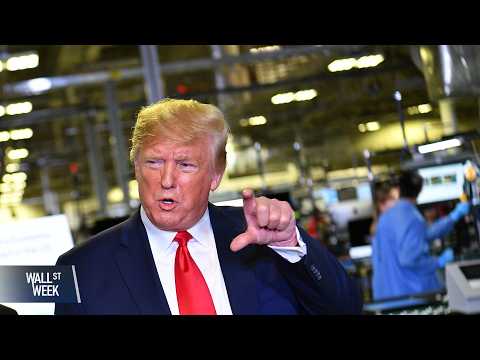
President Donald Trump has established quantum computing as a critical national priority, proposing a $2 billion federal investment designed to secure American dominance in the next generation of technological infrastructure. This initiative, framed as essential for national security and economic supremacy, aims to accelerate the development of quantum technologies through massive funding and public-private partnerships. The proposal directly addresses the escalating technological arms race, specifically countering aggressive investments by global rivals who recognize quantum computing as the foundational architecture of the future.
The announcement signals a significant shift in federal research priorities. It moves quantum computing from the realm of academic theory into the center of geopolitical strategy. The implications extend far beyond faster processing speeds; they touch the core of modern cryptography, logistical optimization, and advanced materials science.
This is not a traditional infrastructure project. It is an investment in the invisible architecture that will dictate global power dynamics for the next century.
The Mechanics of the Quantum Leap
To understand the magnitude of the $2 billion bet, one must understand the technology it seeks to harness. Classical computing, the foundation of the current digital age, relies on bits. A bit exists in one of two binary states: zero or one. This binary system has powered everything from the first calculators to modern smartphones.
Quantum computing fundamentally breaks this paradigm.
It utilizes quantum bits, or qubits. Unlike classical bits, qubits can exist in a state of superposition, meaning they can represent both zero and one simultaneously. Furthermore, qubits can be entangled, a phenomenon where the state of one qubit instantaneously influences the state of another, regardless of the physical distance between them.
Exponential Processing Power
This superposition and entanglement allow quantum computers to process vast amounts of possibilities concurrently, rather than sequentially. For specific, highly complex problems, a quantum computer could theoretically find a solution in seconds that would take the most powerful classical supercomputer millennia to calculate.
This is the concept of “quantum supremacy.” It is the theoretical point at which a quantum machine performs a calculation impossible for any classical machine. Achieving and maintaining quantum supremacy is the core objective of the Trump administration’s $2 billion initiative.
The Geopolitical Stakes: A New Arms Race
The urgency behind the $2 billion proposal is not driven solely by scientific curiosity. It is driven by fear. The United States is currently engaged in a high-stakes technological arms race, primarily with China.
The Chinese government has publicly designated quantum technology as a strategic priority in its five-year plans. They have invested heavily in quantum communication networks, including the launch of Micius, a satellite capable of transmitting quantum-encrypted data. This aggressive posture has alarmed national security officials in Washington.
The Trump initiative is a direct countermeasure. It is an acknowledgment that the nation that controls quantum computing will control the digital high ground.
The Cryptography Threat
The most immediate national security concern centers on cryptography. Modern encryption algorithms, which secure everything from banking transactions to classified military communications, rely on the mathematical difficulty of factoring large prime numbers.
Classical computers struggle with this task. Quantum computers, utilizing algorithms like Shor’s algorithm, could theoretically break these encryptions effortlessly. A geopolitical rival achieving a sufficiently powerful quantum computer before the United States develops quantum-resistant encryption would possess the ability to read the nation’s most sensitive secrets.
The $2 billion investment is, in part, a defensive measure. It funds research into post-quantum cryptography, ensuring American communications remain secure in a post-supremacy world.
Economic Implications and the Private Sector
While national security is the primary driver, the economic implications of the quantum initiative are vast. The $2 billion is not intended solely for government laboratories. A significant portion of the funding is designed to stimulate the private sector, fostering a robust domestic quantum industry.
Companies like IBM, Google, and Microsoft have already invested heavily in quantum research. The federal initiative aims to accelerate these efforts through grants, tax incentives, and collaborative research agreements.
Transforming Industries
The commercial applications of quantum computing are transformative. They promise to revolutionize industries that rely on complex optimization and simulation.
- Pharmaceuticals: Quantum computers could simulate molecular interactions with unprecedented accuracy, drastically reducing the time and cost required to discover new drugs.
- Logistics: Complex supply chains, routing millions of packages globally, could be optimized in real-time, saving billions in operational costs.
- Materials Science: The discovery of new, lightweight, and ultra-strong materials could revolutionize manufacturing and aerospace engineering.
- Finance: Financial institutions could utilize quantum algorithms for high-frequency trading, risk assessment, and portfolio optimization.
The Trump administration’s bet is that by seeding the domestic quantum ecosystem, the United States will secure the economic benefits of these breakthroughs, creating high-tech jobs and maintaining its position as the global hub of innovation.
The Challenges of Scaling Quantum Systems
Despite the massive investment and the theoretical promise, significant hurdles remain. Building a functional, scalable quantum computer is one of the most complex engineering challenges in human history.
Qubits are incredibly fragile. They are highly susceptible to environmental noise, such as temperature fluctuations or electromagnetic radiation. This noise causes a phenomenon known as “decoherence,” where the qubit loses its quantum state, resulting in calculation errors.
The Error Correction Problem
To build a reliable quantum computer, researchers must develop robust error-correction techniques. This requires creating “logical qubits” composed of numerous physical qubits, where the physical qubits work together to detect and correct errors in the logical qubit.
Currently, building a single logical qubit requires hundreds or even thousands of physical qubits. Scaling this to a machine capable of solving real-world problems will require millions of physical qubits, a feat far beyond current technological capabilities.
A substantial portion of the $2 billion initiative will be directed toward solving this specific engineering bottleneck. It funds research into new materials for qubit fabrication, advanced cooling systems to maintain the near-absolute zero temperatures required, and sophisticated control electronics.
The Political Landscape of the Investment
The $2 billion proposal has generated significant political discourse. Supporters view it as a necessary and visionary step to secure American leadership in the 21st century. They argue that the cost of inaction, ceding quantum supremacy to a rival, is far greater than the financial investment.
Critics, however, raise concerns about the allocation of funds. Some argue the money would be better spent on immediate infrastructure needs or social programs. Others question the timeline for a return on investment, noting that practical, large-scale quantum computers may still be decades away.
There is also skepticism regarding the government’s ability to effectively manage such a complex technological initiative. Critics point to past federal technology projects that suffered from cost overruns and delays.
Despite the debate, the initiative underscores a fundamental reality: quantum computing is no longer a fringe scientific pursuit. It is a central pillar of national strategy.
The Foundation of the Future
The $2 billion quantum bet represents a defining moment in American technological policy. It is an acknowledgment that the rules of the digital economy are being rewritten. The classical computing era, which built the modern world, is reaching its physical limits.
The quantum era is beginning.
The outcome of this initiative will not be measured in immediate profits or quarterly earnings. It will be measured in the security of national communications, the speed of scientific discovery, and the foundational architecture of the global economy.
The race has started. The stakes are defined. The investment is made.
Quantum.