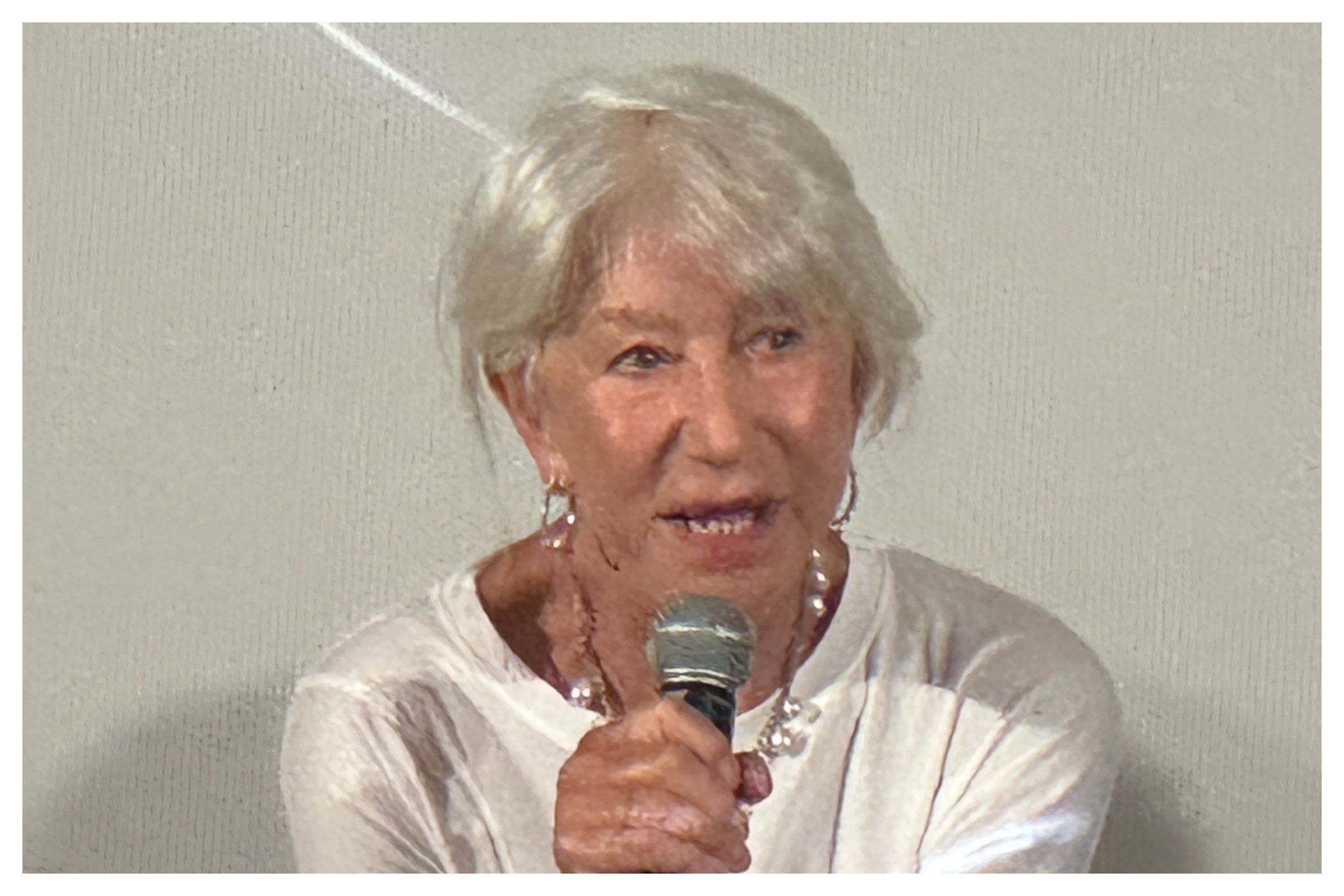
At the 2026 Taormina Film Festival in Sicily, Academy Award-winning actress Helen Mirren declared that actors should not be expected to act as political figures, stating directly to the press, “We’re not politicians, politicians are politicians.” Speaking against the backdrop of the ancient Teatro Antico di Taormina, the veteran actress explicitly rejected the growing modern expectation that entertainers must serve as ideological activists. Her comments arrive at a moment of profound cultural fatigue, signaling a high-profile retreat from the hyper-politicized era that has dominated the American entertainment industry over the past decade.
The statement was not a casual aside. It was a deliberate boundary drawn by one of the most respected figures in global cinema. Mirren, whose seven-decade career spans from the Royal Shakespeare Company to blockbuster franchises, carries immense institutional weight. When she speaks, the industry listens. Her refusal to accept the mantle of the “political animal” represents a significant fracture in the Hollywood consensus. For years, the unwritten rule of the modern press junket dictated that actors must possess, and loudly broadcast, the correct political opinions. Mirren simply refused to play the game.
The Declaration at Teatro Antico
The Taormina Film Festival, established in 1955, has long served as a prestigious European showcase for international cinema. Overlooking the Ionian Sea, the venue provides a stark contrast to the sterile, high-anxiety environments of Los Angeles press rooms. It was here, in June 2026, that Mirren was asked to weigh in on the intersection of art and global affairs. The expectation, as always, was a sweeping statement of moral clarity regarding current events. Instead, the press received a lesson in professional boundaries.
“Artists are not political animals,” Mirren noted. The phrasing is specific. The term “political animal” originates from Aristotle’s Politics, describing human beings as creatures naturally equipped to participate in the governance of the polis. By stripping artists of this specific label in a professional context, Mirren is untethering the craft of acting from the mechanics of statecraft. She is arguing that the ability to deliver a compelling monologue does not equate to the ability to draft effective public policy.
This distinction was once universally understood. Today, it is treated as a radical proposition. The modern entertainment apparatus operates on the assumption that visibility equals authority. A lead role in a $200 million superhero film is frequently treated as a credential for geopolitical analysis. Journalists routinely ask actors promoting summer tentpoles to solve complex international conflicts in four-minute interview windows. Mirren’s response cuts the legs out from under this practice. She reminded the room that the job is to entertain, not to govern.
The Origins of the Hollywood Soapbox
To understand the weight of Mirren’s declaration, one must trace the recent history of Hollywood activism. The modern era of the politicized actor arguably reached its zenith at the 2017 Golden Globe Awards. There, Meryl Streep utilized her Cecil B. DeMille Award acceptance speech to deliver a six-minute, highly publicized indictment of the incoming American presidential administration. The applause inside the Beverly Hilton was deafening. The media coverage was entirely celebratory. The message to the industry was clear: the podium is a soapbox, and silence is complicity.
What followed was nearly a decade of obligatory activism. Award shows transformed from industry celebrations into ideological rallies. The Academy Awards, the Emmy Awards, and the Screen Actors Guild (SAG-AFTRA) ceremonies became platforms for lectures on climate change, electoral politics, and social justice. Actors were praised not for their performances on screen, but for their performances at the microphone.
However, the reaction outside of Los Angeles and New York was markedly different. Ratings for major award broadcasts plummeted. The 93rd Academy Awards in 2021 drew a record-low 9.85 million viewers, a catastrophic drop from the 43 million viewers who tuned in just seven years prior in 2014. Audiences were tuning out. The American public, exhausted by a relentless 24-hour news cycle, looked to movies and television for escapism. Instead, they found the exact same political arguments they were trying to avoid. The entertainment industry had fundamentally misread its consumer base.
The Financial Weight of the Global Box Office
The shift away from activism is not purely philosophical. It is driven by the cold, unforgiving mathematics of the global box office. Major film studios like Warner Bros. Discovery, Universal Pictures, and the Walt Disney Company operate on massive financial scales. A modern blockbuster frequently requires a global gross of $500 million simply to break even. Achieving those numbers requires broad, unified appeal. Alienating half of the potential ticket-buying audience with partisan rhetoric is a luxury the modern studio system can no longer afford.
When an actor makes a polarizing political statement, the financial blowback is immediate and measurable. Social media campaigns organize boycotts. International markets, particularly in Asia and the Middle East, scrutinize the political affiliations of Western stars before approving distribution. The business of entertainment relies on mass consensus. Politics, by definition, relies on division.
Mirren’s stance in Taormina aligns perfectly with the quiet, internal mandates currently circulating through major Hollywood talent agencies. Agents and publicists at powerhouses like Creative Artists Agency (CAA) and William Morris Endeavor (WME) are increasingly advising their clients to lower their political profiles. The era of the outspoken celebrity activist has proven to be a financial liability. Mirren is simply saying the quiet part out loud.
A Growing Chorus of Apolitical Veterans
Helen Mirren is not entirely alone in her assessment. She joins a quiet but growing chorus of veteran actors who have recognized the danger of the Hollywood echo chamber. These are figures whose careers were built on the craft of acting, rather than the metrics of social media engagement.
In 2018, two-time Academy Award winner Anthony Hopkins voiced a remarkably similar sentiment. Speaking to the press, Hopkins bluntly stated that actors are “pretty stupid” and should not be treated as intellectual authorities on world events. He argued that the job of an actor is to learn lines and hit marks, not to dictate morality to the public. Mark Wahlberg echoed this in 2016, noting that Hollywood lives in a bubble and that everyday citizens do not need celebrities telling them how to vote or how to live.
Even Quentin Tarantino, a director known for his provocative cinema, has frequently pushed back against the expectation that his films must serve a specific political agenda. These veterans understand a fundamental truth about the medium: art loses its universal power when it becomes a partisan tool. Mirren’s comments in 2026 serve as a formalization of this retreat. The old guard is reclaiming the boundaries of the profession.
The Audience Reclaims the Theater
The concept of “cultural defense” is central to understanding the public reaction to Mirren’s statement. For years, audiences have felt besieged by entertainment that feels more like a lecture than a story. The insertion of modern political messaging into historical dramas, fantasy franchises, and science fiction epics has shattered the suspension of disbelief. Viewers feel that their beloved escapist properties have been hijacked by writers and actors more interested in scoring ideological points than in telling a compelling narrative.
When Helen Mirren says, “We’re not politicians,” she is offering audiences a profound sense of relief. She is validating their desire to simply sit in a dark room and be transported. She is confirming that it is acceptable to separate the art from the current events of the day. For a public exhausted by the relentless politicization of every facet of modern life, from professional sports to fast-food chains, this separation is a necessary defense mechanism.
The success of recent, aggressively apolitical blockbusters proves this point. Films that prioritize spectacle, emotion, and traditional storytelling over topical commentary have routinely overperformed at the box office. The audience is voting with their wallets. They are rewarding properties that respect their time and their intelligence. Mirren, with the sharp instincts that have kept her relevant for over half a century, is reading the room perfectly.
The Boundary Between Art and Policy
The role of the actor is one of empathy and transformation. It requires the individual to step out of their own worldview and inhabit the life of another. Helen Mirren has done this masterfully, portraying everyone from Queen Elizabeth II in The Queen to the ruthless matriarch Cara Dutton in 1923. This requires a fluidity of spirit that is entirely at odds with the rigid, dogmatic nature of modern politics.
Politicians must deal in absolutes. They must draft legislation, build coalitions, and enforce laws. Their work is the work of tangible, real-world consequences. Artists deal in the abstract. They deal in emotion, metaphor, and reflection. When the two worlds collide, both suffer. The art becomes predictable propaganda, and the politics become theatrical and unserious.
By drawing a hard line in the Sicilian sun, Helen Mirren has done the industry a massive favor. She has given permission to a new generation of actors to simply do their jobs. To learn the lines. To find the light. To tell the story. The burden of saving the world can be left to the people actually elected to do so. The era of the celebrity savior is drawing to a close, replaced by a renewed respect for the simple, profound craft of entertainment.
Directors frame the shot. Actors deliver the lines. Audiences buy the tickets. Entertainment.