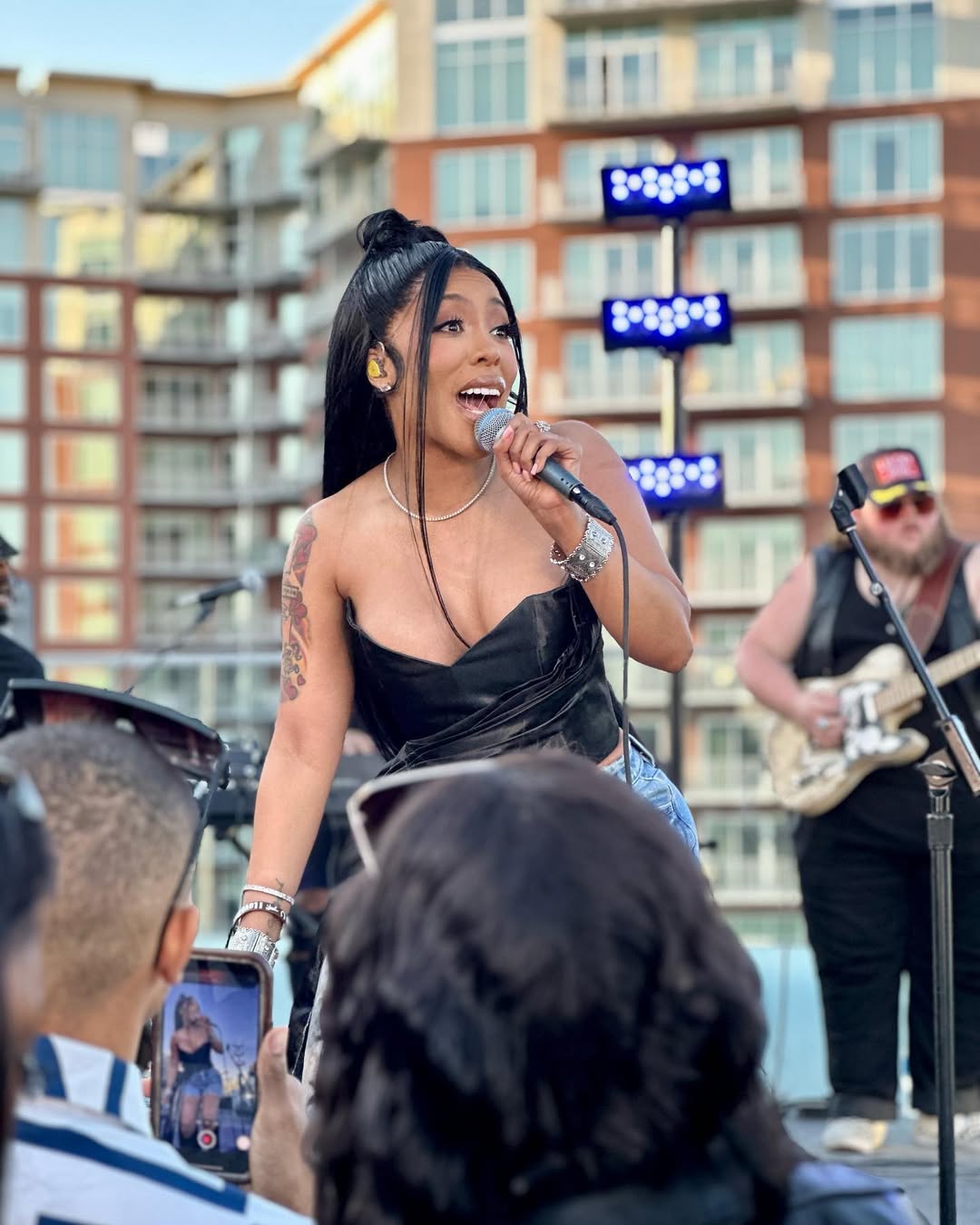
Jennifer Lopez recently declared that to be a true New Yorker, an individual must be born within the five boroughs. The Bronx-born entertainer made the assertion during an appearance on the popular social media series Subway Takes, hosted by comedian Kareem Rahma. When asked for her “hot take,” Lopez stated unequivocally that moving to the city does not grant the title. The comment immediately went viral, fracturing the internet into camps of fierce agreement and immediate defense. It touched a nerve that runs deep beneath the concrete of the city.
The question of who gets to claim New York is as old as the city itself. It is a debate about authenticity. It is a debate about ownership. Lopez, who built a global empire partly on the foundation of her “Jenny from the Block” persona, anchored her claim in birthplace. For her, the identity is inherited, not acquired. But for the millions who arrive at Penn Station or JFK Airport with a dream and a depleted savings account, the identity is something earned through survival and assimilation.
The viral moment did not occur in a vacuum. It arrived at a time when cities are increasingly protective of their cultural borders. The cost of living is high. Displacement is a constant threat. In this environment, claiming native status is a form of cultural defense.
The Bronx Foundation
Jennifer Lopez was born on July 24, 1969, in the Castle Hill neighborhood of the Bronx. Her parents, David Lopez and Guadalupe Rodríguez, were born in Puerto Rico and moved to the United States mainland as children. Her upbringing in a working-class environment heavily influenced her early career and public image.
Her 2002 hit single, “Jenny from the Block,” was an explicit manifesto of her roots. The song, and its accompanying music video featuring then-fiancé Ben Affleck, was a strategic move to maintain relatability despite her skyrocketing fame and wealth. She was asserting that the Bronx remained her core identity, regardless of her Hollywood address.
When Lopez sat down for the Subway Takes interview in early 2024, she was returning to that well. The format of the show, short, rapid-fire opinions filmed on the New York City subway, demands strong, often polarizing statements. Lopez delivered.
“You have to be born in New York to be a New Yorker,” Lopez stated. “You can’t just move here and say you’re a New Yorker.”
The reaction was swift. Native New Yorkers flooded the comments sections, validating her stance. They pointed to the shared experiences of growing up in the city: the public school system, the specific cadence of the accent, the localized knowledge of neighborhoods before they were gentrified. For this group, being a New Yorker is a bloodright.
The Migrant Counter-Argument
The backlash was equally intense. The counter-argument relies on the fundamental mythology of New York as a beacon for the ambitious and the displaced. From the Irish and Italian immigrants of the 19th and early 20th centuries to the artists and writers who flocked to Greenwich Village and Harlem, the city has always been defined by those who chose it.
Critics of Lopez’s stance argue that surviving the crucible of the city, paying exorbitant rent, navigating the MTA, enduring the grueling pace, earns one the title. They cite the famous essay by E.B. White, Here Is New York, published in 1949. White categorized the city into three distinct groups: the native, the commuter, and the person born elsewhere who came in quest of something.
White argued that it was the third group, the settlers, who gave the city its passion. “The city is always full of young worshipful beginners,” White wrote. “To an out-of-towner the city is not a hometown, it is a destination.”
For those who align with White’s view, Lopez’s definition is exclusionary and ignores the vital energy brought by transplants. They argue that a New Yorker is not determined by a birth certificate, but by a state of mind and a commitment to the city’s unique ecosystem.
The Economics of Authenticity
Beneath the cultural debate lies an economic reality. New York City is an expensive brand. The “New Yorker” identity is commodified and sold globally. Lopez herself has leveraged this brand throughout her career, from her music and film roles to her fashion lines and fragrance empires.
When a native New Yorker claims exclusive rights to the title, it is often a reaction against the perceived dilution of that brand by wealthy transplants. The gentrification of neighborhoods like Williamsburg, Brooklyn, and Astoria, Queens, has displaced many native residents. The influx of tech workers and finance professionals has altered the cultural landscape.
In this context, Lopez’s “hot take” can be seen as a defense of the working-class, native-born population. It is a line drawn in the sand against the homogenization of the city. It asserts that there is a lived experience that cannot be purchased with a luxury apartment lease in Tribeca.
The Role of the Boroughs
The debate also highlights the internal hierarchy of the city. Manhattan is often the focal point for transplants, the glittering center of commerce and media. The outer boroughs, the Bronx, Brooklyn, Queens, and Staten Island, are traditionally viewed as the strongholds of native New Yorkers.
Lopez’s emphasis on her Bronx roots is a specific type of New York flex. It signals a gritty, unvarnished authenticity that contrasts with the polished image of Manhattan. When she dictates the terms of who gets to be a New Yorker, she is doing so from the perspective of the outer boroughs, claiming authority over the entire city’s identity.
The Evolution of a Persona
Jennifer Lopez’s relationship with her New York identity has been complex and occasionally contradictory. While she frequently references the Bronx, she has spent the majority of her adult life living in Los Angeles, Miami, and other enclaves of wealth. Her recent purchase of a $60 million mansion in Beverly Hills with Ben Affleck stands in stark contrast to the Castle Hill apartment of her youth.
This duality is common among highly successful individuals from modest backgrounds. The origin story remains a crucial part of their narrative, even as their current reality bears no resemblance to it. For Lopez, the New York identity is both a foundational truth and a carefully maintained brand asset.
When she makes a definitive statement on Subway Takes, she is performing that identity for an audience. She is reminding the public of her roots, reinforcing the narrative that despite the diamonds and the private jets, she remains fundamentally unchanged. The debate it sparked only serves to amplify that message.
The Verdict of the Streets
The question of who is a real New Yorker will never be definitively settled. It is a subjective measure, constantly negotiated and renegotiated. It depends on who is asking and who is answering.
For the native-born, the distinction is clear. It is about shared history, family ties, and a deep, intuitive understanding of the city’s rhythms. For the transplant, the distinction is earned through endurance, contribution, and a conscious choice to embrace the chaos.
Jennifer Lopez threw a match into a powder keg of civic pride and cultural anxiety. She articulated a feeling held by many native residents who feel their city slipping away. She also alienated those who poured their lives into the five boroughs, only to be told they are merely guests.
The debate raged on X, formerly Twitter, and TikTok. Essays were written. Podcasts were recorded. The city, as always, absorbed the noise and kept moving.
The trains ran. The bodegas opened. The tourists stared up at the skyline. The natives navigated the crowds. The transplants hustled for their piece of the pie.