Tina Turner cemented her miraculous 1984 pop music comeback with the July 1985 release of “We Don’t Need Another Hero (Thunderdome)” and her co-starring role as Aunty Entity in the blockbuster film Mad Max Beyond Thunderdome. While her album Private Dancer proved she could return to the charts, it was this post-apocalyptic cinematic crossover that proved to the music industry her resurgence was permanent. She was no longer just a nostalgia act or a survivor of domestic abuse. She was a dominant, global cultural force.
The music industry loves a comeback. It rarely trusts one. In 1984, Turner defied every metric of pop radio. At forty-four years old, a Black woman operating in a landscape dominated by synthesized youth-pop, she released Private Dancer. The album moved over five million copies in the United States alone. It spawned the Billboard Hot 100 number-one single “What’s Love Got to Do with It” and swept the Grammy Awards.
But in the executive boardrooms of Capitol Records, a quiet skepticism lingered. Lightning had been captured in a bottle. Could it be captured twice? The history of the recording industry is littered with veteran artists who manage one massive return to form, only to fade quietly back into legacy-act status. Manager Roger Davies knew the momentum had to be sustained. The next move could not simply be another album. It had to be a cultural event.
The Call from the Wasteland
Halfway across the world, Australian filmmaker George Miller was building a wasteland. Miller was in pre-production for the third installment of his wildly successful Mad Max franchise, titled Mad Max Beyond Thunderdome. The film required a new kind of antagonist for its star, Mel Gibson. Miller envisioned a character named Aunty Entity, the ruthless, glamorous, and hyper-intelligent ruler of a post-apocalyptic trading post called Bartertown.
Miller did not want a traditional Hollywood actress. He wanted a survivor. He wanted someone whose very presence commanded immediate, unquestionable authority. In interviews later, Miller stated that he wrote the character with Turner in mind, never actually expecting to secure her for the role. He needed a woman who could believably rebuild civilization from the ashes.
Davies received the call. Turner accepted the part. The decision was an immense calculated risk. Turner had not acted in a major motion picture since playing the Acid Queen in The Who’s 1975 rock opera Tommy. A failure on the silver screen could derail the carefully rebuilt momentum of her music career. A success, however, would elevate her from pop star to an untouchable tier of celebrity.
Building Aunty Entity
Production for Mad Max Beyond Thunderdome began in late 1984 in the deserts of Australia. The aesthetic of Bartertown was rust, dust, and desperation. Turner arrived on set and immediately transformed the visual language of the film. Costume designer Norma Moriceau constructed a dress made entirely of welded chainmail, dog muzzles, and chicken wire. The costume weighed over seventy pounds.
Turner wore it in the blistering Australian outback without complaint. She shaved her head to accommodate the massive, platinum blonde wig that became the character’s signature silhouette. Her performance was not a musician’s vanity cameo. She delivered a grounded, theatrical, and deeply physical performance. Aunty Entity was not a one-dimensional villain. She was a pragmatist. She was a woman who had survived the end of the world and built an empire out of pig methane.
The parallels to Turner’s own life were impossible to ignore. She had survived the brutal, highly publicized abuse of her former husband and musical partner, Ike Turner. She had walked away in 1976 with nothing but her stage name and thirty-six cents. She had rebuilt her own empire from the ashes of 1970s cabaret lounges. When Aunty Entity looked at Mel Gibson’s Max Rockatansky and demanded respect, the audience believed her. They knew who was speaking.
The Anatomy of an Anthem
A blockbuster film in 1985 required a blockbuster soundtrack. The synergy between MTV and Hollywood was at its absolute peak. Films like Flashdance and Footloose had proven that a massive pop single could drive box office returns, and a hit movie could drive record sales. Davies and Capitol Records needed a song that fit the dystopian themes of Thunderdome but played flawlessly on Top 40 radio.
They turned to the architects of Turner’s recent success: Terry Britten and Graham Lyle. The songwriting duo had penned “What’s Love Got to Do with It.” They understood Turner’s vocal phrasing. They understood the delicate balance between rock instrumentation and pop accessibility. Britten and Lyle delivered a demo titled “We Don’t Need Another Hero.”
The song is a masterclass in 1980s cinematic pop production. It begins with a brooding, atmospheric synthesizer line, mimicking the desolate winds of the Australian outback. Turner enters in a low, restrained register. The lyricism directly references the plot of the film, children lost in the wasteland, the search for a savior, the rejection of false idols.
“Out of the ruins, out from the wreckage / Can’t make the same mistake this time / We are the children, the last generation / We are the ones they left behind.”
As the track builds, the production swells. Heavy, gated-reverb drums kick in. A soaring saxophone solo, a staple of the era, bridges the second chorus. But the defining element of the track occurs in the final act. Britten brought in the King’s House School choir from Richmond, London. The children’s choir joins Turner for the final choruses, elevating the song from a pop track to a quasi-religious anthem. It was grand. It was theatrical. It was exactly what the summer of 1985 demanded.
MTV and the Visual Domination
A song in 1985 lived or died by its music video. George Miller himself directed the promotional video for “We Don’t Need Another Hero.” The strategy was brilliant in its simplicity. The video intercut high-octane footage from the $12 million film with original footage of Turner performing the song.
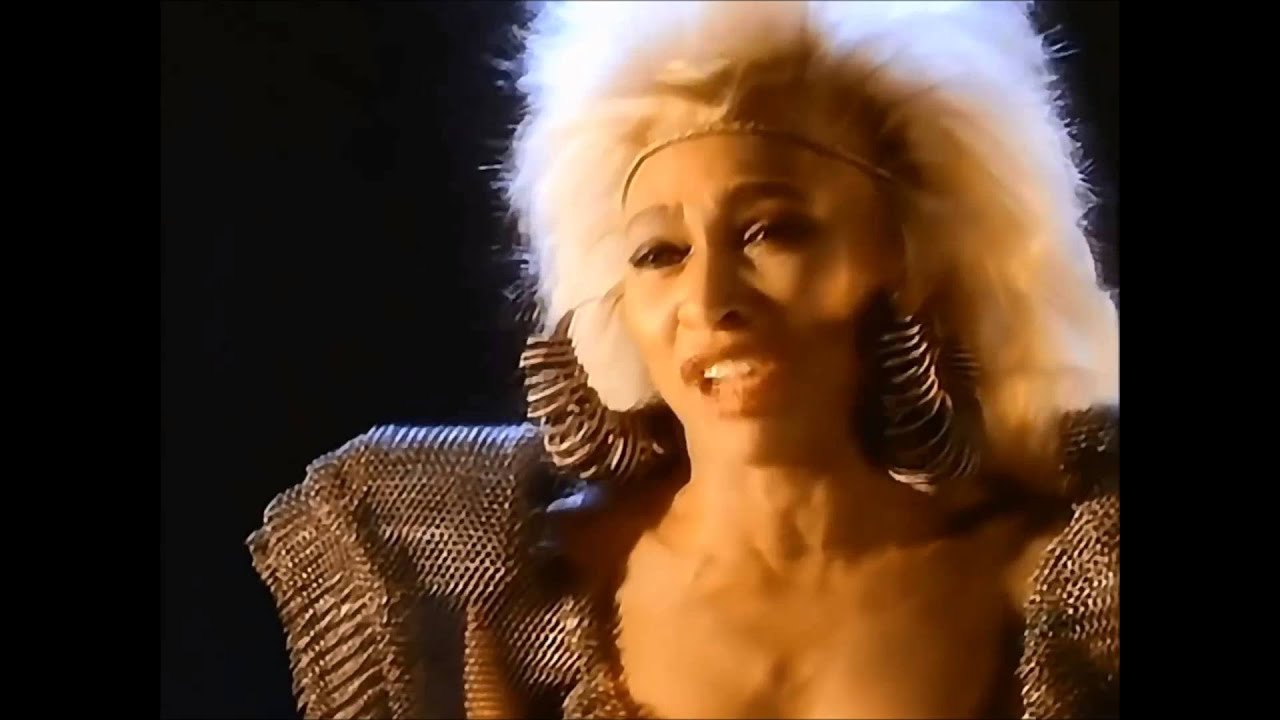
Turner appeared in her full Aunty Entity chainmail armor. She stood in a darkened, smoke-filled soundstage illuminated by sharp spotlights. Her physical presence was commanding. She did not dance; she simply stood her ground and delivered the vocal with intense, piercing eye contact to the camera. MTV placed the video in heavy rotation immediately. It was impossible to turn on a television in July 1985 and not see Tina Turner in chainmail.
The visual branding was flawless. It reinforced the narrative that Turner was a warrior. The vulnerability of her past was gone. She was untouchable.
The Chart Reality of Summer 1985
The single was released in late June 1985, weeks ahead of the film’s July 10 premiere. The commercial response was immediate and overwhelming. “We Don’t Need Another Hero (Thunderdome)” rocketed up the Billboard Hot 100. By late summer, it reached Number 2 in the United States. It was held out of the top spot only by John Parr’s “St. Elmo’s Fire (Man in Motion),” another massive soundtrack hit.
Globally, the song was an absolute juggernaut. It reached Number 1 in Canada, Australia, Germany, Switzerland, and Spain. It peaked at Number 3 on the UK Singles Chart. The track earned a Golden Globe nomination for Best Original Song. It secured a Grammy Award nomination for Best Female Pop Vocal Performance.
Turner did not just stop with the lead single. She contributed a second track to the film’s soundtrack, “One of the Living.” Written by Holly Knight, this second single was a gritty, hard-driving rock track that played during the film’s opening credits. “One of the Living” peaked at Number 15 on the Billboard Hot 100 and ultimately won Turner the Grammy Award for Best Female Rock Vocal Performance in 1986.
The Box Office and the Aftermath
Mad Max Beyond Thunderdome opened to positive reviews and strong box office returns. It grossed over $36 million in the United States, a massive figure for an R-rated, post-apocalyptic sequel in 1985. Critics singled out Turner’s performance. Roger Ebert of the Chicago Sun-Times praised her presence, noting that she brought a necessary theatricality and weight to the role of Aunty Entity.
For Capitol Records, the data was clear. The Private Dancer era was not a fluke. Turner had successfully transitioned from a legacy R&B singer into a multimedia pop culture icon. She could sell records. She could open movies. She could dominate MTV.
This realization changed the trajectory of her career. Because “We Don’t Need Another Hero” proved her staying power, the budget and promotional push for her next studio album, 1986’s Break Every Rule, was massive. She embarked on a global stadium tour. In 1988, she performed for 180,000 people at the Maracanã Stadium in Rio de Janeiro, setting a Guinness World Record for the largest paying audience for a solo performer.
The Permanent Transformation
Looking back at the landscape of 1980s pop music, the timeline of Tina Turner’s career is neatly divided by the summer of 1985. Before Thunderdome, she was the greatest comeback story in music history. After Thunderdome, the word “comeback” was dropped entirely. She was simply the Queen of Rock and Roll.
The song remains a staple of 1980s pop culture. It is a time capsule of a specific era when movies and music operated in perfect commercial lockstep. But beyond the chart data, beyond the box office receipts, and beyond the heavy MTV rotation, the project served a deeper narrative purpose.
It allowed Tina Turner to armor herself. It allowed her to step into the role of a queen who had survived the worst the world had to offer and emerged victorious. The public saw a woman in seventy pounds of chainmail, standing in the desert, declaring that she did not need saving.
The industry watched. The fans bought the records. The critics praised the film. The legacy solidified.