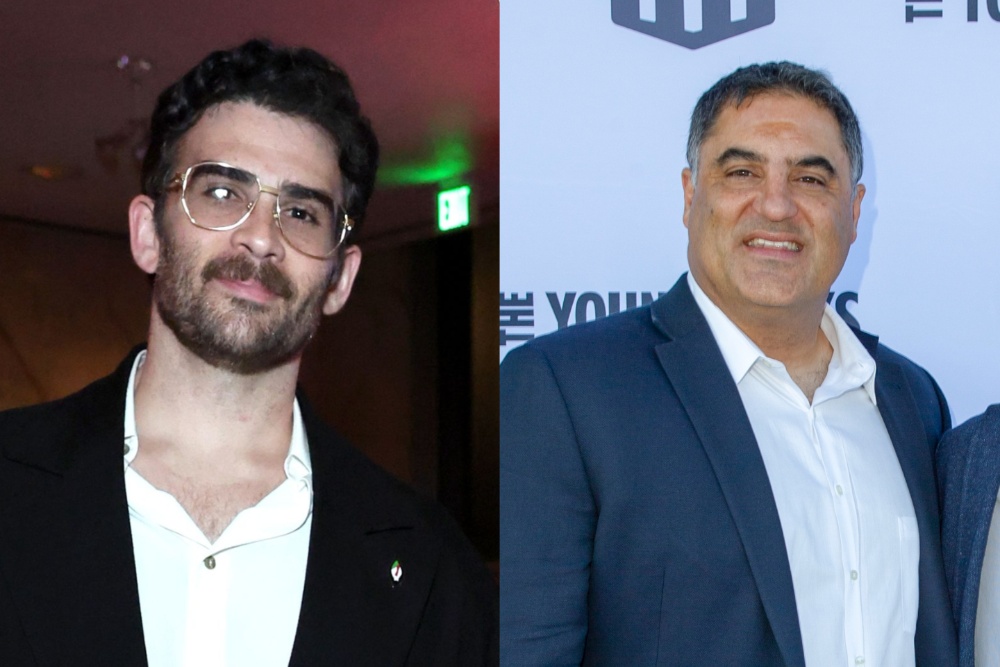
In early 2026, the United Kingdom Home Office officially barred American progressive commentators Hasan Piker and Cenk Uygur from entering the country, forcing the immediate cancellation of their scheduled appearances at the inaugural SXSW London festival. The decision was executed under standard British immigration powers, which allow the government to deny entry to individuals whose presence is deemed not conducive to the public good. The move sent immediate shockwaves through the digital media landscape.
For decades, the internet operated under the assumption of borderless discourse. A broadcast originating in Los Angeles reached a screen in London in milliseconds. But physical geography remains sovereign. When digital figures attempt to cross physical borders, they leave the jurisdiction of American free speech norms and enter the strict legal frameworks of foreign nations.
This is not a story about a localized festival dispute. It is a story about the collision of two distinct legal doctrines. What is protected speech on an American streaming platform can be classified as a threat to public order under British law. The ban of Piker and Uygur underscores a modern reality: digital influence does not guarantee physical access.
The Expansion of SXSW and the London Strategy
South by Southwest began in Austin, Texas, in March 1987. It was a regional music festival that morphed into a global technology, film, and cultural behemoth. By 2023, the festival drew over 340,000 attendees to central Texas. The organization eventually sought international expansion. They launched SXSW Sydney in October 2023. In 2026, they launched SXSW London.
The London iteration was designed to capture the European market. Organizers secured venues across Shoreditch and East London. They booked a slate of international politicians, tech executives, and digital media stars. Hasan Piker and Cenk Uygur were billed as marquee draws for the interactive programming track. They represented the vanguard of independent, internet-native political media.
Their scheduled panels were designed to address the future of digital broadcasting, the mobilization of young voters, and the disruption of legacy media networks. Tickets were sold. Flights were booked. Then, the Home Office intervened. The festival organizers were forced to issue a rapid update to the schedule, citing visa and entry denials beyond their control. The empty chairs on the London stages became a physical manifestation of a digital border.
The Mechanics of Sovereign Denial
The United Kingdom does not have a First Amendment. The British legal system balances free expression against public order, national security, and the prevention of social friction. This philosophy is codified in the nation’s immigration laws.
Under the Immigration Act 1971, the Home Secretary possesses broad discretionary powers to exclude non-citizens from the United Kingdom. The standard applied is whether an individual’s presence is “conducive to the public good.” This is a deliberately wide mandate. It does not require a criminal conviction. It does not require an active terrorist threat. It only requires a determination that an individual’s past rhetoric, behavior, or associations could incite public disorder, provoke violence, or deeply offend the values of British society.
The Home Office maintains a specialized unit that reviews high-profile visa applications and electronic travel authorizations. When a public figure with a massive digital footprint attempts to enter the U.K., their entire broadcast history is subject to review. Hours of Twitch streams, thousands of YouTube videos, and decades of podcast audio become material evidence for border agents.
The Home Office rarely provides exhaustive public explanations for individual bans, citing data protection laws. However, formal letters of denial typically reference specific broadcasts, social media posts, or public statements that breach the Home Office’s acceptable behavior guidelines. For Piker and Uygur, thousands of hours of unscripted, highly charged political commentary provided ample material for government scrutiny.
The Architecture of The Young Turks
To understand the ban, one must understand the broadcasters. Cenk Uygur founded The Young Turks (TYT) in 2002. Born in Istanbul, Turkey, and raised in New Jersey, Uygur began his career as a lawyer before pivoting to political commentary. TYT started as a program on Sirius Satellite Radio.
Uygur recognized the shift in media consumption early. In 2005, TYT launched a daily online video show. By 2007, they were on YouTube. They bypassed traditional cable gatekeepers entirely. By 2026, the TYT network boasted over 5.8 million YouTube subscribers and billions of lifetime views. They secured millions in venture capital funding, including a $20 million round in 2017 to expand their Los Angeles newsroom.
Uygur’s broadcasting style is notoriously aggressive. He utilizes high volume, table-pounding outrage, and relentless attacks on both conservative figures and establishment Democrats. He built an empire on righteous indignation. While this style is standard fare in the American media ecosystem, it frequently skirts the edges of what European regulators consider inflammatory rhetoric.
The Rise of HasanAbi on Twitch
Hasan Piker is Uygur’s nephew. He joined TYT in 2013, initially working in ad sales and production before moving in front of the camera. He hosted pop-culture and political segments aimed at a younger demographic. In 2018, Piker made a strategic pivot that would redefine his career. He launched a channel on Twitch under the name HasanAbi.
Twitch was primarily a video game streaming platform. Piker introduced long-form, live political commentary to the ecosystem. He streamed for eight to twelve hours a day. He reacted to breaking news, debated conservative commentators, and played video games while discussing Marxist theory and progressive politics. The strategy worked. By 2024, he had amassed over 2.5 million followers. He became one of the highest-earning broadcasters on the platform, generating millions of dollars in subscription and advertising revenue.
But live, unscripted broadcasting carries inherent risks. In August 2019, while criticizing American foreign policy and U.S. Representative Dan Crenshaw, Piker stated that “America deserved 9/11.” The clip went instantly viral. It drew condemnation from across the political spectrum. Piker later clarified that he was critiquing American interventionism, not advocating violence, but the digital footprint was permanent.
Piker frequently engages in highly polarized rhetoric regarding international conflicts, capitalism, and law enforcement. In the United States, this is protected political speech. In the United Kingdom, regulators often view such rhetoric through the lens of radicalization and public order.
The Precedent of the Border Filter
The ban of Piker and Uygur is not unprecedented. The U.K. Home Office has a long history of utilizing the “public good” clause to block controversial American figures. The border acts as a strict ideological filter, operating independently of American political binaries. The bans hit both the right and the left.
- Michael Savage: In 2009, the conservative American radio host was banned by Home Secretary Jacqui Smith. The government cited his statements on immigration and Islam, categorizing them as fostering hatred and provoking violence.
- Tyler, The Creator: In 2015, the American rapper was banned from entering the U.K. for three to five years. The Home Office cited lyrics from his 2009 and 2011 albums, arguing they encouraged violence and intolerance. The ban forced the cancellation of a massive European tour.
- Lauren Southern: In 2018, the right-wing Canadian activist was detained in Calais, France, and barred from entering the U.K. under Schedule 7 of the Terrorism Act 2000. The Home Office cited her distribution of materials in the U.K. that were deemed racist and conducive to public friction.
The Home Office does not discriminate by medium. Radio hosts, musicians, and digital streamers are all subject to the same standard. If the British government determines that an individual’s presence will require excessive policing, incite protests, or inflame domestic tensions, the border is sealed.
The Splintering of Global Discourse
The SXSW London incident reveals a fundamental tension in modern media. Content creators build global audiences. They monetize attention across dozens of sovereign nations simultaneously. A viewer in Manchester watches the same Twitch stream as a viewer in Miami. The digital experience is unified.
But legal reality remains fractured. The American First Amendment is an anomaly on the global stage. It protects nearly all forms of speech, including hate speech, provided it does not cross the line into immediate incitement of violence. European law, and specifically British law, places a much higher premium on social cohesion and the prevention of offense.
When Piker and Uygur applied to enter the U.K., they carried the weight of their entire digital archives with them. The Home Office did not view them merely as festival speakers. They viewed them as vectors of potential public disorder. The algorithms that rewarded their aggressive rhetoric in the United States became the exact mechanisms that triggered their exclusion in the United Kingdom.
The Future of International Touring for Digital Creators
For festival organizers like SXSW, the ban introduces a severe logistical risk. Booking digital-native talent now requires an assessment of international speech laws. A creator who drives massive engagement online may be legally untouchable at the border.
This dynamic forces a reckoning within the creator economy. Influencers and political commentators must recognize that their digital footprint serves as a permanent, global passport application. Rhetoric that plays well to a domestic American audience can instantly disqualify them from international markets. The internet may have erased borders for data, but governments have aggressively reinforced them for physical bodies.
The SXSW London stages remained active. Other speakers filled the time slots. The festival continued its programming on artificial intelligence, film production, and music distribution. But the absence of the two massive digital broadcasters hung over the event. It served as a stark reminder of the limits of digital power.
The internet broadcasts globally. The algorithm scales infinitely. The rhetoric travels instantly.
The border remains closed.