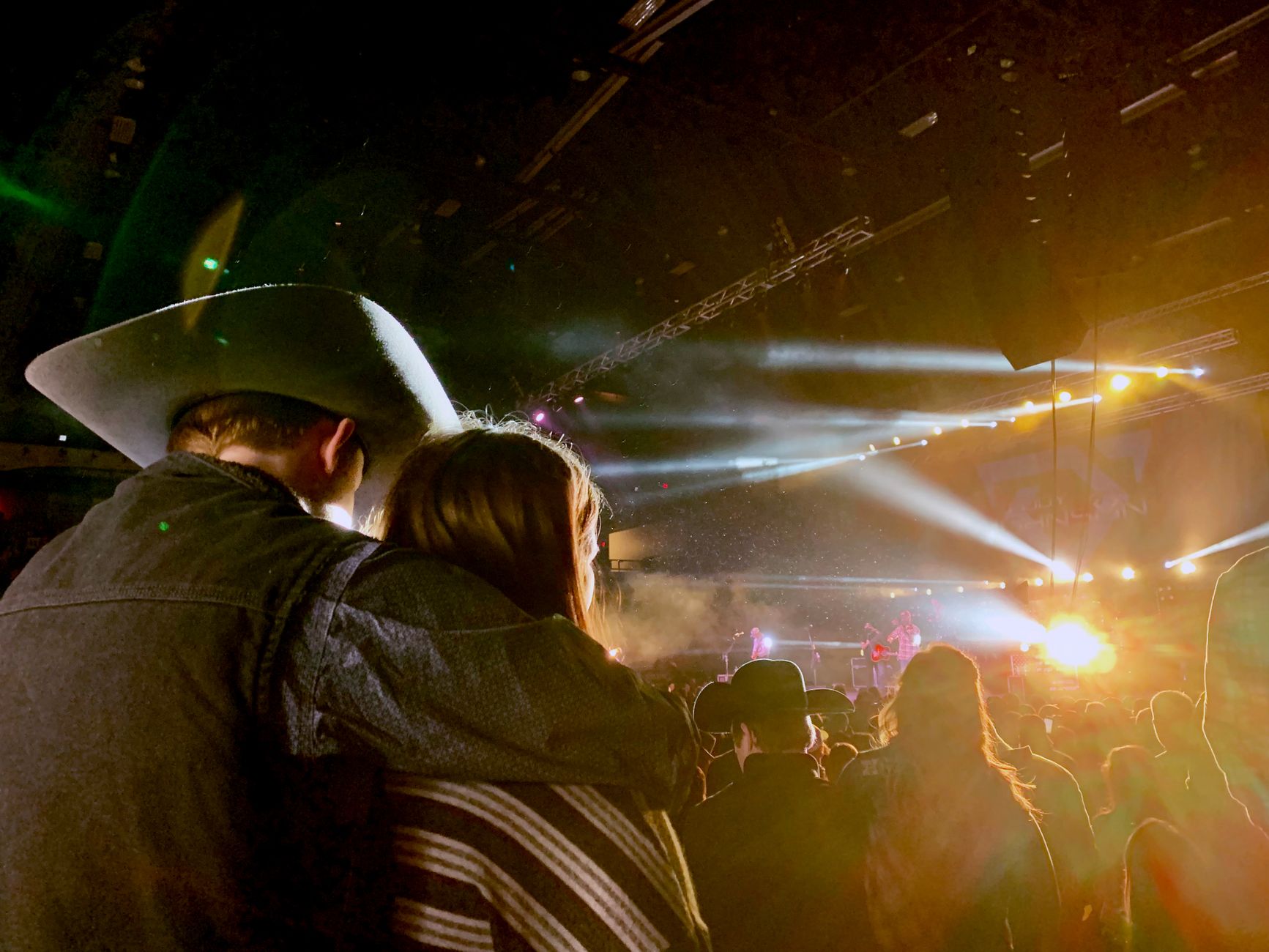
On a humid Nashville evening, over 9,000 fans packed First Horizon Park to watch country music stars Riley Green and Jordan Davis lead the record-breaking Rock ‘N Jock celebrity event. The gathering merged the rising traditionalist movement of modern country music with local philanthropy, setting a new high-water mark for attendance at the minor league stadium. The sheer volume of tickets sold signaled something larger than a simple charity game. It demonstrated the massive, mobilized fan bases of a new generation of Nashville artists.
For decades, Music Row has relied on the intersection of celebrity and charity to build artist profiles. But the scale has changed. A crowd of 9,000 people in a minor league baseball stadium for an amateur softball game requires a specific kind of cultural gravity. Green and Davis provided it. Both men represent a distinct pivot in the country music industry, a move away from the hyper-produced pop-country of the 2010s and back toward acoustic-driven, lyrically grounded storytelling.
The event was not just a game. It was a metric. It proved that the artists currently dominating country radio can pull arena-sized crowds even when they are not holding guitars.
The Record-Breaking Night at First Horizon Park
The gates at First Horizon Park opened to a line that stretched deep into the Germantown neighborhood. The stadium, built to hold exactly 10,000 fans for a standard baseball game, swelled to near capacity. Over 9,000 tickets were scanned. The concourses filled with fans wearing tour merchandise, cowboy hats, and baseball gloves.
The Rock ‘N Jock format is a known entity. It pairs professional athletes, local media personalities, and musicians on a diamond. The draw, however, is almost entirely musical. Fans do not buy tickets to watch a platinum-selling recording artist field a ground ball. They buy tickets for proximity. They buy tickets for the unscripted moments.
When Riley Green stepped to the plate, the roar rivaled a Saturday night at Nissan Stadium. When Jordan Davis took the field, the reaction was identical. These are not legacy acts resting on their laurels. These are artists at the absolute apex of their commercial viability.
The logistics of moving 9,000 people into a stadium located north of the Tennessee State Capitol require immense coordination. Traffic choked Rosa L. Parks Boulevard. Parking lots around Bicentennial Capitol Mall State Park filled hours before the first pitch. The economic footprint of the evening extended far beyond the ticket revenue. Local bars and restaurants in Germantown, from Von Elrod’s to Sonny’s Patio Pub, reported massive surges in foot traffic.
Riley Green, Jordan Davis, and the Traditionalist Pull
The success of the evening rested on the shoulders of its two biggest stars. Riley Green and Jordan Davis are not musical clones, but they occupy a similar space in the modern country ecosystem. They are the rising traditionalists. They anchor the genre.
Riley Green’s Brand of Authenticity
Riley Green built his career in Jacksonville, Alabama. He did not come through the traditional Nashville publishing machine. He built a regional following in the Southeast, playing college bars and small theaters before major labels took notice. His music leans heavily into the tropes of rural southern life, duck hunting, old trucks, and generational respect.
His breakout single, “I Wish Grandpas Never Died,” achieved platinum status precisely because it rejected the polished, synthetic sound dominating radio at the time. Green’s appeal is rooted in his perceived authenticity. To his fans, he is not playing a character. When he steps onto a softball field in Nashville, he carries that same unpretentious energy. He is the guy from the duck blind who happens to play arenas.
Jordan Davis and the Crossover Anchor
Jordan Davis arrived in Nashville from Shreveport, Louisiana. His trajectory was slightly different, marked by a blend of traditional country instrumentation and modern, conversational lyricism. His collaboration with Luke Bryan on “Buy Dirt” became a cultural phenomenon, winning Song of the Year at the CMA Awards. The song is a mandate on prioritizing land, family, and faith over material wealth.
Davis brings a thoughtful, grounded presence to his public appearances. His fan base is broad, capturing both the traditionalists who appreciate his acoustic sensibilities and the mainstream listeners who connect with his melodic hooks. Together, Green and Davis represent the two pillars of modern country success: rural authenticity and undeniable songwriting craft.
Sulphur Dell to First Horizon: A Century of Nashville Baseball
The location of the Rock ‘N Jock event is as important to Nashville’s history as the music itself. First Horizon Park is not just a modern concrete structure. It sits on sacred ground for the city’s sports history.
The stadium is located at the site of the original Sulphur Dell ballpark. Baseball has been played on this exact patch of land since 1870. In the early 20th century, the Nashville Vols played in the Southern Association at Sulphur Dell, dealing with a uniquely asymmetrical outfield and a notorious right-field dump that rose sharply toward the fence.
For decades, Sulphur Dell was a cornerstone of Nashville culture. It hosted Babe Ruth. It hosted minor league legends. But the stadium fell into disrepair and was eventually demolished in 1969. For nearly fifty years, the site sat empty, serving as a state-owned parking lot for capitol employees.
In 2015, the city of Nashville reclaimed the history. First Horizon Park opened as the new home of the Nashville Sounds, the Triple-A affiliate of the Milwaukee Brewers. The stadium brought baseball back to its original home in Germantown. When 9,000 fans packed the stands for the Rock ‘N Jock event, they were sitting on the same geographic coordinates where Nashvillians have gathered to watch baseball for over 150 years.
The Legacy of Nashville Celebrity Softball
The concept of country music stars playing softball for charity is deeply embedded in the DNA of Music Row. The Rock ‘N Jock event is part of a long lineage of philanthropic sports gatherings in Middle Tennessee.
In the 1980s and 1990s, the undisputed queen of the celebrity softball game was Barbara Mandrell. Her annual tournaments brought the biggest names in entertainment to Nashville. It was a staple of the summer calendar, drawing massive crowds and raising millions of dollars for various charities. Mandrell understood that fans wanted to see their idols out of uniform. They wanted to see them drop fly balls. They wanted to see them laugh.
Following Mandrell’s era, the City of Hope Celebrity Softball Game became the anchor event of the CMA Music Festival week. Held at Greer Stadium, the former home of the Nashville Sounds, and later at First Horizon Park, the City of Hope game featured everyone from Vince Gill to Carrie Underwood. It was a reliable, high-profile fundraiser for cancer research.
The Rock ‘N Jock event carries this torch forward. It updates the format for a new generation. The faces change. The venues upgrade. But the underlying mechanics remain identical. Leverage celebrity visibility to generate charitable revenue, while giving fans an accessible, low-stakes environment to interact with the genre’s biggest stars.
The Economics of a 9,000-Ticket Night
A crowd of 9,000 people generates a massive economic ripple. The Rock ‘N Jock event is not just a feel-good story; it is a significant financial engine.
Ticket sales alone represent a massive influx of capital for the designated charities. But the secondary spending is where the true impact is felt. Inside First Horizon Park, concession stands operate at peak capacity. Merchandise tents sell out of limited-edition jerseys and event-specific apparel. The Nashville Sounds organization benefits from the rental fee and the exposure, introducing thousands of potential new fans to the stadium experience.
Outside the gates, the Germantown neighborhood absorbs the impact. Germantown is one of Nashville’s oldest and most historically significant residential neighborhoods. Over the past two decades, it has transformed into a culinary destination. On the night of the event, restaurants along 5th Avenue North and Jefferson Street see their dining rooms fill by 4:00 PM. Valet stands overflow. The economic velocity of a single 9,000-person event sustains local businesses through the slower summer months.
The Changing Face of Music Row
The success of the Rock ‘N Jock event also highlights a structural shift in how country music operates. Historically, artists relied on radio airplay to build an audience, and then hoped that audience would translate into ticket sales.
Today, the model is inverted. Artists like Riley Green build massive, highly engaged audiences through direct-to-consumer platforms, streaming services, and relentless touring. Radio airplay is often the final piece of the puzzle, rather than the first. This creates a fan base that is deeply loyal and highly mobilized.
When an artist with a direct-to-consumer fan base announces an appearance at a charity softball game, the tickets move instantly. There is no need for a massive traditional marketing campaign. A single post on Instagram or a brief mention on a podcast is enough to fill a 10,000-seat stadium. The 9,000 fans at First Horizon Park were not there by accident. They were deployed.
The Future of the Nashville Gathering
As Nashville continues to grow, the infrastructure required to host these events will evolve. Nissan Stadium is slated for replacement. Bridgestone Arena remains booked year-round. Mid-sized venues like First Horizon Park are becoming increasingly vital to the city’s cultural ecosystem.
They provide the perfect scale. They are large enough to generate significant revenue and accommodate massive crowds, but intimate enough to maintain the connection between the artist and the audience. The minor league baseball stadium is the ideal vessel for the modern country music charity event.
The Terminal Drop
The lights reflected off the Cumberland River. The crowds funneled out into the humid Germantown night. The bases were pulled from the dirt. The bats were packed away. The charities counted the receipts. The rising traditionalists proved their pull. The city absorbed the impact. Nashville.