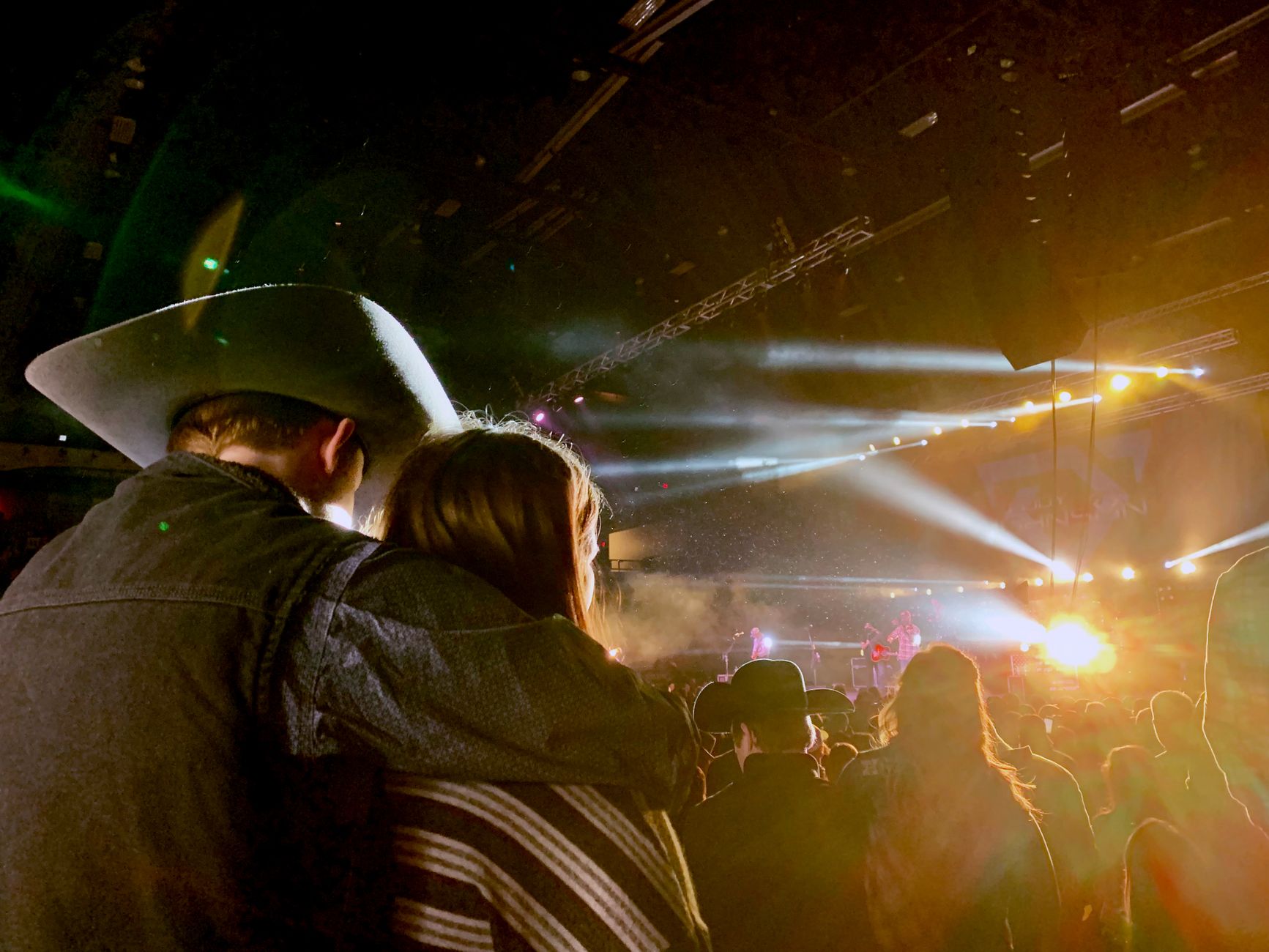

At the 2026 CMA Touring Awards in Nashville, Lainey Wilson’s road crew swept the major production categories, marking a definitive industry shift toward traditional, live-instrumentation arena tours. The Country Music Association also honored legendary booking agent Jim Halsey and touring veteran Keith Urban for their decades of live music innovation. The evening served as a clear mandate from the industry. The era of the pop-country track show is fading. The era of the working country band has returned.
The CMA Touring Awards exist outside the televised glamour of the November CMA Awards. There are no red-carpet fashion breakdowns. There are no prime-time commercial breaks. This event belongs to the road warriors. The riggers. The front-of-house engineers. The tour managers. The lighting directors. These are the professionals who move millions of dollars of steel, sound, and light down the interstate every night. They build temporary cities in empty arenas by 8:00 AM and tear them down by midnight.
In 2026, the industry recognized that no crew built a better city than Lainey Wilson’s.
The Sweep of the Bell Bottom Crew
Lainey Wilson spent the last five years climbing from a camper trailer to stadium headliner status. That ascent required a massive scaling of production. But unlike many of her contemporaries who scaled up by adding LED video walls and digital backing tracks, Wilson’s team scaled up the analog way. They amplified the band. They built a touring infrastructure that supported a sprawling, 1970s-style country-rock show.
The CMA Touring Awards voters rewarded this approach. Wilson’s team took home hardware across the most competitive categories. Front of House (FOH) Engineer of the Year. Tour Manager of the Year. Lighting Director of the Year. Production Manager of the Year. The sweep was absolute.
This dominance is not an accident. It represents a philosophical choice. Wilson’s production team deliberately designed a show that feels tactile. The lighting rigs utilize warm tungsten tones rather than cold, hyper-kinetic lasers. The audio mix prioritizes the steel guitar and live drum kit, rejecting the polished, quantized sound of modern pop. Delivering this raw, unpolished sound in a cavernous, concrete arena requires immense technical skill. The acoustic challenges of a 15,000-cap hockey arena are notoriously unforgiving to live acoustic instruments.
The Mechanics of the Modern Traditional Tour
Moving a tour of this magnitude is a logistical marvel. A modern arena tour requires upwards of fifteen semi-trucks and eight sleeper buses. The daily burn rate for a tour of this size can exceed $150,000 before a single ticket is scanned. The crew manages fuel logistics, union venue labor, catering for a hundred people, and the physical safety of a massive suspended lighting rig.
Wilson’s Tour Manager and Production Manager were specifically recognized for executing this massive operation flawlessly throughout the 2025 and 2026 touring cycles. They managed routing through secondary and tertiary markets. They navigated the complex economics of post-pandemic touring, where diesel prices and venue cuts have squeezed profit margins tight. Through it all, the crew delivered a consistent, high-fidelity experience to the fans.
The industry took notes. Wilson’s crew proved that a rising traditionalist can move tickets and execute production at a scale previously reserved for pop-crossover acts.
Jim Halsey and the Blueprint of Country Touring
While Wilson’s crew represents the present and future of country touring, the CMA Touring Awards also paused to honor the architect of its past. Jim Halsey received a career honor that underscored his foundational role in making country music a global touring enterprise.
Before Jim Halsey, country music touring was largely a regional affair. Artists played state fairs, high school gymnasiums, and local honky-tonks. The infrastructure was primitive. The money was small. Halsey changed the math.
Operating out of Tulsa, Oklahoma, far from the Nashville establishment, The Jim Halsey Company became the largest and most powerful country music booking agency in the world. At his peak, Halsey represented a staggering roster. The Oak Ridge Boys. Roy Clark. Waylon Jennings. The Judds. Reba McEntire. He demanded that country artists be treated with the same respect, and paid the same guarantees, as rock and roll stars.
Halsey pushed country music into performing arts centers. He booked country acts into the main rooms of Las Vegas casinos, breaking the monopoly of the Rat Pack and traditional crooners. He even pushed the genre across the Iron Curtain. In 1976, Halsey booked Roy Clark and the Oak Ridge Boys for a historic tour of the Soviet Union. It was a logistical and diplomatic triumph that proved country music’s appeal was not limited to the American South.
Honoring Halsey in 2026 serves as a reminder to the modern industry. The multi-million dollar arena tours of today were built on the grueling, groundbreaking work of agents who refused to let country music be marginalized.
Keith Urban’s Enduring Road Legacy
The evening’s third major narrative belonged to Keith Urban. The Australian guitar virtuoso was honored for his decades of live performance innovation and his enduring commitment to his road family.
Urban bridges the gap between Halsey’s era and Wilson’s era. When Urban broke out in the late 1990s and early 2000s, he fundamentally altered the expectations for a country music live show. He brought stadium-rock energy, extended guitar solos, and a dynamic stage presence that demanded larger, more sophisticated production.
But Urban was honored at the 2026 CMA Touring Awards for more than just his stagecraft. He was recognized for how he runs his organization. In an industry notorious for high turnover and burnout, Urban’s crew is famous for its longevity. Many of his guitar techs, monitor engineers, and production staff have been with him for over fifteen years.
Urban treats his touring operation like a family business. He has historically paid above-market rates, provided superior road accommodations, and fostered a culture of respect. During the industry shutdowns of 2020, Urban was among the most vocal advocates for out-of-work road crews, quietly supporting his own team when the trucks were parked.
His recognition at the CMA Touring Awards is a nod to the human element of touring. Production requires gear, but it runs on people. Urban has spent a quarter-century proving that taking care of the people is the best way to ensure the gear works.
The Economics of the 2026 Country Tour
The backdrop to the 2026 CMA Touring Awards is a rapidly shifting live music economy. The cost of touring has never been higher. Independent promoters are being squeezed by massive conglomerates. Ticketmaster controversies continue to frustrate fans. The barrier to entry for a new artist trying to mount a national tour is staggeringly high.
This economic reality makes the achievements of Wilson’s crew, Halsey’s legacy, and Urban’s longevity even more significant.
For a rising traditionalist like Lainey Wilson, the decision to carry a full, live band rather than relying on a laptop is an expensive one. It means more hotel rooms. It means more per diems. It means a larger bus lease. Every additional musician on stage cuts into the bottom line. But the 2026 CMA Touring Awards validated that investment. The fans are demanding authenticity. They are willing to pay premium ticket prices, but they expect a premium, live musical experience in return. The laptop-driven track shows of the 2010s are no longer sufficient for an arena crowd.
Halsey’s legacy reminds the industry that breaking into new markets requires risk. When Halsey booked Roy Clark in Vegas, the casinos were skeptical. When Wilson’s team booked her first arena headline tour, the financial risk was entirely on their shoulders. The agents and promoters who take these risks are the ones who move the genre forward.
The Vanguard of the New Traditionalists
Lainey Wilson does not exist in a vacuum. She is the vanguard of a broader movement. Artists like Zach Bryan, Tyler Childers, and Cody Johnson have also built massive touring empires based on live instrumentation and raw performance. They have bypassed the traditional pop-country playbook.
The CMA Touring Awards are a lagging indicator of industry trends. The voters are the people actually doing the work. When the crews vote to sweep Lainey Wilson’s team, they are casting a vote for the type of tour they want to work on. They want to mix real drums. They want to light real musicians. They want the unpredictability of a live band.
The 2026 awards ceremony was a celebration of this return to form. It acknowledged that the heart of country music still beats on the highway. It beats in the diesel engines of the Peterbilts. It beats in the callouses of the guitar techs. It beats in the meticulous spreadsheets of the tour managers.
The awards have been handed out. The speeches have been made. The bar tabs have been closed. The industry takes a brief moment to breathe.
Then the radios crackle. The riggers clip in. The cases get pushed up the ramp. The trucks get loaded. The buses fire their engines. The drivers check the routes. Tomorrow, the arena will be empty. But tonight belongs to the crew.
Nashville.