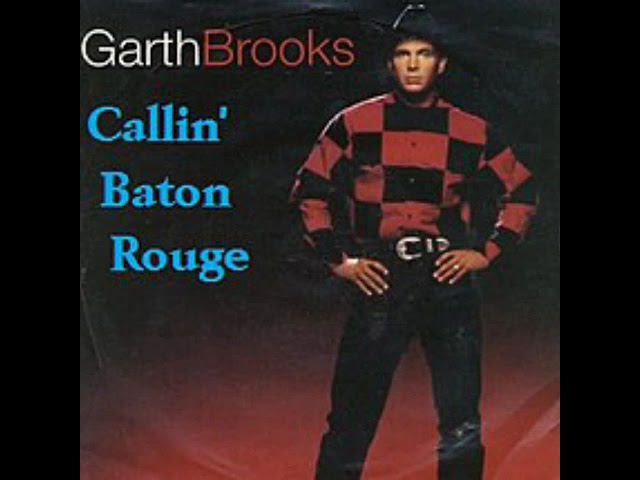
Garth Brooks is reportedly exploring the sale of his music catalog and publishing rights for a record-breaking $2 billion, a deal that would encompass his massive discography of over 157 million albums sold worldwide. The figure, first reported by industry outlets like American Songwriter, would shatter every existing record in the history of music acquisition. It is a number that redefines the ceiling of intellectual property. The valuation does not stem simply from his popularity. It stems from decades of ruthless, calculated control over his master recordings, his publishing rights, and his digital distribution.
For years, the music industry has watched heritage artists cash out. The catalog boom of the 2020s turned classic rock and pop discographies into an uncorrelated asset class for private equity firms. But Garth Brooks represents a different tier of asset. He is a walled garden. He is the best-selling solo artist in United States history. He has outsold Elvis Presley. He sits second only to The Beatles in total domestic album sales. A $2 billion asking price is not merely a reflection of past radio hits. It is a premium placed on absolute ownership.
The Two Billion Dollar Benchmark
To understand the sheer scale of a $2 billion valuation, the number must be placed against the existing market comparables. In December 2021, Bruce Springsteen sold his master recordings and publishing rights to Sony Music Group for an estimated $500 million. At the time, the Springsteen deal was viewed as the absolute ceiling for a single artist’s life work. A year prior, Bob Dylan sold his publishing catalog to Universal Music Publishing Group for nearly $400 million, later selling his master recordings to Sony for an additional $200 million.
Other massive transactions have followed. Genesis sold for $300 million. Sting sold for $300 million. The estate of Michael Jackson sold a 50 percent stake in his catalog to Sony for a reported $600 million, valuing the total Jackson catalog at $1.2 billion. Recently, rumors circulated that the surviving members of Queen were seeking $1.2 billion for their collective assets.
Brooks is reportedly seeking nearly double the price of Springsteen. The math behind this $2 billion figure relies on several unique multipliers. First is the sheer volume of his physical sales. Brooks holds nine RIAA Diamond awards, signifying albums that have sold over 10 million copies each. No other artist in history has achieved this. Second is the nature of his ownership. A buyer would not be purchasing a fractional royalty stream. They would be purchasing the keys to the entire Garth Brooks enterprise.
The Architecture of a Country Empire
The foundation of this valuation was poured in 1989. Brooks released his self-titled debut album on Capitol Records, produced by Allen Reynolds. The record was a success, but it was his 1990 sophomore effort, No Fences, that altered the trajectory of the music industry. Driven by singles like “Friends in Low Places” and “The Thunder Rolls,” No Fences sold 18 million copies. It proved that country music could generate pop-level revenue.
In 1991, Brooks released Ropin’ the Wind. It became the first country album in history to debut at No. 1 on the all-genre Billboard 200 chart. Throughout the 1990s, Brooks operated with a strategic ruthlessness rarely seen in Nashville. He understood leverage. He understood that his sales were keeping the lights on at Capitol Records and its parent company, EMI.
The Battle for the Masters
In the music business, the master recording is the original sound recording of a song. Whoever owns the master controls where the song can be licensed, how it can be distributed, and who gets paid when it is played. Historically, record labels owned the masters in perpetuity. Artists received a royalty percentage. Brooks refused to accept this standard arrangement.
During a period of intense corporate restructuring at EMI in the late 1990s, Brooks used his unparalleled sales figures as leverage. He demanded control of his master recordings. He won. Today, his music is released through his own independent imprint, Pearl Records. Because he owns his masters, any potential catalog sale means the buyer acquires 100 percent of the master revenue, rather than a diluted royalty cut. This single business maneuver decades ago is directly responsible for hundreds of millions of dollars in his current valuation.
The Digital Holdout and the Walled Garden
The second pillar of the $2 billion valuation is scarcity. In the early 2000s, the music industry was decimated by digital piracy and the unbundling of the album format. Steve Jobs launched the iTunes Store, convincing major labels to sell songs individually for 99 cents. Brooks refused to participate. He argued that albums were cohesive bodies of work and should not be chopped into singular tracks. Because he owned his masters, Capitol Records could not force his music onto iTunes.
For over a decade, the only way to legally acquire Garth Brooks music was to buy a physical CD. As the industry transitioned from digital downloads to streaming via Spotify and Apple Music, Brooks maintained his holdout. He argued that the streaming compensation model was fundamentally broken for songwriters and artists.
- In 2014, Brooks launched his own digital music platform, GhostTunes, allowing fans to purchase his music directly.
- In 2016, he finally entered the streaming era, but on his own terms. He signed an exclusive streaming deal with Amazon Music.
- To this day, Garth Brooks’ music cannot be found on Spotify or Apple Music.
This exclusivity is incredibly valuable. If a private equity firm or major label acquires his catalog, they acquire the right to finally release Garth Brooks to the broader streaming ecosystem. The sudden influx of his 157-million-selling discography onto Spotify and Apple Music would trigger a massive, unprecedented wave of global streaming revenue. The buyer is not just purchasing past performance. They are purchasing untapped digital potential.
The Buyers and the Broader Market
Who can afford a $2 billion music catalog? The pool of buyers is exceptionally small. It consists of major music conglomerates and heavily capitalized private equity firms. Sony Music Group and Universal Music Group have the infrastructure and the capital, often partnering with outside financiers to fund mega-deals.
Firms like Primary Wave, Hipgnosis Songs Fund, KKR, and Blackstone have poured billions into music rights over the last five years. They view iconic songs as predictable, cash-flowing assets. A hit song from 1990 generates royalties every time it is played on terrestrial radio, streamed online, used in a television commercial, or sung in a crowded stadium. It is an asset class that is theoretically immune to stock market volatility. People listen to music during recessions. People listen to music during economic booms.
“The acquisition of a catalog like Garth Brooks is not a standard music industry play. It is a macroeconomic infrastructure play. You are buying a utility that generates yield based on American cultural consumption.”
However, a $2 billion price tag carries significant risk. The buyer must be convinced that country music, a genre historically dominant in North America but less penetrative globally than pop or rock, can generate the international streaming volume required to recoup a two-billion-dollar investment. Brooks is an American titan, but his global streaming footprint remains largely untested due to his Amazon Music exclusivity.
The Live Multiplier Effect
Catalog valuations are also tied to an artist’s ongoing relevance. An inactive artist generates passive catalog revenue. An active, touring artist generates active catalog revenue. Brooks is one of the most successful live performers in history. When he came out of retirement in 2014, his comeback tour with his wife, Trisha Yearwood, sold over 6.3 million tickets, making it the highest-grossing North American tour of all time.
He followed this with The Stadium Tour from 2018 to 2022, routinely drawing crowds of over 70,000 people per night. Every time Brooks plays a stadium, his catalog streams spike. His physical album sales spike. His merchandise sales spike. A buyer paying $2 billion is betting that Brooks will continue to perform, continue to drive cultural conversations, and continue to act as the primary marketing engine for his own legacy.
What a Sale Means for the Legacy
For an artist in their sixties, Brooks was born on February 7, 1962, a catalog sale is the ultimate form of estate planning. It converts a complex web of intellectual property, royalty administration, and master licensing into liquid, generational wealth. It removes the burden of catalog management from the artist’s heirs.
If Brooks executes this sale, he will cement his status not just as a cultural icon, but as one of the most successful businessmen in the history of American entertainment. He built an empire by saying no. He said no to standard record deals. He said no to Steve Jobs. He said no to Daniel Ek and Spotify. Every refusal increased his leverage. Every holdout increased his value. The market shifted. The catalogs sold. The billionaires waited. Brooks.