When Elvis Presley stepped to the microphone at Radio Recorders in Hollywood in the mid-1960s, the compliance was gone. He looked at the sheet music on the stand. He read the lyrics. He began to laugh. The album in question was part of a relentless soundtrack churn, records like Frankie and Johnny, which would stall exactly at No. 20 on the Billboard Top LPs chart in May 1966. For a man who had revolutionized global culture a decade earlier, hitting the bottom edge of the Top 20 with novelty songs felt like a public execution. But this mockery was not just a fleeting moment of studio frustration. It was the exact moment the King of Rock and Roll decided to save his own life.
The story of Elvis Presley in the 1960s is often told as a tragedy of lost potential. He went into the United States Army in 1958 as a dangerous, hip-shaking revolutionary. He emerged in 1960 and was immediately packaged into a family-friendly cinematic commodity. The strategy was engineered by his manager, Colonel Tom Parker. The math was simple, lucrative, and artistically devastating.
Three movies a year. Three accompanying soundtrack albums a year. Maximum revenue. Minimum effort.
The Hollywood Assembly Line
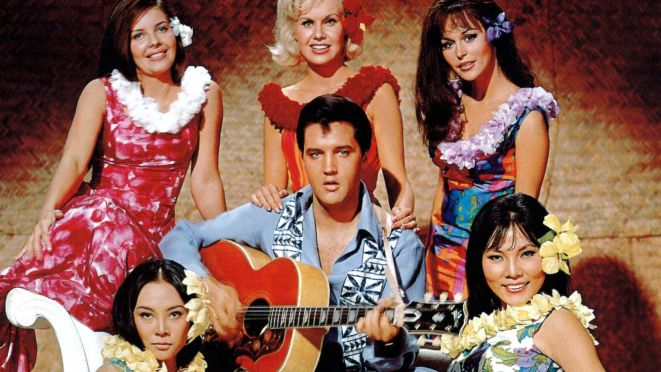
By 1965, the formula had calcified. Presley was trapped in a cycle of travelogues and lightweight musical comedies. Blue Hawaii had been a massive success in 1961, spending 20 weeks at No. 1 on the Billboard 200. That success sealed his fate. Paramount Pictures and Metro-Goldwyn-Mayer demanded more of the same. Colonel Parker happily obliged.
The music suffered first. RCA Victor, Presley’s label, was contractually obligated to release the soundtracks. But the songs were not chosen for their artistic merit. They were chosen based on publishing rights.
The Hill & Range Monopoly
Colonel Parker had brokered a deal with the publishing company Hill & Range. If a songwriter wanted Elvis Presley to sing their song in a movie, they had to surrender a significant portion of their publishing royalties to Presley’s own publishing companies, Gladys Music and Elvis Presley Music. The greatest songwriters of the era, Leiber and Stoller, Bob Dylan, Lennon and McCartney, refused these terms. They kept their publishing. Consequently, Elvis was cut off from the best music of the 1960s.
Instead, the material was churned out by a stable of reliable, compliant hack writers. They wrote songs to fit absurd cinematic plot points. Presley was forced to sing “Yoga Is As Yoga Does” in Easy Come, Easy Go. He sang “Queenie Wahine’s Papaya” in Paradise, Hawaiian Style. He sang “A Dog’s Life” to a pack of hounds.
He hated the songs. He hated the movies. And eventually, he could no longer hide it.
The Breaking Point in the Studio
The rebellion began behind closed doors. Inside RCA’s Studio B in Nashville, and at various soundstages in Los Angeles, Presley’s mood darkened. Members of the Memphis Mafia, his close-knit group of friends and bodyguards, including Red West and Jerry Schilling, noted the shift. Presley stopped trying to elevate the material.
During the sessions for films like Frankie and Johnny and Spinout (which peaked at No. 18 in 1966), Presley began to openly mock the music. When handed the sheet music for a new track, he would read the lyrics aloud in a sarcastic, exaggerated voice. He would intentionally flub takes to make the studio engineers laugh. He sang with a mocking, operatic vibrato, turning the insipid lyrics into a joke.
He was daring the producers to use the bad takes. Sometimes, they did.
“He would look at the lyrics and just shake his head. He knew what was happening on the radio. He knew what the Beatles were doing. And here he was, singing about a smorgasbord.”
This mockery was a defense mechanism. If he treated the sessions as a joke, it shielded his ego from the reality of his declining relevance. The Billboard charts reflected this decline. His soundtracks were no longer hitting No. 1. They were scraping the Top 20. Then the Top 40. The world was moving on, listening to Pet Sounds and Rubber Soul. Presley was singing “Petunia, the Gardener’s Daughter.”
The Financial Success Masking the Artistic Void
The tragedy of the mid-60s era was that it remained profitable just long enough to trap him. A Presley movie was a guaranteed return on investment. The budgets were slashed. The shooting schedules were compressed into a few weeks. The albums, despite their declining chart positions, still sold enough copies globally to keep RCA Victor satisfied.
- 1964: Kissin’ Cousins peaked at No. 6.
- 1965: Harum Scarum peaked at No. 8.
- 1966: Frankie and Johnny peaked at No. 20.
- 1967: Double Trouble peaked at No. 47.
The trajectory was clear. The audience was aging out, and no new fans were being won. The mockery in the studio was Presley’s internal alarm system going off. He realized that if he did not break the cycle, he would be remembered as a cinematic joke rather than a musical pioneer.
The Pivot Toward the 1968 Comeback
The turning point arrived when the mockery turned into action. Presley’s vocal dissatisfaction in the studio finally translated into a confrontation with Colonel Parker. By late 1967, Presley made it clear he wanted out of the movie business. He wanted to perform live again. He wanted to feel the danger of a real audience.
Parker, sensing the cinematic well was running dry, pivoted to television. He pitched a Christmas special to NBC. Parker’s vision was typical: Elvis in a tuxedo, singing “Here Comes Santa Claus,” surrounded by fake snow. It would be another safe, sanitized product.
But the Presley who showed up to the NBC meetings was the same Presley who had been laughing at the soundtrack sheet music. He was done complying. He partnered with a young, rebellious television director named Steve Binder. Binder did not care about Colonel Parker. Binder cared about rock and roll.
The Leather Suit and the Raw Truth
Binder asked Presley a simple question: What do you want to do? Presley wanted to play his guitar. He wanted to sweat. He wanted to prove he was still the King.
The resulting broadcast, known today as the ’68 Comeback Special, aired on December 3, 1968. Presley wore a black leather suit designed by Bill Belew. He sat in a small square ring, surrounded by a live audience, alongside his original guitarist Scotty Moore and drummer D.J. Fontana. He was nervous. He was feral. He was magnificent.
When he launched into “Lawdy Miss Clawdy” and “Baby, What You Want Me to Do,” the Hollywood years evaporated. The novelty songs were erased. The man who had mocked his own records just two years prior was suddenly delivering the most vital, aggressive performances of his adult life.
The Return to Memphis
The momentum of the television special carried over into the recording studio. Presley refused to go back to the Hollywood soundstages. In January 1969, he walked into American Sound Studio in his hometown of Memphis, Tennessee.
He was working with producer Chips Moman and a legendary session band known as the Memphis Boys. There were no movie scripts. There were no Hill & Range publishing demands. Moman demanded excellence, and Presley delivered. The sessions produced a string of massive, career-defining hits.
- “Suspicious Minds”
- “In the Ghetto”
- “Kentucky Rain”
- “Don’t Cry Daddy”
The resulting album, From Elvis in Memphis, is widely considered one of the greatest records in the history of popular music. It peaked at No. 13 on the Billboard charts, but its cultural impact was immeasurable. It proved that Presley was not a relic. He was a contemporary force.
The Legacy of the Laughter
It is easy to look back at the Hollywood years as a dark age. But the terrible soundtracks served a vital purpose. They pushed Presley to his absolute limit. If the songs had been just mediocre, he might have coasted through the rest of the decade. But the songs were so spectacularly bad, so worthy of his open mockery, that they forced him to wake up.
The laughter in the RCA recording booths was not just a sign of defeat. It was the sound of a prisoner realizing the door was unlocked. He just had to push it open.
The clapperboards snapped shut. The novelty songs faded. The King stepped back to the microphone. Memphis.