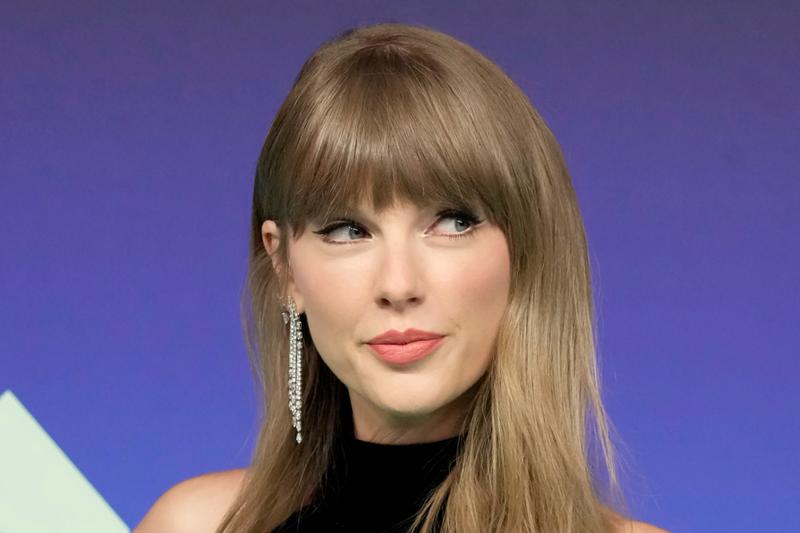
Taylor Swift has dethroned Ella Langley on the Billboard Hot 100, ending a record-breaking run for the country single “Choosin’ Texas.”
The all-genre chart is a weekly scoreboard. Streams. Sales. Airplay. Then a new name at No. 1.
Country fans are not treating this as a routine update.
But the story does not begin with a pop star’s return. It begins with a country record that refused to leave the throne. A Texas-titled song turned a chart week into a referendum on who the Hot 100 is for.
What “Dethroned” Means on the Billboard Hot 100
On the Billboard Hot 100, dethroned has a plain meaning. One song was No. 1. Another song took its place.
The Hot 100 is not a country chart. It is not a pop chart. It is the all-genre list Billboard has published since August 4, 1958, ranking the most popular songs in the United States.
When a country single sits at the top, it occupies space that pop catalogs usually reclaim. When it falls, the fall is public.
According to American Songwriter, Taylor Swift knocked Ella Langley from that summit after a record-breaking run for “Choosin’ Texas.” The trade outlet treated the change as chart news. Country timelines treated it as something else.
The song that lost the crown kept its name. “Choosin’ Texas.” The state in the title is doing work. It tells listeners which map the record belongs to.
Ella Langley and a Country Record That Would Not Leave
Ella Langley came up as a country singer-songwriter from Hope Hull, Alabama, not as a pop-radio project. Her lane has been barroom country. Guitars. Specific detail. A voice built for Friday nights and replay buttons.
She broke through to a much wider audience with “you look like you love me,” the 2024 duet with Riley Green that country radio could not kill. The song crossed into the broader American conversation. Awards shows noticed. Nashville noticed. People who do not usually watch country award shows noticed too.
That earlier hit is the reason a later Langley single could threaten the Hot 100’s top slot. Crossover is not a mystery. It is accumulated attention.
“Choosin’ Texas” arrived in that slipstream. The title plants a flag in Texas country, a tradition that runs through dancehalls, pickup-truck stereos, and regional radio long before it ever touches an all-genre chart.
Alabama roots, Texas title
Texas country has its own geography. Gruene Hall in New Braunfels. Billy Bob’s Texas in Fort Worth. Dancefloors in Lubbock, Amarillo, and San Antonio. The sound is not always the same as Music Row polish. The loyalty often is.
A record called “Choosin’ Texas” does not need to be a history lecture. The title is the lecture.
Langley’s run at the top of the Hot 100 was described as record-breaking. The exact trophy, weeks at No. 1, streaming marks, the longest country hold in a given span, belongs to Billboard’s week-by-week recaps. The cultural fact is simpler.
A country song held the American pop throne long enough for people to get used to it. Then it was gone.
Why Country Fans Are Passing This Around
Country music has spent two decades watching the all-genre chart from the hallway.
Sometimes a song walks in. Each time, a piece of the country or country-adjacent world treated the peak as proof. Proof that the mainstream still had to make room.
- Lil Nas X and Billy Ray Cyrus, “Old Town Road,” 2019
- Morgan Wallen, “Last Night,” 16 weeks at No. 1 in 2023
- Shaboozey, “A Bar Song (Tipsy),” 2024
- Ella Langley, “Choosin’ Texas,” the run that just ended
The reverse trip feels different. A pop superstar taking the slot back is mathematically normal. It does not feel normal to the people who had adopted “Choosin’ Texas” as their chart.
That is why the story is traveling as a gut punch. Not because Billboard changed its rules. Because a Texas-titled country hold ended at the hands of Taylor Swift.
The Nashville departure that never left the argument
Swift is not a stranger to country. She started there.
She was born December 13, 1989, in West Reading, Pennsylvania. She moved to Hendersonville, Tennessee, as a teenager and signed with Big Machine Records. The debut single was “Tim McGraw” in 2006. The early albums, Taylor Swift, Fearless, Speak Now, Red, were country radio facts before they were pop-history facts.
Then 1989 arrived in October 2014. The country charts stopped being the center of the story. The Hot 100 became the home field.
Country fans have a long memory for that arc. Some still claim her. Some still resent the departure. A lot of people do both in the same sentence.
So when Swift dethrones a current country No. 1, the argument writes itself on social media. It is not only a bigger artist winning the week. It is the person who left Nashville taking the chair.
The chart does not care about the argument. The audience does.
Taylor Swift’s Gravity on the All-Genre Chart
Taylor Swift is not an ordinary Hot 100 visitor. She is one of the list’s defining modern occupants.
She has stacked No. 1 singles across eras, from “We Are Never Ever Getting Back Together” through the streaming-era album cycles that turn release weeks into national events. Catalog streams. Opening-week sales. Radio. A fan base that still buys music on purpose.
The Eras Tour, which ran from March 2023 into December 2024, turned that chart power into a traveling city. Stadiums. Wristbands. A set list that functioned like a greatest-hits radio format. By the time the tour closed, Swift’s catalog was not a back catalog. It was a living chart engine.
That engine is why a dethroning is always on the table. A Swift single does not need country radio. It needs the rest of the country.
Which Swift song took the No. 1 slot in this particular week is a Billboard line-item. The larger fact does not depend on the title. The largest pop catalog of the last twenty years reclaimed the peak from a country record named after Texas.
That is the collision.
How the Billboard Hot 100 Actually Works
The Hot 100 is often treated like a vote. It is not a vote.
Billboard compiles the chart with data from Luminate, blending three pipes. The public ranking lives on Billboard’s Hot 100 each week. The job has not changed since 1958. Name the most popular songs in the United States.
- Streaming from services such as Spotify, Apple Music, YouTube, and Amazon Music
- Radio airplay across formats, not only country stations
- Sales of downloads and physical singles
A country song can dominate country radio and still lose the all-genre week if pop streaming is larger. A pop song can win without ever being played on a country station in Waco.
That math is why country peaks feel borrowed. The format’s home charts, Hot Country Songs and Country Airplay, measure a different public. The Hot 100 measures the whole United States as one market.
When “Choosin’ Texas” sat at No. 1, it meant the whole market had, for a stretch, chosen a country record. When Swift took the slot, it meant the whole market had moved.
Neither result is a moral verdict. Both are arithmetic.
Country listeners know the arithmetic and still feel the symbolism. Charts have always been symbols. A No. 1 is a flag planted in public.
Planting a country flag on the Hot 100 is rare enough to celebrate. Watching it pulled down is rare enough to resent.
Country Radio Is Not the Hot 100
Country Airplay, published by Billboard, measures detections on country stations. Hot Country Songs mixes airplay, streaming, and sales inside the format. A song can rule those lists and still lose the all-genre week.
Program directors in Dallas, Houston, Oklahoma City, and Atlanta can keep “Choosin’ Texas” in power rotation. That will not automatically restore a Hot 100 crown. Pop streaming is a different ocean.
This split is old. Garth Brooks sold out stadiums in the 1990s while the Hot 100 was often looking elsewhere. The Chicks could dominate country and still live a different life on the all-genre list. Today the pipes are streaming-first, which is how Morgan Wallen became a Hot 100 regular without becoming a pop-radio mascot.
Langley’s audience can be huge in the format and still be outnumbered by a Taylor Swift release week. That is not an insult. It is population.
Carrie Underwood, Miranda Lambert, and Lainey Wilson have all learned the same hard chart lesson. Country stardom and Hot 100 occupancy are related, not identical. A woman holding No. 1 on the all-genre list with a country record is still an event. That is part of why “Choosin’ Texas” was celebrated. It is part of why its removal stings.
Texas in the Title, Nashville in the Crossfire
“Choosin’ Texas” is a clever piece of geography.
Related: Kacey Musgraves Brings Miranda Lambert Out for Austin Duet
Ella Langley is an Alabama artist. The song’s title points west. That is not a contradiction in modern country. Texas is a brand as much as a place. It signals dancehalls, Telecasters, beer, heat, and a kind of regional stubbornness.
Nashville is the industry town. Texas is the myth the industry still borrows.
So a Texas-titled No. 1 lets country fandom tell a cleaner story. The heartland held the pop chart. Then the biggest pop star in the world took it back.
Music Row will still work the phones on Monday. Country radio will still spin what tests. The Hot 100 will still publish on Tuesday.
The argument will still be online.
This is the same tension that follows every country crossover. Is the song still country if the rest of America likes it? Is the artist still country if the Hot 100 notices? What happens when the Hot 100 notices, then notices someone else?
Langley does not become less country because the week changed. Swift does not become a Nashville artist again because country Twitter said her name.
The chart moved. The identities did not.
The Long Line of Country Songs That Touched the Throne
Country has been knocking on this door since the chart existed.
Jimmy Dean’s “Big Bad John” hit No. 1 in 1961. Jeannie C. Riley’s “Harper Valley P.T.A.” did it in 1968. Kenny Rogers and Dolly Parton sent “Islands in the Stream” to the top in 1983. Lonestar’s “Amazed” reached No. 1 in 2000.
The 2020s made the visits more frequent. Streaming rewarded hooks that work in trucks and in dorm rooms. Wallen, Shaboozey, and now Langley did not need a novelty costume to be heard outside the format.
Ella Langley’s “Choosin’ Texas” sits in that 2020s line whether or not every traditionalist grants the membership card. A woman country singer holding the Hot 100 is still rarer than the male streaming giants who have defined the decade’s country-pop overlap.
That rarity is part of the sting. The run was not only country. It was a country woman at the peak of the all-genre list. Then the most famous woman in pop music took the peak back.
Two different kinds of dominance. One chair.
What the Week Does Not Change
A Hot 100 dethroning does not delete a song.
“Choosin’ Texas” still plays in trucks. It still plays in bars. It still plays on country radio if program directors keep the spin. Billboard’s country charts will tell that story in a different column.
Taylor Swift still commands a global streaming base that most country artists will never touch. That was true the week before this chart. It is true the week after.
What changed is the flag at the top of one list.
Country fandom has a habit of treating that flag as a census of respect. Pop fandom has a habit of treating it as a census of scale. Both habits are why a single Billboard week in October 2026 can feel like a culture war.
It is still a week.
The record-breaking run happened. The dethroning happened. The argument is the part that will outlive the dated chart.
Dancehalls kept the song. Country radio kept the song. Playlists kept the song.
Swift.
Frequently asked questions
Did Taylor Swift dethrone Ella Langley on the Billboard Hot 100?
Yes. In October 2026, Taylor Swift replaced Ella Langley at No. 1 on the Billboard Hot 100 after Langley’s record-breaking run with “Choosin’ Texas.” American Songwriter reported the dethroning as the country single lost the all-genre summit.
What is Choosin’ Texas by Ella Langley?
“Choosin’ Texas” is a country single by Ella Langley whose title stakes a claim in Texas country, even though Langley is from Hope Hull, Alabama. The song had a record-breaking run on the Billboard Hot 100 before Taylor Swift took the No. 1 slot.
Why do country fans care that Taylor Swift took the No. 1 spot?
Country fans had treated the “Choosin’ Texas” peak as proof that a Texas-titled country record could hold the all-genre throne. Swift started in Nashville on Big Machine Records, then left country radio behind after 1989 in 2014, so her return to No. 1 reads in that audience as pop scale reclaiming a chair country had briefly owned.
How does the Billboard Hot 100 choose a No. 1 song?
The Billboard Hot 100, published since August 4, 1958, blends streaming, radio airplay, and sales using data from Luminate. It is an all-genre U.S. popularity chart, not a country chart, which is why a pop catalog can overtake a song that still dominates country radio.
Who is Ella Langley?
Ella Langley is a country singer-songwriter from Hope Hull, Alabama. She reached a national audience with the 2024 Riley Green duet “you look like you love me” before “Choosin’ Texas” made its Billboard Hot 100 run.
Sponsored · Buying, selling or investing in property? JL Group works with owners and investors in Springfield, Missouri and beyond. jlgroup.online · Advertise on ByteSize Network