Tag: Roku

  • Elizabeth Warren and Lawmakers Warn of Fox-Roku Antitrust Issues

    Elizabeth Warren and Lawmakers Warn of Fox-Roku Antitrust Issues

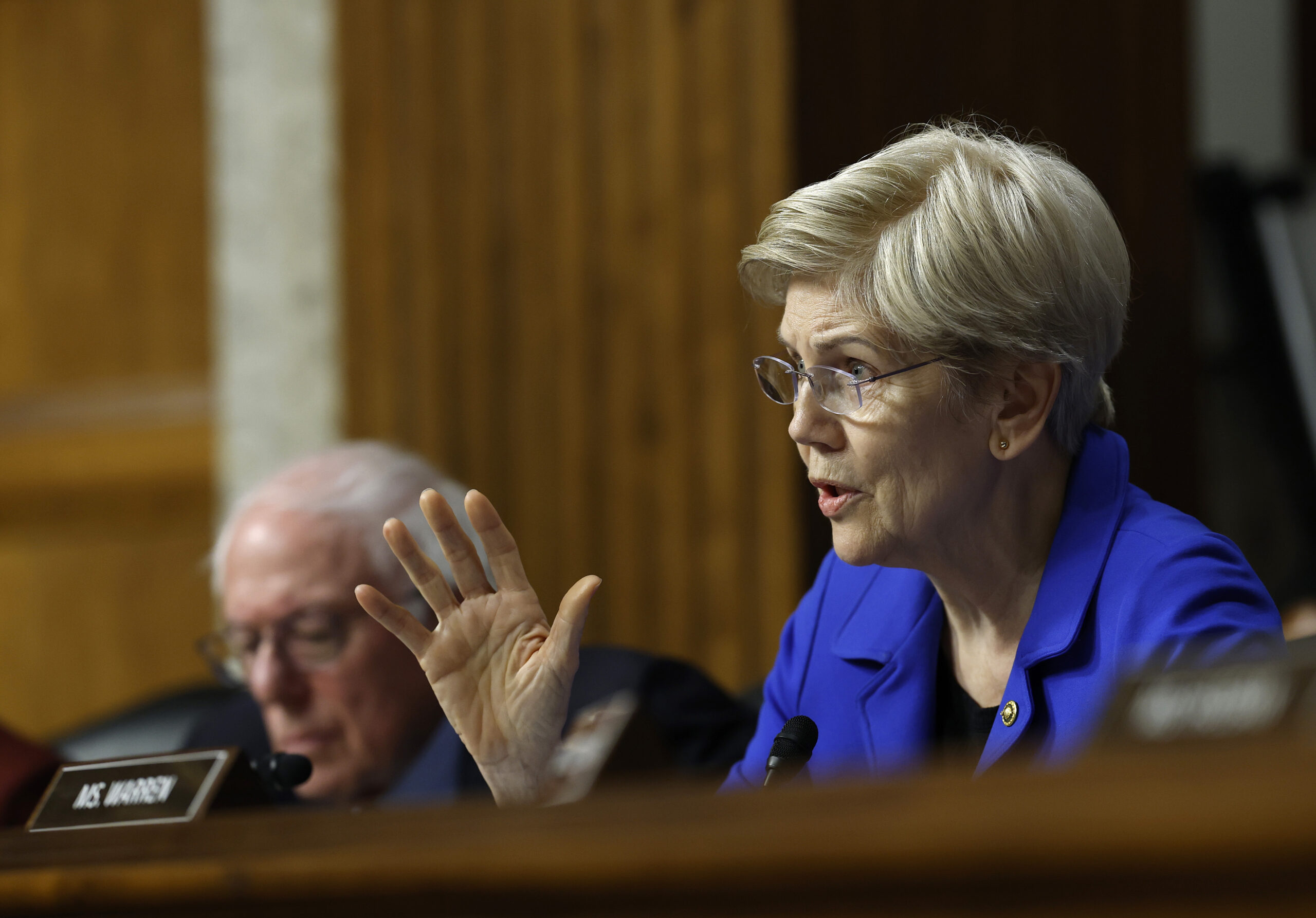
    Senator Elizabeth Warren and other Democratic lawmakers have formally warned of significant antitrust issues concerning a proposed merger between Fox Corporation and streaming technology company Roku. This opposition highlights growing concerns within Congress regarding media consolidation and its potential impact on competition, consumer choice, and the broader digital economy.

    The Proposed Fox-Roku Merger

    The potential merger would combine Fox Corporation’s extensive content library and broadcasting capabilities with Roku’s widely adopted streaming platform. Fox Corporation, a prominent media conglomerate, owns various news, sports, and entertainment properties. Roku, meanwhile, commands a substantial share of the smart TV operating system and streaming device market.

    This integration would create a vertically integrated entity capable of controlling both content creation and its distribution to millions of households. Such a combination raises immediate questions about market power and fair play in the competitive streaming landscape.

    Lawmakers’ Antitrust Concerns

    Senator Elizabeth Warren, a leading voice on antitrust policy, has been particularly vocal in her opposition. She, alongside other Democratic lawmakers, argues that the merger could grant the combined entity undue influence over pricing, content availability, and innovation across the streaming ecosystem. Their primary concern is the potential for the merged company to prioritize its own content and services on the Roku platform, thereby disadvantaging competitors and limiting consumer access to diverse programming.

    The lawmakers’ letter to the Department of Justice (DOJ) outlines several potential harms. These include reduced incentives for innovation among smaller streaming services, increased advertising costs for rival content providers, and a general stifling of market dynamism. They contend that such a merger would further entrench the power of a few large corporations in the media sector, diminishing opportunities for independent creators and broadcasters.

    Impact on Consumers

    Consumers stand to lose in several ways, according to the lawmakers. A less competitive market could result in higher subscription fees for streaming services. It could also lead to fewer choices in content, as the merged entity might favor its own Fox-produced programming. This scenario could force consumers into bundles or subscriptions that do not align with their preferences, ultimately reducing overall value.

    The integration of advertising technology is another area of concern. Roku’s robust advertising platform, combined with Fox’s ad inventory, could create a dominant force in the connected TV advertising market. This could make it more difficult and expensive for other businesses to reach audiences, potentially leading to increased costs passed on to consumers.

    Historical Context of Media Consolidation

    The current debate surrounding the Fox-Roku merger is not an isolated incident. It reflects a long-standing pattern of media consolidation that has reshaped the industry over decades. Major mergers and acquisitions have historically raised antitrust flags, prompting government intervention to protect market competition.

    Past examples include AT&T’s acquisition of Time Warner and Disney’s acquisition of 21st Century Fox assets. Each of these deals underwent intense scrutiny from regulatory bodies. These cases often centered on similar concerns: the potential for reduced competition, increased consumer prices, and diminished content diversity.

    Regulatory Scrutiny and the DOJ

    The Department of Justice is the primary federal agency responsible for enforcing antitrust laws in the United States. Its role involves reviewing proposed mergers and acquisitions to determine if they would substantially lessen competition or create a monopoly. The DOJ can challenge mergers in court or negotiate conditions to mitigate anticompetitive effects.

    Given the high-profile nature of the Fox-Roku proposal and the vocal opposition from lawmakers, the DOJ’s review is expected to be comprehensive and rigorous. The agency will assess market definitions, potential foreclosure effects, and the overall impact on consumer welfare. This review process often involves extensive data analysis, expert testimony, and public comment periods.

    The Role of Senator Warren in Antitrust Policy

    Senator Elizabeth Warren has consistently been a prominent advocate for stronger antitrust enforcement. Her tenure in the Senate has been marked by a focus on curbing corporate power and promoting fair competition across various industries, particularly in technology and media.

    Warren has frequently criticized what she perceives as lax antitrust enforcement in previous administrations. She argues that unchecked mergers have led to an economy dominated by a few powerful players, at the expense of small businesses and consumers. Her involvement in the Fox-Roku case aligns with her broader policy agenda to rein in corporate giants.

    Other Democratic Lawmakers’ Involvement

    Beyond Senator Warren, several other Democratic lawmakers have joined the chorus of opposition. Their collective voice amplifies the pressure on the DOJ to take a firm stance against the merger. These lawmakers often cite constituents’ concerns about rising costs and dwindling choices in their media consumption habits.

    The bipartisan nature of some past antitrust concerns, though less evident in this specific case, underscores the potential for broad political consensus when major market shifts are at stake. However, the current opposition is primarily from the Democratic side of the aisle, reflecting a policy divide on the appropriate level of government intervention in corporate mergers.

    Potential Outcomes of the Antitrust Review

    The DOJ’s review of the Fox-Roku merger could lead to several outcomes. The agency might approve the merger without conditions, finding no substantial threat to competition. Alternatively, it could approve the merger with certain remedies, such as requiring the divestiture of specific assets or imposing behavioral restrictions on the merged entity.

    A more stringent outcome would be a complete challenge to the merger in federal court, arguing that it violates antitrust laws. This would lead to a protracted legal battle, the outcome of which would depend on the evidence presented by both the DOJ and the merging companies. The final decision will set a precedent for future media and technology mergers.

    The Future of Streaming and Media

    The resolution of the Fox-Roku merger saga will have significant implications for the future direction of the streaming industry. If approved, it could signal a new era of vertical integration, where content owners increasingly control their distribution channels. This could accelerate the trend of media companies acquiring or partnering with tech platforms.

    Conversely, if the merger is blocked or significantly altered, it could reinforce the importance of maintaining a diverse and competitive media landscape. Such a decision would empower regulatory bodies to scrutinize large-scale consolidations more closely, potentially fostering an environment where smaller players and independent content creators can thrive.

    The debate surrounding Fox and Roku highlights a critical juncture in the evolution of digital media. Lawmakers warn. Consumers wait. Regulators decide.

    The future of streaming hangs in the balance.
  • Fox’s $22 Billion Roku Acquisition: A Streaming Pivot That Has Wall Street Asking Questions

    Fox’s $22 Billion Roku Acquisition: A Streaming Pivot That Has Wall Street Asking Questions

    Fox Corporation has acquired Roku in a landmark $22 billion transaction, fundamentally altering the architecture of the streaming television industry. The deal merges one of legacy media’s most established content engines with the dominant hardware platform in connected television. Fox secures direct access to millions of living rooms, bypassing traditional distribution gatekeepers. Roku gains the financial backing of a media conglomerate. Executives on both sides herald the merger as a strategic necessity. Wall Street, however, remains unconvinced.

    The acquisition represents a structural shift. For years, media companies focused on building proprietary streaming applications. They rented space on platforms like Roku, Apple TV, and Amazon Fire. Now, Fox is buying the real estate itself. The $22 billion price tag reflects the premium placed on user data and direct advertising access. This is no longer just about content creation. It is about controlling the pipeline.

    But the sheer scale of the investment has triggered immediate scrutiny. Financial analysts are questioning the integration timeline and the true value of Roku’s hardware business in an increasingly saturated market. The deal requires Fox to pivot from a content-first strategy to managing a massive technology and advertising ecosystem. The success of this acquisition will define the next decade of Fox Corporation.

    The Strategic Logic: Why Fox Needed Roku

    The streaming wars have entered a phase of consolidation. Subscriber growth for standalone applications has plateaued. The new battleground is free, ad-supported streaming television (FAST) and platform control. Fox recognized a vulnerability in its existing model. It relied on third-party hardware to deliver its programming. Roku solves that problem.

    Roku controls a massive share of the connected TV market in the United States. Millions of households use Roku devices or Roku-integrated televisions as their primary gateway to streaming content. By acquiring Roku, Fox instantly acquires this audience. They no longer have to negotiate for prime placement on the Roku home screen. They own the home screen.

    Furthermore, Roku’s advertising platform is highly sophisticated. It collects granular data on viewer habits, preferences, and engagement. This data is invaluable to advertisers. Fox can now bundle its traditional broadcast inventory with Roku’s highly targeted digital inventory. This creates a formidable advertising proposition that rivals the scale of tech giants.

    The Data Advantage

    In the modern media landscape, data is as valuable as content. Roku’s operating system tracks exactly what users watch, when they watch it, and how long they stay engaged. This level of insight allows for hyper-targeted advertising. Fox’s acquisition of Roku is, in many ways, an acquisition of this data infrastructure.

    Traditional television ratings are increasingly viewed as outdated. Advertisers demand precision. They want to know that their commercials are reaching specific demographics. Roku provides that certainty. Fox can leverage this data to optimize its own programming decisions and maximize the yield on its ad inventory.

    The combination of Fox’s news, sports, and entertainment content with Roku’s data analytics creates a closed-loop system. Fox creates the content, distributes it through its own platform, and monetizes it using proprietary data. It is a vertically integrated model designed for the digital age.

    Wall Street’s Skepticism: The $22 Billion Question

    Despite the strategic rationale presented by Fox executives, Wall Street’s reaction has been tepid. The $22 billion valuation is a significant premium. Analysts are scrutinizing the financial mechanics of the deal and the execution risks involved.

    The primary concern centers on integration. Fox is a traditional media company. Roku is a technology company. Merging two distinct corporate cultures and operational structures is notoriously difficult. The history of media-tech mergers is littered with expensive failures. Wall Street is demanding a clear roadmap for how Fox intends to realize the projected synergies.

    Furthermore, Roku’s hardware business operates on razor-thin margins. The company has historically subsidized the cost of its streaming sticks and televisions to drive user acquisition, relying on advertising revenue for profitability. Fox must now manage this low-margin hardware division while simultaneously investing in content and platform development.

    The Hardware Dilemma

    Roku’s dominance in the connected TV market is not guaranteed. It faces intense competition from Amazon, Apple, and Google. These tech behemoths have deeper pockets and can afford to loss-lead on hardware to capture market share. Fox is entering a hardware war against the largest companies in the world.

    Analysts are questioning whether Fox has the technological expertise to keep Roku’s operating system competitive. The user interface must remain intuitive, and the platform must continue to attract third-party developers. If Roku loses its edge in hardware and user experience, the value of the acquisition collapses.

    The $22 billion price tag leaves little room for error. Fox has taken on significant debt to finance the transaction. The pressure to deliver immediate financial results will be immense. Wall Street will be watching closely to see if the promised advertising synergies materialize fast enough to justify the cost.

    The Impact on the Streaming Ecosystem

    The Fox-Roku merger sends a clear signal to the rest of the industry. The era of standalone streaming applications may be ending. Survival requires scale and platform control. Other media companies are likely reevaluating their strategies in light of this deal.

    This acquisition could trigger a wave of consolidation. Companies that lack their own distribution platforms may seek partnerships or mergers to remain competitive. The balance of power is shifting away from content creators and toward platform owners.

    For consumers, the impact is less clear. Fox has stated that Roku will remain an open platform, accessible to all streaming services. However, there are concerns that Fox may prioritize its own content on the Roku home screen. The neutrality of the platform is now in question.

    The Future of FAST Channels

    Free, ad-supported streaming television (FAST) is the fastest-growing segment of the streaming market. Roku is a major player in this space with the Roku Channel. Fox already owns Tubi, another prominent FAST platform. The integration of Tubi and the Roku Channel creates a massive ad-supported ecosystem.

    This combined entity will have unparalleled reach. It will offer thousands of hours of free content, supported by targeted advertising. This poses a significant threat to traditional linear television and subscription-based streaming services. Consumers are increasingly seeking free alternatives, and Fox is now positioned to dominate that market.

    The success of this FAST strategy will depend on content acquisition and advertising sales. Fox must continue to license compelling content for these platforms while convincing advertisers to shift their budgets from traditional television to connected TV. The scale of the combined Roku-Tubi audience makes this a compelling proposition.

    The Execution Challenge Ahead

    The acquisition is complete. The checks have cleared. Now, the real work begins. Fox must execute on its ambitious vision while managing the inherent risks of a $22 billion merger. The transition period will be critical.

    Fox leadership must reassure Roku employees and maintain the technological momentum of the platform. They must also convince Wall Street that the financial projections are realistic. The integration plan must be executed flawlessly to avoid disrupting the user experience or alienating advertisers.

    The stakes are existential. If the merger succeeds, Fox will secure its position as a dominant force in the future of television. If it fails, the financial consequences will be devastating. The industry is watching.

    Capital deployed. Platforms merged. Strategies aligned. The market waits.

  • Fox Corp Acquires Roku in $22 Billion Deal

    Fox Corp Acquires Roku in $22 Billion Deal

    The streaming landscape has shifted overnight. Fox Corporation is buying Roku. The acquisition is valued at $22 billion. It merges a traditional media conglomerate with the dominant independent gatekeeper of the streaming era. For years, Roku operated as the neutral ground of streaming hardware. Now, it belongs to Fox.

    The Details of the $22 Billion Acquisition

    The deal broke across financial and entertainment outlets in June 2026. The $22 billion valuation reflects Roku’s massive footprint in the digital entertainment market. Roku does not merely manufacture streaming sticks. It controls the Roku OS, the proprietary operating system built directly into millions of smart televisions manufactured by brands like TCL and Hisense.

    This is a developing story. The exact financial architecture of the acquisition, including the specific ratio of cash to stock, is still emerging. Corporate leadership from both Fox Corp and Roku, including Roku founder Anthony Wood, are expected to release formal integration timelines shortly.

    Why Fox Targeted the Streaming Hardware Giant

    Fox already holds a dominant position in the free, ad-supported streaming television (FAST) sector. The company acquired Tubi in 2020 for $440 million. Roku operates The Roku Channel, a direct competitor in the FAST ecosystem. Merging Tubi and The Roku Channel creates an unprecedented advertising behemoth in the free streaming market.

    However, the hardware interface is the ultimate prize. Owning Roku means owning the digital living room. When a consumer turns on a Roku-enabled television, Fox will now control the home screen. They will control the search algorithms. They will control the premium ad inventory displayed before a user ever launches a competitor’s application like Netflix or Disney+.

    Market Reaction and Regulatory Hurdles

    The broader technology and media markets are rapidly adjusting to the news. Competitors in the streaming hardware space, specifically Amazon with its Fire TV ecosystem, Apple with Apple TV, and Google with Chromecast, now face a rival backed by a legacy media empire.

    Regulatory filings will clarify the exact terms of the buyout in the coming days. The Federal Trade Commission and the Department of Justice are expected to review the consolidation closely, given the massive share of the ad-supported streaming market the combined entity will control.

    The era of the independent streaming platform is ending. Hardware and content are officially merging. Fox made the offer. Roku took the deal. Consolidation.

  • Fox Acquires Roku in $22 Billion Deal, The Streaming Consolidation

    Fox Acquires Roku in $22 Billion Deal, The Streaming Consolidation

    Fox Corporation is acquiring streaming platform Roku, Inc. in a $22 billion deal that fundamentally reshapes the global media landscape. The agreement merges a legacy broadcast empire with the hardware that powers modern television viewing.

    For years, content creators relied on third-party hardware to reach digital audiences. Now, Fox is buying the distribution pipeline itself.

    This is a developing story. Specific terms regarding cash, stock, and executive restructuring are still emerging. Updates will be published to this page as facts are confirmed.

    The $22 Billion Consolidation

    The acquisition price sits at a staggering $22 billion. The move signals a massive shift in the ongoing streaming wars. Fox already owns Tubi, a highly successful free, ad-supported streaming television platform. Roku operates The Roku Channel, a direct competitor in that exact same space.

    Combining the two creates an immediate advertising juggernaut.

    Roku CEO Anthony Wood built a hardware and software empire that dictates how millions of consumers access Netflix, Hulu, and Disney+. Fox CEO Lachlan Murdoch oversees a live sports, news, and entertainment machine. The strategic synergy is clear.

    Fox secures a permanent, unblockable footprint in millions of living rooms. Roku gains the financial backing of a traditional media titan.

    Regulatory Hurdles and Market Impact

    Because this is a breaking news event, the timeline for the acquisition’s closure remains unconfirmed. A $22 billion merger in the media and technology sector will inevitably trigger immediate regulatory scrutiny.

    The Federal Trade Commission and the Department of Justice frequently review deals of this magnitude for antitrust implications. Competitors in the streaming hardware space are watching closely. Amazon operates the Fire TV ecosystem. Apple controls Apple TV. Google manages Chromecast. Roku was the last major independent player in the television operating system market.

    More details will be published as official filings hit the Securities and Exchange Commission.

    The Shifting Living Room

    The television industry is shrinking into fewer, larger hands. Independent platforms are being absorbed by content creators. Hardware is merging with software.

    Deals are struck. Markets react. Audiences wait.

    Consolidation.