Tag: politics

  • Gavin Newsom’s Claim: DOJ Investigation Directed by Donald Trump

    Gavin Newsom’s Claim: DOJ Investigation Directed by Donald Trump

    California Governor Gavin Newsom has claimed that he and his wife, Jennifer Siebel Newsom, are currently under investigation by the United States Department of Justice. Newsom publicly stated that this federal inquiry was initiated at the direct instruction of former President Donald Trump. The allegation introduces a significant political development, linking federal law enforcement actions to a prominent political rivalry.

    Newsom’s assertion emerged during a period of intense verbal sparring between the Democratic governor and the former Republican president. Their public exchanges have frequently addressed issues ranging from state governance to national policy. This new claim escalates the tension, suggesting a direct intervention by a former executive into the legal affairs of a current state leader.

    The Governor’s Public Statement

    Governor Newsom made his claim in a public forum, drawing immediate attention. The statement was not accompanied by specific details regarding the nature of the alleged investigation. No documentation or official communication from the Department of Justice was presented at the time of his announcement.

    The timing of Newsom’s declaration coincided with increased political activity. Both Newsom and Trump are figures often discussed in the context of future presidential elections. This context frames the allegation within a broader narrative of political maneuvering and strategic communication.

    Jennifer Siebel Newsom, as the First Partner of California, holds a public profile. Any investigation involving her would carry significant weight and public interest. Her work in documentary filmmaking and advocacy has been widely recognized.

    Allegations of Political Motivation

    Newsom’s central allegation is that the investigation is politically motivated. He specifically named Donald Trump as the directing force behind the Department of Justice’s alleged actions. This accusation implies a misuse of federal power for partisan purposes.

    The Department of Justice operates under a mandate of independence from political influence. Allegations of presidential directives influencing investigations are serious. Such claims often trigger public debate about the integrity of federal institutions.

    During his presidency, Donald Trump frequently faced accusations of attempting to leverage federal agencies for political gain. These past claims contribute to the environment in which Newsom’s current allegation is being discussed. The historical context informs public perception of the present situation.

    The Department of Justice and Its Role

    The Department of Justice (DOJ) is the principal law enforcement arm of the United States federal government. Its mission includes enforcing federal laws, ensuring public safety, and providing federal leadership in preventing and controlling crime. The Attorney General leads the DOJ, serving as the chief law enforcement officer of the federal government.

    Investigations conducted by the DOJ are typically initiated based on evidence of potential federal crimes. These investigations are meant to be apolitical, guided solely by legal statutes and factual findings. Protocols exist to insulate investigations from undue political pressure.

    Public confidence in the DOJ relies heavily on its perceived impartiality. When allegations of political interference arise, they can erode this confidence. The institution’s credibility is a critical component of the rule of law.

    Donald Trump’s Historical Stance on Federal Agencies

    Former President Donald Trump frequently expressed strong opinions regarding federal agencies. He often criticized institutions he perceived as opposing his agenda. This included the FBI, the intelligence community, and, at times, the Department of Justice itself.

    Trump’s tenure saw several high-profile instances where his administration’s interactions with federal law enforcement drew scrutiny. These included the firing of FBI Director James Comey and various pronouncements about ongoing investigations. These actions fueled debates about the proper boundaries between the executive branch and investigative bodies.

    His public statements often challenged conventional norms regarding presidential commentary on legal matters. This established a precedent for a more direct and outspoken approach to federal law enforcement issues. Newsom’s claim leverages this established perception of Trump’s past conduct.

    The Implications for Political Discourse

    Newsom’s claim, regardless of its factual basis, has immediate implications for political discourse. It frames the relationship between two prominent political figures in terms of potential federal scrutiny. This can galvanize support among their respective bases.

    For supporters of Governor Newsom, the claim might reinforce a narrative of political persecution. For supporters of former President Trump, it might be dismissed as a political tactic or a baseless accusation. The narrative depends heavily on pre-existing political alignments.

    Such allegations also contribute to broader discussions about accountability in government. They raise questions about who holds power, how that power is exercised, and the checks and balances in place to prevent abuse. The public’s trust in democratic institutions is often tested by these exchanges.

    Lack of Official Confirmation

    As of the time of Newsom’s statement, no official confirmation from the Department of Justice was released. Neither the DOJ nor representatives for Donald Trump immediately corroborated or denied the specific claim of an investigation or its alleged origins.

    The absence of official comment is standard procedure for ongoing or potential investigations. Federal agencies typically do not confirm or deny investigations unless formal charges are filed or public safety concerns necessitate disclosure. This protocol maintains the integrity of the investigative process.

    Without official confirmation, Newsom’s statement remains an unverified public assertion. Its impact is therefore primarily political, influencing public perception and shaping media narratives. The lack of concrete details leaves room for speculation and interpretation.

    The Broader Context of Executive Power

    This situation touches upon the delicate balance of executive power in the United States. The President has significant authority over federal agencies, including the Department of Justice. However, norms and legal frameworks exist to prevent the weaponization of these agencies for political ends.

    The principle of prosecutorial independence is a cornerstone of the American legal system. It dictates that decisions to investigate and prosecute should be based on law and facts, not political considerations. Any perceived deviation from this principle raises alarms.

    Discussions about executive power and its limits are perennial in American politics. High-profile claims like Newsom’s bring these abstract principles into sharp public focus. They force a re-evaluation of the boundaries of presidential authority and the safeguards against its potential abuse.

    The political landscape remains charged. Allegations fly. Institutions are tested.

    California.

    What is Gavin Newsom’s claim regarding the Department of Justice?

    California Governor Gavin Newsom stated that he and his wife, Jennifer Siebel Newsom, are under investigation by the United States Department of Justice. He further claimed that this investigation was initiated at the direct instruction of former President Donald Trump.

    Has the Department of Justice confirmed an investigation into Gavin Newsom?

    As of Governor Newsom’s public statement, the Department of Justice had not issued any official confirmation or denial regarding an investigation into him or his wife. Federal agencies typically do not comment on ongoing or potential investigations.

    What are the implications of Newsom’s allegation of political motivation?

    Newsom’s allegation suggests a potential misuse of federal power for partisan purposes, raising concerns about the independence and integrity of the Department of Justice. It also intensifies political tensions between Newsom and former President Trump, impacting public discourse.

    Who is Jennifer Siebel Newsom?

    Jennifer Siebel Newsom is the wife of California Governor Gavin Newsom and serves as the First Partner of California. She is a documentary filmmaker and advocate, known for her work on gender equality and social issues.

    Why is the timing of this claim significant?

    The timing of Governor Newsom’s claim is significant because it occurs amidst heightened political activity and ongoing verbal sparring between Newsom and former President Trump. Both figures are often discussed in relation to future national political roles, adding a layer of strategic importance to the accusation.

  • The Cost of the Octagon – Who Pays for a UFC Event at the White House?

    The Cost of the Octagon – Who Pays for a UFC Event at the White House?

    The staging of a proposed Ultimate Fighting Championship (UFC) exhibition at the White House has triggered immediate scrutiny over taxpayer liabilities, with early estimates suggesting baseline security and logistical costs could exceed $1.5 million. The debate centers on whether the General Services Administration (GSA) or TKO Group Holdings, the UFC’s parent company, will shoulder the financial burden of transforming the South Lawn into a sanctioned combat arena. Bringing the Octagon to 1600 Pennsylvania Avenue is not merely a matter of moving metal and canvas. It is a massive federal operation requiring sweeping security protocols, infrastructure overhauls, and deep legal reviews regarding corporate sponsorships on federal grounds.

    The trucks idle on West Executive Avenue. The steel frame waits in the cargo bay. The United States Secret Service runs the perimeter. What was once the domain of state dinners and Easter Egg Rolls now faces the prospect of mixed martial arts.

    The optics are intentional. The financial reality is complex. The intersection of combat sports and presidential politics has never been closer.

    The Logistics of a Federal Octagon

    The Octagon is not a simple stage. It is a highly engineered, 6,000-pound structure. It requires a 750-square-foot footprint. It demands specialized lighting rigs. It requires medical staging areas for physicians and cutmen. Bringing this apparatus into the most secure residential perimeter on earth requires weeks of planning.

    Every wire must be swept. Every steel pole must be cleared by explosive ordnance disposal teams. The United States Secret Service (USSS) does not work for free. Overtime hours accumulate rapidly when a private event scales the gates of the executive mansion.

    Federal grounds require federal oversight. The General Services Administration (GSA) oversees the physical integrity of the White House complex. Heavy equipment cannot simply be rolled over the South Lawn. Plywood pathways must be laid to protect the historical turf. Temporary power grids must be established. The electrical draw of a modern broadcast event far exceeds the standard output available on the lawn.

    These logistical hurdles translate directly into dollars.

    The Breakdown of Estimated Costs

    While final ledgers are rarely publicized until long after the event, historical data from large-scale White House productions provides a baseline. Industry analysts and former government officials point to several distinct cost centers:

    • Security Sweeps and Personnel: $400,000 to $600,000 for additional USSS agents, K-9 units, and explosive ordnance disposal teams.
    • Grounds Preparation: $150,000 to $250,000 for turf protection, temporary fencing, and structural reinforcements managed by the GSA.
    • Power and Infrastructure: $200,000 to $300,000 for independent generators, satellite uplinks, and cable routing through secure conduits.
    • Medical and Emergency Standby: $50,000 for dedicated trauma units stationed outside the gates, separate from the UFC’s internal medical staff.

    The total footprint easily crosses the million-dollar threshold before a single punch is thrown.

    The Financial Ledger: Who Pays for the Spectacle?

    The core of the controversy lies in the Antideficiency Act. This federal law prohibits the government from accepting voluntary services or private funds to offset official operations without explicit congressional authorization.

    TKO Group Holdings, the $21 billion conglomerate that owns the UFC and WWE, possesses the capital to fund the event entirely. UFC CEO Dana White has a long history of absorbing massive production costs to secure unprecedented venues. During the COVID-19 pandemic, the UFC spent millions securing “Fight Island” in Abu Dhabi. Funding a White House event is well within their corporate budget.

    However, the government cannot simply accept a corporate check to pay for Secret Service overtime. The lines between private production and public expenditure blur.

    “The White House is not an arena for rent. When a private corporation stages an event on federal property, the taxpayer inevitably absorbs the invisible costs of security, disruption, and administrative oversight.”

    The UFC will undoubtedly pay for the Octagon, the fighters, the broadcast crew, and the marketing. But the perimeter belongs to the taxpayer. The airspace restrictions belong to the Federal Aviation Administration. The street closures on Pennsylvania Avenue belong to the Metropolitan Police Department of the District of Columbia. These municipalities and federal agencies bear costs that cannot easily be reimbursed by a private sports league.

    The Cultural Optics of Combat

    Beyond the ledger, the event acts as a cultural Rorschach test. It aligns perfectly with the concept of cultural defense, the idea that national identity is tied to specific forms of expression, entertainment, and values.

    For supporters, bringing the UFC to the White House is a populist victory. It is the ultimate expression of American grit, meritocracy, and free enterprise. Mixed martial arts is a working-class sport that fought its way from unregulated gymnasiums to billion-dollar valuations. Seeing it recognized at the highest level of government validates a massive segment of the American public that feels ignored by traditional, elite institutions.

    For critics, it represents a degradation of the executive branch. The White House is traditionally reserved for honoring champions, hosting diplomats, and addressing the nation. Transforming it into a venue for blood sports is viewed by some as a Roman circus. A distraction. A misuse of the solemnity of the office.

    The debate mirrors broader political realignments. Combat sports have increasingly become intertwined with right-leaning populism. Politicians frequently attend UFC pay-per-view events to court young, male voters. The crossover is not accidental. It is a calculated merging of demographics.

    A History of Executive Athletics

    While a sanctioned cage fight is unprecedented, violence and athletics in the White House are not without historical precedent.

    President Abraham Lincoln was a renowned catch-as-catch-can wrestler in his youth. His physical prowess was a core part of his political mythology.

    President Theodore Roosevelt famously boxed in the White House. He regularly sparred with military aides and professional fighters in the executive mansion. Roosevelt viewed physical combat as an essential component of the “strenuous life” he advocated for all Americans. His boxing sessions only ended after a severe blow detached his retina, leaving him blind in one eye.

    In the modern era, the White House has hosted countless athletic exhibitions. President Dwight D. Eisenhower installed a putting green. President Richard Nixon hosted professional wrestlers. President Barack Obama played highly competitive pickup basketball games on the White House court.

    Yet, these were private activities or ceremonial honors. Staging a fully broadcast, commercially sponsored combat event crosses a new threshold. It moves from personal recreation to corporate partnership.

    The Security Perimeter and Broadcast Reality

    Broadcasting a live event from the White House introduces profound logistical friction. ESPN, the exclusive broadcast partner of the UFC in the United States, requires massive infrastructure to produce a pay-per-view event.

    Dozens of production trucks must be parked. Hundreds of technicians require security clearances. The background checks alone place a massive administrative burden on the Secret Service. Every camera operator, audio engineer, and lighting technician must be vetted.

    Furthermore, the broadcast signal itself must be secured. The White House communications agency tightly controls the electromagnetic spectrum around the complex. Coordinating wireless microphones, communication headsets, and drone cameras requires navigating a maze of federal regulations designed to prevent espionage and signal jamming.

    The UFC production team is known for its efficiency. They can build and strike an arena in under 48 hours. But the White House operates on its own timeline. Efficiency bows to security.

    The Political Capital of the Cage

    The decision to host such an event is ultimately a calculation of political capital. The administration authorizing the event wagers that the goodwill generated among combat sports fans will outweigh the criticism from fiscal conservatives and institutionalists.

    It is a bold play for the attention economy. In an era where traditional political messaging struggles to penetrate fractured media diets, a UFC event at the White House guarantees universal coverage. It dominates the news cycle. It forces every political commentator to engage with the spectacle.

    The fighters themselves become political props. The post-fight interviews. The photo opportunities in the Oval Office. The inevitable social media clips of the President standing alongside the heavyweight champion. These are highly engineered moments designed for maximum virality.

    But virality has a price. And in Washington, that price is eventually audited.

    The Bottom Line for the American Public

    When the final bell rings and the Octagon is dismantled, the true cost of the event will likely remain obscured in overlapping agency budgets. The GSA will absorb the grounds maintenance. The Secret Service will absorb the overtime. The local police will absorb the traffic control.

    TKO Group Holdings will walk away with historic broadcast ratings and unprecedented brand elevation. The administration will walk away with a cultural victory lap.

    The American taxpayer is left to balance the books. The debate over whether the spectacle was worth the expenditure will continue long after the grass on the South Lawn has recovered.

    The trucks load up. The steel is packed away. The politicians retreat to the West Wing. Washington.

  • The Return of the Apolitical Actor – Helen Mirren Rejects Hollywood’s Activist Era

    The Return of the Apolitical Actor – Helen Mirren Rejects Hollywood’s Activist Era

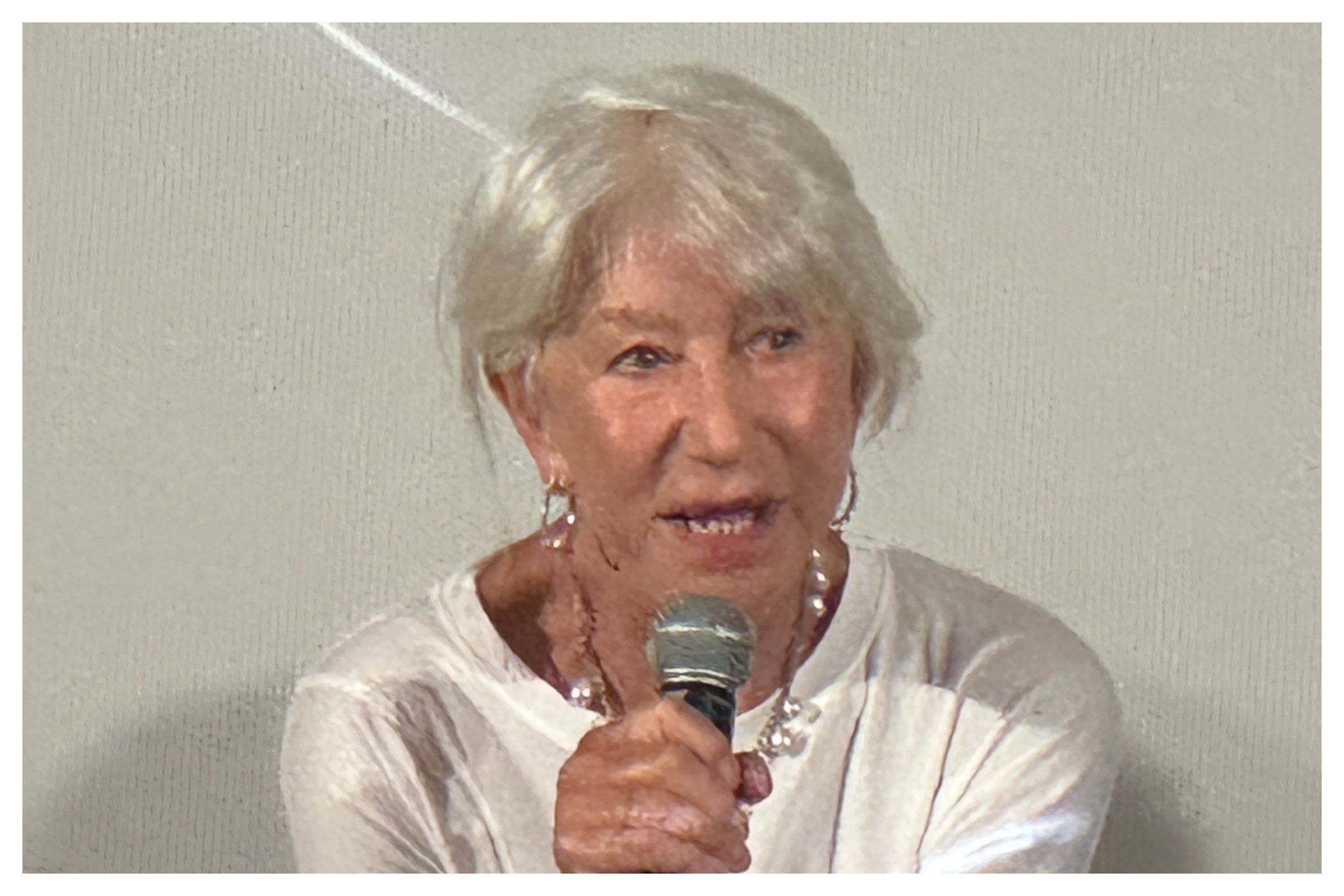
    At the 2026 Taormina Film Festival in Sicily, Academy Award-winning actress Helen Mirren declared that actors should not be expected to act as political figures, stating directly to the press, “We’re not politicians, politicians are politicians.” Speaking against the backdrop of the ancient Teatro Antico di Taormina, the veteran actress explicitly rejected the growing modern expectation that entertainers must serve as ideological activists. Her comments arrive at a moment of profound cultural fatigue, signaling a high-profile retreat from the hyper-politicized era that has dominated the American entertainment industry over the past decade.

    The statement was not a casual aside. It was a deliberate boundary drawn by one of the most respected figures in global cinema. Mirren, whose seven-decade career spans from the Royal Shakespeare Company to blockbuster franchises, carries immense institutional weight. When she speaks, the industry listens. Her refusal to accept the mantle of the “political animal” represents a significant fracture in the Hollywood consensus. For years, the unwritten rule of the modern press junket dictated that actors must possess, and loudly broadcast, the correct political opinions. Mirren simply refused to play the game.

    The Declaration at Teatro Antico

    The Taormina Film Festival, established in 1955, has long served as a prestigious European showcase for international cinema. Overlooking the Ionian Sea, the venue provides a stark contrast to the sterile, high-anxiety environments of Los Angeles press rooms. It was here, in June 2026, that Mirren was asked to weigh in on the intersection of art and global affairs. The expectation, as always, was a sweeping statement of moral clarity regarding current events. Instead, the press received a lesson in professional boundaries.

    “Artists are not political animals,” Mirren noted. The phrasing is specific. The term “political animal” originates from Aristotle’s Politics, describing human beings as creatures naturally equipped to participate in the governance of the polis. By stripping artists of this specific label in a professional context, Mirren is untethering the craft of acting from the mechanics of statecraft. She is arguing that the ability to deliver a compelling monologue does not equate to the ability to draft effective public policy.

    This distinction was once universally understood. Today, it is treated as a radical proposition. The modern entertainment apparatus operates on the assumption that visibility equals authority. A lead role in a $200 million superhero film is frequently treated as a credential for geopolitical analysis. Journalists routinely ask actors promoting summer tentpoles to solve complex international conflicts in four-minute interview windows. Mirren’s response cuts the legs out from under this practice. She reminded the room that the job is to entertain, not to govern.

    The Origins of the Hollywood Soapbox

    To understand the weight of Mirren’s declaration, one must trace the recent history of Hollywood activism. The modern era of the politicized actor arguably reached its zenith at the 2017 Golden Globe Awards. There, Meryl Streep utilized her Cecil B. DeMille Award acceptance speech to deliver a six-minute, highly publicized indictment of the incoming American presidential administration. The applause inside the Beverly Hilton was deafening. The media coverage was entirely celebratory. The message to the industry was clear: the podium is a soapbox, and silence is complicity.

    What followed was nearly a decade of obligatory activism. Award shows transformed from industry celebrations into ideological rallies. The Academy Awards, the Emmy Awards, and the Screen Actors Guild (SAG-AFTRA) ceremonies became platforms for lectures on climate change, electoral politics, and social justice. Actors were praised not for their performances on screen, but for their performances at the microphone.

    However, the reaction outside of Los Angeles and New York was markedly different. Ratings for major award broadcasts plummeted. The 93rd Academy Awards in 2021 drew a record-low 9.85 million viewers, a catastrophic drop from the 43 million viewers who tuned in just seven years prior in 2014. Audiences were tuning out. The American public, exhausted by a relentless 24-hour news cycle, looked to movies and television for escapism. Instead, they found the exact same political arguments they were trying to avoid. The entertainment industry had fundamentally misread its consumer base.

    The Financial Weight of the Global Box Office

    The shift away from activism is not purely philosophical. It is driven by the cold, unforgiving mathematics of the global box office. Major film studios like Warner Bros. Discovery, Universal Pictures, and the Walt Disney Company operate on massive financial scales. A modern blockbuster frequently requires a global gross of $500 million simply to break even. Achieving those numbers requires broad, unified appeal. Alienating half of the potential ticket-buying audience with partisan rhetoric is a luxury the modern studio system can no longer afford.

    When an actor makes a polarizing political statement, the financial blowback is immediate and measurable. Social media campaigns organize boycotts. International markets, particularly in Asia and the Middle East, scrutinize the political affiliations of Western stars before approving distribution. The business of entertainment relies on mass consensus. Politics, by definition, relies on division.

    Mirren’s stance in Taormina aligns perfectly with the quiet, internal mandates currently circulating through major Hollywood talent agencies. Agents and publicists at powerhouses like Creative Artists Agency (CAA) and William Morris Endeavor (WME) are increasingly advising their clients to lower their political profiles. The era of the outspoken celebrity activist has proven to be a financial liability. Mirren is simply saying the quiet part out loud.

    A Growing Chorus of Apolitical Veterans

    Helen Mirren is not entirely alone in her assessment. She joins a quiet but growing chorus of veteran actors who have recognized the danger of the Hollywood echo chamber. These are figures whose careers were built on the craft of acting, rather than the metrics of social media engagement.

    In 2018, two-time Academy Award winner Anthony Hopkins voiced a remarkably similar sentiment. Speaking to the press, Hopkins bluntly stated that actors are “pretty stupid” and should not be treated as intellectual authorities on world events. He argued that the job of an actor is to learn lines and hit marks, not to dictate morality to the public. Mark Wahlberg echoed this in 2016, noting that Hollywood lives in a bubble and that everyday citizens do not need celebrities telling them how to vote or how to live.

    Even Quentin Tarantino, a director known for his provocative cinema, has frequently pushed back against the expectation that his films must serve a specific political agenda. These veterans understand a fundamental truth about the medium: art loses its universal power when it becomes a partisan tool. Mirren’s comments in 2026 serve as a formalization of this retreat. The old guard is reclaiming the boundaries of the profession.

    The Audience Reclaims the Theater

    The concept of “cultural defense” is central to understanding the public reaction to Mirren’s statement. For years, audiences have felt besieged by entertainment that feels more like a lecture than a story. The insertion of modern political messaging into historical dramas, fantasy franchises, and science fiction epics has shattered the suspension of disbelief. Viewers feel that their beloved escapist properties have been hijacked by writers and actors more interested in scoring ideological points than in telling a compelling narrative.

    When Helen Mirren says, “We’re not politicians,” she is offering audiences a profound sense of relief. She is validating their desire to simply sit in a dark room and be transported. She is confirming that it is acceptable to separate the art from the current events of the day. For a public exhausted by the relentless politicization of every facet of modern life, from professional sports to fast-food chains, this separation is a necessary defense mechanism.

    The success of recent, aggressively apolitical blockbusters proves this point. Films that prioritize spectacle, emotion, and traditional storytelling over topical commentary have routinely overperformed at the box office. The audience is voting with their wallets. They are rewarding properties that respect their time and their intelligence. Mirren, with the sharp instincts that have kept her relevant for over half a century, is reading the room perfectly.

    The Boundary Between Art and Policy

    The role of the actor is one of empathy and transformation. It requires the individual to step out of their own worldview and inhabit the life of another. Helen Mirren has done this masterfully, portraying everyone from Queen Elizabeth II in The Queen to the ruthless matriarch Cara Dutton in 1923. This requires a fluidity of spirit that is entirely at odds with the rigid, dogmatic nature of modern politics.

    Politicians must deal in absolutes. They must draft legislation, build coalitions, and enforce laws. Their work is the work of tangible, real-world consequences. Artists deal in the abstract. They deal in emotion, metaphor, and reflection. When the two worlds collide, both suffer. The art becomes predictable propaganda, and the politics become theatrical and unserious.

    By drawing a hard line in the Sicilian sun, Helen Mirren has done the industry a massive favor. She has given permission to a new generation of actors to simply do their jobs. To learn the lines. To find the light. To tell the story. The burden of saving the world can be left to the people actually elected to do so. The era of the celebrity savior is drawing to a close, replaced by a renewed respect for the simple, profound craft of entertainment.

    Directors frame the shot. Actors deliver the lines. Audiences buy the tickets. Entertainment.

  • Into the Gauntlet: Why VP JD Vance is Going on ABC’s ‘The View’

    Into the Gauntlet: Why VP JD Vance is Going on ABC’s ‘The View’

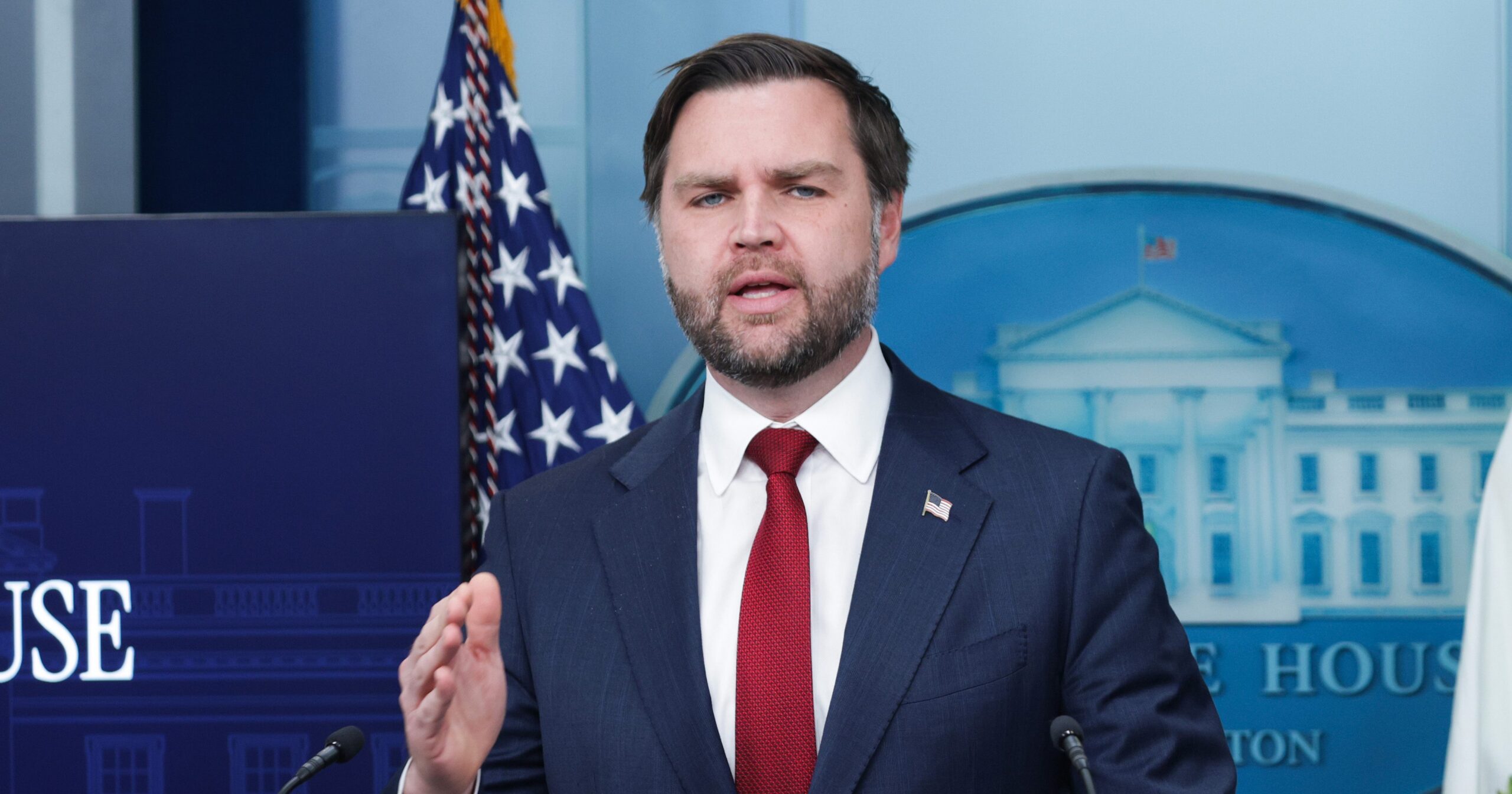
    In June 2026, Vice President JD Vance will make his first official appearance on ABC’s daytime talk show, The View. The booking places a leading conservative voice directly into a predominantly liberal media forum. It is a calculated strategy. The vice president’s office is stepping outside the traditional conservative media ecosystem. They are targeting a daytime audience of roughly 2.4 million daily viewers. The announcement arrived via ABC News. It immediately sparked anticipation across political and entertainment circles. The View is not a standard policy interview. It is a cultural gauntlet. Politicians do not sit at the circular desk to explain the nuances of tax policy. They sit there to survive a televised collision of ideologies.

    The Origins of the Daytime Political Gauntlet

    The modern iteration of The View bears little resemblance to its original blueprint. Barbara Walters and Bill Geddie launched the program on August 11, 1997. The premise was simple. Women of different generations and backgrounds would gather to discuss the events of the day. For the first decade, the show leaned heavily into lifestyle, celebrity interviews, and light current events. Politics was present, but it was not the lifeblood of the broadcast.

    That changed in the late 2000s. The culture fractured. The media landscape polarized. The View adapted to survive. By the time Barack Obama became the first sitting president to appear on the show in 2010, the program had transformed. It was no longer just a morning chat show. It was a required stop for anyone seeking national office. The producers realized that political friction generated higher ratings than celebrity anecdotes. The daytime television model relies on advertising revenue from pharmaceutical companies, automotive manufacturers, and consumer packaged goods. Controversy drives viewership. Viewership drives ad rates. The financial imperative aligned perfectly with the political spectacle.

    The Geography of Studio TV1

    The physical space of the broadcast dictates the psychological dynamic of the interview. The View is filmed in Studio TV1 at the ABC News headquarters in the Upper West Side of Manhattan. The set is brightly lit. The desk is circular. The guest is positioned in the center, flanked by the hosts. This is not the standard one-on-one setup of a Sunday morning political show like Meet the Press or Face the Nation.

    The physical layout creates a five-on-one dynamic. The guest must constantly pivot. They must address questions from the left, the right, and across the table. Beyond the cameras sits the live studio audience. The audience in Manhattan leans heavily liberal. They are primed to applaud the hosts. They are primed to groan at conservative talking points. When JD Vance walks onto the set, he is not just facing five interrogators. He is facing a room designed to amplify his opposition. The geography of the studio is a weapon. The guest must navigate the space without appearing defensive.

    The Modern Panel Dynamics at the Circular Desk

    To understand the challenge facing the vice president, one must understand the specific architecture of the panel. As of 2026, the primary cast features a distinct blend of backgrounds and ideological leanings. Whoopi Goldberg serves as the moderator. She controls the flow of the conversation. She dictates when the broadcast cuts to commercial. Her reactions often set the tone for the studio audience.

    Joy Behar operates as the comedic but sharp liberal anchor. Her attacks are often laced with humor, making them difficult to counter with pure policy arguments. Sunny Hostin brings a background as a federal prosecutor. She relies on legal framing and historical context, often pressing guests on civil rights and constitutional issues. Ana Navarro provides the perspective of a disaffected former Republican, frequently criticizing the populist wing of the party. Alyssa Farah Griffin sits in the conservative chair. As a former Trump administration official who broke with the movement, her dynamic with populist Republicans is uniquely fraught. Vance will have to calibrate his responses to five very different styles of interrogation in real-time.

    The Strategic Value of the Hostile Environment

    Why does a conservative vice president volunteer for a hostile interview? The answer lies in the mechanics of modern political media. Safe interviews in friendly studios do not generate momentum. Fox News offers safety. Newsmax offers agreement. ABC’s Studio TV1 offers friction. Friction creates heat. Heat creates attention.

    The vice president’s office understands the dual-audience strategy. There is the audience watching live on ABC at 11:00 AM Eastern. Then there is the audience that will watch the interview on their phones for the next three weeks. By stepping into a liberal stronghold, Vance signals strength to his base. He demonstrates a willingness to fight. The conservative ecosystem rewards politicians who take the fight directly to mainstream media figures.

    The Mechanics of the Viral Clip Economy

    Television is no longer consumed purely as a linear broadcast. It is consumed in pieces. It is consumed in vertical video formats. It is consumed on X, TikTok, Instagram Reels, and YouTube Shorts. A ten-minute segment on The View will be sliced into dozens of micro-clips. Each clip will be optimized for a specific algorithm.

    • The Liberal Framing: Left-leaning media accounts will clip the moments where Joy Behar or Sunny Hostin interrupt Vance. The headline will read that the hosts dismantled the vice president’s arguments.
    • The Conservative Framing: Right-leaning media accounts will clip the exact same exchange. They will focus on Vance’s calm demeanor while being yelled at. The headline will read that Vance destroyed the liberal panel.
    • The Algorithmic Boost: Both sets of clips will generate massive engagement. Outrage drives shares. The algorithm does not care if the user is cheering or booing. It only cares that the user is watching.

    By appearing on the show, Vance guarantees himself a week of dominant social media presence. The campaign does not need to win over the studio audience. They only need three minutes of compelling video to feed the digital machine.

    The Demographics of the Daytime Audience

    Beyond the viral clips, there is a tangible electoral prize. The View dominates the women 25-54 demographic. This is not a fringe audience. This is the suburban voter bloc. This is the demographic that decides swing states like Pennsylvania, Michigan, Wisconsin, and Arizona. Suburban women have historically been a challenging demographic for the populist wing of the Republican party.

    Vance’s appearance in June 2026 aligns with the relentless cycle of permanent campaigning. He cannot reach these voters on conservative talk radio. He cannot reach them at a rally in rural Ohio. He must go to where their televisions are already tuned. Even if the interview is contentious, simply showing up serves a purpose. It softens the edges of the political caricature. It proves that the candidate is willing to engage in a conversation, however strained, with mainstream America.

    Historical Precedents of Conservative Guests

    Vance is not the first conservative to walk into this specific arena. The history of The View is littered with high-profile clashes. John McCain appeared in 2008 during his presidential run, resulting in a famously tense exchange about the Iraq War. Donald Trump appeared multiple times before his presidency, though his relationship with the program fractured entirely once he entered the political arena.

    More recently, politicians like Ted Cruz and Tim Scott have tested the waters. Cruz’s appearance in 2022 was interrupted by climate activists in the studio, creating a chaotic scene that went viral instantly. Tim Scott’s appearance in 2023 featured a dense, heated debate with Sunny Hostin over the concept of systemic racism. In every instance, the pattern remained the same. The polite introduction. The rapid escalation of tension. The cross-talk. The abrupt cut to a commercial break. The campaign war rooms expect this exact sequence of events.

    JD Vance and the Populist Message

    JD Vance brings a specific brand of politics to the table. He is not a country-club Republican. He is a populist. His rise to national prominence began with his 2016 memoir, Hillbilly Elegy, which detailed the economic and cultural struggles of the white working class in Appalachia and the Rust Belt. He parlayed that cultural cachet into a successful 2022 Senate run in Ohio, backed heavily by the America First movement.

    His political identity is built on a critique of coastal elites, corporate consolidation, and mainstream media narratives. The View represents everything his political brand opposes. It is headquartered in Manhattan. It is hosted by wealthy media personalities. It is broadcast by a massive multinational conglomerate, the Walt Disney Company. The clash is not just about tax rates or foreign policy. It is a fundamental collision of two entirely different Americas.

    Preparing for the Broadcast

    The preparation for a daytime talk show appearance is as rigorous as preparation for a primary debate. In Washington D.C., the vice president’s team will assemble briefing books. They will conduct mock interviews. Staffers will play the roles of Whoopi Goldberg and Joy Behar. They will anticipate the most aggressive questions.

    “You do not go on daytime television to deliver a white paper. You go on daytime television to survive a knife fight in a phone booth.”

    Vance will be briefed on abortion policy, economic inflation, border security, and his own past statements. The goal is not to convince the hosts to change their minds. The goal is to remain unflappable. The hosts, meanwhile, will have their own preparation. ABC News researchers will provide dossiers on Vance’s voting record and public speeches. The producers will script the introductory segments to maximize dramatic tension. Every participant knows their role in the theater.

    The Intersection of Entertainment and Policy

    The blurring of lines between entertainment and governance is complete. The appearance of a sitting vice president on a show originally designed to discuss celebrity gossip and lifestyle trends highlights the reality of the modern attention economy. Policy cannot survive without a platform. A platform cannot survive without conflict.

    When the broadcast begins, the standard rules of political engagement will apply. The pleasantries will be brief. The questions will be pointed. The cross-talk will be inevitable. The studio audience will react exactly as programmed. The clips will be cut, uploaded, and distributed before the broadcast even finishes airing on the West Coast. The media cycle will consume the event, digest it, and demand the next spectacle.

    The Aftermath and the Spin Room

    Once the cameras cut, the real work begins. The campaign’s rapid response team will immediately push their preferred clips to friendly media outlets. The network will issue press releases highlighting the ratings spike. Opinion columnists will write thousands of words analyzing the body language, the tone, and the unsaid implications of the ten-minute segment.

    The viewers will return to their day. The politicians will return to Washington. The media will return to the hunt for the next viral collision. The machine requires constant fuel. The booking serves the network. The booking serves the politician. The booking serves the algorithm. The cycle continues without interruption. The network promotes. The audience watches. The internet reacts. Confrontation.

  • Vice President J.D. Vance’s Appearance on ‘The View’ – A Political Television Event

    Vice President J.D. Vance’s Appearance on ‘The View’ – A Political Television Event

    Vice President J.D. Vance is scheduled to appear on ABC’s popular daytime talk show, ‘The View.’ This engagement marks a significant moment for political discourse, bringing a high-ranking conservative official into direct conversation with the show’s panel, known for its liberal perspectives. The broadcast is anticipated to provide a platform for Vance to articulate administration policies and conservative ideologies to a broad national audience.

    The announcement of Vance’s upcoming appearance has generated considerable discussion across media outlets and social platforms. Political commentators and public interest groups are closely monitoring the event. The show’s format often leads to spirited debates, and Vance’s presence is expected to continue this tradition.

    This particular booking highlights an ongoing trend. Public figures from across the political spectrum engage with programs that challenge their established narratives. Such appearances aim to bridge communication gaps or to solidify existing support bases.

    The specific date and time for Vice President Vance’s interview have been confirmed by ABC. Promotional materials have begun to circulate, emphasizing the significance of this high-profile guest. Viewers are preparing for a candid and potentially contentious exchange.

    Historical Context of Political Appearances on ‘The View’

    ‘The View’ has a long history of hosting prominent political figures. Since its inception in 1997, the show has served as a unique forum for politicians. Candidates for president, sitting vice presidents, and first ladies have all graced its stage.

    Hillary Clinton, then First Lady, appeared on the show in 2000. Her interview covered policy, personal life, and public perception. This set a precedent for high-level political engagement.

    President Barack Obama made history in 2010 as the first sitting U.S. President to appear on a daytime talk show. His visit to ‘The View’ broke traditional media molds. It demonstrated a willingness to connect with voters outside conventional news programs.

    Vice President Dick Cheney also appeared on the program during his tenure. His interviews were often characterized by firm defenses of the Bush administration’s policies. These appearances frequently led to viral moments and extensive media analysis.

    The show’s format, featuring a panel of diverse women, offers a different interview dynamic. This contrasts with more formal news programs. Guests often face questions that combine policy with personal conviction.

    The Role of Daytime Television in Political Communication

    Daytime television, historically perceived as less serious than evening news, has evolved. It now serves as a critical battleground for political messaging. Shows like ‘The View’ reach millions of viewers who may not tune into traditional political news channels.

    The demographic reach of ‘The View’ is particularly valuable. It often includes women, a crucial voting bloc in national elections. Political strategists recognize the power of this direct access.

    Campaigns frequently leverage these platforms. They aim to humanize candidates or to clarify policy positions. The informal setting can sometimes allow for a different kind of connection with the electorate.

    The show’s hosts often represent a spectrum of opinions. This dynamic can lead to challenging questions for guests. It also allows for a robust discussion that reflects broader public debates.

    Anticipated Topics for Discussion

    Vice President Vance’s appearance will likely cover a range of pressing national and international issues. The current political climate dictates many of these conversation points. Economic policy, foreign relations, and domestic social issues are almost certainly on the agenda.

    The administration’s stance on inflation and economic growth will be a key topic. Vance will likely be asked to defend current fiscal strategies. He may also present future economic outlooks.

    Foreign policy challenges are another probable area of focus. Discussions could involve ongoing international conflicts or diplomatic relations with key global partners. Vance’s role in the administration’s foreign policy initiatives will be scrutinized.

    Domestic issues such as healthcare reform, immigration, and cultural debates will also command attention. These topics often resonate deeply with ‘The View’s’ audience. Vance’s conservative viewpoints on these matters will be central to the discussion.

    The Impact of ‘Hillbilly Elegy’ on Public Perception

    J.D. Vance first gained national prominence with his 2016 memoir, ‘Hillbilly Elegy: A Memoir of a Family and Culture in Crisis.’ The book provided an intimate look into the struggles of the white working class in Appalachia. It became a bestseller and a significant cultural touchstone.

    The memoir offered insights into the economic and social anxieties prevalent in certain American communities. It also explored themes of poverty, education, and social mobility. The book’s success catapulted Vance into the national spotlight as a voice for a specific demographic.

    His subsequent political career has been heavily influenced by the book’s themes. Vance’s political platform often emphasizes issues related to economic nationalism and cultural conservatism. His background as described in ‘Hillbilly Elegy’ shapes public perception of his policies.

    Critics and supporters alike often reference the memoir when discussing Vance’s political evolution. His appearance on ‘The View’ offers an opportunity to connect his personal narrative with his current role as Vice President. This connection can be powerful for viewers.

    The ‘View’ Panel and Their Interview Style

    The panel of ‘The View’ is known for its diverse perspectives and direct questioning. The show typically features a moderator, a conservative voice, and several liberal co-hosts. This composition often leads to dynamic and sometimes confrontational interviews.

    Whoopi Goldberg, a long-standing co-host, often serves as a moderating force. Her questions can be incisive, but she also maintains a degree of theatrical impartiality. Her presence helps to guide the conversation.

    Joy Behar and Sunny Hostin are typically vocal in their liberal viewpoints. They often challenge conservative guests on policy and ideology. Their questioning style is direct and often passionate.

    The conservative seat on the panel provides a counterpoint. This co-host often defends conservative positions. They also work to find common ground or to highlight areas of disagreement. This internal dynamic is key to the show’s appeal.

    The collective interview style is characterized by rapid-fire questions and follow-ups. Guests must be prepared for a rigorous exchange. Vance’s political experience will be tested in this environment.

    Previous Controversial Interviews on ‘The View’

    ‘The View’ has a history of interviews that have sparked national debate. These moments often involve high-profile political figures. They can highlight deep divisions within American society.

    One notable instance involved then-candidate Donald Trump in 2015. His appearance generated significant media attention. The interview foreshadowed the contentious nature of his presidential campaign.

    Former Vice President Mike Pence also had a memorable appearance. His discussions with the panel often focused on social issues. These interviews frequently led to heated exchanges and strong reactions from viewers.

    The show’s ability to create such moments is part of its enduring appeal. It provides unscripted television. It also offers a raw look at political discourse. Vance’s upcoming interview is expected to continue this trend of high-stakes television.

    Media and Public Reaction Expectations

    The anticipation surrounding Vice President Vance’s appearance is high. Media outlets, political analysts, and the general public are all preparing for the broadcast. Reactions are expected to be polarized, reflecting the current political climate.

    Conservative media will likely praise Vance’s performance. They will emphasize his ability to articulate conservative principles. They may also highlight any perceived victories in the debate.

    Liberal media will likely focus on perceived inconsistencies or controversial statements. They will scrutinize his responses. They will also analyze his interactions with the panel.

    Social media platforms will undoubtedly be abuzz during and after the broadcast. Hashtags related to Vance, ‘The View,’ and specific policy topics will trend. Online commentary will range from fervent support to strong criticism.

    The interview will likely be dissected for days, if not weeks, following its airing. Political pundits will offer their interpretations. The discussion will contribute to the ongoing national conversation about the administration’s policies and future.

    Long-Term Implications for Political Engagement

    Vice President Vance’s decision to appear on ‘The View’ carries long-term implications. It demonstrates a strategy of direct engagement with audiences outside traditional political echo chambers. This approach can be both risky and rewarding.

    For the administration, it offers an opportunity to reach undecided voters. It also allows for the direct rebuttal of criticisms. The goal is often to shape public opinion by going directly to the source of potential opposition.

    For ‘The View,’ it reinforces its status as a relevant political forum. High-profile guests boost ratings and maintain cultural relevance. The show continues to be a destination for significant political events.

    The success or failure of such an appearance is subjective. It depends on the goals of the guest and the expectations of the audience. However, the act of engaging itself signals a certain political courage or strategic calculation.

    This appearance contributes to the broader narrative of how politicians communicate in the 21st century. It underscores the importance of diverse media platforms. It also highlights the evolving nature of political discourse in America.

    The cameras rolled. The hosts questioned. The Vice President responded. The nation watched.

    Television.

  • The Origins of a Gathering City Part 3 – The Blue and Gray Reunion at Wilson’s Creek

    The Origins of a Gathering City Part 3 – The Blue and Gray Reunion at Wilson’s Creek

    The Veterans Arrive in the Ozarks

    The Veterans Arrive in the Ozarks

    In August of 1883, only a few years after the press convention had introduced Springfield to the state, passenger trains pulling into the city carried a different kind of visitor.

    They were not editors. They were veterans of the Civil War.

    They arrived along the lines of the St. Louis and San Francisco Railway, stepping off at the Springfield depot in steady numbers over several days. Some came from Missouri towns, while others traveled from farther regions, connecting through the expanding rail network that now tied the Ozarks to the rest of the country.

    At the depot they were met with organized receptions marked by the boom of cannon and ringing of bells. Processions were formed and moved through the principal streets of the city before continuing outward toward their accommodations.

    This was not a single arrival but a continuous flow. From the railhead, the movement extended toward Wilson’s Creek as wagon trains carried men and provisions the ten miles southwest of the city, while carriages transported officers, dignitaries, and members of the citizen committees. Others made the journey on foot.

    The route followed the Wire Road, the same corridor that had carried troops and telegraph lines during the war. Over several days, that movement grew into the thousands, with some accounts placing total attendance near 10,000 visitors across the reunion.

    Springfield, which had hosted roughly 150 editors in 1878, was now receiving a volume of visitors it had never managed before.

    A City Preparing for a Larger Gathering

    By 1883 Springfield had developed the infrastructure necessary to receive visitors, but the scale of the reunion quickly pushed those systems to their limits.

    Hotels near the Public Square and along Commercial Street filled beyond capacity, while boarding houses and private residences opened their doors. Overflow was directed into temporary arrangements across the city.

    Transportation became a continuous operation, with wagons and carriages moving constantly between Springfield and Wilson’s Creek, carrying veterans, families, and supplies along the same ten mile route.

    Food required large scale coordination. On the second day of the reunion, a massive tent was erected on the grounds of E. G. Blake, where plates were laid for over six hundred people at once. This mass dining operation became the centerpiece of the day’s logistics and a visible demonstration of the strain placed on a town of Springfield’s size.

    Additional refreshment stands appeared across both the city and the battlefield, extending the food system beyond fixed locations and into temporary structures.

    Springfield was no longer simply hosting visitors. It was managing strain at scale.

    The Blue and Gray Reunion

    The reunion was structured as a three-day event, beginning on August 8 and culminating on August 10, the anniversary of the battle. This allowed for a transition from social and civic activity within the city to a more focused, commemorative movement toward the battlefield.

    Veterans from both Union and Confederate forces were invited to return to the ground where they had fought twenty two years earlier. It was one of the first major joint gatherings where former adversaries were encouraged to camp together as though there had never been a difference between them.

    The battlefield itself had changed very little. The hills, Wilson’s Creek, and the dense scrub oak known as blackjacks remained largely as they had been in 1861, allowing veterans to locate positions with a degree of accuracy not possible on more developed landscapes.

    They were not visiting an abstract place. They were walking through the physical structure of the battle itself.

    August 8 The Social Foundation

    The first day focused on arrival and registration. Local posts of the Grand Army of the Republic organized the reception and directed veterans to gathering spaces such as Drummond Hall, which had been decorated with flags and emblems.

    Inside, large tables were arranged with shared provisions, including a pail of prepared tobacco and a basket of pipes. This communal setup created an immediate point of connection, allowing Union and Confederate veterans to sit together, smoke, and talk.

    The act itself became part of the reunion, a quiet but meaningful ritual that allowed former opponents to engage in the ordinary habits of civilian life.

    August 9 Civic Processions and Mass Dining

    On the second day, formal processions moved through Springfield‘s principal streets. A column of approximately four hundred veterans, accompanied by bands, marched through a city decorated with flags, banners, and color displays.

    The movement led to the grounds of E. G. Blake, where the central logistical effort of the day took place. A massive tent had been erected, with plates laid for over six hundred people.

    This was not incidental. It was the centerpiece.

    The scale of the meal reflected both the size of the gathering and the limits of the city’s permanent infrastructure, requiring coordinated temporary solutions beyond what hotels and restaurants could provide.

    August 10 The Battlefield Pilgrimage

    The final day centered on movement. Several thousand people traveled the ten miles from Springfield to Wilson’s Creek along the Wire Road, with wagons, carriages, and foot traffic filling the route continuously as dust rose under constant motion.

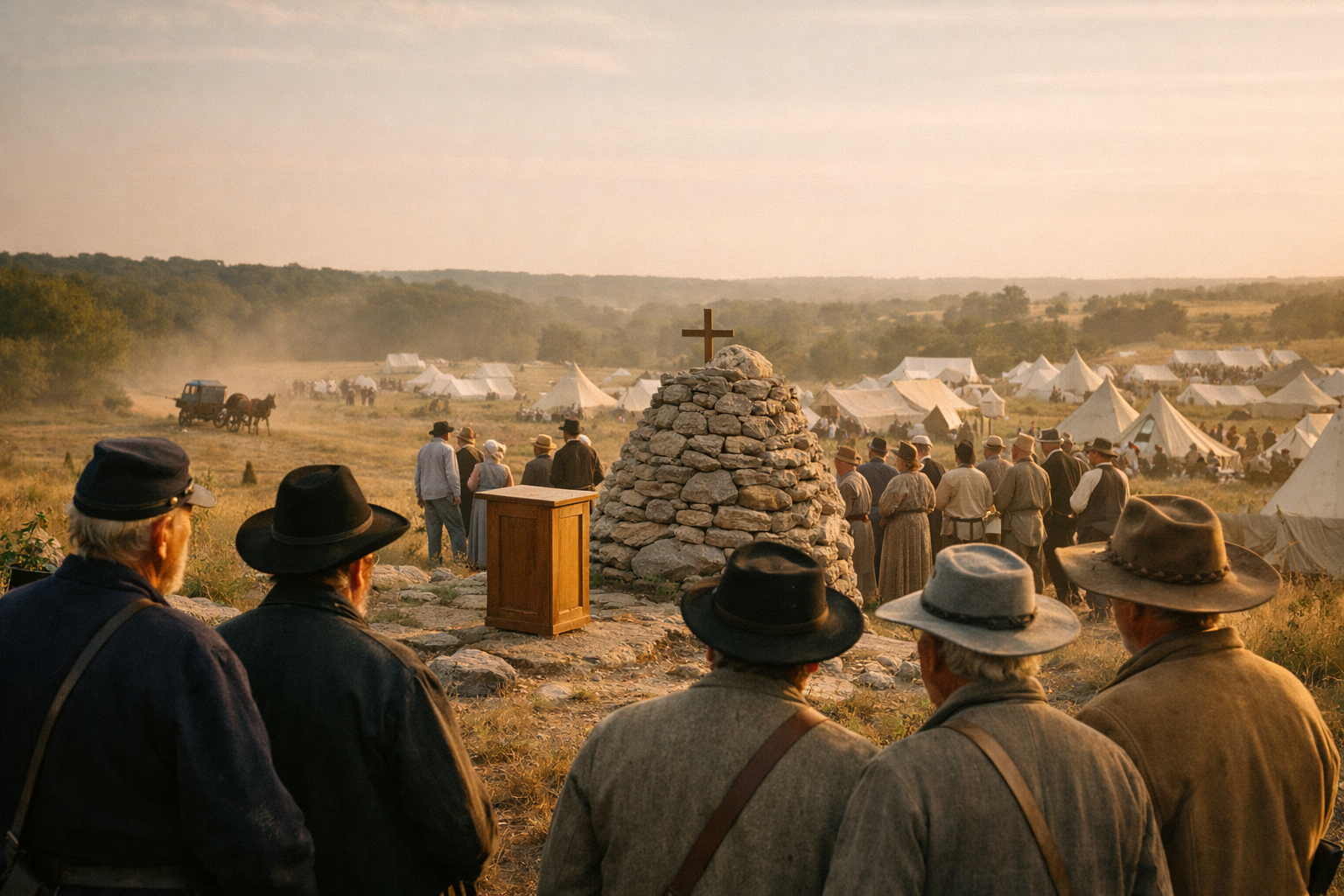
    At the battlefield, attention focused on Bloody Hill. A formal stand had been erected near the location where General Nathaniel Lyon had fallen on August 10, 1861, and from this position speakers addressed the crowd while surrounded by the terrain that had shaped the original battle.

    Among those present were local officials, invited guests, and nationally recognized figures.

    The same ground that had once held lines of fire now held an assembled crowd.

    The Battlefield Encampment

    The reunion expanded into a temporary encampment stretching nearly two miles. This tent city housed veterans and visitors who remained on the field, with Sibley tents recreating the physical arrangement of wartime camps and providing a direct sensory connection to earlier experiences.

    Refreshment stands and gathering areas appeared throughout the encampment, and families were present, giving the environment a dual character as both a memorial and a large public gathering.

    At the center stood Bloody Hill, and nearby the location of Lyon’s death was marked by a growing stone cairn built collectively by visitors over time.

    Veterans moved across the battlefield identifying positions they had once held. Some followed routes associated with Sigel’s column, while others stood along ridges where lines had formed and broken.

    In 1861, Lyon had assembled approximately 5,800 men at Springfield to confront a combined Southern force of nearly 12,000 under Sterling Price and Benjamin McCulloch. The struggle on Bloody Hill remained the focal point of their return.

    The terrain itself had not changed.

    The Scale of the Reunion

    Attendance reached into the thousands, with some estimates approaching 10,000 visitors across the three-day event. This represented a significant expansion from earlier gatherings in the city.

    The strain on infrastructure was visible, with overwhelmed hotels, heavily trafficked roads, expanded food systems, and decentralized water and sanitation solutions.

    Despite these pressures, the event remained functional. Springfield demonstrated that it could coordinate movement, resources, and space at a scale it had not previously attempted.

    Interactions on the Field

    Observers noted that interactions between Union and Confederate veterans remained orderly. Men who had once faced each other across the same ground now occupied it together, sharing meals, camps, and movement.

    At locations such as the Lyon cairn, both sides gathered in recognition of the same event from different perspectives.

    The act of gathering itself became the defining feature.

    Contemporary Descriptions and Historical Voices

    The reunion was documented in real time through newspapers and firsthand accounts. Reports described the atmosphere as notably calm, with veterans camping together as though there had never been a difference between them.

    Other accounts captured the contrast between past and present, linking the organized movement of the reunion to the memory of the battle.

    Veterans’ own recollections added further depth, as many revisited positions from both sides and, for the first time, understood how the battle had unfolded from the perspective of their former opponents.

    Logistics Strain and the Local Economy

    The scale of the reunion produced both economic activity and visible strain. Housing reached critical levels, forcing overflow into tent encampments and private residences, while food and water systems expanded through temporary stands and mass dining operations.

    The demand for food led to the establishment of refreshment stands across the battlefield, many operated by local families and businesses. The stand on Bloody Hill served not only as a platform for speeches but also as a central logistical hub.

    This reflected a broader trend, as battlefields were beginning to function as destinations long before formal preservation systems were established.

    The Battlefield Landscape in 1883

    The physical landscape remained largely unchanged from 1861. Wilson’s Creek continued to serve as a water source, while the hills and blackjacks still defined the terrain.

    Vegetation had increased, with dense scrub oak contributing to the same visibility challenges that had shaped the battle. Markers were informal, with the most prominent being the stone cairn marking Lyon’s death.

    Nearby structures such as the Ray House remained visible, and the Wire Road continued as the primary route through the area.

    Relic hunting was already underway, with local families collecting and selling artifacts, reflecting a growing desire among visitors to take a physical piece of the site with them.

    A City Tested by Scale

    The Blue and Gray Reunion of 1883 placed demands on Springfield beyond anything it had previously experienced. The city coordinated transportation, housing, food, and movement across multiple days and distances.

    What had been developed in earlier years was tested under pressure.

    The result was not perfection, but capacity.

    Springfield proved that it could manage a gathering larger than any it had hosted before.

    The Long-Term Significance of the 1883 Gathering

    The 1883 reunion was not an isolated event. It marked an early example of how large scale gatherings could reshape public memory through shared presence rather than conflict, and it also marked the beginning of a longer process of recognition and preservation.

    Future gatherings would expand in size, with later reunions drawing even larger crowds, and interest in the battlefield continued as visitors returned in the years that followed.

    The site began to shift in meaning, moving from a battlefield to a destination and ultimately to a place of memory. By gathering on the same ground where they had once fought, the veterans reshaped how the land was understood, not by changing it, but by returning to it together.

    Next in the Series

    In the years that followed, Springfield would continue to grow as a regional center for commerce, industry, and public gatherings. What had been demonstrated in 1883 would continue to build, as the city moved beyond becoming the Queen City of the Ozarks and began learning how to operate like one.