Tag: Music Industry

  • Songwriting Credits and Catalog Longevity: How Traditionalists Are Reclaiming Studio Authorship

    Songwriting Credits and Catalog Longevity: How Traditionalists Are Reclaiming Studio Authorship

    In an era dominated by algorithmic streaming and multi-writer pop-country sessions, a profound shift is underway across the roots and traditionalist landscape. Fans and independent creators are looking past polished production to scrutinize the foundational craft of songwriting itself.

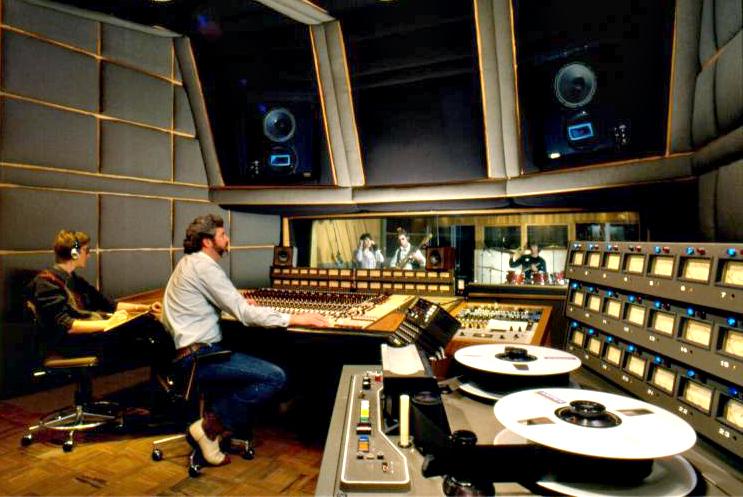
    Rustic acoustic guitar and studio recording equipment
    Modern traditionalists are prioritizing solo songcraft and analog studio lineage over assembly-line corporate writer rooms.

    Recent audience discourse across music communities underscores a growing friction between legacy catalog longevity and assembly-line song construction. When listeners analyze why classic albums remain commercially and emotionally vibrant decades after release, the answer consistently traces back to authentic authorship and cohesive artistic vision.

    The Dilemma of the Mega-Room Writing Session

    Over the past fifteen years, mainstream Nashville and global pop production leaned heavily into collective songwriting rooms, frequently crediting five to eight contributors on a single three-minute track. While this approach optimizes for immediate hook density, it frequently dilutes the distinct narrative voice that defines legendary country storytelling.

    • Fragmented Royalties: Heavy co-writing splits reduce the economic sustainability of non-performing songwriters while tying publishing assets to complex corporate rights holders.
    • Sonic Homogenization: Formulas designed to satisfy playlist curation often produce interchangeable lyrical motifs, shortening the cultural lifespan of new releases.
    • The Rise of Lone Craftsmen: Emerging traditionalists like Zach Top and Wyatt Flores, alongside the expanding vanguard recognized by Countrytown and the Country Music Association, are deliberately returning to small-room or solo composition to preserve raw authenticity.

    Audience Demand for Transparent Songcraft

    Streaming data and live tour receipts demonstrate that grassroots audiences reward transparent musicianship. Live acoustic sessions, unvarnished acoustic arrangements, and detailed liner notes are experiencing a major revival. Listeners increasingly demand to know who built the melody, who penned the lyrics, and whether the performer lives the story they sing.

    For more deep-dive analyses on roots music and outlaw heritage, explore our dedicated ByteSize Country Music Hub. Institutional audiences and label executives tracking real-time audience shifts can access our full streaming intelligence reports via ByteSize Audience Data Subscriptions.

    As the music industry navigates new distribution models and artificial generation tools, human songcraft remains the ultimate moat. The artists who anchor their careers in durable songwriting will own catalogs that withstand shifting trends and build generational equity. To understand how automated distribution systems support resilient media networks, read our architectural breakdown on Self-Healing Autonomous Fleets.

  • Australian Country Music Hits $1 Billion: Brad Cox, The Wolfe Brothers Drive Global Boom with CMC Rocks & Tamworth

    Australian Country Music Hits $1 Billion: Brad Cox, The Wolfe Brothers Drive Global Boom with CMC Rocks & Tamworth

  • Nicki Minaj Charges Fans $10 a Month for Exclusive X Content

    Nicki Minaj Charges Fans $10 a Month for Exclusive X Content

    The Economics of Direct Fan Monetization

    Popular music icons operate complex digital ecosystems. Every post, tweet, and live stream carries commercial value. Major artists continually test the boundaries of digital engagement and financial return.

    Nicki Minaj introduced a direct subscription model on X, charging supporters $10 per month. The feature locks select updates, media, and commentary behind a paywall. Followers must pay the monthly fee to view the artist’s exclusive timeline updates.

    Platform monetization tools allow high-profile accounts to capture recurring revenue directly from followers. Traditional social media models relied on ad-revenue sharing and algorithmic reach. Modern creator economies rely on direct micro-transactions from dedicated fanbases.

    Fan Reactions and the Backlash Over Access

    Digital communities reacted swiftly to the paywall announcement. Loyal supporters voiced frustration over paying recurring fees simply to read an artist’s everyday commentary.

    Online fan culture values parasocial intimacy and immediate access. Monetizing those interactions transforms organic community spaces into tiered subscription products. Critics argue that charging for basic social media access alienates younger or lower-income supporters.

    How Platform Paywalls Shape Celebrity Culture

    Platforms like X, formerly Twitter, rolled out subscription features to retain top-tier creators. Artists leverage massive follower counts to drive recurring subscription revenue. Million-follower accounts possess immense leverage when testing monetization thresholds.

    • Platform features enable recurring creator subscriptions.
    • High follower counts turn minor monthly fees into substantial revenue streams.
    • Paywalls divide casual observers from financially committed super-fans.

    Charging for digital access alters the fundamental dynamic between artists and audiences.

    The Broader Trend Across the Music Industry

    Recording artists face shifting revenue realities in the streaming era. Album sales and touring margins fluctuate with economic conditions. Digital monetization bridges the gap between major album cycles.

    Competitors across the entertainment sector experiment with private servers, subscriber-only Discord channels, and paid newsletters. Nicki Minaj joins an expanding roster of celebrities utilizing closed ecosystems to maximize digital earnings.

    Followers grumbled. Observers calculated the margins. Platforms updated their software. The subscription economy expanded.

    Minaj.

    Frequently Asked Questions

    How much does Nicki Minaj charge for exclusive X content?

    Nicki Minaj charges fans $10 a month for access to her exclusive subscription content on X.

    Why are fans upset about the subscription fee?

    Fans argue that charging a monthly recurring fee for basic social media access and celebrity commentary creates unnecessary financial barriers for loyal supporters.

    What platform hosts Nicki Minaj’s paid subscription?

    The subscription feature operates directly on X, utilizing the platform’s native creator monetization tools.

  • The Soundtrack of a Generation – 4 Songs From 1973 That Every Baby Boomer Knows by Heart

    The Soundtrack of a Generation – 4 Songs From 1973 That Every Baby Boomer Knows by Heart

    The Soundtrack of a Fracture

    In 1973, the American cultural landscape fractured, and out of that fracture came four songs that permanently embedded themselves into the collective memory of the Baby Boomer generation: Billy Joel’s Piano Man, Aerosmith’s Dream On, Gladys Knight & the Pips’ Midnight Train to Georgia, and Lynyrd Skynyrd’s Free Bird. The year marked a definitive transition. The Vietnam War drew to a close with the signing of the Paris Peace Accords in January. The Watergate hearings dominated television screens by May. The utopian idealism of the 1960s had officially expired.

    In its place, the recording industry shifted. It was now a $2 billion economic juggernaut. Record labels like Columbia, MCA, and Buddah Records began producing deeply introspective singer-songwriter anthems alongside the first massive stadium rock epics. The AM radio dial still controlled pop supremacy, but underground FM radio was rapidly gaining ground, allowing longer, more complex tracks to find an audience. These four songs did not just top the charts. They became the architectural framework for the music of a generation.

    The Los Angeles Lounge That Built “Piano Man”

    Billy Joel did not want to be in Los Angeles in 1973. He was hiding. After signing a disastrous contract with Family Productions and producer Artie Ripp, Joel fled New York for the West Coast. He needed money to pay rent. He took a job playing piano at The Executive Room, a dimly lit lounge on Wilshire Boulevard. He worked under the pseudonym Bill Martin.

    For six months, Joel watched the room. He watched the regulars. He took mental notes. John at the bar was a real person, a bartender who worked the shift during Joel’s sets. Paul the real estate novelist was a regular patron. Davy, who was still in the Navy, was another fixture of the Wilshire Boulevard establishment. The waitress practicing politics was Joel’s first wife, Elizabeth Weber, who worked at The Executive Room while he played.

    Joel took these observations and crafted a waltz in the key of C major. He signed a new deal with Columbia Records, facilitated by executive Clive Davis. In September 1973, Joel entered Devonshire Sound Studios in North Hollywood with producer Michael Stewart. They recorded the track using an acoustic piano, an accordion, a mandolin, and Joel’s signature harmonica.

    Columbia Records released “Piano Man” as a single on November 9, 1973. It was not an immediate smash. The song ran for five minutes and thirty-eight seconds, far too long for standard AM radio play. Columbia executives forced a radio edit, cutting the track down to three minutes. The edited version slowly climbed the Billboard Hot 100, eventually peaking at number 25 in April 1974. But chart position did not dictate the song’s legacy. “Piano Man” became Joel’s signature song, a permanent fixture in American pop culture, and the anthem for every lonely patron in every bar across the country.

    Aerosmith and the Slow Burn of “Dream On”

    While Billy Joel was playing lounges in Los Angeles, a relatively unknown rock band from Boston was trying to break into the mainstream. Aerosmith had formed in 1970. By 1973, they had secured a record deal with Columbia Records, largely due to the efforts of Clive Davis, who saw potential in their gritty, blues-driven sound.

    The band’s debut album, self-titled Aerosmith, was recorded at Intermedia Studios in Boston in late 1972. Producer Adrian Barber oversaw the sessions. The album featured a track that lead singer Steven Tyler had been working on for years. Tyler had composed the chord progression on a Steinway upright piano in the living room of his childhood home in New Hampshire. He was a teenager at the time. The song was “Dream On.”

    Tyler’s father was a Juilliard-trained classical musician. Tyler grew up listening to classical compositions, which heavily influenced the dramatic, sweeping structure of “Dream On.” The song was a departure from Aerosmith’s typical blues-rock sound. It featured a mellotron, intricate guitar arpeggios by Joe Perry, and Tyler’s soaring, almost operatic vocal climax.

    Columbia Records released the Aerosmith album on January 13, 1973. They released “Dream On” as a single on June 27, 1973. It flopped. The single peaked at number 59 on the Billboard Hot 100 and quickly fell off the charts. The band’s debut album was largely ignored by the national press, overshadowed by the release of Bruce Springsteen’s debut album on the same label.

    But the song refused to die. Aerosmith spent the next two years touring relentlessly across the United States. They built a massive grassroots following. In late 1975, Columbia Records re-released “Dream On” as a single. This time, the cultural timing was right. The song exploded, reaching number 6 on the Billboard Hot 100 in April 1976. It became the blueprint for the modern power ballad, proving that hard rock bands could achieve massive commercial success with emotionally vulnerable, piano-driven epics.

    The Journey to a “Midnight Train to Georgia”

    The story of “Midnight Train to Georgia” begins with a phone call, a famous actress, and a completely different city. In 1970, songwriter Jim Weatherly called his friend, actor Lee Majors. Majors’ girlfriend, actress Farrah Fawcett, answered the phone. She mentioned that she was packing her bags to take the “midnight plane to Houston” to visit her mother. The phrase stuck in Weatherly’s head.

    Weatherly wrote a country-leaning song called “Midnight Plane to Houston.” He recorded it himself, but it failed to gain traction. In 1972, gospel and soul singer Cissy Houston, mother of Whitney Houston, wanted to record the track. She felt that “Houston” did not fit her style. She asked Weatherly for permission to change the title to “Midnight Train to Georgia.” Weatherly agreed, stipulating only that the core melody and lyrics remain intact. Houston’s version was a moderate R&B hit, but the song had not yet reached its final form.

    Enter Gladys Knight & the Pips. In 1973, the group left Motown Records and signed with Buddah Records. They were looking for material for their upcoming album, Imagination. They heard Cissy Houston’s version of Weatherly’s song and decided to record it. They entered the studio with producer Tony Camillo.

    Knight and her backing vocalists, her brother Merald “Bubba” Knight, and their cousins William Guest and Edward Patten, transformed the song. They stripped away the country-gospel elements and injected a deep, driving soul rhythm. The call-and-response vocals between Knight and the Pips became the track’s defining feature. When Knight sang, “I’d rather live in his world,” the Pips answered with precise, rhythmic harmony.

    Buddah Records released “Midnight Train to Georgia” in August 1973. It was an unstoppable force. On October 27, 1973, the song hit number one on the Billboard Hot 100. It remained at the top of the R&B charts for four weeks. In March 1974, the song won the Grammy Award for Best R&B Vocal Performance by a Duo, Group or Chorus. It remains Gladys Knight’s signature track, a masterful study in vocal arrangement and emotional storytelling.

    Lynyrd Skynyrd and the Architecture of “Free Bird”

    In the sweltering heat of Jacksonville, Florida, a group of working-class musicians spent the late 1960s and early 1970s rehearsing in a tin-roofed cabin they called the Hell House. Ronnie Van Zant, Allen Collins, and Gary Rossington formed the core of the band that would eventually become Lynyrd Skynyrd. They were building a new sound, blending British blues-rock with Southern country and honky-tonk.

    The foundation of their legacy was a song that began as a simple chord progression. Guitarist Allen Collins had been playing the chords for two years. Lead singer Ronnie Van Zant initially refused to write lyrics for it, claiming the progression was too complicated and had too many chords. Eventually, the melody clicked. Van Zant wrote the lyrics in minutes, inspired by a question his wife, Judy, had asked him: “If I leave here tomorrow, would you still remember me?”

    The song was “Free Bird.”

    In early 1973, Lynyrd Skynyrd signed with Sounds of the South, a label distributed by MCA Records and founded by legendary producer Al Kooper. Kooper took the band to Studio A in Doraville, Georgia, to record their debut album, (Pronounced ‘Lĕh-‘nérd ‘Skin-‘nérd). When it came time to record “Free Bird,” the band laid down a masterpiece of structural engineering.

    The track is divided into two distinct halves. The first half is a slow, mournful ballad featuring a prominent organ played by Billy Powell and a weeping slide guitar played by Gary Rossington. At the four-minute and thirty-second mark, the song shifts gears entirely. The tempo doubles. The track explodes into a relentless, multi-guitar solo led by Allen Collins.

    MCA Records released the album on August 13, 1973. “Free Bird” clocked in at nine minutes and eight seconds. Like “Piano Man” and “Dream On,” it was initially considered too long for radio. MCA released an edited single version in November 1974, which reached number 19 on the Billboard Hot 100. But the radio edit missed the point. The full, nine-minute album version became a staple of FM rock radio. It defined the Southern rock genre. It became the ultimate concert anthem, a song so synonymous with live music that audiences began shouting its title at concerts regardless of who was playing on stage.

    The Permanence of the 1973 Catalog

    Fifty years later, these four tracks do not exist merely as nostalgia. They operate as active cultural currency. “Piano Man” continues to close out Billy Joel concerts at Madison Square Garden. “Dream On” remains a staple of classic rock radio and has been sampled heavily in modern hip-hop. “Midnight Train to Georgia” stands as a masterclass in R&B vocal arrangement. “Free Bird” remains the undisputed king of the guitar solo.

    The Baby Boomer generation adopted these songs as their soundtrack. But the music outlived the specific cultural moment of 1973. On modern streaming platforms like Spotify, these tracks generate hundreds of millions of streams annually, discovered by new generations who were not alive when the vinyl first hit the record store shelves.

    The studios cleared. The producers moved on. The charts turned over.

    The music remained.