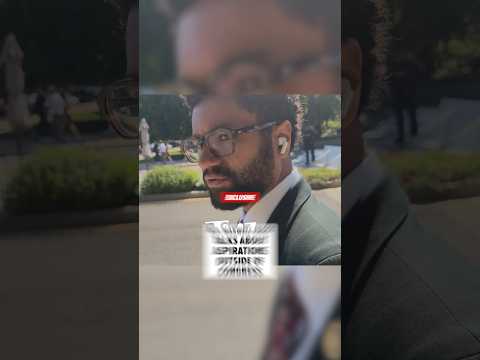
U.S. Representative Rich McCormick recently made a public comment suggesting that Republican interns could engage in romantic relationships with Democratic counterparts. The remark, quickly picked up by TMZ, sparked immediate and widespread discussion across political and social circles. It highlighted the complex social dynamics that exist even within the highly partisan environment of Washington D.C., prompting varied interpretations and intense scrutiny.
The Origin of the Remark: TMZ and Viral Spread
Representative Rich McCormick, a Republican representing Georgia’s 7th congressional district, delivered the comment during a public interaction. The specific phrasing, suggesting that GOP interns could ‘hook up’ with Democrats, was concise yet provocative. Its casual nature, combined with the subject matter, ensured its rapid dissemination.
TMZ, known for its focus on celebrity news and viral content, was among the first outlets to report on McCormick’s statement. This immediate media attention propelled the remark beyond traditional political news cycles. It quickly entered popular culture, reaching a broad audience unfamiliar with typical congressional proceedings.
The speed at which the comment spread underscored the contemporary media landscape. Statements made by public figures, regardless of their intended gravitas, can instantly become national talking points. The incident demonstrated the power of digital platforms and entertainment news in shaping political narratives.
McCormick’s Background and Political Stance
Representative McCormick was first elected to Congress in 2022. He is a former emergency room physician and a Marine Corps veteran, bringing a non-traditional background to Capitol Hill. His political platform typically centers on fiscal conservatism, healthcare reform, and national security.
His tenure has seen him engage in numerous legislative debates and committee work. However, this particular comment diverted significantly from policy-focused discussions. It instead ventured into the realm of social observation, touching upon the personal lives of congressional staff.
The remark was interpreted by some as an attempt at humor. Others viewed it as a candid, if unfiltered, observation on the social interactions that occur within the political ecosystem. Regardless of intent, the comment had a tangible impact on public perception and political discourse.
Immediate Reactions and Diverse Interpretations
The comment from Representative McCormick elicited a broad spectrum of immediate reactions. It was widely characterized as a ‘provocative political statement.’ This descriptor suggests that the remark, whether intentionally or not, was designed to stimulate debate and challenge conventional notions of decorum in political speech.
Social media platforms, including X (formerly Twitter), Facebook, and Reddit, became immediate conduits for public discussion. Political commentary websites and news aggregators amplified the story. Individuals from across the political spectrum weighed in with their perspectives.
Some observers interpreted the comment as a lighthearted, albeit potentially unrefined, observation about human nature. They suggested it highlighted the idea that personal connections can transcend rigid political divides. This viewpoint often excused the language as a form of casual banter.
Conversely, a significant portion of the public and political commentators viewed the remark as inappropriate for an elected official. Critics argued that the statement trivialized the professional environment of Congress. They also raised concerns about the implicit objectification of young, often unpaid, interns.
The Connotations of ‘Hook Up’ in Political Discourse
The specific phrase ‘hook up’ carries distinct connotations in contemporary English. It generally implies casual romantic or sexual encounters, often without the expectation of a long-term relationship. The use of this informal terminology added a layer of controversy to McCormick’s statement.
In a professional setting like Capitol Hill, such language can be perceived as unprofessional or dismissive. When applied to young interns, it can also raise questions about power dynamics and workplace ethics. The choice of words significantly shaped the public’s reception of the comment.
The incident highlighted the challenges public figures face in controlling the narrative around their statements. Once a remark enters the public domain, particularly through viral channels, its interpretation can quickly diverge from the speaker’s original intent. The informal phrasing contributed directly to its polarizing effect.
Political Discourse in a Polarized Era: 2026 Context
The year 2026 continues to be defined by a highly polarized political landscape in the United States. Discussions between the Republican and Democratic parties frequently devolve into partisan divides, with perceived common ground often elusive. Representative McCormick’s comment inadvertently tapped into these prevailing dynamics.
Elected officials and other public figures operate under intense scrutiny. Every statement, whether delivered formally in a legislative chamber or informally in a public setting, can be amplified, dissected, and analyzed. The pervasive nature of social media and 24-hour news cycles ensures that controversial remarks quickly become national talking points.
This incident also reflected a broader trend in modern political communication. The boundaries between personal observation, strategic political maneuvering, and accidental gaffe have become increasingly blurred. Officials must navigate a complex terrain where their words are constantly evaluated for their political, social, and ethical implications.
The Role of Media in Amplifying Political Statements
The involvement of outlets like TMZ in reporting on McCormick’s comment exemplified a shift in media consumption. What might once have been confined to political gossip within Washington D.C. now quickly reaches a mass audience. This broad dissemination shapes public perception and intensifies debate.
Traditional news organizations often follow the lead of viral content, providing further analysis and commentary. This layered media coverage ensures that provocative statements gain prolonged attention. It also means that the initial context of a remark can be overshadowed by subsequent interpretations and reactions.
The media’s role in amplifying such comments contributes to the fast-paced and often reactive nature of contemporary political discourse. Public figures are increasingly aware that their words can be taken out of context or reinterpreted in ways they did not intend, often with significant political consequences.
Life as a Congressional Intern: Beyond the Politics
Internships on Capitol Hill represent a foundational experience for many individuals aspiring to careers in politics, public service, and law. These roles are often demanding, characterized by long hours, low or no pay, and a significant commitment. Interns, typically college students or recent graduates, are immersed in the daily operations of legislative offices.
The social environment for interns in Washington D.C. is distinctive. Many interns live in close proximity, often in shared housing. They work in shared office spaces and frequently interact with peers from various congressional offices, regardless of party affiliation. This proximity and shared experience often lead to the formation of strong social networks.
Despite the intense political rivalries at higher levels of government, personal relationships can and do develop among staff members from different offices and political parties. These connections often form outside the formal political arena, during social gatherings, happy hours, or shared commutes.
Social Dynamics and Inter-Party Connections
Representative McCormick’s comment, therefore, touched upon a known, if often unspoken, aspect of intern life. The concept of inter-party relationships among young staff members is not entirely novel. The public acknowledgment by an elected official, however, brought this informal reality into the formal political discourse.
The comment might also be seen as an acknowledgment of the shared human experience that underlies political differences. Even in environments designed for partisan conflict, individuals form connections based on shared experiences, proximity, and personal chemistry. These human elements often transcend the political labels assigned to individuals.
For interns, navigating the social landscape of D.C. is part of the overall experience. They learn to balance professional duties with personal lives, often forming friendships and relationships that can last well beyond their internship terms. The comment, for some, simply articulated an open secret about this aspect of intern culture.
Historical Parallels: Bridging the Political Divide
The history of American politics offers numerous examples of personal relationships bridging partisan divides. While the political climate has intensified in recent decades, historical records illustrate instances of friendships, marriages, and even romantic relationships between individuals from opposing political parties.
During earlier eras, Washington D.C. society often functioned with a greater degree of social mixing among political opponents. Social events, formal dinners, and informal gatherings frequently included members from both sides of the aisle. These interactions sometimes fostered personal bonds that could soften the edges of political rivalry and facilitate bipartisan cooperation.
The phenomenon of inter-party marriage, for example, is not uncommon throughout American history. Spouses from different political affiliations often navigate their ideological differences in private, while maintaining their public political stances. These relationships highlight the complex interplay between personal and professional lives in politics, demonstrating that political divisions do not always dictate personal connections.
Shifting Social Norms in Washington D.C.
Representative McCormick’s remark, in a way, echoed this historical reality by suggesting that fundamental human interactions, including romantic ones, can still occur across party lines. It pointed to the idea that despite the current political polarization, younger generations entering the political arena might continue to form such connections.
However, the context of these interactions has evolved. Modern D.C. is often perceived as more segregated along partisan lines, particularly in social settings. The comment, therefore, might also be interpreted as a commentary on the lingering social fluidity that still exists, especially among younger, less entrenched political actors.
The incident prompted reflection on whether such casual inter-party connections are still as prevalent or as openly acknowledged as they might have been in previous decades. It opened a dialogue about the evolving social norms and expectations within the nation’s capital.
The Role of Humor and Controversy in Political Communication
Humor often serves as a complex tool in political communication. It can be used to defuse tension, build rapport, or deliver sharp critiques. However, political humor also carries inherent risks, particularly when delivered by elected officials in public forums.
Representative McCormick’s comment, if intended as humor, failed to land universally. For some, it was perceived as a harmless jest. For others, it was seen as inappropriate, trivializing, or even offensive. This disparity in reception highlights the subjective nature of humor, especially in a politically charged environment.
Controversy, whether intentional or accidental, frequently generates significant media attention. In the modern political landscape, attention itself can be a valuable commodity. Generating controversy can elevate a politician’s profile, even if the attention is negative in nature. This dynamic complicates how public statements are evaluated.
Navigating Public Perception and Accountability
The incident placed Representative McCormick under a spotlight, prompting questions about accountability for public statements. Elected officials are expected to uphold certain standards of conduct and communication. Remarks perceived as unprofessional or insensitive can lead to calls for apologies or explanations.
The public reaction to McCormick’s comment underscored the constant negotiation between freedom of speech and the responsibilities of public office. Politicians must weigh the potential impact of their words on their constituents, their colleagues, and the broader political discourse.
Ultimately, the episode served as a reminder of the delicate balance politicians must strike. They must communicate authentically while also being acutely aware of how their words will be received and interpreted by a diverse and often critical public. The fallout from such comments can be swift and far-reaching.