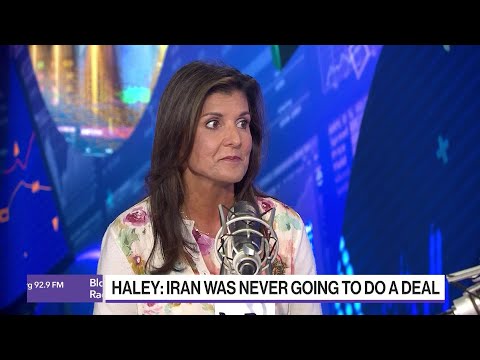
United States officials now assess an 80 to 85 percent probability that a new diplomatic agreement with the Islamic Republic of Iran will be signed before the end of 2026. The framework reportedly freezes Iranian uranium enrichment at existing levels in exchange for the unfreezing of billions in restricted international assets. This assessment, broadcast on Bloomberg Television’s Balance of Power on June 12, 2026, represents the highest level of official confidence in a diplomatic breakthrough since the collapse of the original nuclear pact. The Biden administration seeks quiet in the Middle East. Tehran seeks a lifeline for its battered economy. The intersection of those two desires forms the foundation of the current draft.
But the story does not begin in the summer of 2026. It begins a decade earlier, in the aftermath of a shattered treaty. What looks like a sudden diplomatic breakthrough is actually the culmination of years of shadow diplomacy, proximity talks, and quiet concessions orchestrated in the deserts of the Persian Gulf.
The Long Shadow of the JCPOA
The original Joint Comprehensive Plan of Action (JCPOA) was signed on July 14, 2015. It was a sprawling, highly technical document. It dismantled Iran’s nuclear infrastructure, shipped tons of enriched uranium to Russia, and poured concrete into the core of the Arak heavy water reactor. In exchange, the United States, the European Union, and the United Nations lifted a suffocating web of economic sanctions.
That architecture held for less than three years. On May 8, 2018, the United States formally withdrew from the agreement. The Trump administration launched a maximum pressure campaign, snapping sanctions back into place and targeting Iran’s lifeblood: crude oil exports. Tehran waited exactly one year before retaliating. Iranian scientists resumed enriching uranium. They activated advanced IR-6 centrifuges. They moved operations deep underground into the Fordow Fuel Enrichment Plant, a facility buried beneath a mountain near the holy city of Qom.
By the time the Biden administration took office in 2021, the nuclear file was a crisis. Diplomacy stalled in Vienna. European mediators grew frustrated. The original JCPOA was dead, rendered obsolete by Iran’s technical advancements. A return to the 2015 parameters was no longer physically possible. A new framework was required. It took five years to build it.
Decoding the 80-85 Percent Metric
In Washington, probabilities are currency. An 80 to 85 percent confidence interval is not a guess. It is a formal intelligence and diplomatic assessment. When Bloomberg Television reported this metric on June 12, 2026, it signaled a fundamental shift in the status of the negotiations.
An 85 percent probability means the text is written. It means the technical annexes are finalized. The brackets surrounding disputed clauses have been removed. The remaining 15 percent accounts for political volatility. It accounts for the possibility that Supreme Leader Ayatollah Ali Khamenei could reject the final draft at the eleventh hour. It accounts for the risk of a regional escalation that could force the United States to walk away.
The 85 percent threshold indicates that the negotiators have finished their jobs. The text is locked. The remaining hurdles are entirely political, resting on the desks of the ultimate decision-makers in Washington and Tehran.
Diplomatic officials do not leak high-confidence metrics unless they are preparing the public for an imminent announcement. The leak itself is a tool. It tests the waters. It allows the administration to gauge the reaction of Congress, the markets, and allied nations before the official signing ceremony.
The Oman Backchannel and Proximity Diplomacy
The 2026 agreement was not forged in a grand European hotel. It was built in the quiet rooms of the Middle East. Muscat, the capital of Oman, served as the primary conduit. Sultan Haitham bin Tariq continued the legacy of his predecessor, offering Omani territory as a neutral ground for hostile nations to communicate.
The United States and Iran do not maintain formal diplomatic relations. Their diplomats do not sit in the same room. Instead, they practice proximity diplomacy. American officials, often led by White House coordinator Brett McGurk, sit in one villa. Iranian officials, led by their deputy foreign minister, sit in another. Omani and Qatari diplomats ferry written messages across the courtyards.
- The Message Carriers: Qatari and Omani officials act as the physical bridge, translating nuance and ensuring messages are not misinterpreted.
- The Financial Blueprint: Qatar also serves as the financial clearinghouse, managing the restricted bank accounts where Iran’s unfrozen assets are held.
- The Security Guarantee: Oman provides the physical security and the absolute secrecy required for high-level intelligence officers to meet safely.
This method is slow. It is agonizingly precise. But it prevents public posturing. In the absence of cameras and press pools, the two sides managed to construct a highly transactional arrangement.
Uranium, Centrifuges, and the IAEA
The core of the 2026 framework is a freeze, not a rollback. Iran has already enriched uranium to 60 percent purity. Weapons-grade uranium requires 90 percent purity. The technical jump from 60 to 90 percent is a matter of weeks, not years. The United States refers to this as the breakout time.
The new agreement explicitly caps enrichment at 60 percent. It requires Iran to dilute a portion of its existing stockpile. More importantly, it reinstates the monitoring apparatus of the International Atomic Energy Agency (IAEA). For years, IAEA Director General Rafael Grossi fought a losing battle to keep cameras running in Iran’s nuclear facilities. Tehran systematically disconnected the cameras, creating what Grossi called a blind spot in international monitoring.
Under the 2026 terms, the IAEA cameras return to Natanz and Fordow. Electronic seals will be placed on centrifuge rotors. Inspectors will regain daily access to the enrichment halls. The world will once again have a clear view of Iran’s nuclear ledger. In exchange, the United States will not demand the total destruction of the advanced centrifuges. They will be unplugged, but they will not be destroyed.
The Economics of Sanctions Relief
Iran does not want a treaty. Iran wants cash. The Iranian economy has been battered by inflation, currency devaluation, and widespread protests. The government in Tehran requires capital to stabilize the rial and fund its domestic subsidy programs.
The 2026 agreement provides targeted, highly monitored financial relief. It builds on the blueprint established in 2023, when the United States allowed South Korea to transfer $6 billion in Iranian oil revenue to restricted accounts in Qatar. Under the new framework, billions more will be unfrozen from accounts in Iraq, Japan, and Europe. This money cannot be wired directly to the Central Bank of Iran. It must remain in escrow, strictly limited to humanitarian purchases: food, medicine, and agricultural goods.
The broader economic impact lies in the energy markets. Iran holds an estimated 80 million barrels of crude oil on floating storage. Very Large Crude Carriers (VLCCs) sit anchored off the coasts of Singapore and China, waiting for the legal green light to unload. If the 2026 deal is signed, the United States will quietly relax its enforcement of oil sanctions. Iranian crude will flow more freely into Asian markets.
Global markets reacted instantly to the Bloomberg Television report. Brent crude futures dipped as traders priced in the sudden influx of Iranian supply. A finalized deal could add up to one million barrels per day to the global market, providing a buffer against supply shocks and helping to stabilize global energy prices.
The Domestic Political Minefield
The hardest battle for the Biden administration will not be fought in Muscat. It will be fought in Washington. The Iran Nuclear Agreement Review Act (INARA) of 2015 requires the President to submit any nuclear agreement with Iran to Congress for a review period. During this time, Congress can pass a joint resolution of disapproval.
Republicans will unanimously oppose the deal. They will argue that unfreezing assets effectively funds terrorism, pointing to Iran’s support for proxy groups across the Middle East. Hawkish Democrats will also express deep skepticism, questioning whether a freeze is sufficient to prevent a nuclear-armed Iran.
To survive this political gauntlet, the White House will likely frame the 2026 arrangement as an understanding rather than a formal treaty. An understanding does not require a two-thirds ratification vote in the Senate. It is an executive action, implemented through the Treasury Department’s waiver authority. It is fragile. It can be reversed by the next president. But for now, it is the only viable path forward.
Regional Shockwaves in the Middle East
The Middle East of 2026 is not the Middle East of 2015. The geopolitical chessboard has been rewritten. Saudi Arabia and Iran restored diplomatic relations in a deal brokered by China. The United Arab Emirates has deepened its economic ties with Tehran. The Gulf states, once the loudest opponents of the original JCPOA, now quietly support a de-escalation agreement. They prefer a contained Iran over a desperate, unpredictable Iran.
The exception is Israel. The Israeli government views any enrichment on Iranian soil as an existential threat. Israeli intelligence agencies have a long history of conducting covert operations inside Iran, targeting nuclear scientists and sabotaging facilities. The United States has spent months briefing Israeli officials on the parameters of the 2026 deal, attempting to secure a promise that Israel will not launch a preemptive military strike while the agreement is in place.
The 85 percent probability metric suggests that Israel has, at least temporarily, agreed to stand down. The military option remains on the table, but the diplomatic window has been forced open.
Diplomats finalized the text. Markets priced in the oil. Politicians prepared their talking points. Signatures.