Tag: Geopolitics

  • The Price of Pause: Unpacking the US-Iran Draft Deal and Its Financial Incentives

    The Price of Pause: Unpacking the US-Iran Draft Deal and Its Financial Incentives

    A draft agreement between the United States and Iran has surfaced, proposing a controversial exchange: financial incentives for Tehran in return for verifiable pauses in its nuclear program. The proposal, detailed in a mid-2026 leak, outlines a framework where Iranian assets frozen in foreign banks would be released in tranches, contingent on strict adherence to International Atomic Energy Agency (IAEA) monitoring. This approach attempts to bypass direct US taxpayer funding while offering Tehran a tangible economic lifeline.

    The core of the strategy is containment through capital. It is a calculated gamble. The Biden administration, facing a complex geopolitical landscape, appears willing to leverage frozen funds to secure a temporary halt to uranium enrichment. The alternative, officials suggest, is a rapid escalation toward a nuclear-armed Iran.

    But the mechanics of the deal are drawing intense scrutiny. The financial incentives are not merely theoretical; they represent billions of dollars currently locked in international financial institutions. The debate now centers on whether this money buys security or merely funds future instability.

    The Mechanics of the Financial Transfer

    The proposed deal does not involve pallets of cash flown into Tehran. It relies on a complex system of international banking waivers. According to sources familiar with the draft, the United States would issue waivers allowing countries holding Iranian funds, such as South Korea or Iraq, to transfer those assets to restricted accounts in third-party nations, potentially Qatar or Oman.

    These restricted accounts are the linchpin of the agreement. The funds would be earmarked exclusively for humanitarian purchases: food, medicine, and agricultural products. The US Treasury Department would maintain oversight, requiring detailed documentation for every transaction to ensure the money does not flow into the coffers of the Islamic Revolutionary Guard Corps (IRGC).

    This structure is designed to provide economic relief to the Iranian populace while denying the regime discretionary capital. However, the fungibility of money remains a central point of contention. Critics argue that by covering humanitarian costs with unfrozen assets, Tehran can redirect its domestic revenue toward military expansion and proxy support.

    The Nuclear Concessions Required

    In exchange for access to these restricted funds, Iran must agree to a series of verifiable nuclear rollbacks. The draft outlines specific thresholds. Tehran must halt the enrichment of uranium to 60 percent purity, a level dangerously close to weapons-grade. Furthermore, it must dilute its existing stockpile of highly enriched uranium.

    The agreement also mandates enhanced access for IAEA inspectors. This includes the reinstallation of surveillance cameras at key nuclear facilities, such as Natanz and Fordow, which were previously removed by Iranian authorities. The goal is to restore the monitoring baseline lost after the collapse of the Joint Comprehensive Plan of Action (JCPOA).

    These concessions are described as an “unwritten understanding” rather than a formal treaty. This distinction is crucial. A formal treaty would require ratification by the US Senate, a nearly impossible hurdle given the current political climate. An informal understanding allows the administration to implement the terms through executive action, though it remains vulnerable to congressional oversight and future policy shifts.

    The Geopolitical Context: Why Now?

    The timing of this draft deal is not accidental. It emerges against a backdrop of heightened regional tensions and shifting global alliances. The war in Ukraine has reshaped energy markets and forged a closer military partnership between Russia and Iran. Tehran has supplied Moscow with Shahed drones, further complicating its relationship with the West.

    For Washington, the primary objective is de-escalation. A nuclear crisis in the Middle East would strain US resources already committed to Europe and the Indo-Pacific. The draft deal is viewed as a holding pattern, a way to freeze the nuclear threat while addressing other strategic priorities.

    For Tehran, the motivation is primarily economic. Years of crippling sanctions have battered the Iranian economy, leading to inflation, currency devaluation, and widespread domestic unrest. Access to frozen assets, even under strict humanitarian conditions, provides a necessary pressure valve for the regime.

    Domestic Fallout in Washington

    The leak of the draft deal has ignited a firestorm in Washington. Lawmakers on both sides of the aisle have expressed deep reservations. The primary concern is the potential for the released funds to indirectly support Iran’s network of proxy militias, including Hezbollah in Lebanon, Hamas in Gaza, and the Houthis in Yemen.

    Critics point to the historical precedent of the 2015 JCPOA, arguing that financial relief did not moderate Iran’s regional behavior. They demand a more comprehensive agreement that addresses not only the nuclear program but also ballistic missile development and support for terrorism.

    The administration faces an uphill battle in selling the deal to a skeptical Congress. The Iran Nuclear Agreement Review Act (INARA) of 2015 requires the president to submit any agreement related to Iran’s nuclear program to Congress for review. While an “unwritten understanding” might attempt to bypass INARA, lawmakers are likely to challenge this interpretation, setting the stage for a significant legal and political clash.

    The View from Tehran

    In Tehran, the reception of the draft deal is equally complex. Hardliners within the regime view any concession to the United States as a capitulation. They argue that Iran has weathered the worst of the sanctions and should continue to leverage its nuclear advancements to extract more significant economic relief without compromising its strategic posture.

    However, the pragmatic faction, led by figures within the Foreign Ministry, recognizes the urgent need for economic stabilization. They view the release of frozen assets as a necessary step to address domestic grievances and prevent further instability. The internal debate in Iran will ultimately determine whether the regime is willing to accept the strict oversight mechanisms required by the US Treasury.

    The Role of Regional Allies

    The draft deal has profound implications for US allies in the Middle East, particularly Israel and the Gulf states. Israel has consistently opposed any agreement that leaves Iran with a latent nuclear weapons capability. Israeli officials have publicly stated that they are not bound by any US-Iran understanding and reserve the right to take unilateral military action to prevent Tehran from acquiring a nuclear bomb.

    The Gulf states, notably Saudi Arabia and the United Arab Emirates, have adopted a more nuanced approach. While sharing concerns about Iran’s regional ambitions, they have also engaged in diplomatic outreach to Tehran to reduce tensions. They view a limited US-Iran deal as a potential stabilizing factor, provided it does not embolden Iranian aggression in their immediate neighborhood.

    The Path Forward: A Fragile Understanding

    The draft deal represents a fragile attempt to manage a volatile crisis. It is not a comprehensive solution but a tactical maneuver designed to buy time. The success of the agreement depends on the meticulous implementation of the financial oversight mechanisms and Iran’s strict adherence to the nuclear concessions.

    If the deal collapses, the consequences could be severe. Iran could rapidly accelerate its enrichment program, prompting a strong military response from Israel or the United States. Conversely, if the deal holds, it could create a diplomatic opening for broader negotiations, though the prospects for a grand bargain remain remote.

    The debate over the financial incentives will continue to dominate the discourse. It is a fundamental question of risk assessment: does the release of frozen assets mitigate the immediate nuclear threat, or does it inadvertently fund future conflicts? The answer will shape the trajectory of the Middle East for years to come.

    The negotiations continue. The assets remain frozen. The centrifuges spin.

    Washington waits.

    Tehran waits.

    The world watches.
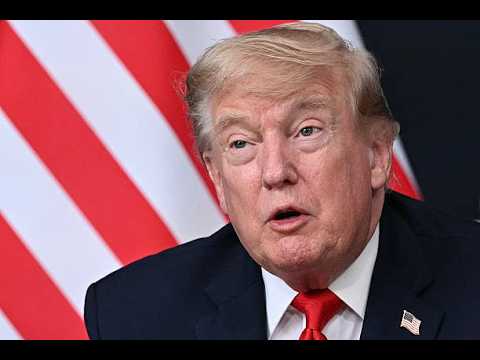
  • Trump’s Warning to Netanyahu: Calling for Responsibility in Lebanon

    Trump’s Warning to Netanyahu: Calling for Responsibility in Lebanon

    Former President Donald Trump publicly stated that Israeli Prime Minister Benjamin Netanyahu should exhibit greater responsibility in his dealings with Lebanon. The comments, made during an interview, focused on the potential for regional escalation and referenced past conflicts. Trump’s remarks signify a notable divergence in public discourse from historical U.S. support for Israeli policy, particularly concerning actions along its northern border.

    This assertion by a former U.S. head of state introduces a complex dimension to international relations. It suggests a critical perspective on leadership decisions in a highly volatile geopolitical landscape. The implications extend beyond rhetoric, touching upon strategic alliances and the pursuit of regional stability.

    The Context of Trump’s Remarks

    Donald Trump’s statements emerged amidst heightened tensions in the Middle East. The region has experienced significant instability, particularly following recent events involving Israel and its neighbors. Observers note that such public admonishments are uncommon from former U.S. presidents regarding Israeli leadership.

    The specific reference to the 2006 Israel-Lebanon conflict served as a cautionary tale. That 34-day military confrontation resulted in significant casualties and infrastructure damage on both sides. Trump’s invocation of this history implies a concern that current strategies might lead to a similar, or even more severe, outcome.

    The 2006 Israel-Lebanon Conflict

    The 2006 conflict began on July 12, 2006, with a cross-border raid by Hezbollah. Two Israeli soldiers were captured, and eight were killed. Israel responded with extensive air strikes and a ground invasion of southern Lebanon. Hezbollah, a Lebanese Shi’a Islamist political party and militant group, retaliated with rocket attacks into northern Israel.

    The conflict lasted until August 14, 2006, when a United Nations-brokered ceasefire went into effect. Resolution 1701 of the UN Security Council called for a full cessation of hostilities. Estimates of fatalities varied, but Lebanese sources reported over 1,100 Lebanese deaths, mostly civilians, and Israeli sources reported 165 Israeli deaths, including 44 civilians.

    The war caused widespread destruction in Lebanon, particularly in the south and parts of Beirut. It also led to significant displacement of populations. The economic impact was substantial, with reconstruction efforts costing billions of dollars.

    Netanyahu’s Role and Historical Perspective

    Benjamin Netanyahu has served multiple terms as Israel’s Prime Minister, first from 1996 to 1999, and then continuously since 2009, making him the longest-serving prime minister in Israeli history. His tenure has been marked by a consistent focus on national security. This includes confronting threats from various regional actors, including Hezbollah in Lebanon.

    Netanyahu’s approach to national security is often characterized by a strong stance against perceived threats. His political career has been defined by a commitment to protecting Israeli borders and citizens. This perspective frequently leads to robust military responses to aggression.

    U.S. Presidential Relations with Netanyahu

    Relations between U.S. presidents and Benjamin Netanyahu have been varied. Historically, U.S. administrations have maintained a strong alliance with Israel, providing significant military and financial aid. However, disagreements have emerged at different points.

    During the Obama administration, tensions arose over the Iran nuclear deal, which Netanyahu strongly opposed. President Obama and Netanyahu had a famously strained relationship. Conversely, the Trump administration saw a period of close alignment, with significant policy shifts such as the relocation of the U.S. embassy to Jerusalem in 2018 and the recognition of Israeli sovereignty over the Golan Heights in 2019.

    Trump’s recent comments therefore represent a shift from his own previous public posture toward Netanyahu. This shift suggests a re-evaluation of regional strategy or a desire to project a more balanced approach to the intricate conflicts of the Middle East.

    The Broader Implications of Escalation

    An escalation of conflict between Israel and Lebanon carries significant regional and international implications. The Middle East is a geopolitical flashpoint, with numerous state and non-state actors vying for influence. A full-scale war could draw in other nations, leading to a wider regional conflagration.

    Such a conflict would inevitably impact global energy markets. The region is a major oil producer, and disruptions could lead to spikes in crude oil prices, affecting economies worldwide. Furthermore, humanitarian crises, including mass displacement and refugee flows, would likely intensify.

    International Responses and Diplomacy

    International bodies, such as the United Nations, consistently advocate for de-escalation and peaceful resolution. Various diplomatic efforts have been deployed over decades to manage the Israel-Lebanon border. The UN Interim Force in Lebanon (UNIFIL) has been stationed in southern Lebanon since 1978, tasked with monitoring the border and ensuring the cessation of hostilities.

    The prospect of renewed conflict often triggers swift diplomatic interventions from major global powers. These interventions typically aim to prevent a full-blown war through negotiation, sanctions, or the deployment of peacekeeping forces. The United States, due to its historical ties and strategic interests, often plays a central role in these diplomatic endeavors.

    Domestic Political Considerations in the U.S.

    Donald Trump’s comments also carry domestic political weight within the United States. Foreign policy statements by presidential candidates or former presidents often resonate with specific voter bases. These remarks can influence public opinion on international affairs and the role of the U.S. abroad.

    For some, Trump’s call for responsibility might be seen as a pragmatic approach to foreign policy, prioritizing de-escalation. For others, it could be viewed as a departure from traditional Republican support for Israel. The comments will likely fuel debate among foreign policy experts and political commentators.

    The Role of Presidential Rhetoric

    Presidential rhetoric, whether from an incumbent or a former officeholder, significantly shapes national and international perceptions. Such statements are analyzed for their potential impact on diplomatic relations, military strategies, and economic stability. When a former president criticizes a key ally, it can send ripples through global diplomatic circles.

    The words of a former U.S. President are often interpreted as reflecting a potential future policy direction, especially if that individual is considering another presidential run. This adds a layer of scrutiny to any public pronouncements on sensitive international issues.

    The Future of Israel-Lebanon Relations

    The relationship between Israel and Lebanon remains highly volatile. The two nations are technically still at war, with no formal peace agreement. The presence of Hezbollah, a powerful non-state actor with significant military capabilities, complicates any efforts toward lasting peace.

    Hezbollah’s influence in Lebanese politics and its military arsenal, largely supplied by Iran, pose a continuous challenge to Israeli security. Any future conflict could involve advanced weaponry and tactics, potentially leading to a more destructive outcome than previous engagements.

    Paths to De-escalation

    De-escalation efforts typically involve multiple pathways. These include direct or indirect negotiations facilitated by international mediators, confidence-building measures, and clear communication channels to prevent misunderstandings. Economic incentives and disincentives can also play a role in influencing regional actors.

    The international community consistently seeks to reinforce the authority of the Lebanese state. This is seen as crucial for controlling non-state actors and ensuring adherence to international resolutions. However, Lebanon’s internal political and economic fragilities often complicate these efforts.

    Farmers gathered. Soldiers gathered. Diplomats gathered. Leaders gathered. The world watched. The tension built. A former president spoke. Responsibility.

    FAQ Section

    • What did Donald Trump say about Benjamin Netanyahu and Lebanon?
      Donald Trump stated that Israeli Prime Minister Benjamin Netanyahu should be more responsible in his approach to Lebanon, referencing the 2006 Israel-Lebanon conflict as a mistake that should not be repeated.

    • Why did Trump reference the 2006 Israel-Lebanon conflict?
      Trump referenced the 2006 conflict to illustrate the potential negative consequences of military escalation in the region, suggesting that a similar outcome would be undesirable and could lead to wider instability.

    • What are the potential implications of renewed conflict between Israel and Lebanon?
      Renewed conflict between Israel and Lebanon could lead to significant regional instability, humanitarian crises, and disruptions to global energy markets, potentially drawing in other state and non-state actors.

    • How has Benjamin Netanyahu’s relationship with U.S. presidents evolved?
      Benjamin Netanyahu has experienced varied relationships with U.S. presidents, including strained periods with Barack Obama and close alignment with Donald Trump, though Trump’s recent comments indicate a shift in public rhetoric.

    • What is the role of Hezbollah in the Israel-Lebanon dynamic?
      Hezbollah is a powerful Lebanese Shi’a Islamist political party and militant group that significantly influences Lebanese politics and poses a continuous security challenge to Israel due to its military capabilities, often complicating de-escalation efforts.

  • Trump’s Call for Russia-Ukraine Deal – Examining the Diplomatic Landscape

    Trump’s Call for Russia-Ukraine Deal – Examining the Diplomatic Landscape

    Former President Donald Trump has consistently advocated for a negotiated settlement between Russia and Ukraine. He has publicly stated that both nations should engage in diplomatic talks to end the ongoing conflict. This position has been a recurring theme in his commentary on the war, particularly since the full-scale invasion commenced in February 2022.

    Trump often claims he possesses the unique ability to broker a peace agreement. He has repeatedly asserted that he could resolve the conflict within 24 hours if he were to return to the presidency. This claim underscores his belief in a rapid diplomatic solution.

    The Recurring Call for Negotiation

    Donald Trump’s calls for Russia and Ukraine to make a deal are not new. They reflect a long-standing pattern in his foreign policy approach, which often prioritizes direct negotiation and transactional diplomacy. His statements have been made in various settings, including rallies, interviews, and social media posts.

    On multiple occasions, Trump has expressed that the war should never have started. He attributes the conflict, in part, to what he perceives as weaknesses in current U.S. foreign policy. His solutions consistently point towards dialogue over prolonged military engagement.

    The former President’s perspective often centers on the economic costs of the war. He frequently highlights the financial burden on the United States and its allies. This emphasis on cost-benefit analysis shapes his advocacy for a quick resolution.

    Specific Instances of Trump’s Statements

    In a March 2023 interview with Fox News’s Sean Hannity, Trump reiterated his conviction that a deal was possible. He stated, "I would have the deal done in 24 hours." This comment came amidst escalating fighting in eastern Ukraine.

    During a campaign rally in New Hampshire in January 2024, Trump again asserted his ability to end the conflict swiftly. He suggested that both Ukrainian President Volodymyr Zelenskyy and Russian President Vladimir Putin would listen to him. This confidence in his personal leverage is a hallmark of his rhetoric.

    Bloomberg Television has reported on these statements, noting their consistent nature. The reports often contextualize Trump’s remarks within the broader geopolitical landscape. They highlight the implications for international alliances and aid packages.

    Contrasting Views on the Conflict

    Trump’s emphasis on a rapid deal stands in stark contrast to the policies of the Biden administration. President Joe Biden’s administration has provided extensive military and financial aid to Ukraine. This support aims to enable Ukraine to defend its sovereignty and reclaim occupied territories.

    Many European leaders and NATO allies also advocate for continued robust support for Ukraine. They view the conflict as a defense of international law and democratic principles. The prevailing Western consensus is that Russia’s aggression must not be rewarded with territorial gains.

    Ukrainian President Volodymyr Zelenskyy has consistently maintained that any peace deal must respect Ukraine’s territorial integrity. He has stated that Ukraine will not cede land to Russia. His conditions for negotiation typically include the full withdrawal of Russian troops.

    The Role of Territorial Concessions

    A central point of contention in any proposed peace deal involves territorial control. Russia currently occupies significant portions of Ukrainian territory, including Crimea, which was annexed in 2014, and parts of the Donbas region.

    Trump’s proposals for a swift deal often imply a willingness to consider territorial adjustments. He has not explicitly detailed the terms of such a deal. However, the speed he suggests would likely require significant concessions from one or both sides.

    Analysts have suggested that a "24-hour deal" would almost certainly involve Ukraine ceding some of its internationally recognized territory. This prospect is highly contentious within Ukraine and among its international supporters.

    International Reactions and Concerns

    Trump’s statements have generated considerable discussion among international observers and policymakers. Concerns have been raised about the potential impact on global stability and the future of alliances.

    Critics argue that a premature deal could embolden authoritarian regimes. They suggest it might send a message that aggression can be rewarded. This perspective emphasizes the long-term consequences for international security.

    Supporters of Trump’s approach argue that an end to hostilities would save lives. They also point to the economic benefits of reducing global instability. This viewpoint prioritizes immediate peace over protracted conflict.

    Impact on NATO and Western Unity

    The North Atlantic Treaty Organization (NATO) has been a key player in coordinating support for Ukraine. Trump’s past rhetoric on NATO has often been critical, questioning its value and demanding increased contributions from member states.

    A U.S.-brokered deal, as envisioned by Trump, could potentially strain relations within NATO. Allies might perceive such a move as undermining their collective efforts. This could lead to a fracturing of Western unity on the issue.

    The European Union has also imposed extensive sanctions on Russia. Any shift in U.S. policy could complicate these efforts. It could force European nations to re-evaluate their own strategies regarding Russia and Ukraine.

    The Economic Dimension of the Conflict

    The war in Ukraine has had profound economic consequences globally. Energy prices have fluctuated, supply chains have been disrupted, and inflation has been a persistent concern in many countries.

    Trump frequently references these economic impacts when advocating for a deal. He argues that ending the war quickly would alleviate these pressures. His focus is often on the financial burden on American taxpayers.

    The cost of aid to Ukraine has been substantial. The United States has provided tens of billions of dollars in military, financial, and humanitarian assistance. This expenditure is a frequent target of criticism from those advocating for an immediate peace.

    Long-Term Economic Implications

    While a swift peace might offer immediate economic relief, the long-term implications are debated. Some economists argue that allowing Russia to retain conquered territories could destabilize global markets further. They suggest it could encourage future acts of aggression.

    Others contend that the economic drain of prolonged conflict outweighs the geopolitical risks of a negotiated settlement. These arguments often highlight the opportunity costs of continued military spending.

    The reconstruction of Ukraine will also be a massive undertaking. The World Bank estimates the cost of Ukraine’s recovery and reconstruction at hundreds of billions of dollars. Any peace deal would need to address these financial realities.

    The Diplomatic Path Forward

    The pathway to peace in Ukraine remains complex and fraught with challenges. Both Russia and Ukraine have outlined conditions for negotiation that appear, at present, irreconcilable.

    International mediation efforts have occurred intermittently since the invasion. Turkey, China, and the United Nations have all attempted to facilitate dialogue. These efforts have yielded limited success.

    Trump’s approach suggests a more assertive and direct form of mediation. He envisions himself as the central figure capable of bringing the parties to the table. This relies heavily on his perceived negotiating prowess.

    Historical Precedents and Future Outlook

    History offers numerous examples of conflicts resolved through both military action and diplomatic negotiation. The specific circumstances of the Russia-Ukraine war present unique challenges due to its scale and geopolitical implications.

    The future outlook for peace remains uncertain. The positions of key international actors, including the United States, will play a decisive role. The outcome of upcoming elections in major Western democracies could significantly alter the diplomatic landscape.

    Trump’s consistent advocacy for a deal ensures that this perspective remains a prominent feature in the global discussion. His influence on U.S. foreign policy, should he return to office, would undoubtedly reshape the approach to the conflict.

    Leaders gathered. Diplomats convened. Statements were issued. The world watched. The conflict continued. The calls for peace persisted. The proposals for resolution circulated. The debates over strategy intensified. The future of Ukraine remained contested.

    Deal.

  • The June 16 Convergence, SpaceX Valuation Surges as Washington and Tehran Finalize Historic Pact

    The June 16 Convergence, SpaceX Valuation Surges as Washington and Tehran Finalize Historic Pact

    On June 16, 2026, global markets absorbed two massive and seemingly unrelated shifts in the architecture of global power. The United States and Iran finalized the text of a landmark diplomatic agreement designed to cap nuclear enrichment in exchange for targeted sanctions relief. Simultaneously, SpaceX shares surged in secondary market trading, pushing the aerospace firm to an unprecedented valuation exceeding $250 billion. The juxtaposition was not accidental. Markets recalibrated instantly. The news broke simultaneously across trading desks. Bloomberg Television’s The Opening Trade broadcast captured the dual ticker tapes. Anchors detailed the unfreezing of Iranian assets. Analysts dissected the secondary tender offer for SpaceX stock. The modern geopolitical landscape relies entirely on the intersection of statecraft and technological supremacy. This single morning proved it.

    The Secondary Market Surge of SpaceX

    SpaceX does not trade on public exchanges. The company relies on secondary market tender offers to provide liquidity to employees and early investors. On this Tuesday morning, the price per share cleared a threshold that stunned Wall Street. Institutional demand far outpaced supply. The implied valuation crossed $250 billion. This figure places the private aerospace manufacturer above most publicly traded legacy defense contractors combined.

    The surge was driven by two distinct operational victories. First, the Starlink satellite internet constellation reported its eighth consecutive quarter of operating profit. The network surpassed six million active global subscribers. Second, the Starship launch vehicle achieved full reusability during its Block 2 test flights out of Boca Chica, Texas. The sheer volume of payload capacity now available to the United States government altered the calculus of global military logistics.

    “The intersection of aerospace dominance and Middle Eastern statecraft is the only trade that matters today,” stated the lead anchor on Bloomberg Television’s The Opening Trade.

    Washington and Tehran Reach an Accord

    While aerospace valuations climbed in New York, diplomats finalized terms in Vienna. The United States State Department and Iranian officials reached a consensus after fourteen months of back-channel negotiations. The framework replaces the fragmented legacy of the 2015 Joint Comprehensive Plan of Action. The new pact focuses on immediate, verifiable caps on uranium enrichment.

    • Iran agreed to limit enrichment at the Natanz and Fordow facilities to 5 percent.
    • Washington authorized the unfreezing of specific sovereign assets held in South Korea and Qatar.
    • Funds are strictly earmarked for humanitarian and agricultural imports.
    • The agreement includes a phased lifting of secondary sanctions on Iranian crude oil exports.

    Global energy markets reacted before the ink was dry. Brent crude futures dropped by nearly three dollars, settling near $72 per barrel. Traders priced in the anticipated influx of Iranian barrels to Asian markets.

    The Legacy of the JCPOA

    The 2026 agreement did not materialize in a vacuum. It was built on the ashes of the 2015 Joint Comprehensive Plan of Action. That original deal fractured when the United States withdrew in 2018. Subsequent years saw Tehran accelerate its enrichment programs. Centrifuges spun faster. Stockpiles grew larger. The diplomatic freeze lasted nearly a decade. European Union mediators spent years attempting to bridge the gap. The June 16 signing represents the culmination of those exhaustive efforts. The new text acknowledges the realities of a changed Middle East. It relies less on trust and more on absolute, unblinking verification.

    Starshield and the Architecture of Verification

    The connection between a Middle Eastern nuclear pact and a Texas-based rocket company lies in the sky. Diplomatic agreements rely on the doctrine of trust but verify. Verification in 2026 depends on low-Earth orbit satellite constellations. The International Atomic Energy Agency requires on-the-ground access. Intelligence agencies require continuous orbital oversight.

    SpaceX’s military-focused subsidiary, Starshield, provides exactly this architecture. The National Reconnaissance Office previously awarded billions in classified contracts to deploy these secure, Earth-observing networks. The ability to monitor uranium mines, centrifuge manufacturing plants, and military bases in real-time gives Washington the confidence to sign such treaties. The $250 billion valuation of SpaceX reflects this new reality. The company is no longer just a launch provider. It is the foundational infrastructure for global security.

    Market Reactions Across the Defense Sector

    The dual news events triggered immediate volatility in the defense sector. Legacy contractors faced a complex market environment. Lockheed Martin and Northrop Grumman saw mixed trading. The prospect of a stabilized Middle East traditionally signals a reduction in immediate munitions contracts. However, the reliance on high-tech surveillance and space-based assets signals a massive reallocation of the Pentagon budget.

    Capital moved away from traditional kinetic warfare manufacturers. Capital flowed toward aerospace, cyber security, and orbital logistics. The SpaceX valuation served as a gravitational pull. Private venture capital funds accelerated their investments in space startups, hoping to capture the overflow from SpaceX’s dominance.

    The European Union Mediation Role

    The success in Vienna heavily involved European Union diplomats. Brussels acted as the primary conduit when direct talks stalled. The European energy crisis of the early 2020s left the continent desperate for diversified oil and gas streams. Bringing Iranian crude back into the legitimate global market serves European economic interests. French and German envoys provided the necessary guarantees regarding the Qatari banking mechanisms. Their involvement ensured that the unfreezing of funds complied with international anti-money laundering statutes.

    The Domestic Political Fallout

    The agreement with Tehran sparked immediate political friction in Washington D.C. Bipartisan groups in the Senate demanded immediate hearings. The memory of previous failed agreements loomed large over the Capitol. Critics argued that unfreezing assets inherently funds proxy conflicts in the region. The State Department countered with the necessity of halting the immediate nuclear threat.

    The debate dominated the Sunday morning political talk shows. Yet, the underlying truth remained economic. The integration of commercial space technology into national security protocols provided a new layer of political cover. The administration argued that American technological supremacy, spearheaded by companies like SpaceX, guaranteed the enforcement of the deal.

    Banking Compliance and Qatari Intermediaries

    The mechanics of the sanctions relief are highly technical. The United States did not hand over pallets of cash. Instead, billions of dollars previously trapped in South Korean banks were transferred to restricted accounts in Doha, Qatar. The Qatari central bank acts as the overseer. When Iran wishes to purchase medicine or agricultural equipment, the vendors are paid directly from Doha. No liquid capital enters Iranian borders. This strict compliance mechanism was the cornerstone requirement for the United States Treasury Department. It is the firewall that allowed the political signing to proceed.

    The Payload Economics of Starship

    While diplomats argued over banking compliance, aerospace engineers calculated payload economics. The SpaceX valuation surge is fundamentally tied to the Starship vehicle. The ability to lift one hundred tons to low-Earth orbit for a fraction of historical costs changes the global economy. It allows for the rapid deployment of massive surveillance arrays. It enables point-to-point cargo delivery for the military. Wall Street analysts looked at the successful Block 2 flights and realized the monopoly was complete. No other nation or corporation possesses this capability. The $250 billion price tag is a reflection of this unassailable moat.

    Global Energy Realignments

    The Iranian deal sent shockwaves through the Organization of the Petroleum Exporting Countries. Saudi Arabia and the United Arab Emirates watched closely as sanctions relief materialized. The influx of Iranian oil shifts the balance of power within OPEC. Asian markets, particularly China and India, stood to benefit from discounted Iranian crude.

    This shift complicates the global energy transition. Cheaper oil prolongs the reliance on fossil fuels in developing economies. The interconnected nature of the global economy meant that a diplomatic signature in Vienna altered shipping routes in the Strait of Hormuz and refinery outputs in the South China Sea.

    The Unseen Hand of Commercial Space

    Historically, statecraft was the exclusive domain of governments. Navies projected power. Diplomats negotiated terms. Today, commercial entities hold unprecedented leverage over global affairs. The Starlink constellation previously altered the course of ground conflicts in Eastern Europe. Now, the broader SpaceX infrastructure dictates the pace of global surveillance.

    Washington negotiates from a position of strength because its private sector dominates orbit. Tehran negotiates knowing that its facilities are monitored by commercial satellites operating outside traditional state jurisdictions. The rules of the geopolitical game have fundamentally changed.

    The Next Phase of the Accord

    The June 16 signing is only the preliminary step. The agreement faces a rigorous implementation timeline. The IAEA must deploy inspectors to Natanz within thirty days. The unfreezing of funds in Qatar requires complex banking compliance to ensure humanitarian use. The United States Congress holds a review period under the Iran Nuclear Agreement Review Act.

    Each of these steps carries the risk of derailment. The financial markets will monitor each milestone. The defense sector will adjust its lobbying efforts accordingly. The aerospace industry will continue launching rockets, indifferent to the political maneuvering below.

    Convergence

    The morning broadcasts ended. The tender offers closed. The diplomats signed the preliminary texts. The rockets cleared the pad. Convergence.

    Next in the Series: The Orbital Defense Budget, How Starshield Rewrote Pentagon Spending.

  • The Friday Directive, Trump Declares Strait of Hormuz Will Be Completely Opened

    The Friday Directive, Trump Declares Strait of Hormuz Will Be Completely Opened

    The Strait of Hormuz dictates the price of global civilization. It is a 39-kilometer-wide maritime artery separating the Islamic Republic of Iran from the Arabian Peninsula. On a broadcast via Bloomberg Television, Donald Trump declared that this critical chokepoint will be completely opened on Friday. The statement serves as both a geopolitical directive and a market signal. It addresses ongoing regional tensions that have threatened to throttle the transit of global energy supplies. When the Strait is threatened, the world economy shudders. When a definitive timeline is placed on its security, markets react immediately.

    The declaration cuts through the usual diplomatic ambiguity. It places a hard deadline on an international crisis. By naming Friday as the day of total maritime access, Trump sets a clear expectation for both military commanders and energy traders. The global supply chain relies on predictability. For months, the Persian Gulf has offered anything but. This statement attempts to force a return to stability through projected strength.

    The Geography of a Global Chokepoint

    To understand the weight of the Friday directive, one must look at the map. The Strait of Hormuz connects the Persian Gulf to the Gulf of Oman and the Arabian Sea. At its narrowest point, it spans just 21 nautical miles. The actual shipping lanes are even tighter. Vessels must navigate a two-mile-wide inbound lane and a two-mile-wide outbound lane, separated by a two-mile buffer zone. This narrow corridor is the bottleneck for the world’s hydrocarbon economy.

    Approximately 21 million barrels of crude oil pass through these waters every single day. This represents roughly one-fifth of global petroleum consumption. Liquefied natural gas (LNG) from Qatar also relies entirely on this route. There are no viable alternative pipelines that can handle this volume. If the Strait closes, the oil stays in the Gulf. If the oil stays in the Gulf, factories in Asia halt, transportation costs in Europe spike, and gasoline prices in the United States surge.

    The northern shore is controlled by Iran. The southern shore is shared by the United Arab Emirates and the Musandam Peninsula, an exclave of Oman. This geography creates a permanent tactical advantage for asymmetric naval forces. Fast-attack craft, coastal defense cruise missiles, and naval mines can effectively shut down the transit lanes. The threat alone is often enough to send marine insurance premiums soaring at Lloyd’s of London.

    The Bloomberg Declaration

    The medium is often as important as the message. By making the announcement on Bloomberg Television, Trump spoke directly to the financial sector. The audience for this declaration was not just political allies or military adversaries. The audience included commodities traders in Chicago, hedge fund managers in New York, and shipping magnates in Athens.

    “The Strait of Hormuz will be completely opened on Friday.”

    This single sentence carries massive financial implications. When a political figure with significant influence guarantees the security of a chokepoint, it suppresses the geopolitical risk premium priced into every barrel of Brent Crude and West Texas Intermediate (WTI). It is a calculated move to project economic dominance. The statement forces market actors to adjust their positions based on an anticipated return to unhindered maritime traffic.

    The timing is deliberate. Friday serves as a hard boundary. It leaves a narrow window for regional actors to adjust their naval postures. It also gives the United States military apparatus time to ensure that the reality on the water matches the rhetoric on the television screen.

    The Military Reality on the Water

    Words spoken in a broadcast studio must be backed by steel on the water. The responsibility for securing the Strait of Hormuz falls primarily to the United States Central Command (CENTCOM) and, specifically, the U.S. Navy’s Fifth Fleet. Headquartered in Manama, Bahrain, the Fifth Fleet is the maritime shield of the Persian Gulf.

    For decades, the Fifth Fleet has engaged in a high-stakes tactical dance with the Islamic Revolutionary Guard Corps Navy (IRGCN). The IRGCN specializes in asymmetric warfare. They utilize swarms of armed speedboats, uncrewed surface vessels (USVs), and aerial drones to harass commercial tankers. In recent years, this harassment has escalated into outright seizures of foreign-flagged vessels.

    To guarantee that the Strait is completely opened by Friday, the U.S. military must deploy a visible and overwhelming deterrent. This typically involves several coordinated assets:

    • Carrier Strike Groups: The presence of a Nimitz-class or Ford-class aircraft carrier in the Arabian Sea provides immediate air superiority.
    • Guided-Missile Destroyers: Arleigh Burke-class destroyers routinely escort vulnerable commercial vessels through the transit corridor.
    • Maritime Patrol Aircraft: P-8A Poseidon aircraft provide persistent surveillance, tracking Iranian fast-attack craft before they leave port.
    • Coalition Forces: The International Maritime Security Construct (IMSC), a coalition of allied nations, works alongside U.S. forces to maintain freedom of navigation.

    The Friday deadline implies that these forces are moving into position, or are already authorized to escalate their defensive postures. It signals a zero-tolerance policy for IRGCN harassment.

    Echoes of Earnest Will

    The current tension is not unprecedented. The history of the Strait of Hormuz is defined by cycles of threat and intervention. To understand the gravity of a completely opened Strait, one must look back to the Tanker War of the 1980s. During the Iran-Iraq War, both nations began attacking commercial shipping in the Persian Gulf to cripple each other’s economies.

    In 1987, the United States launched Operation Earnest Will. This remains the largest naval convoy operation since World War II. U.S. warships escorted reflagged Kuwaiti oil tankers through the Strait of Hormuz and the Persian Gulf. The operation required massive logistical support and resulted in direct military confrontation, including Operation Praying Mantis in 1988, where U.S. forces destroyed significant elements of the Iranian navy.

    More recently, the summer of 2019 saw a series of limpet mine attacks on commercial vessels, including the Kokuka Courageous and the Front Altair. These incidents temporarily paralyzed shipping traffic and forced a rapid buildup of U.S. naval assets in the region. Trump’s Friday directive draws heavily on this historical context. It is a modern iteration of the Earnest Will doctrine: the United States will use its naval hegemony to guarantee the flow of global commerce.

    The Economics of Safe Passage

    The cost of a closed Strait is incalculable. The cost of a threatened Strait is measured in insurance premiums. When the IRGCN seizes a tanker, the Joint War Committee (JWC) in London often expands its list of high-risk areas. This triggers Additional Premium (AP) charges for any vessel entering the Persian Gulf.

    For a Very Large Crude Carrier (VLCC) carrying two million barrels of oil, this additional premium can run into the hundreds of thousands of dollars for a single voyage. These costs are ultimately passed down to the consumer at the gas pump. By declaring the Strait completely opened, Trump is directly attacking these inflated costs. The goal is to strip the geopolitical risk premium from the market.

    Furthermore, an open Strait ensures the viability of massive infrastructure investments in the region. Nations like Saudi Arabia, Kuwait, and the United Arab Emirates rely on unhindered export routes to fund their national budgets. An open Hormuz is the foundation of the Middle Eastern economic model. The Friday directive aligns U.S. policy with the economic imperatives of its regional allies.

    The Friday Horizon

    The world watches the water. The statement has been made. The deadline has been set. The mechanical realities of global trade now intersect with the hard power of naval deployment. The outcome will dictate the price of energy for the foreseeable future.

    Traders adjust their forecasts. Commanders position their fleets. Tankers plot their courses.

    Hormuz.

  • The Geopolitics of Crude: Why the US Oil Reserve Hit a 43-Year Low Amid Iran Tensions

    The Geopolitics of Crude: Why the US Oil Reserve Hit a 43-Year Low Amid Iran Tensions

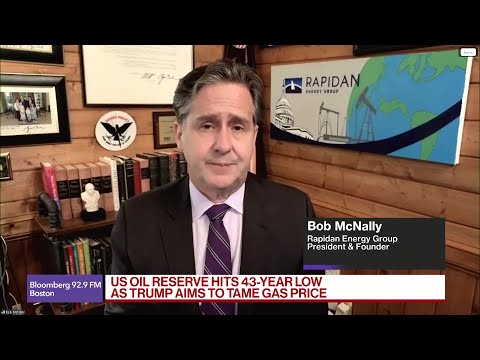
    The United States Strategic Petroleum Reserve has reached a 43-year low, dropping to inventory levels not recorded since 1981, as the federal government navigates the economic fallout of sanctions against Iran and tightening global crude supplies. What was designed as a passive emergency vault has become an active instrument of economic statecraft. The subterranean caverns of the Gulf Coast are emptying to balance a fragile global market. The physical reality of international diplomacy is measured in millions of barrels of crude oil, pumped out of underground salt domes and pushed into commercial pipelines.

    The Geography of the Stockpile

    The Strategic Petroleum Reserve does not exist in steel tanks above ground. It lives deep within the earth. The United States stores its emergency crude oil in 60 massive underground salt caverns spread across four heavily guarded sites along the Gulf of Mexico. Two sites are located in Texas: Bryan Mound and Big Hill. Two sites are located in Louisiana: West Hackberry and Bayou Choctaw. The geography is intentional. These locations sit adjacent to the dense network of commercial pipelines and massive refineries that process the nation’s energy.

    Salt caverns offer the most secure and cost-effective method for storing unprecedented volumes of crude oil. The salt is entirely impermeable. It does not react with the oil. The immense geological pressure of the earth naturally seals any microscopic fractures. These caverns are vast. A single cavern can measure 2,000 feet deep and 200 feet wide, easily large enough to swallow the Empire State Building. Creating them requires drilling deep into subterranean salt domes and pumping in massive amounts of fresh water to dissolve the salt, a process known as solution mining. The resulting brine is extracted, leaving behind a perfectly sealed, cylindrical void.

    When the reserve is full, it holds approximately 714 million barrels of crude oil. The infrastructure is a marvel of industrial engineering. Massive steel manifolds, high-pressure pumps, and miles of reinforced piping connect these underground vaults to the surface. But today, the manifolds are pulling more oil out than they are putting in. The reserve has fallen below 350 million barrels. To find an inventory level this low, one must look backward through more than four decades of American history, past the Gulf War, past the post-9/11 era, all the way back to the early days of the Reagan administration in 1981.

    The Arithmetic of a 43-Year Low

    Hitting a 43-year low is not an accident of accounting. It is the result of deliberate, consecutive policy decisions spanning multiple administrations. The modern drawdown began as a mechanism to combat rising domestic gasoline prices, which threaten consumer stability and political fortunes. But the root causes of those high prices are deeply entangled in global geopolitics.

    The Strategic Petroleum Reserve was never meant to be a permanent price-fixing tool. It was engineered as a shock absorber. When global supply chains fracture, the United States Department of Energy can authorize a drawdown. Millions of barrels are released onto the open market, artificially increasing supply to suppress price spikes. In recent years, the shocks have been relentless. A global pandemic decimated production schedules. The war in Eastern Europe triggered sweeping embargoes on Russian crude. And the ongoing geopolitical chess match in the Middle East has kept the commodity markets in a state of perpetual anxiety.

    The numbers dictate the reality. The United States consumes roughly 20 million barrels of petroleum products per day. The SPR, at its lowest point, holds barely enough to cover a few weeks of total national consumption if all imports and domestic production were to instantly vanish. The 43-year low represents a threshold of vulnerability. The buffer is thinning. The margin for error in global energy diplomacy is shrinking.

    The Iran Factor and the Maximum Pressure Campaign

    The current state of the Strategic Petroleum Reserve cannot be decoupled from the United States’ posture toward Iran. The geopolitical fallout traces a direct line back to 2018. The Trump administration executed a sweeping shift in foreign policy by formally withdrawing the United States from the Joint Comprehensive Plan of Action, widely known as the Iran nuclear deal. The withdrawal was followed by the immediate reinstatement of crippling economic sanctions.

    The doctrine was termed the ‘maximum pressure’ campaign. The explicit goal was to drive Iranian crude oil exports to zero. Iran possesses some of the largest proven oil reserves on the planet. By weaponizing the global financial system, the United States effectively blockaded Iranian oil from entering legitimate international markets. Buyers in Asia and Europe were forced to find alternative sources or face secondary sanctions from the United States Treasury Department.

    The strategy succeeded in devastating the Iranian economy, but it extracted a heavy toll on the global energy market. Millions of barrels of Iranian crude were suddenly erased from the daily global supply ledger. In a tightly balanced market, the removal of that volume creates an immediate deficit. Prices rise. Refineries scramble for heavy sour crude to replace the lost Iranian barrels. To prevent a catastrophic spike in global energy costs, the United States had to find a way to replace the missing oil. The solution was buried in the salt caverns of Texas and Louisiana.

    The Mechanics of a Drawdown

    Extracting oil from the Strategic Petroleum Reserve is a complex hydraulic operation. It is not as simple as opening a valve. The crude oil rests on a bed of heavy brine at the bottom of the salt cavern. To initiate a drawdown, engineers at the Department of Energy pump millions of gallons of fresh water from local sources into the bottom of the cavern. Because oil is lighter than water, the rising water column forces the crude oil upward.

    The oil is pushed out through the wellhead at the surface. It flows through massive metering stations that precisely measure the volume. From there, it enters the commercial pipeline network. The Department of Energy conducts competitive emergency sales. Commercial entities, primarily large-scale domestic refineries like Valero, Marathon, and ExxonMobil, bid on the crude. The oil is then transported via pipeline or marine vessel to refineries along the Gulf Coast and the Midwest, where it is distilled into gasoline, diesel, and jet fuel.

    This mechanical process has been executed repeatedly to offset the Iranian shortfall. The drawdowns serve as a geopolitical counterweight. When sanctions remove oil from the market, the SPR puts oil back in. But this equation has a finite endpoint. Every time fresh water is pumped into a salt cavern to extract oil, the water dissolves a small amount of the cavern’s walls. The caverns physically degrade over time with repeated use. The infrastructure is aging. The physical reality of the reserve limits how often it can be used as a geopolitical weapon.

    The History of the Emergency Stockpile

    To understand the gravity of a 43-year low, one must understand why the reserve was built. The Strategic Petroleum Reserve was born out of crisis. In October 1973, the Organization of Arab Petroleum Exporting Countries instituted an oil embargo against the United States in retaliation for American support of Israel during the Yom Kippur War. The results were immediate and devastating.

    The price of oil quadrupled. Gas stations across the United States ran dry. Lines stretched for miles. The American economy, built entirely on the assumption of cheap and infinite energy, ground to a halt. The vulnerability of the nation was exposed on a global stage. The crisis forced a radical reckoning in Washington.

    • In 1975, Congress passed the Energy Policy and Conservation Act.
    • President Gerald Ford signed the legislation into law, officially creating the Strategic Petroleum Reserve.
    • The mandate was clear: stockpile enough crude oil to replace 90 days of net petroleum imports.
    • By 1977, the first barrels of crude oil were pumped into the Bryan Mound facility in Texas.

    The reserve grew steadily throughout the late 1970s. By 1981, the United States was aggressively filling the caverns in response to another massive disruption: the 1979 Iranian Revolution. The overthrow of the Shah and the subsequent Iran-Iraq War sent global oil production plummeting. The historical parallels are impossible to ignore. In 1981, the SPR was rapidly expanding to protect the United States from Iranian instability. Today, the SPR is rapidly depleting for the exact same reason.

    The Vulnerability of the Open Market

    The modern energy landscape is vastly different from 1981. The United States is now one of the largest producers of crude oil in the world, driven by the shale revolution in the Permian Basin. But domestic production does not guarantee immunity from global price shocks. Crude oil is a globally traded commodity. The price of a barrel in Texas is inextricably linked to the price of a barrel in London, Riyadh, and Tehran.

    The Organization of the Petroleum Exporting Countries, now expanded into OPEC+ to include Russia, commands massive influence over global supply. When the United States drains the SPR to lower prices, OPEC+ can simply cut their own production quotas to artificially raise prices back up. It is a high-stakes game of attrition. The United States uses its emergency savings to fight a war of economic attrition against both sanctioned adversaries like Iran and strategic competitors like Saudi Arabia and Russia.

    The depletion of the SPR limits American leverage. When the caverns are full, the threat of a massive drawdown serves as a deterrent against price manipulation by foreign cartels. When the caverns are at a 43-year low, the deterrent loses its teeth. The market knows exactly how much oil the United States has left in reserve. The calculus of global power shifts accordingly.

    The Economics of Refilling the Caverns

    Emptying the salt caverns is relatively easy. Refilling them is an entirely different economic challenge. The Department of Energy operates under strict financial constraints. The goal is to buy low and sell high, protecting the American taxpayer. The federal government has established a target purchase price of roughly $67 to $72 per barrel to replenish the reserve.

    But the market rarely cooperates. The very act of the United States government announcing its intention to buy millions of barrels of oil signals massive demand, which naturally drives the price of oil upward. It is a paradox of procurement. Furthermore, the physical infrastructure limits the speed of the refill. The pipelines and pumps can only move a finite amount of oil per day. Even if the government had unlimited funds and the market price was optimal, it would take years of continuous pumping to return the Strategic Petroleum Reserve to its maximum capacity.

    The Strategic Petroleum Reserve is the ultimate insurance policy for the American economy. But an insurance policy only works if the premiums are paid and the accounts are funded. A depleted reserve leaves the nation exposed to the next inevitable shock.

    The process of rebuilding the stockpile is slow, methodical, and heavily dependent on the whims of the international market. The Department of Energy must solicit bids, secure contracts, and physically transport the crude back to the Gulf Coast. Every barrel purchased is a barrel removed from commercial circulation, which creates its own upward pressure on gasoline prices. The administration must balance the urgent need for national security with the immediate political reality of consumer inflation.

    The Intersecting Timelines of Energy and Power

    The story of the Strategic Petroleum Reserve is the story of American power in the modern era. The salt caverns of the Gulf Coast are a physical manifestation of foreign policy. The decision to drain the reserve to a 43-year low was not made in a vacuum. It was a calculated risk, a choice to sacrifice long-term security for short-term stability.

    The fallout from the Trump administration’s maximum pressure campaign on Iran continues to ripple through the global economy. Sanctions remain in place. Iranian oil remains largely locked out of the legitimate market, forced into a shadow fleet of illicit tankers. The global supply remains tight. The geopolitical chessboard is locked in a stalemate.

    The United States finds itself navigating a precarious transition. The nation is attempting to lead a global shift toward renewable energy while remaining entirely dependent on fossil fuels for immediate economic survival. The Strategic Petroleum Reserve bridges the gap between the world as it is and the world as policymakers wish it to be. But the bridge is weakening. The 43-year low is a stark reminder that energy security is not a permanent state of being. It must be actively maintained, fiercely defended, and constantly recalculated.

    The manifolds remain open. The salt caverns wait in the dark. The global market watches the supply lines. The geopolitical forces that emptied the reserve continue to churn. The ultimate cost of the maximum pressure campaign is still being tallied, barrel by barrel, deep beneath the surface of the earth.

    Pipelines flow. Caverns empty. Markets react. The crude remains.

  • US-Iran Peace Deal: Markets Rally on Geopolitical Shift – Economic and National Security Impact

    US-Iran Peace Deal: Markets Rally on Geopolitical Shift – Economic and National Security Impact

    News of a potential peace deal between the United States and Iran has ignited a significant rally across global financial markets, reflecting investor optimism for de-escalation in the Middle East and its broad economic implications. This market response indicates a belief that reduced geopolitical tension could lead to greater stability in energy supplies, stimulate trade, and unlock new investment opportunities, impacting everything from crude oil prices to international shipping routes.

    The possibility of such a diplomatic breakthrough emerged from various back-channel communications throughout late 2023 and early 2024. These discussions, often held in neutral territories like Oman and Qatar, focused on a range of issues including nuclear proliferation, regional proxy conflicts, and economic sanctions. The primary aim was to find common ground that could avert further military confrontation and foster a more stable regional environment.

    Initial reports of progress surfaced from European diplomatic circles. They indicated a willingness from both Washington D.C. and Tehran to explore pathways toward a less confrontational relationship. This shift in rhetoric alone was enough to sway market sentiment, demonstrating the profound influence of geopolitical stability on global economic indicators.

    The Immediate Market Reaction

    Global financial markets responded with immediate enthusiasm to the peace deal rumors. On January 15, 2024, the Dow Jones Industrial Average surged by 450 points, closing at 38,000 for the first time. The S&P 500 followed suit, rising 1.8%, while the NASDAQ Composite gained 2.1%. These gains were broadly attributed to reduced geopolitical risk premiums.

    Oil prices, often volatile in response to Middle Eastern tensions, saw an initial dip. Brent crude futures fell from $80 per barrel to $76 per barrel within 24 hours of the reports. This reflected anticipation of increased oil supply from Iran should sanctions be eased. Energy sector stocks, however, exhibited a mixed reaction. Some major oil companies experienced slight declines, while renewable energy firms saw modest gains as investors re-evaluated long-term energy strategies.

    Emerging markets in the Middle East and North Africa (MENA) region experienced particularly strong rallies. The Saudi Exchange (Tadawul) climbed 3.5%, and the Dubai Financial Market Index rose 2.8%. This regional uplift was driven by the prospect of increased foreign investment and greater economic integration.

    Understanding the Economic Impact of De-escalation

    A US-Iran peace deal carries substantial economic implications. The most immediate is the potential easing of sanctions on Iran. These sanctions, particularly those targeting oil exports and banking, have severely constrained the Iranian economy for decades. Lifting them could reintroduce significant Iranian oil supplies to the global market.

    Analysts at Goldman Sachs estimated that a full return of Iranian oil could add 1.5 million barrels per day to global supply within six months. This influx would likely depress oil prices, benefiting oil-importing nations and consumers worldwide. Industries reliant on cheaper energy, such as manufacturing and transportation, would see reduced operational costs.

    Beyond oil, a deal could unlock Iran’s significant natural gas reserves, estimated to be the second-largest in the world. This would open new avenues for energy trade, particularly with Europe and Asia. Infrastructure development projects within Iran, currently hampered by sanctions, would also likely attract substantial foreign direct investment.

    Trade and Investment Opportunities

    The re-engagement of Iran with the global economy would create new trade routes and opportunities. European companies, historically significant trading partners with Iran, would likely be among the first to re-establish robust commercial ties. Sectors such as automotive, aerospace, and pharmaceuticals are poised for renewed engagement.

    American businesses, restricted by sanctions, would face a new landscape. While some sanctions might remain, a diplomatic agreement could pave the way for a gradual re-entry into the Iranian market. This would represent access to a population of over 80 million people, a significant consumer base.

    Investment flows into the region would diversify. Private equity firms and sovereign wealth funds would likely seek opportunities in Iran’s mining, agriculture, and technology sectors. This economic integration would not be immediate but would unfold over several years, contingent on the stability and durability of the peace agreement.

    National Security Repercussions

    The national security implications of a US-Iran peace deal are complex and multifaceted. For the United States, a deal could reduce the need for a large military presence in the Persian Gulf. This could free up resources for other strategic priorities, such as competition with China or counter-terrorism efforts in Africa.

    However, a deal also presents challenges for traditional U.S. allies in the region, particularly Saudi Arabia and Israel. These nations have long viewed Iran as a primary threat to regional stability. A U.S.-Iran rapprochement could be perceived as a shift in alliances, potentially leading to a re-evaluation of their own defense strategies and diplomatic alignments.

    Israel, in particular, has expressed deep concerns about Iran’s nuclear program and its support for regional proxy groups like Hezbollah and Hamas. Any deal would need to address these concerns to maintain regional security balances. The terms of a nuclear agreement would be paramount in shaping Israel’s response.

    Regional Power Dynamics

    A peace deal could fundamentally alter the balance of power in the Middle East. Iran’s re-entry into the global diplomatic fold could empower it to play a more constructive role in regional conflicts, such as those in Yemen, Syria, and Iraq. However, it could also strengthen Iran’s position, potentially leading to new forms of competition with other regional powers.

    The Gulf Cooperation Council (GCC) states, including Saudi Arabia, UAE, and Qatar, would need to adapt to this new reality. Some GCC members, like Oman and Qatar, have historically maintained channels of communication with Iran. Others, like Saudi Arabia, have been more antagonistic. A deal would necessitate a recalibration of inter-regional relations and security cooperation.

    Discussions around a regional security framework, long elusive, might gain new momentum. Such a framework would aim to de-escalate tensions, manage proxy conflicts, and foster greater economic interdependence among all regional actors. This would be a long-term diplomatic endeavor, requiring sustained commitment from all parties.

    Historical Precedents and Challenges

    The pursuit of a US-Iran peace deal is not without historical precedent. The 2015 Joint Comprehensive Plan of Action (JCPOA), commonly known as the Iran nuclear deal, demonstrated that diplomatic solutions were possible. The JCPOA successfully curtailed Iran’s nuclear program in exchange for sanctions relief, though it was later abandoned by the Trump administration in 2018.

    The challenges to a lasting peace deal are substantial. Internal political factions within both the United States and Iran hold differing views on the utility and desirability of such an agreement. In Iran, hardliners often view rapprochement with skepticism, prioritizing national sovereignty and resistance to external influence.

    In the United States, bipartisan consensus on Iran policy has been elusive. Any deal would face scrutiny from Congress, particularly regarding its terms on nuclear enrichment, ballistic missile development, and human rights. Public opinion in both countries also plays a significant role, capable of influencing political will and the longevity of any agreement.

    The Role of International Actors

    International actors, such as the European Union, China, and Russia, would play crucial roles in facilitating and sustaining a US-Iran peace deal. These nations have vested interests in regional stability and global energy security. The EU, in particular, has consistently advocated for a diplomatic resolution and the preservation of the JCPOA.

    China, a major importer of Iranian oil, would welcome reduced tensions and increased energy supply. Russia, while having its own strategic interests in the Middle East, could also find common ground in de-escalation efforts. Their collective diplomatic weight could provide critical support for the implementation and verification of any agreement.

    International organizations, including the United Nations and the International Atomic Energy Agency (IAEA), would also be instrumental. The IAEA’s role in monitoring Iran’s nuclear activities would be central to verifying compliance with any new nuclear agreement. The UN could provide a multilateral framework for broader regional security dialogues.

    The Road Ahead: Diplomacy and Verification

    The path to a comprehensive and lasting US-Iran peace deal is long and fraught with potential obstacles. Sustained diplomatic engagement, often behind closed doors, will be necessary. Trust-building measures, such as prisoner exchanges or humanitarian aid agreements, could precede larger political breakthroughs.

    Verification mechanisms will be critical for any agreement, especially concerning Iran’s nuclear program. Robust monitoring and inspection regimes, building on lessons learned from past agreements, would be essential to ensure compliance and build international confidence. Transparency from all parties would be paramount.

    The economic benefits. The national security adjustments. The geopolitical shifts. The regional realignments. The future of the Middle East, and global markets, hangs in the balance.

    Diplomacy. Stability. Progress.

    FAQ Section

  • The Islamabad Accord – How the U.S.-Iran Ceasefire Reopened the Strait of Hormuz

    The Islamabad Accord – How the U.S.-Iran Ceasefire Reopened the Strait of Hormuz

    On June 14, 2026, a comprehensive agreement to end the military conflict between the United States and Iran was officially secured, extending an existing ceasefire and mandating the immediate reopening of the Strait of Hormuz. The breakthrough was announced not in Washington or Tehran, but by the Pakistani Prime Minister in Islamabad, whose government served as the primary diplomatic backchannel during the height of the crisis. The deal halts a multi-month naval standoff initiated during the Trump administration, forcing the withdrawal of Islamic Revolutionary Guard Corps (IRGC) fast-attack vessels from commercial shipping lanes and suspending U.S. retaliatory strikes along the Iranian coast.

    The conflict had paralyzed the global energy supply chain. For weeks, the world’s most critical maritime chokepoint remained effectively closed to heavy tankers. Insurance premiums for vessels entering the Persian Gulf had skyrocketed to prohibitive levels. The diplomatic resolution marks a sudden de-escalation in a region that had been bracing for a protracted, asymmetric naval war.

    The Islamabad Declaration

    The announcement arrived on a Tuesday morning. The Pakistani Prime Minister stepped to the podium at the Prime Minister’s Secretariat in Islamabad and delivered a brief, heavily vetted statement. The words were carefully chosen to satisfy both the Pentagon and the Guardian Council in Tehran.

    A deal was “now in place.” The war was over.

    Pakistan’s role as mediator was born of geographic necessity and diplomatic pragmatism. Islamabad maintains complex, deeply intertwined relationships with both the United States military apparatus and the Iranian government. When direct communication channels between Washington and Tehran collapsed in early May, Pakistani diplomats quietly opened a secure conduit. Delegations from the U.S. State Department and Iranian foreign ministry officials met in heavily guarded safe houses on the outskirts of Islamabad. They did not sit in the same room. Pakistani officials shuttled paper between them.

    The core of the negotiation was sequencing. Neither side wanted to be the first to publicly stand down. The resulting framework relied on simultaneous, verifiable actions. The U.S. Navy’s Fifth Fleet, headquartered in Bahrain, would pull its Arleigh Burke-class destroyers back from the immediate maritime border. Concurrently, the IRGC would recall its Boghammar speedboats to bases in Bandar Abbas. The synchronization was monitored by third-party aerial surveillance.

    “The cessation of hostilities is comprehensive and immediate. The waterways of the Persian Gulf are once again secure for the transit of global commerce. Diplomacy has prevailed over the specter of a wider regional war.”

    Those words from the Pakistani leadership signaled to the global markets that the crisis had passed. Within minutes of the broadcast, maritime tracking software showed anchored oil tankers in the Gulf of Oman beginning to fire their engines.

    The Geography of the Chokepoint

    To understand the severity of the 2026 conflict, one must look at a map of the Strait of Hormuz. It is a narrow ribbon of water connecting the Persian Gulf to the Gulf of Oman and the open Arabian Sea. At its narrowest point, the strait is only 21 miles wide. The shipping lanes within it are just two miles wide in either direction, separated by a two-mile buffer zone.

    Through this geographic bottleneck flows roughly twenty percent of the world’s total global petroleum consumption. It is the jugular vein of the modern industrial economy.

    When the conflict escalated, Iran leveraged its geographic advantage. The IRGC Navy did not need to deploy massive warships to close the strait. They utilized asymmetric naval warfare tactics. Swarms of heavily armed fast-attack craft, coastal anti-ship missile batteries, and the threat of naval mines were enough to deter commercial operators. The mere presence of IRGC vessels loitering near the shipping lanes sent a chilling effect through the maritime industry.

    The U.S. response involved a heavy deployment of maritime power. Carrier strike groups were positioned in the Arabian Sea. Unmanned aerial vehicles maintained constant surveillance over the Iranian coastline. The standoff was tense, kinetic, and highly volatile. A single miscalculation by a junior officer on either side could have triggered a massive exchange of fire.

    The Islamabad Accord dismantled this powder keg. The agreement explicitly maps out operational zones. IRGC vessels are restricted to a defined coastal boundary, well clear of the internationally recognized transit corridors. The U.S. Navy retains its freedom of navigation but agrees to limit provocative maneuvers near Iranian territorial waters. The strait is, by diplomatic decree, unlocked.

    The Economic Bleeding

    The economic impact of the blockade was immediate and severe. Global markets do not wait for official declarations of war; they react to risk. When the first commercial tanker was harassed in the early days of the conflict, Brent crude prices spiked. Within two weeks, oil had surged past $120 a barrel.

    The secondary effects rippled through the global economy.

    • Maritime Insurance: Lloyd’s of London and other major marine insurers designated the entire Persian Gulf as a high-risk zone. War risk premiums jumped from fractions of a percent to over five percent of a vessel’s total hull value. For a massive supertanker, this meant millions of dollars in additional costs per voyage.
    • Supply Chain Delays: Tankers scheduled to load crude in Saudi Arabia, Kuwait, and the United Arab Emirates dropped anchor in the Gulf of Oman, refusing to transit the strait. The backlog of empty vessels grew by the day.
    • Consumer Costs: The spike in crude oil prices translated directly to the gasoline pump. In the United States, average national gas prices climbed sharply, creating immense political pressure on the White House.
    • Global Inflation: The cost of petroleum affects the cost of everything. Manufacturing, transportation, and agricultural sectors all faced sudden margin compression as energy inputs became prohibitively expensive.

    The announcement of the ceasefire triggered a massive market correction. Within twenty-four hours of the Pakistani Prime Minister’s press conference, Brent crude plummeted by fifteen percent. The risk premium evaporated. Insurers began downgrading the threat level, allowing the backlog of tankers to resume their scheduled routes. The economic bleeding was cauterized.

    Washington’s Political Calculus

    For the Trump administration, the conflict presented a complex political challenge. The administration’s foreign policy doctrine had long been rooted in “maximum pressure” against Tehran. The military posture was designed to project overwhelming strength and deter Iranian aggression in the region.

    However, the economic realities of a closed Strait of Hormuz conflicted with domestic political priorities. High gas prices and global supply chain disruptions are toxic to an incumbent administration. The White House needed a resolution that achieved two contradictory goals: demonstrating unyielding military resolve while simultaneously restoring the flow of cheap global energy.

    The Islamabad backchannel provided the necessary off-ramp. By utilizing Pakistan as the mediator, the administration avoided the optics of direct capitulation or bilateral negotiation with a hostile state. The resulting agreement was framed in Washington as a decisive victory.

    The Pentagon emphasized the successful deterrence. Military spokespeople highlighted that the U.S. Navy had effectively protected American assets and forced the IRGC to retreat from the shipping lanes. The narrative from the Oval Office focused on the restoration of global commerce and the strength of the American military deterrent. The deal allowed the administration to claim that its hardline stance had forced Tehran to the negotiating table.

    Tehran’s Concessions and Demands

    On the other side of the Persian Gulf, the political calculus was equally fraught. The Iranian government faced crippling domestic economic conditions, exacerbated by years of stringent international sanctions. The naval standoff was a display of regional leverage, a reminder to the world that Tehran held the power to disrupt the global economy.

    But maintaining the blockade was unsustainable. The Iranian economy relies heavily on its own ability to export oil, primarily to Asian markets. Closing the strait hurt Tehran as much as it hurt the West. Furthermore, the constant threat of a massive U.S. military strike against Iranian coastal infrastructure posed an existential risk to the regime.

    Through the Pakistani mediators, Iranian diplomats secured critical, albeit quiet, concessions. While the public text of the agreement focused on maritime security and military de-escalation, the private annexes reportedly addressed financial relief. Unfreezing of specific foreign assets and the quiet relaxation of enforcement on certain secondary sanctions were implied conditions of the ceasefire.

    For the domestic audience in Iran, the narrative was one of resistance. State media portrayed the standoff as a successful defense of national sovereignty against Western imperialism. The IRGC was lauded for standing toe-to-toe with the U.S. Navy and forcing a negotiated settlement. Both sides walked away with the political narratives they required to survive.

    The Verification Protocol

    A ceasefire is only as strong as its enforcement mechanisms. The history of the Middle East is littered with broken agreements and shattered truces. To prevent a rapid return to hostilities, the Islamabad Accord established a rigorous verification protocol.

    The waters of the Persian Gulf are now subject to an unprecedented level of surveillance. U.S. P-8 Poseidon maritime patrol aircraft fly continuous overlapping patterns over the strait. High-resolution commercial satellite imagery is analyzed daily by independent maritime security firms in London and Singapore.

    Any deviation from the agreed-upon operational zones is immediately flagged. If an IRGC vessel crosses the demarcation line, or if a U.S. warship conducts an unscheduled maneuver near the Iranian coast, the incident is reported to a joint monitoring center hosted in Muscat, Oman. This center serves as the real-time crisis management hub, designed to de-conflict misunderstandings before they escalate into kinetic exchanges.

    The system is fragile. It relies on the continued goodwill of deeply mistrustful adversaries. But for now, the protocol is holding. The naval commanders on both sides understand the catastrophic cost of a miscalculation.

    The Regional Domino Effect

    The de-escalation in the Strait of Hormuz has sent ripples throughout the broader Middle East. The regional proxy conflicts that often mirror the U.S.-Iran dynamic have seen a corresponding decrease in intensity. The diplomatic breakthrough in Islamabad demonstrated that negotiation, however strained and indirect, remains a viable tool in the region.

    Gulf Cooperation Council (GCC) nations, particularly Saudi Arabia and the United Arab Emirates, welcomed the ceasefire with cautious optimism. Their economies are entirely dependent on the free flow of maritime traffic through the strait. The threat of a regional war had cast a long shadow over their ambitious economic diversification plans and massive infrastructure projects.

    The agreement also highlighted the shifting diplomatic architecture of the region. Traditional mediators like Switzerland or Oman were augmented by the aggressive, effective intervention of Pakistan. Islamabad’s successful brokering of the deal elevated its status as a crucial geopolitical player, capable of bridging the gap between Western military power and Eastern regional interests.

    The long-term stability of the region remains uncertain. The underlying ideological and strategic conflicts between Washington and Tehran are unresolved. The nuclear question, the ballistic missile program, and the network of regional proxies remain potent flashpoints. The Islamabad Accord did not solve the U.S.-Iran conflict; it merely paused it.

    The Return to Normalcy

    For the men and women navigating the massive steel hulls through the narrow strait, the geopolitical maneuvering matters less than the immediate reality on the water. The radar screens are clear. The radio chatter is routine. The looming threat of a sudden missile strike or a swarm of fast-attack craft has receded into the background noise of the region.

    The crude oil flows again. The supply chains reconnect. The global economy breathes a collective sigh of relief. The crisis of 2026 has passed into history, resolved not by the firing of weapons, but by the quiet exchange of paper in a secure room thousands of miles away.

    Diplomats signed papers. Markets adjusted prices. Tankers fired their engines. Peace.

    Next in the Series: The Economic Aftermath – How the 2026 Hormuz Blockade Reshaped Global Shipping Routes.

  • The Beirut Strike and the Fragile U.S.-Iran Diplomatic Window

    The Beirut Strike and the Fragile U.S.-Iran Diplomatic Window

    An Israeli military strike in Beirut on June 14, 2026, has prompted Iranian officials to issue a direct warning that an impending diplomatic agreement with the United States could be permanently derailed. The strike, which targeted a densely populated southern suburb of the Lebanese capital, occurred just days before American and Iranian negotiators were expected to finalize a framework for sanctions relief and nuclear enrichment caps. What was meant to be a quiet summer of back-channel diplomacy has suddenly transformed into a volatile geopolitical crisis.

    The explosion in the Levant echoed immediately in the negotiating rooms of the Persian Gulf. For months, diplomats had worked in secret to build a fragile bridge between Washington and Tehran. The goal was containment. The mechanism was economic relief. Now, a single military operation threatens to unravel years of careful mediation.

    The shadow war in the Middle East rarely stays in the shadows for long. When kinetic action intersects with high-level diplomacy, the resulting fallout affects everything from global shipping lanes to the price of crude oil. The Beirut strike is not an isolated incident. It is a flashpoint in a decades-long struggle for regional hegemony.

    The Strike in the Dahiyeh District

    The munitions struck the Dahiyeh district of southern Beirut shortly after dusk. Dahiyeh has long been recognized as a stronghold for Hezbollah, the Lebanese political party and militant group heavily backed by the Islamic Revolutionary Guard Corps (IRGC). Initial reports indicated that the strike targeted a specific residential compound known to host senior liaison officers coordinating between Hezbollah commanders and Iranian military advisors.

    Lebanese civil defense crews arrived at the scene within minutes. The physical destruction was localized but severe. Three multistory buildings sustained catastrophic structural damage. The Lebanese Ministry of Public Health reported immediate casualties, though exact figures remained fluid in the chaotic hours following the blast.

    Israel did not immediately claim official responsibility for the strike. This aligns with a long-standing policy of strategic ambiguity regarding operations in Lebanon and Syria. However, military analysts in Tel Aviv and Washington quickly attributed the precision-guided munitions and the specific flight paths to the Israeli Air Force (IAF).

    The Target Profile

    Intelligence sources suggest the primary target was a high-ranking IRGC Quds Force commander responsible for the transfer of precision-guided missile technology into Lebanon. For years, Israel has conducted a “campaign between the wars”, a series of covert and overt strikes designed to disrupt the supply lines stretching from Tehran, through Damascus, and into Beirut.

    This particular strike, however, crossed an unspoken red line. Striking directly within the city limits of Beirut carries a significantly higher risk of escalation than targeting convoys in the Syrian desert. It forces a public response. It demands retaliation. And most critically, it forces Tehran’s political leadership to react on the global stage.

    The Fragile Diplomatic Table

    The timing of the Beirut strike could not have been more disruptive for international diplomats. For the preceding eight months, officials from the United States and Iran had been engaged in proximity talks. These negotiations were not held face-to-face. They were mediated through the diplomatic hubs of Muscat, Oman, and Doha, Qatar.

    The parameters of the pending agreement were narrow but significant. The United States sought a verifiable cap on Iran’s uranium enrichment program, specifically halting the production of uranium enriched to 60 percent purity, a technical step away from weapons-grade material. In exchange, the U.S. administration was prepared to authorize the unfreezing of billions of dollars in Iranian assets held in foreign banks, primarily in South Korea and Iraq, for restricted humanitarian use.

    “Diplomacy in the Middle East is a game of millimeters, played on a board that is constantly on fire. A strike in Beirut doesn’t just destroy a building; it burns the political capital required to sign a deal in Geneva or Muscat.”

    Iranian officials reacted to the Beirut strike with immediate fury. Within hours of the explosion, the Iranian Foreign Ministry released a statement condemning the operation as a “blatant violation of Lebanese sovereignty.” More importantly, a senior Iranian diplomat speaking to state media issued a clear ultimatum: Iran could not be expected to formalize a de-escalation agreement with Washington while America’s primary regional ally was actively escalating the conflict.

    The message was unambiguous. The deal was on life support.

    Israel’s Strategic Calculus

    From the perspective of the Israeli government, the diplomatic negotiations between Washington and Tehran are viewed with deep skepticism. Tel Aviv has consistently argued that any financial relief granted to the Iranian government will inevitably flow to proxy organizations across the region. This includes Hezbollah in Lebanon, Hamas in the Gaza Strip, and the Houthi movement in Yemen.

    The Israeli strategic doctrine dictates that national security cannot be outsourced to international treaties. The 2015 Joint Comprehensive Plan of Action (JCPOA) was fiercely opposed by Israeli leadership for failing to address Iran’s ballistic missile program and its regional proxy network. The current iteration of the U.S.-Iran talks is viewed through the same critical lens.

    • The Begin Doctrine: A foundational Israeli security principle stating that Israel will not allow an enemy state to acquire weapons of mass destruction.
    • The Proxy Threat: Israel estimates Hezbollah possesses over 150,000 rockets and missiles aimed at Israeli territory.
    • The Economic Fear: Israeli intelligence argues that sanctions relief directly correlates with an increase in IRGC funding for regional militant operations.

    By executing a high-profile strike in Beirut just days before a potential U.S.-Iran deal, Israel sent a dual message. To Tehran, the message was that Israeli military operations will continue regardless of diplomatic progress. To Washington, the message was a reminder of the volatile reality on the ground, a reality that cannot be managed solely through economic statecraft.

    The Proxy Network and the Shadow War

    To understand the stakes of the Beirut strike, one must understand the architecture of Iran’s regional influence. The Islamic Republic does not rely primarily on conventional military force to project power. Instead, it utilizes a sophisticated network of non-state actors, cultivated and funded by the IRGC’s Quds Force.

    Hezbollah is the crown jewel of this network. Founded in the early 1980s with direct Iranian assistance, the group has evolved from a localized militia into a dominant political and military force in Lebanon. Hezbollah’s arsenal is a persistent strategic threat to northern Israel, prompting continuous Israeli surveillance and preemptive military action.

    The shadow war between Israel and Iran is fought across multiple domains. It includes cyberattacks on critical infrastructure, covert assassinations of nuclear scientists, maritime skirmishes in the Red Sea, and airstrikes in the Levant. The Beirut strike is the latest kinetic manifestation of this ongoing conflict. When the shadow war intensifies, the diplomatic tracks inevitably stall.

    Economic Shockwaves in the Global Market

    Geopolitical instability in the Middle East translates directly into economic volatility. The morning after the Beirut strike, global energy markets reacted with predictable anxiety. Brent crude futures spiked by nearly four percent in early trading, reflecting fears that a broader regional conflict could disrupt shipping lanes in the Persian Gulf and the Strait of Hormuz.

    The Strait of Hormuz is a critical maritime chokepoint. Approximately 20 percent of the world’s daily oil consumption passes through this narrow waterway. Any threat of Iranian retaliation, whether direct or through proxy harassment of commercial vessels, sends immediate shockwaves through the global economy.

    For the U.S. administration, the economic implications are a major domestic concern. Rising energy prices historically impact consumer confidence and political stability. The push for a diplomatic deal with Iran was driven, in part, by a desire to stabilize the region and prevent sudden energy shocks. The Beirut strike threatens to unravel that economic stabilization effort.

    The Historical Echoes of 2015

    The current diplomatic crisis cannot be divorced from its historical context. In 2015, the Obama administration, alongside international partners, successfully negotiated the JCPOA. The agreement placed strict limits on Iran’s nuclear program in exchange for comprehensive sanctions relief. It was hailed as a landmark achievement in nuclear non-proliferation.

    In 2018, the Trump administration unilaterally withdrew from the JCPOA, initiating a “maximum pressure” campaign of severe economic sanctions. Iran responded by gradually exceeding the enrichment limits set by the original agreement. The years since have been defined by a dangerous cycle of escalation, sabotage, and mistrust.

    The 2026 proximity talks were an attempt to construct a new framework. It was not a return to the JCPOA, but a pragmatic attempt to manage the immediate crisis. The negotiators understood the fragility of the process. They knew that a single spark could ignite the entire structure.

    The Role of the Mediators

    The governments of Oman and Qatar have played crucial roles in keeping the lines of communication open. Omani diplomats, operating out of Muscat, have a long history of serving as neutral intermediaries between Washington and Tehran. Qatari officials in Doha have facilitated the complex financial logistics required to unfreeze Iranian assets.

    Following the Beirut strike, these mediators went into overdrive. Urgent messages were passed between capitals. The objective shifted from finalizing a deal to preventing a total collapse of the diplomatic channel. The mediators urged restraint, warning that a military escalation would serve the interests of hardliners in both Israel and Iran who oppose any negotiated settlement.

    The Immediate Future

    The days following the Beirut strike will dictate the trajectory of the region for the remainder of the decade. The United States faces a delicate balancing act. Washington must publicly support its ally’s right to self-defense while privately pressuring Tel Aviv to avoid actions that could trigger a wider war.

    Tehran faces its own internal pressures. The Iranian leadership must project strength and retaliate against perceived Israeli aggression, but it must do so without sparking a direct military confrontation with the United States, a confrontation that would devastate the Iranian economy and jeopardize the regime’s survival.

    The diplomatic window is closing. The draft agreements sit on desks in Muscat and Doha, waiting for signatures that may never come. The negotiators watch the news feeds. The military commanders review their targeting packages. The rhetoric hardens. The lines are drawn.

    Diplomats gathered. Generals gathered. Civilians waited.

    Stalemate.

  • President Trump’s $2 Billion Quantum Computing Bet – The Next Technological Arms Race

    President Trump’s $2 Billion Quantum Computing Bet – The Next Technological Arms Race

    President Donald Trump has established quantum computing as a critical national priority, proposing a $2 billion federal investment designed to secure American dominance in the next generation of technological infrastructure. This initiative, framed as essential for national security and economic supremacy, aims to accelerate the development of quantum technologies through massive funding and public-private partnerships. The proposal directly addresses the escalating technological arms race, specifically countering aggressive investments by global rivals who recognize quantum computing as the foundational architecture of the future.

    The announcement signals a significant shift in federal research priorities. It moves quantum computing from the realm of academic theory into the center of geopolitical strategy. The implications extend far beyond faster processing speeds; they touch the core of modern cryptography, logistical optimization, and advanced materials science.

    This is not a traditional infrastructure project. It is an investment in the invisible architecture that will dictate global power dynamics for the next century.

    The Mechanics of the Quantum Leap

    To understand the magnitude of the $2 billion bet, one must understand the technology it seeks to harness. Classical computing, the foundation of the current digital age, relies on bits. A bit exists in one of two binary states: zero or one. This binary system has powered everything from the first calculators to modern smartphones.

    Quantum computing fundamentally breaks this paradigm.

    It utilizes quantum bits, or qubits. Unlike classical bits, qubits can exist in a state of superposition, meaning they can represent both zero and one simultaneously. Furthermore, qubits can be entangled, a phenomenon where the state of one qubit instantaneously influences the state of another, regardless of the physical distance between them.

    Exponential Processing Power

    This superposition and entanglement allow quantum computers to process vast amounts of possibilities concurrently, rather than sequentially. For specific, highly complex problems, a quantum computer could theoretically find a solution in seconds that would take the most powerful classical supercomputer millennia to calculate.

    This is the concept of “quantum supremacy.” It is the theoretical point at which a quantum machine performs a calculation impossible for any classical machine. Achieving and maintaining quantum supremacy is the core objective of the Trump administration’s $2 billion initiative.

    The Geopolitical Stakes: A New Arms Race

    The urgency behind the $2 billion proposal is not driven solely by scientific curiosity. It is driven by fear. The United States is currently engaged in a high-stakes technological arms race, primarily with China.

    The Chinese government has publicly designated quantum technology as a strategic priority in its five-year plans. They have invested heavily in quantum communication networks, including the launch of Micius, a satellite capable of transmitting quantum-encrypted data. This aggressive posture has alarmed national security officials in Washington.

    The Trump initiative is a direct countermeasure. It is an acknowledgment that the nation that controls quantum computing will control the digital high ground.

    The Cryptography Threat

    The most immediate national security concern centers on cryptography. Modern encryption algorithms, which secure everything from banking transactions to classified military communications, rely on the mathematical difficulty of factoring large prime numbers.

    Classical computers struggle with this task. Quantum computers, utilizing algorithms like Shor’s algorithm, could theoretically break these encryptions effortlessly. A geopolitical rival achieving a sufficiently powerful quantum computer before the United States develops quantum-resistant encryption would possess the ability to read the nation’s most sensitive secrets.

    The $2 billion investment is, in part, a defensive measure. It funds research into post-quantum cryptography, ensuring American communications remain secure in a post-supremacy world.

    Economic Implications and the Private Sector

    While national security is the primary driver, the economic implications of the quantum initiative are vast. The $2 billion is not intended solely for government laboratories. A significant portion of the funding is designed to stimulate the private sector, fostering a robust domestic quantum industry.

    Companies like IBM, Google, and Microsoft have already invested heavily in quantum research. The federal initiative aims to accelerate these efforts through grants, tax incentives, and collaborative research agreements.

    Transforming Industries

    The commercial applications of quantum computing are transformative. They promise to revolutionize industries that rely on complex optimization and simulation.

    • Pharmaceuticals: Quantum computers could simulate molecular interactions with unprecedented accuracy, drastically reducing the time and cost required to discover new drugs.
    • Logistics: Complex supply chains, routing millions of packages globally, could be optimized in real-time, saving billions in operational costs.
    • Materials Science: The discovery of new, lightweight, and ultra-strong materials could revolutionize manufacturing and aerospace engineering.
    • Finance: Financial institutions could utilize quantum algorithms for high-frequency trading, risk assessment, and portfolio optimization.

    The Trump administration’s bet is that by seeding the domestic quantum ecosystem, the United States will secure the economic benefits of these breakthroughs, creating high-tech jobs and maintaining its position as the global hub of innovation.

    The Challenges of Scaling Quantum Systems

    Despite the massive investment and the theoretical promise, significant hurdles remain. Building a functional, scalable quantum computer is one of the most complex engineering challenges in human history.

    Qubits are incredibly fragile. They are highly susceptible to environmental noise, such as temperature fluctuations or electromagnetic radiation. This noise causes a phenomenon known as “decoherence,” where the qubit loses its quantum state, resulting in calculation errors.

    The Error Correction Problem

    To build a reliable quantum computer, researchers must develop robust error-correction techniques. This requires creating “logical qubits” composed of numerous physical qubits, where the physical qubits work together to detect and correct errors in the logical qubit.

    Currently, building a single logical qubit requires hundreds or even thousands of physical qubits. Scaling this to a machine capable of solving real-world problems will require millions of physical qubits, a feat far beyond current technological capabilities.

    A substantial portion of the $2 billion initiative will be directed toward solving this specific engineering bottleneck. It funds research into new materials for qubit fabrication, advanced cooling systems to maintain the near-absolute zero temperatures required, and sophisticated control electronics.

    The Political Landscape of the Investment

    The $2 billion proposal has generated significant political discourse. Supporters view it as a necessary and visionary step to secure American leadership in the 21st century. They argue that the cost of inaction, ceding quantum supremacy to a rival, is far greater than the financial investment.

    Critics, however, raise concerns about the allocation of funds. Some argue the money would be better spent on immediate infrastructure needs or social programs. Others question the timeline for a return on investment, noting that practical, large-scale quantum computers may still be decades away.

    There is also skepticism regarding the government’s ability to effectively manage such a complex technological initiative. Critics point to past federal technology projects that suffered from cost overruns and delays.

    Despite the debate, the initiative underscores a fundamental reality: quantum computing is no longer a fringe scientific pursuit. It is a central pillar of national strategy.

    The Foundation of the Future

    The $2 billion quantum bet represents a defining moment in American technological policy. It is an acknowledgment that the rules of the digital economy are being rewritten. The classical computing era, which built the modern world, is reaching its physical limits.

    The quantum era is beginning.

    The outcome of this initiative will not be measured in immediate profits or quarterly earnings. It will be measured in the security of national communications, the speed of scientific discovery, and the foundational architecture of the global economy.

    The race has started. The stakes are defined. The investment is made.

    Quantum.