Tag: Foreign Policy

  • Iran Conflict and Midterm Elections: A General’s Perspective on Duration

    Iran Conflict and Midterm Elections: A General’s Perspective on Duration

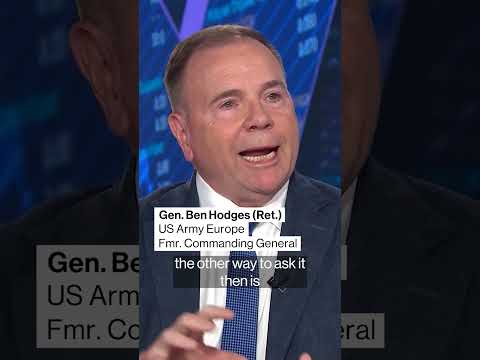
    A general’s statement indicates that the conflict involving Iran is not expected to be resolved by the time of the upcoming midterm elections, pointing to a prolonged period of engagement and geopolitical complexity. This assessment suggests that the issues contributing to the conflict are deeply entrenched, extending beyond short-term political cycles and requiring sustained attention from international actors.

    The declaration has significant implications for political discourse and public sentiment. It signals that military involvement and foreign policy related to Iran will remain prominent topics. This sustained focus impacts electoral campaigns and voter concerns, especially regarding economic stability and national security.

    The Geopolitical Landscape of the Iran Conflict

    The conflict surrounding Iran is multifaceted, involving a complex interplay of regional powers, international alliances, and economic interests. At its core are issues of nuclear proliferation, regional hegemony, and the security of vital shipping lanes. These factors contribute to a volatile environment where resolutions are often elusive.

    The Strait of Hormuz, a critical choke point for global oil shipments, remains central to these tensions. Disruptions in this waterway can have immediate and far-reaching economic consequences. International efforts to ensure its security often clash with Iran’s strategic objectives in the region.

    Economic sanctions against Iran have also played a significant role in shaping the conflict. These measures aim to curb Iran’s nuclear program and its support for various proxy groups. However, their effectiveness is often debated, and they can exacerbate humanitarian concerns and internal political pressures within Iran.

    Midterm Elections and Public Opinion

    Midterm elections, typically held two years into a presidential term, often serve as a referendum on the sitting administration’s policies. A protracted foreign conflict can heavily influence voter behavior. Public opinion frequently shifts based on perceived successes or failures in international engagements.

    Concerns about troop deployments, military casualties, and the financial cost of war often dominate public discussion. These anxieties can translate into electoral outcomes, affecting the balance of power in legislative bodies. Candidates must navigate these sentiments carefully.

    The general’s statement underscores that voters will likely consider the Iran conflict when casting their ballots. This means foreign policy will not be relegated to a secondary issue. Instead, it will be a defining aspect of the political landscape leading up to the elections.

    Historical Parallels and Prolonged Engagements

    History offers numerous examples of conflicts that have extended beyond initial expectations, often spanning multiple election cycles. The Vietnam War, for instance, deeply divided American society and influenced several presidential and midterm elections. Similarly, the wars in Afghanistan and Iraq presented ongoing challenges to various administrations.

    These prolonged engagements often lead to public fatigue and skepticism regarding government assurances of swift resolutions. They can also shift national priorities, diverting resources from domestic issues. Understanding these historical patterns provides context for the general’s recent remarks.

    The current situation with Iran bears some resemblance to these past events, particularly in its complex origins and the difficulty of achieving a decisive conclusion. The involvement of multiple actors and deeply rooted historical grievances contribute to its persistent nature.

    The Role of Military Leadership in Public Discourse

    Statements from military leaders hold significant weight in public discourse. Their assessments often carry an air of authority and direct knowledge. When a general speaks about the duration of a conflict, it is often interpreted as a realistic appraisal of the situation on the ground.

    Such statements can also serve to manage public expectations. By indicating a longer timeline, military leadership can prepare the public for sustained efforts. This proactive communication can be crucial in maintaining support, even if it highlights a difficult reality.

    The general’s comment, disseminated widely through channels like Bloomberg Television, becomes part of the national conversation. It informs policy debates and contributes to the overall understanding of the strategic challenges facing the nation. This transparency, while potentially unsettling, is often seen as vital for democratic accountability.

    Economic Impacts of Sustained Conflict

    A prolonged conflict involving Iran carries substantial economic implications, both domestically and internationally. Military expenditures can strain national budgets, potentially leading to increased taxes or cuts in other public services. The cost of maintaining troop presence, equipment, and logistical support adds up rapidly.

    Global energy markets are particularly sensitive to tensions in the Middle East. Any perceived threat to the Strait of Hormuz can cause oil prices to spike, impacting consumers and businesses worldwide. This economic uncertainty can further fuel public discontent during election cycles.

    Trade relations and international investment can also suffer from prolonged geopolitical instability. Companies may be hesitant to invest in regions affected by conflict, leading to reduced economic activity. These economic ripples can be felt far beyond the immediate theater of operations.

    The Strait of Hormuz: A Strategic Bottleneck

    The Strait of Hormuz is approximately 21 miles wide at its narrowest point. It connects the Persian Gulf with the Arabian Sea and the Gulf of Oman. Roughly one-fifth of the world’s total petroleum liquids consumption, and about one-fifth of the world’s liquefied natural gas (LNG), passes through this strait.

    Iran’s strategic position along the northern coast of the strait gives it significant leverage. Threats to close or disrupt shipping in the Strait of Hormuz have been a recurring feature of geopolitical tensions. Such actions would have catastrophic effects on global energy supplies and prices.

    International naval forces regularly patrol the strait to ensure safe passage. However, incidents involving Iranian vessels, drones, or naval exercises often escalate regional tensions. The ongoing security of this waterway remains a top priority for many nations, particularly those reliant on Middle Eastern oil.

    Political Stability and Regional Dynamics

    The conflict with Iran is not isolated. It is deeply intertwined with broader regional dynamics and the political stability of neighboring countries. The involvement of various non-state actors and proxy forces further complicates the landscape. These groups often operate with varying degrees of autonomy, making comprehensive resolutions difficult.

    Nations like Saudi Arabia, Israel, and the United Arab Emirates view Iran’s actions with considerable apprehension. Their security concerns often influence their foreign policy decisions and their alliances with Western powers. This intricate web of relationships means any resolution must address multiple stakeholders’ interests.

    Internal political shifts within Iran also play a role. The balance of power between different factions can influence the country’s approach to international relations and its willingness to engage in de-escalation efforts. These internal dynamics add another layer of complexity to the conflict’s resolution.

    Looking Ahead: Challenges and Prospects for Resolution

    The general’s statement implies that a swift resolution to the Iran conflict is not on the horizon. This necessitates a long-term strategic approach from all involved parties. Diplomacy, economic pressure, and military deterrence will likely continue to be key components of this strategy.

    Future negotiations would need to address Iran’s nuclear program, its ballistic missile capabilities, and its regional influence. Building trust and finding common ground among deeply entrenched adversaries remains a formidable challenge. International cooperation is essential for any meaningful progress.

    The possibility of unintended escalation always looms in such volatile regions. Miscalculations or minor incidents can quickly spiral into larger confrontations. Therefore, maintaining open lines of communication and de-escalation protocols is paramount.

    The path forward is fraught with obstacles. Strategic patience will be required. Diplomatic efforts will continue. Military readiness will remain a priority. The global community will watch.

    Tehran.


  • State Department Issues Worldwide Caution Amid Rising Middle East Tensions

    State Department Issues Worldwide Caution Amid Rising Middle East Tensions

    The United States State Department issued a worldwide caution alert on 2026-07-18, advising U.S. citizens traveling or residing abroad to exercise increased vigilance. This advisory stems from escalating tensions in the Middle East, prompting a broad recommendation for enhanced situational awareness.

    Such alerts are standard protocols. They serve to inform and protect American citizens in an unpredictable global environment. The current caution reflects a perceived elevation of risk across various regions.

    Understanding Worldwide Caution Alerts

    A worldwide caution alert is a comprehensive travel advisory. It is issued by the U.S. Department of State. Its purpose is to inform U.S. citizens about global events or trends that could affect their safety and security abroad.

    These alerts differ from country-specific travel advisories. While country-specific advisories focus on particular nations or regions, a worldwide caution indicates a more generalized, elevated threat landscape.

    The State Department regularly assesses global security conditions. This assessment includes geopolitical developments, potential for civil unrest, and specific threats from various actors. The current alert is a direct outcome of these ongoing evaluations.

    What Triggers a Worldwide Caution?

    Worldwide cautions are typically triggered by significant geopolitical shifts. They can also be prompted by broad patterns of extremist activity or large-scale humanitarian crises. The current situation in the Middle East is cited as the primary driver.

    Escalations in regional conflicts, increases in terrorist threats, or widespread demonstrations can all contribute to such an issuance. The goal is to provide a proactive warning to American travelers and residents.

    These alerts are not meant to deter all international travel. Instead, they encourage informed decision-making and heightened personal security measures. They are a tool for risk mitigation.

    The Current Middle East Landscape

    Tensions in the Middle East have been a consistent feature of international relations. Recent developments have led to a re-evaluation of the risk profile for U.S. citizens in the region and globally.

    Specific incidents are not detailed in the general alert. However, the cumulative effect of various ongoing situations contributes to the overall assessment of increased risk. This includes political instability, potential for conflict expansion, and extremist group activities.

    Regional dynamics involve multiple state and non-state actors. The interactions among these entities can quickly escalate. This creates an environment of uncertainty that necessitates caution.

    Implications for Travel and Residency

    For U.S. citizens abroad, the worldwide caution means a need for increased vigilance. This includes being aware of surroundings, avoiding large gatherings, and monitoring local news.

    The State Department advises enrolling in the Smart Traveler Enrollment Program (STEP). This free service allows U.S. citizens to receive important information from the Embassy or Consulate about safety conditions in their destination country.

    STEP also makes it easier for the U.S. Embassy or Consulate to contact citizens in an emergency. This can include natural disasters, civil unrest, or family emergencies.

    Previous Worldwide Caution Alerts

    Worldwide caution alerts are not unprecedented. The U.S. State Department has issued similar advisories in response to various global events throughout history.

    For instance, significant alerts were issued following major terrorist attacks or during periods of widespread geopolitical instability. Each alert is tailored to the specific circumstances of the time.

    Reviewing past alerts reveals a pattern of responsiveness. The State Department aims to keep its citizens informed of evolving threats. This historical context underscores the gravity of the current advisory.

    Historical Context of U.S. Travel Advisories

    The system of travel advisories has evolved over decades. It began with simpler warnings and has grown into a multi-tiered system. This system includes four levels of advisories, from ‘Exercise Normal Precautions’ to ‘Do Not Travel.’

    Worldwide cautions fit into this framework as a special type of alert. They signal a broad, rather than localized, concern. This distinguishes them from country-specific warnings.

    The modern system prioritizes clarity and actionable advice. It provides granular information whenever possible. This helps travelers and residents make informed decisions about their safety.

    Official Guidance and Resources

    The State Department’s official website is the primary source for current travel advisories. It provides detailed information and updates for every country. U.S. citizens are encouraged to consult this resource regularly.

    Travelers should also review the country-specific travel advisories for their planned destinations. These may contain more specific guidance relevant to their exact location.

    Consular services remain available for U.S. citizens in need. Embassies and consulates provide assistance with emergencies, passport services, and general welfare inquiries.

    Personal Security Planning

    Developing a personal security plan is crucial in response to such alerts. This involves identifying safe areas, understanding local emergency procedures, and maintaining communication with family and friends.

    Travelers should also keep copies of important documents. These include passports, visas, and identification. Digital copies stored securely are also recommended.

    Maintaining a low profile and avoiding predictable routines can also enhance personal safety. These are general recommendations applicable in any elevated risk environment.

    The Role of National Security

    The issuance of a worldwide caution alert highlights the broader concerns of national security. The safety of U.S. citizens abroad is a paramount concern for the government.

    These advisories are part of a larger strategy. This strategy involves intelligence gathering, diplomatic efforts, and, when necessary, security operations. The goal is to protect American interests and lives globally.

    The alert also serves as a signal to other government agencies. It prompts them to review their own protocols and preparedness. This ensures a coordinated response to global threats.

    Government Response to Global Tensions

    President Donald Trump’s administration continually monitors international developments. The State Department, under its current leadership, is responsible for issuing these public advisories.

    The Vice President, JD Vance, also plays a role in national security discussions. These discussions inform the decisions made regarding travel advisories and broader foreign policy.

    Diplomatic efforts are ongoing to de-escalate tensions in the Middle East. These efforts involve engaging with regional partners and international organizations. The aim is to find peaceful resolutions to conflicts.

    Public and Media Reaction

    News of a worldwide caution alert typically generates significant media attention. Outlets like Fox News amplify these advisories, reaching a broad audience.

    The public reaction often involves heightened concern and discussions about national security. Social media platforms become forums for sharing information and personal perspectives.

    Such alerts often prompt individuals to re-evaluate travel plans. They also encourage greater awareness of global events. The impact extends beyond those directly affected by international travel.

    Disinformation and Misinformation

    In times of heightened tension, the spread of disinformation and misinformation can increase. It is crucial for citizens to rely on official sources for accurate information.

    The State Department’s website and official social media channels are reliable. These platforms provide verified updates and guidance. Misinformation can create unnecessary panic or lead to unsafe decisions.

    Citizens are advised to cross-reference information from multiple credible sources. This practice helps to filter out inaccurate or misleading content.

    Looking Ahead

    The worldwide caution alert will remain in effect until rescinded or updated. The State Department will continue to monitor the global security environment closely.

    Updates will be provided as circumstances evolve. U.S. citizens abroad should regularly check official channels for the latest information.

    The focus remains on ensuring the safety and security of American citizens. This is a constant priority in a complex and interconnected world.

    Governments conferred. Diplomats dialogued. Citizens cautioned.

    Vigilance.

  • The Deterrence Doctrine: Why Trump Demands a Direct Response to Iran’s Helicopter Attack

    The Deterrence Doctrine: Why Trump Demands a Direct Response to Iran’s Helicopter Attack

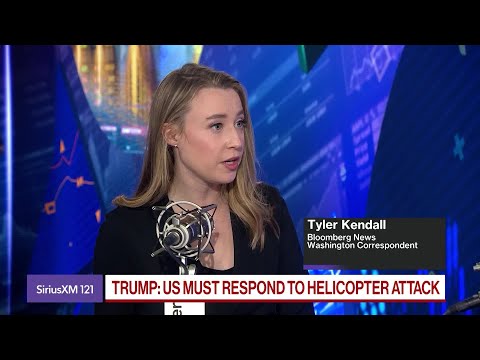
    Former President Donald Trump stated in a Bloomberg Television interview that the United States must launch a direct, proportional military response against Iran following an attack on a U.S. helicopter. Speaking to the necessity of global deterrence, Trump argued that failing to retaliate against Tehran directly projects a fatal weakness that emboldens hostile state actors and endangers American service members deployed across the Middle East.

    The statement cuts to the core of American foreign policy. It forces a conversation about where the lines of engagement are drawn. It demands an answer to a decades-old question.

    When a proxy fires a weapon, who pays the price?

    The Bloomberg Television Declaration

    The interview aired on Bloomberg Television. The setting was formal. The rhetoric was uncompromising. Trump addressed the attack on the U.S. helicopter not as an isolated skirmish, but as a symptom of a collapsing global deterrence architecture.

    He pointed the finger directly at Tehran. He bypassed the local militia groups entirely.

    This is a calculated rhetorical strategy. For decades, the Islamic Republic of Iran has utilized a network of proxy forces to harass Western assets. This provides plausible deniability. Trump’s stated doctrine strips that deniability away. If a weapon is financed by Iranian rials, smuggled by the Quds Force, and fired at an American aircraft, Trump’s framework treats the attack as an official act of the Iranian state.

    His demand for a response activates a specific cultural defense mechanism. It signals patriotism. It signals a refusal to accept American casualties as the cost of doing business in the Middle East.

    The Vulnerability of Rotary-Wing Aircraft

    Helicopters are inherently vulnerable. They do not fly at thirty thousand feet. They do not break the sound barrier. They operate low and slow, navigating complex terrain where threats can emerge from a single rooftop or a desert ridge.

    The U.S. military relies heavily on rotary-wing aircraft in the Middle East. The AH-64 Apache provides close air support. The MH-60 Black Hawk handles troop transport and medical evacuations. These machines are the lifeblood of U.S. Central Command (CENTCOM) operations.

    They are also prime targets.

    Iran has spent years flooding the region with man-portable air-defense systems (MANPADS). These shoulder-fired missiles are cheap. They are easy to smuggle. They are highly effective against helicopters. When an Iran-backed militia targets a U.S. helicopter, they are attacking the logistical foundation of the American military presence in the region.

    An attack on a helicopter is not a warning shot. It is an attempt to inflict catastrophic casualties.

    The Architecture of Maximum Pressure

    Trump’s demand for retaliation is not theoretical. It is anchored in his established track record. During his presidency, he implemented a strategy known as Maximum Pressure.

    The strategy began with economics. In May 2018, the United States withdrew from the Joint Comprehensive Plan of Action (JCPOA). Sanctions were reimposed. The goal was to choke off the financial pipelines that funded the Islamic Revolutionary Guard Corps (IRGC).

    But the strategy also included kinetic action.

    On January 3, 2020, a U.S. drone strike at Baghdad International Airport killed Qasem Soleimani. Soleimani was the commander of the IRGC’s Quds Force. He was the architect of Iran’s proxy network. The strike was a massive escalation. It was a direct message that the United States would no longer tolerate proxy attacks without targeting the Iranian leadership orchestrating them.

    Trump’s recent comments on Bloomberg Television echo this exact philosophy. Deterrence is not achieved through proportional responses against low-level militants. Deterrence is achieved by making the cost of aggression unimaginably high for the state sponsoring it.

    The Proxy War Apparatus

    Understanding the helicopter attack requires understanding the IRGC. The IRGC operates parallel to the traditional Iranian military. Its mandate is to export the Islamic Revolution.

    It achieves this through the Quds Force. The Quds Force funds, trains, and equips militias across the Middle East. The Houthis in Yemen. Hezbollah in Lebanon. Kataib Hezbollah in Iraq. These groups provide Tehran with a strategic buffer.

    When the Houthis fire anti-ship ballistic missiles in the Red Sea, they do so with Iranian intelligence. When militias in Iraq launch drones at U.S. bases, they do so with Iranian hardware.

    This dynamic creates a complex problem for the Pentagon. Striking the proxies is akin to treating the symptoms of a disease while ignoring the cause. The militants are replaceable. The hardware is easily restocked. Trump’s doctrine argues that the only way to stop the attacks is to strike the source.

    Washington’s Political Calculus

    National security is a dominant force in American politics. As the 2024 election cycle accelerates, foreign policy has become a central battleground.

    The attack on the helicopter forces lawmakers to take a stance. It highlights the tension between isolationism and interventionism. Trump’s base responds strongly to a posture of strength. The concept of cultural defense is deeply tied to the image of an untouchable American military.

    When American service members are attacked, the public expects a response. Hesitation is viewed as weakness. Weakness is viewed as a national embarrassment.

    Trump leverages this sentiment effectively. By demanding a direct response to Iran, he positions himself as the defender of American prestige. He draws a sharp contrast with diplomatic approaches that prioritize de-escalation over retaliation.

    The Mechanics of Retaliation

    What does a direct response look like? The Pentagon maintains extensive target packages for Iranian assets.

    A retaliatory strike would likely involve a combination of naval and air assets. The USS Dwight D. Eisenhower Carrier Strike Group operates in the region. Arleigh Burke-class destroyers carry Tomahawk cruise missiles capable of striking targets deep inside Iranian territory with pinpoint accuracy.

    Air Force assets would also play a role. B-1B Lancer bombers, flying from Al Udeid Air Base in Qatar or directly from the continental United States, can deliver massive payloads. F-35 Lightning II stealth fighters can bypass advanced air defense systems.

    The targets would be carefully selected to maximize damage to the IRGC while minimizing civilian casualties. Command and control centers. Drone manufacturing facilities. Naval bases along the Strait of Hormuz.

    The goal is not regime change. The goal is the destruction of military capability.

    The Echoes of Operation Praying Mantis

    There is historical precedent for this type of escalation. In April 1988, the USS Samuel B. Roberts struck an Iranian naval mine in the Persian Gulf. The blast nearly split the frigate in half.

    President Ronald Reagan ordered a direct, disproportionate response. The result was Operation Praying Mantis.

    On April 18, 1988, U.S. forces systematically destroyed half of Iran’s operational fleet. American aircraft and warships sank Iranian frigates, gunboats, and speedboats. They destroyed armed oil platforms used by the IRGC to coordinate attacks on commercial shipping.

    The operation lasted less than a day. It effectively ended the naval phase of the Iran-Iraq War. It reestablished American dominance in the Persian Gulf.

    Trump’s demands align with the legacy of Operation Praying Mantis. When an American asset is attacked, the response must be overwhelming. It must leave no doubt about the balance of power.

    The Cost of Inaction

    The alternative to retaliation is de-escalation. Proponents of de-escalation argue that striking Iran directly risks triggering a regional war. They point to the volatility of the Middle East. They warn of the economic consequences of a conflict in the Strait of Hormuz, where a significant portion of the world’s oil supply transits daily.

    But the doctrine of deterrence views inaction as the greater risk.

    If Iran believes it can attack a U.S. helicopter without facing direct consequences, it will escalate. Today it is a helicopter. Tomorrow it is a destroyer. The day after, it is a forward operating base.

    Deterrence is a psychological construct. It exists only as long as the adversary believes the threat of retaliation is credible. The moment that credibility fractures, the deterrence fails.

    Rebuilding the Red Line

    The Bloomberg Television interview serves as a blueprint for a potential future administration. It signals a return to Maximum Pressure. It signals a zero-tolerance policy for proxy warfare.

    The attack on the helicopter is a flashpoint. It is a test of American resolve. The way Washington responds will dictate the operational tempo of the IRGC for years to come.

    The Middle East respects strength. It exploits weakness. The doctrine of deterrence does not allow for ambiguity.

    Diplomats drafted memos. Generals reviewed target packages. Politicians debated the escalation ladder. Deterrence.