Tag: Disney+

  • The Return to Music Row – Why Taylor Swift’s ‘Toy Story 5’ Anthem Is an Oscar Play

    The Return to Music Row – Why Taylor Swift’s ‘Toy Story 5’ Anthem Is an Oscar Play

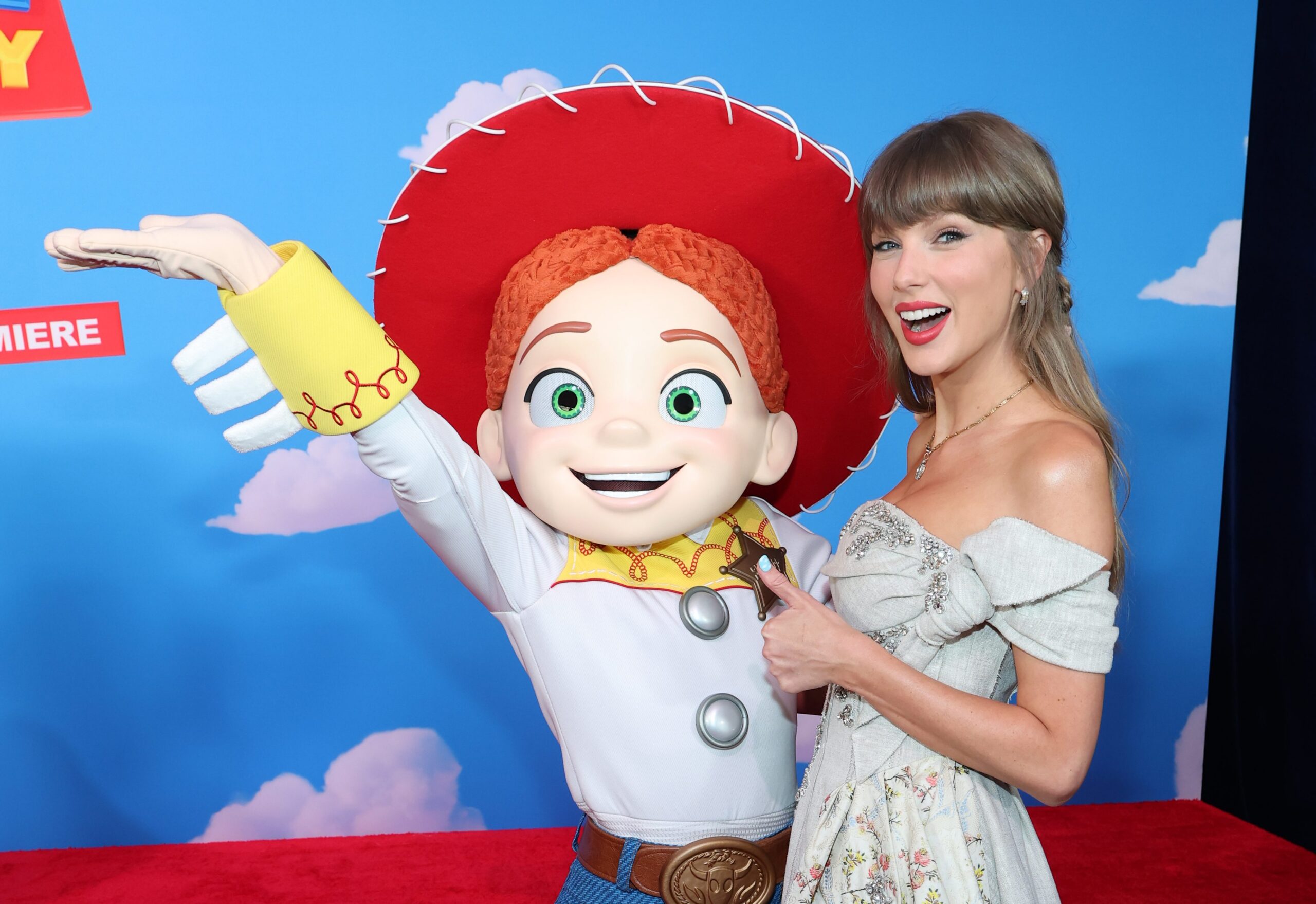
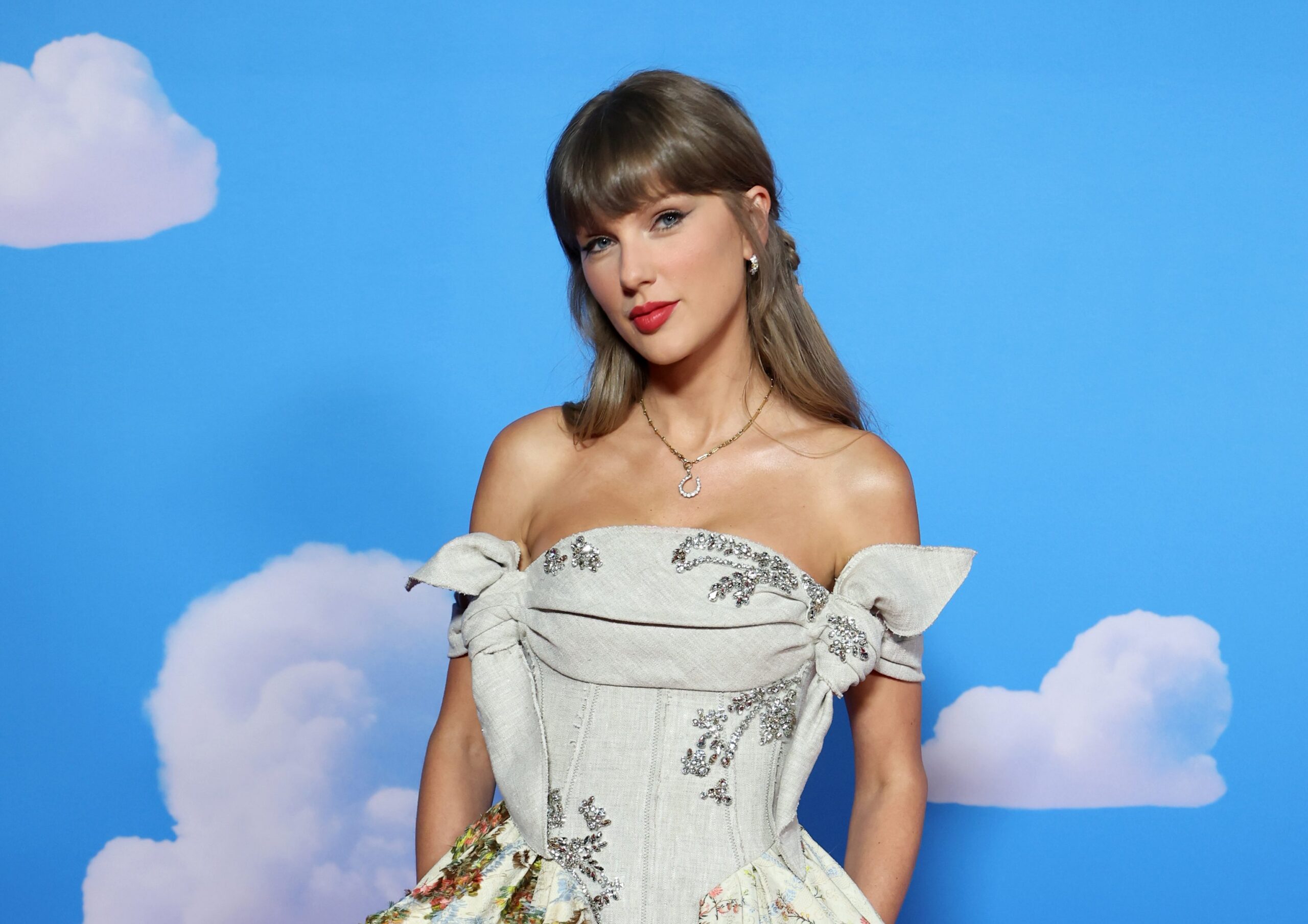
    Taylor Swift is returning to her country music roots to write and perform an original song for Pixar Animation Studios’ Toy Story 5, a move industry analysts project will finally secure her an Academy Award nomination for Best Original Song. The collaboration merges the world’s most dominant touring artist with The Walt Disney Company’s most bankable animation franchise. It signals a definitive return to the acoustic, storytelling-driven sound that launched her career in 2006. But the story does not begin there.

    What looks like a simple soundtrack credit actually represents a highly calculated pivot. Swift has conquered the recording industry. She has broken global touring records. She has dominated cinematic box offices. Yet, the Academy of Motion Picture Arts and Sciences has continually kept her outside the Dolby Theatre.

    That is about to change.

    The Missing Trophy on the Mantle

    Fourteen Grammy Awards sit in Taylor Swift’s collection. She holds the record for the most Album of the Year victories in Grammy history. She has Emmy Awards. She has MTV Video Music Awards. She does not have an Oscar.

    The pursuit of the Academy Award for Best Original Song is a well-documented trajectory for generational pop stars. Adele achieved it with “Skyfall” in 2013. Lady Gaga secured it with “Shallow” in 2019. Billie Eilish claimed two before her twenty-third birthday, winning for No Time to Die in 2022 and Barbie in 2024.

    Swift has made repeated attempts to enter this echelon. Her cinematic songwriting catalog is extensive, yet the Academy’s music branch has repeatedly passed her over. The history is written in the snubs.

    • 2012: “Safe & Sound” from The Hunger Games. A haunting acoustic ballad featuring The Civil Wars. It won a Grammy but failed to secure an Oscar nomination.
    • 2013: “Sweeter Than Fiction” from One Chance. A synth-pop track co-written with Jack Antonoff. It earned a Golden Globe nomination but was ignored by the Academy.
    • 2019: “Beautiful Ghosts” from Cats. Co-written with Andrew Lloyd Webber. The catastrophic critical reception of the film sank the song’s chances.
    • 2022: “Carolina” from Where the Crawdads Sing. A moody, Appalachian-inspired murder ballad recorded on period-accurate acoustic instruments. It made the Oscar shortlist but missed the final five nominees.

    The Academy’s music branch is notoriously insular. They favor narrative resonance. They favor songs that serve as the emotional load-bearing walls of a film. They do not nominate pop stars simply for being pop stars.

    To win the Oscar, Swift needed a vehicle with undeniable cinematic prestige. She needed a franchise that the Academy already reveres. She needed Pixar.

    The Pixar Pipeline to the Academy

    Pixar Animation Studios is an Oscar-generating machine. Since the studio’s inception, its films have been inextricably linked to the Academy Award for Best Original Song. The architecture of a Pixar film demands a specific type of musical storytelling.

    Randy Newman defined this sound. In 1995, Newman wrote “You’ve Got a Friend in Me” for the original Toy Story. The song became the emotional thesis for the entire franchise. Newman received 22 Academy Award nominations over his career, winning Best Original Song twice, both for Pixar films (Monsters, Inc. in 2002 and Toy Story 3 in 2011).

    Stepping into the Toy Story universe means stepping into Newman’s shadow. It requires a specific sonic palette. Synthesizers and heavy bass drops do not belong in Woody’s world. The assignment requires acoustic guitars, fiddles, steel guitars, and plainspoken lyrical sincerity.

    It requires traditional country music.

    A Calculated Return to Music Row

    Taylor Swift moved to Hendersonville, Tennessee, at age 14 to pursue a career on Music Row. Her self-titled 2006 debut album and her 2008 blockbuster Fearless were built on the foundations of country instrumentation. Fiddles, banjos, and acoustic guitars were her primary tools.

    She abandoned that sound entirely with 2014’s 1989, declaring it her first official pop album. While she dipped back into indie-folk with 2020’s Folklore and Evermore, a true return to the traditional country radio sound has eluded her discography for over a decade.

    The timing of the Toy Story 5 collaboration is not accidental. The music industry is currently experiencing a massive traditional country renaissance. In 2024, Beyoncé released Cowboy Carter, forcing the industry to re-examine the genre’s roots. Post Malone pivoted entirely to country. Shaboozey dominated the Billboard Hot 100 with acoustic-driven anthems. Zach Bryan proved that lo-fi, stripped-down country songwriting could fill football stadiums.

    The market is hungry for traditionalism. Nostalgia is the dominant currency of the decade.

    “The potential return of Taylor Swift to country music for ‘Toy Story 5’ will evoke strong feelings of nostalgia and hope for the future of traditional country among the audience.”

    By writing a country song for Toy Story 5, Swift accomplishes three strategic objectives simultaneously. First, she satisfies the public’s current appetite for traditional country music. Second, she taps into the deep nostalgia of the Millennial audience, a demographic that grew up watching the original Toy Story in 1995 and buying Swift’s debut album in 2006. Third, she delivers the exact acoustic, emotionally grounded sound the Academy demands from a Pixar film.

    The Disney Synergy Machine

    The business mechanics behind this collaboration are equally formidable. The Walt Disney Company and Taylor Swift have built a highly lucrative, deeply entrenched corporate partnership over the past five years.

    When Swift needed a platform to release Folklore: The Long Pond Studio Sessions during the 2020 pandemic, she went to Disney+. When she decided to release the definitive streaming version of Taylor Swift: The Eras Tour, Disney CEO Bob Iger personally negotiated the deal. Disney reportedly paid $75 million for the exclusive streaming rights to the concert film.

    Disney knows that Swift drives subscriptions. Swift knows that Disney commands the cultural zeitgeist. Placing Swift on the Toy Story 5 soundtrack is the ultimate exercise in corporate synergy.

    Disney will launch a massive For Your Consideration (FYC) campaign for the song. They will host exclusive screenings in Los Angeles and New York. They will place full-page advertisements in Variety and The Hollywood Reporter. They will ensure that every voting member of the Academy’s music branch understands the narrative.

    The Anatomy of an Oscar Campaign

    Winning an Academy Award requires more than a good song. It requires a flawless campaign narrative. The Academy votes on emotion, legacy, and industry politics.

    The narrative for Swift’s Toy Story 5 campaign writes itself. It is the story of a global superstar returning to her humble acoustic roots. It is the story of a songwriter paying homage to the legacy of Randy Newman. It is the story of bridging generational divides through music.

    To execute this campaign, Swift will likely follow a strict playbook. She will participate in the Hollywood Reporter Songwriters Roundtable. She will give exclusive interviews detailing her writing process, emphasizing the use of vintage acoustic instruments and the specific emotional beats of the Pixar script. She will likely perform the song live at the Academy Museum of Motion Pictures.

    The goal is to position the song not as a pop single attached to a movie, but as an indispensable piece of the film’s cinematic architecture.

    The Competition on the Horizon

    The path to the Dolby Theatre is never entirely clear. The Best Original Song category is highly competitive. Swift will likely face formidable opponents.

    Historically, the category features a mix of Broadway veterans, established pop stars, and legendary film composers. Diane Warren is virtually guaranteed her annual nomination. Lin-Manuel Miranda is always a threat when Disney Animation releases a musical. Billie Eilish remains an Academy favorite.

    However, none of those competitors possess the specific cultural gravity of a Taylor Swift country music revival tied to the Toy Story franchise. The sheer weight of the combined brands, Swift, Pixar, Disney, and the country music genre itself, creates an almost insurmountable campaign juggernaut.

    The Cultural Impact of the Acoustic Pivot

    Beyond the awards season politics, the musical implications of this pivot are significant. Swift’s early country records defined a generation of songwriters. Artists like Olivia Rodrigo, Conan Gray, and Sabrina Carpenter frequently cite Swift’s early country storytelling as their primary influence.

    A return to Music Row, even for a single soundtrack contribution, shifts the center of gravity in Nashville. It forces modern country radio, which has spent years leaning heavily into pop and hip-hop production elements, to reckon with the stripped-down, acoustic storytelling that originally built the genre.

    If the Toy Story 5 track features prominent fiddle, pedal steel, and a standard acoustic arrangement, it will instantly become the most-streamed traditional country song of the year. It will serve as a proof of concept that pure, unadulterated country music can still dominate global pop culture.

    The Road to the Dolby Theatre

    The timeline is set. The film will enter its final stages of animation. The marketing rollout will begin. The first teaser trailer will likely feature a few isolated acoustic guitar chords, instantly recognizable to millions of fans.

    The song will be released. The Academy will receive their screeners. The narrative will take hold.

    For fifteen years, Taylor Swift has systematically dismantled every record in the music industry. She has rewritten the rules of touring, re-recorded her own masters to reclaim her catalog, and achieved a level of ubiquity unseen since the peak of Michael Jackson. Yet, the film industry has remained the final, unconquered frontier.

    The strategy is in place. The genre has been chosen. The franchise has been secured.

    Animators drafted storyboards. Executives drafted contracts. Musicians tuned acoustic guitars in Nashville studios. The pipeline was built. The narrative was set.

    Oscar.
  • Disney+ Greenlights ‘Journey’, The Obamas’ Higher Ground Enters the Animation Wars

    Disney+ Greenlights ‘Journey’, The Obamas’ Higher Ground Enters the Animation Wars

    Disney+ has officially greenlit “Journey,” a new fantasy animated series produced by Barack and Michelle Obama’s Higher Ground Productions. The 2026 acquisition marks a significant expansion for the former First Family’s media empire, moving their storytelling footprint from Netflix into the heart of the Walt Disney Company’s family entertainment portfolio. “Journey” represents a strategic move into high-budget family fantasy. It merges Higher Ground’s focus on diverse, thematic storytelling with Disney’s global animation pipeline. The announcement arrived via Variety. It signals a definitive shift in the modern streaming landscape. The Obamas are no longer exclusive to a single platform. Their media footprint is diversifying. The cultural implications are immediate. Disney has spent the last four years navigating intense political crossfire. Higher Ground carries inherent political weight. Combining the two guarantees a cultural reaction.

    The Greenlight at Burbank

    The deal for “Journey” was struck quietly in the halls of Burbank. Disney+ needs high-retention family programming. Higher Ground needs a platform with legacy reach. The marriage makes structural sense. Fantasy animation is a highly specific genre. It requires massive upfront capital. It requires years of lead time. It requires a merchandising apparatus that only a few studios possess. Disney holds the infrastructure. Higher Ground brings the cultural cachet. The series is described as a sprawling fantasy epic. The exact plot details remain under strict embargo. The target demographic is broad family viewing. This is not a niche political documentary. This is a play for the four-quadrant audience. The global streaming market demands content that can cross borders. Fantasy animation translates perfectly. The visual language is universal. The themes of heroism, discovery, and resilience scale across international markets. Disney+ currently operates in over 150 markets. “Journey” is engineered for all of them. The production timeline suggests a rapid acceleration. Animation pipelines usually take three to four years. Higher Ground has been developing the intellectual property internally before bringing it to Disney. The greenlight means the conceptual phase is over. The rendering phase begins.

    The Architecture of Higher Ground

    To understand the Disney deal, one must look at the foundation of Higher Ground. Barack and Michelle Obama launched the production banner in 2018. They did not enter Hollywood to make campaign ads. They entered to build a legacy media brand. Their initial move was a massive, multi-year overall deal with Netflix. Industry analysts estimated the initial Netflix pact at roughly $50 million. The strategy was clear from the start. Hire top-tier executives. Acquire premium festival projects. Develop original intellectual property. Priya Swaminathan and Tonia Davis were brought in early to build the slate. The results validated the strategy. Higher Ground’s first release, “American Factory,” won the Academy Award for Best Documentary Feature in 2020. They followed it with critically acclaimed projects like “Crip Camp” and “Becoming.” But documentaries have a ceiling. Fiction scales higher. The company pivoted toward narrative features and high-end television. They produced the dystopian thriller “Leave the World Behind” with Sam Esmail and Julia Roberts. The film dominated Netflix’s global charts in late 2023. Higher Ground proved they could deliver blockbuster numbers.

    The Netflix Foundation

    The Netflix years established Higher Ground as a serious Hollywood player. Ted Sarandos championed their early slate. Los Gatos provided the capital. The Obamas provided the access. But the streaming wars evolved. Overall deals began to shift. Exclusivity became less attractive for high-profile creators who wanted to shop specific genres to the best possible buyer. Higher Ground recognized the shifting tides. When their initial Netflix deal reached its expiration phase, they opted for flexibility. They renewed ties with Netflix for specific projects but opened their doors to the wider marketplace. Disney+ emerged as the perfect home for “Journey.” Netflix has a robust animation department, but Disney is the historical king of the medium. If a production company wants to launch a generational fantasy animated property, Disney is the ultimate distributor.

    Disney’s Cultural Battlefield

    The Walt Disney Company does not make moves in a vacuum. Every greenlight carries weight. The partnership with the Obamas arrives at a complex moment for the House of Mouse. Over the past four years, Disney has found itself at the center of the American culture wars. The friction began in earnest in 2022. The company, then led by CEO Bob Chapek, clashed publicly with Florida Governor Ron DeSantis over the state’s Parental Rights in Education bill. The fallout was severe. Disney faced boycotts from conservative media. Florida moved to dissolve the Reedy Creek Improvement District, stripping Disney of its long-held self-governing status in Orlando. Bob Iger returned to the CEO chair to stabilize the ship. He has spent the last two years attempting to quiet the political noise. Iger’s mandate is shareholder value. He wants the focus back on storytelling. But the “Journey” announcement immediately reactivates the cultural defense mechanisms. Right-leaning media outlets will inevitably frame the partnership as evidence of Disney’s ideological leanings. Left-leaning outlets will celebrate the inclusion of the Obamas in the Disney ecosystem. The cultural debate is unavoidable.

    The Florida Shadow

    Tallahassee still watches Burbank. The political sentiment surrounding Disney has real financial implications. Subscriber churn is a metric closely tied to brand perception. When a brand becomes politicized, a segment of the audience inevitably unplugs. Disney has factored this into the calculus of “Journey.” The executives believe the quality of the intellectual property will outshine the political noise. History offers a mixed precedent. Some projects survive the culture war. Others sink under the weight of the discourse. The Obamas are highly polarizing figures in the political arena, but their media output has largely avoided partisan signaling. “Leave the World Behind” was a massive commercial success despite conservative criticism of its themes. Disney is betting that “Journey” will follow a similar trajectory. They are betting that parents care more about high-quality entertainment than the names listed in the executive producer credits.

    The Mechanics of Fantasy Animation

    Animation is not a monolith. “Journey” falls into the specific sub-genre of serialized fantasy. This is a highly lucrative space when executed correctly. Shows like “Avatar: The Last Airbender” and “The Dragon Prince” proved that audiences crave deep lore, complex magic systems, and long-form character arcs in animated formats. Higher Ground is not new to animation. They previously produced “Ada Twist, Scientist” for Netflix. That series was aimed at preschoolers. It was educational. It was safe. “Journey” represents a massive step up in scale and ambition. The budgets for premium fantasy animation can run between $10 million and $15 million per episode. The world-building requires armies of concept artists, riggers, and sound designers. Disney+ needs this specific type of content to bridge the gap between their Marvel and Star Wars tentpoles. Original fantasy IP is rare. If “Journey” hits, it spawns merchandise, theme park integrations, and spin-offs. The financial upside of a successful fantasy franchise dwarfs the initial production costs. Higher Ground knows this. They are building an asset with a long-tail revenue stream.

    The Economics of ‘Journey’

    The streaming industry in 2026 operates on a mandate of profitability. The era of blank checks is over. Wall Street demands positive cash flow from streaming divisions. Disney+ has aggressively restructured its content spending to meet these demands. The greenlight of “Journey” indicates that the project passed a rigorous internal financial stress test. Disney does not hand out animation budgets lightly. The deal structure likely involves significant back-end participation for Higher Ground. In the modern era, production companies of this caliber do not work for flat fees. They demand ownership stakes or lucrative licensing thresholds. The exact dollar amount of the Disney-Higher Ground pact remains undisclosed. However, industry comparables suggest a massive commitment. The marketing budget alone for a new original fantasy series will rival a theatrical release. Disney will leverage its entire corporate synergy machine to launch the show. ESPN, ABC, and the theme parks will all play a role in the promotional rollout.

    What ‘Journey’ Represents for 2026 Streaming

    The streaming landscape is consolidating. Platforms are merging. Audiences are experiencing subscription fatigue. To cut through the noise, a project needs an undeniable hook. “Journey” has two. It has the promise of a sprawling fantasy world, and it has the Obama brand attached to its marketing materials. This is the new formula for event television. Combine high-end genre storytelling with massive, out-of-market celebrity power. Higher Ground has successfully transitioned from a boutique documentary house into a full-scale Hollywood studio. They are playing the long game. Disney is playing the retention game. The intersection of these two strategies is “Journey.” The cultural debate will rage. The political sentiment will be measured. The think pieces will be drafted. But ultimately, the success of the series will rely on the basic fundamentals of storytelling. Does the world feel real? Do the characters resonate? Does the animation push the medium forward? These are the questions that will determine the legacy of the project. The executives have signed the contracts. The animators have started their renders. The culture war waits in the wings. The platforms prepare for the launch. Burbank prepares. Los Gatos watches. Tallahassee reacts. Entertainment.

  • Taylor Swift’s ‘Toy Story 5’ Anthem Debuts at No. 1, Securing Her 15th Hot 100 Crown

    Taylor Swift’s ‘Toy Story 5’ Anthem Debuts at No. 1, Securing Her 15th Hot 100 Crown

    Taylor Swift’s original song “I Knew It, I Knew You” from the Disney Pixar Toy Story 5 soundtrack debuted at No. 1 on the Billboard Hot 100 in June 2026, marking her 15th career chart-topping single. The acoustic-driven ballad, released alongside the highly anticipated animated sequel, achieved massive first-week metrics across streaming, radio, and digital sales platforms. By claiming the top spot, Swift breaks her historical tie with Rihanna, securing sole possession of the position for the most No. 1 hits by a female artist behind only Mariah Carey.

    The convergence of a global pop phenomenon and a legacy animation franchise created an inescapable cultural moment. It was not merely a music release. It was a synchronized corporate event.

    The Billboard Hot 100 measures U.S. streaming, radio airplay, and sales data tracked by Luminate. To debut at No. 1 in the modern music economy requires a perfect storm of algorithmic dominance, physical media mobilization, and terrestrial radio support. Swift and Disney engineered exactly that.

    The Numbers Behind the Debut

    Luminate data for the tracking week ending June 18, 2026, reveals the sheer scale of the release. “I Knew It, I Knew You” generated 68.4 million official U.S. streams. It secured 42 million radio airplay audience impressions. It sold 74,000 equivalent digital and physical units.

    These metrics did not happen by accident. The release strategy utilized multiple physical variants. Four distinct CD singles and three 7-inch vinyl records were made available exclusively through Swift’s official webstore and Target locations nationwide. Each physical edition featured alternate cover art featuring different character pairings from Toy Story 5, Woody and Buzz, Jessie and Bullseye, Rex and Hamm.

    Physical sales accounted for a significant portion of the track’s chart points. In an era where streaming pays fractions of a cent, physical media remains the ultimate lever for chart dominance. Fans mobilized to collect the set. The numbers surged.

    Radio adoption was equally swift. iHeartMedia stations across the Pop, Adult Contemporary, and Hot AC formats placed the track on hourly rotation. The song’s acoustic pop production allowed it to bridge multiple formats seamlessly. It played in grocery stores. It played in minivans. It played on TikTok.

    Climbing the All-Time Ranks

    The Billboard Hot 100 has served as the definitive metric of American musical success since its inception on August 4, 1958. Achieving a No. 1 hit is difficult. Amassing 15 is a historical anomaly.

    With this debut, Swift alters the upper echelon of the all-time charts. The Beatles hold the ultimate record with 20 No. 1 singles. Mariah Carey follows closely with 19. Swift now stands at 15, moving past Rihanna, who holds 14, and Michael Jackson, who secured 13 during his lifetime.

    Swift’s journey to 15 spans over a decade of continuous reinvention. Her first No. 1 came in 2012 with “We Are Never Ever Getting Back Together.” She dominated the 2010s with tracks like “Shake It Off” and “Blank Space.” She conquered the streaming era with “Anti-Hero” and “Cruel Summer.” Now, she extends her reign through cinematic synergy.

    The velocity of her recent chart success is notable. Six of her 15 No. 1 hits have occurred in the 2020s. While legacy acts often see their chart performance wane as their careers progress, Swift’s commercial gravity has only intensified. She does not just compete with contemporary artists. She competes with history.

    The Disney Synergy Machine

    The partnership between Taylor Swift and The Walt Disney Company represents a masterclass in cross-promotional leverage. The relationship was solidified when Disney CEO Bob Iger secured the exclusive streaming rights to Taylor Swift: The Eras Tour (Taylor’s Version) for Disney+ in early 2024. That deal reportedly cost Disney $75 million. It paid immediate dividends in subscriber retention.

    Securing Swift for Toy Story 5 was the logical next step. Pixar Animation Studios, led by Chief Creative Officer Pete Docter, needed a cultural anchor for the franchise’s fifth installment. The Toy Story series has historically relied on the musical genius of Randy Newman, whose 1995 classic “You’ve Got a Friend in Me” defined the emotional landscape of the original films.

    Swift was not brought in to replace Newman. She was brought in to expand the universe. “I Knew It, I Knew You” plays during the film’s climactic third-act montage, a narrative space previously occupied by Sarah McLachlan’s devastating “When She Loved Me” in Toy Story 2.

    Disney utilized its entire corporate apparatus to promote the track. ESPN featured the song during NBA Finals broadcasts. ABC’s Good Morning America hosted the exclusive music video premiere. Theme parks in Anaheim and Orlando integrated the melody into their nightly fireworks displays. The song was inescapable because the distribution network was infinite.

    The Anatomy of the Anthem

    Musically, “I Knew It, I Knew You” is a precise piece of engineering. Co-written and co-produced by Swift and her longtime collaborator Jack Antonoff, the track blends the acoustic intimacy of her Folklore era with the expansive pop sensibilities of 1989.

    The instrumentation is grounded. A finger-picked Martin acoustic guitar drives the verse. A swelling string section, arranged by Bryce Dessner, elevates the chorus. Antonoff’s signature analog synthesizers pulse quietly in the background, providing a modern heartbeat to a traditional ballad structure.

    The lyrics operate on two distinct levels. For the audience of Toy Story 5, the song speaks directly to the enduring, evolving relationship between Woody and Buzz Lightyear, a meditation on loyalty across decades. For Swift’s core fanbase, the lyrics easily translate into a reflection on long-term friendship, shifting eras, and the comfort of being deeply understood.

    The Soundtrack Resurgence

    The success of the single underscores a broader shift in the music industry: the return of the blockbuster movie soundtrack. For much of the late 2010s, original songs for films struggled to break the upper tiers of the Hot 100, often relegated to Adult Contemporary charts or Oscar campaigns.

    That paradigm shifted with Black Panther in 2018 and exploded with Barbie in 2023. Billie Eilish’s “What Was I Made For?” and Dua Lipa’s “Dance The Night” proved that theatrical releases could still drive massive pop consumption. Film studios realized that a hit song acts as a four-minute, highly repeatable trailer for the movie.

    Disney recognized this mechanism. By releasing “I Knew It, I Knew You” two weeks prior to the theatrical premiere of Toy Story 5, they ensured the film dominated cultural conversation before a single ticket was scanned. The song drove anticipation. The anticipation drove box office sales. The box office sales drove further streams. The feedback loop was absolute.

    The Economics of a No. 1 Debut

    Debuting at No. 1 is a capital-intensive endeavor. It requires meticulous timing and significant financial investment from the record label. Republic Records, Swift’s label under Universal Music Group, executed a flawless rollout.

    The marketing spend for the first week was heavily front-loaded. Digital billboards in Times Square and Piccadilly Circus. Promoted audio on Spotify’s free tier. Sponsored hashtags on TikTok. The goal is never a slow climb. The goal is immediate, overwhelming market dominance.

    This strategy also starves competitors of oxygen. By dropping a high-profile soundtrack single with physical variants, Swift effectively blocked other major releases from the top spot. In the modern music industry, real estate at the top of the Billboard Hot 100 is finite. You either hold the crown, or you are blocked by the person who does.

    The Cultural Permanence

    The intersection of Taylor Swift and Toy Story bridges a massive generational divide. The original Toy Story premiered in 1995. Many of the children who watched it in theaters are now parents taking their own children to see Toy Story 5. Simultaneously, Swift’s career, which began in 2006, has soundtracked the entire lives of Millennials and Generation Z.

    When those demographics converge in a movie theater, the emotional resonance is compounded. The song acts as a trigger for nostalgia while remaining firmly planted in the present cultural moment. It is a calculated, highly effective piece of emotional engineering.

    As the tracking week closed, the outcome was inevitable. The data compiled. The algorithms processed. The chart refreshed.

    Fans streamed. Stations broadcasted. Registers rang.

    History.

  • Jimmy Kimmel’s Epstein-Themed Birthday Card to Donald Trump – A Late-Night Escalation

    Jimmy Kimmel’s Epstein-Themed Birthday Card to Donald Trump – A Late-Night Escalation

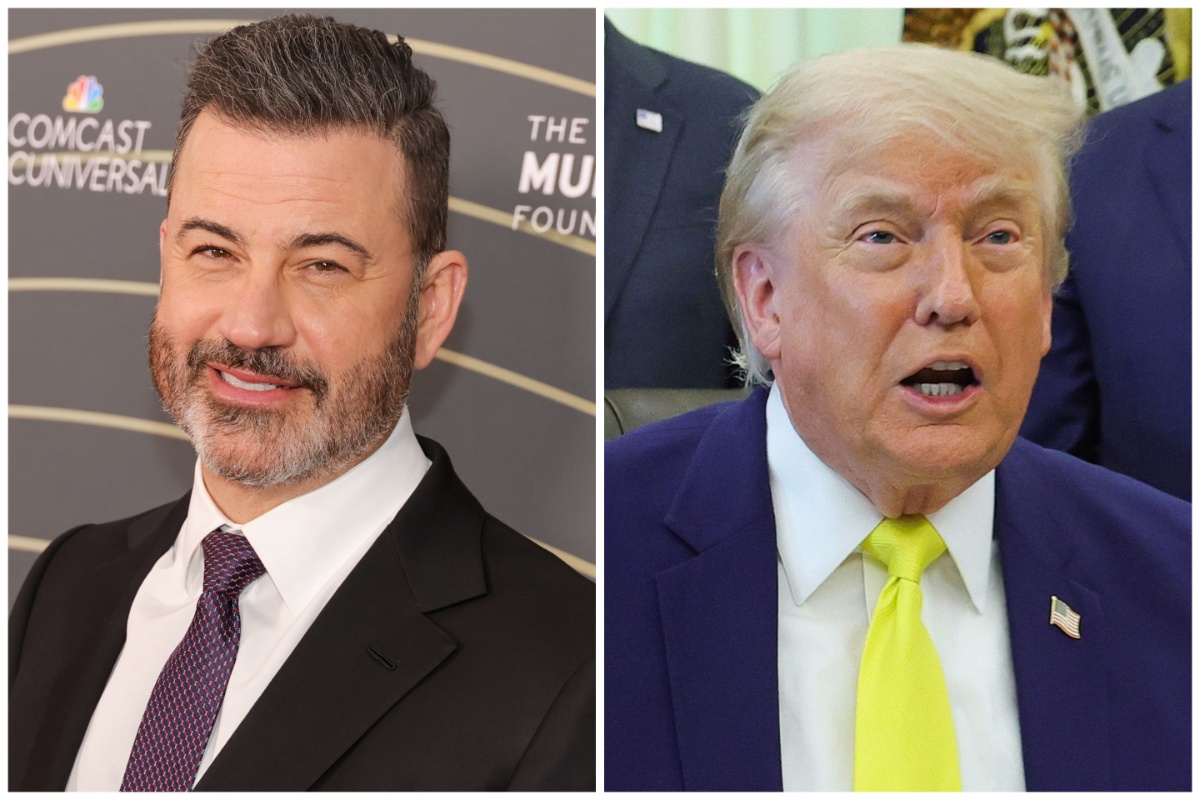
    On June 14, 2026, ABC late-night host Jimmy Kimmel marked Donald Trump’s 80th birthday by broadcasting a custom-designed, Jeffrey Epstein-inspired birthday card during his opening monologue on Jimmy Kimmel Live!. The segment immediately triggered a polarized cultural response, blending late-night comedy with the dark legacy of the convicted sex offender. The broadcast utilized historical photographs of Trump and Epstein from the 1990s, weaponizing the past social association between the two men for political satire.

    The visual landed exactly as intended. The studio audience at the El Capitan Entertainment Centre in Hollywood erupted. Social media platforms fractured along predictable partisan lines. Variety reported on the segment within hours, cementing its status as a viral media event.

    But the story does not begin with a single monologue in 2026. What looks like a spontaneous late-night joke is actually the culmination of a decade-long media war. It is a story about the changing mechanics of television, the weaponization of scandal, and the total collapse of the neutral American broadcaster.

    The Broadcast from Hollywood

    The mechanics of the modern late-night monologue are highly engineered. The writing staff of Jimmy Kimmel Live! works hours before the 11:35 PM EST broadcast to isolate the day’s most flammable political topics. On June 14, the target was obvious.

    Donald Trump’s birthday has long served as a focal point for both his supporters and his political detractors. Kimmel chose to bypass traditional political critiques regarding policy or legal battles. Instead, he reached for the most radioactive cultural figure of the 21st century.

    Jeffrey Epstein died at the Metropolitan Correctional Center in Manhattan on August 10, 2019. His legacy as a financier and convicted sex offender continues to cast a long shadow over global elites. By linking Trump’s milestone birthday to Epstein, Kimmel bypassed standard comedy. He deployed a deliberate, associative attack.

    The card displayed during the broadcast featured well-documented imagery. It relied on photographs taken at Mar-a-Lago and various Manhattan social events during the late 1990s and early 2000s. These images show Trump and Epstein in close proximity, often accompanied by Ghislaine Maxwell.

    Kimmel delivered the punchline with practiced precision. The camera cut to the custom graphic. The joke was brief. The cultural fallout was immediate.

    A Decade of Hostility

    Jimmy Kimmel and Donald Trump were not always adversaries. During the early 2000s, Trump was a frequent guest on late-night television. He promoted The Apprentice, discussed real estate deals, and participated in lighthearted banter. The relationship was transactional and mutually beneficial.

    The dynamic fractured permanently in 2015. When Trump descended the escalator at Trump Tower to announce his presidential campaign, the late-night ecosystem shifted. By the time Trump assumed the presidency in January 2017, hosts like Kimmel, Stephen Colbert, and Seth Meyers had transformed their programs into nightly opposition broadcasts.

    The feud between Kimmel and Trump became deeply personal. It transcended standard political satire. Trump frequently targeted Kimmel on Twitter, and later on Truth Social. He mocked Kimmel’s ratings. He criticized his hosting abilities. He labeled the comedian a partisan hack.

    Kimmel returned fire consistently. He dedicated vast portions of his nightly monologues to dissecting Trump’s administration. The conflict reached a historic peak on March 10, 2024.

    “Has there ever been a worse host than Jimmy Kimmel at the Oscars?”

    Trump posted that question on Truth Social during the 96th Academy Awards. Kimmel, hosting the live broadcast on ABC, read the post to a global audience of nearly 20 million viewers. He followed it with a direct jab at Trump’s legal troubles. The exchange proved that the feud had become a permanent fixture of American pop culture.

    The 2026 birthday card was simply the latest ammunition in an ongoing war. It was designed to provoke. It succeeded.

    The Epstein Association as Political Weapon

    The use of Jeffrey Epstein as a comedic weapon requires specific context. Epstein was a fixture of high society. His contact book, often referred to as the “black book,” contained the names of politicians, scientists, actors, and billionaires.

    Both Bill Clinton and Donald Trump had documented social interactions with Epstein. This bipartisan proximity made Epstein a unique figure in modern political warfare. Opposing political camps frequently use Epstein’s memory to attack their rivals.

    For Kimmel, the strategy was clear. The visual evidence of Trump and Epstein socializing in Palm Beach provides undeniable fodder. Trump’s defenders routinely point out that Trump banned Epstein from Mar-a-Lago after a dispute over real estate, long before Epstein’s 2008 conviction in Florida.

    Late-night comedy does not concern itself with nuanced timelines. It concerns itself with impact. The image of the two men laughing together in the 1990s is a potent visual. Kimmel’s writing team understood the algorithm. They knew the image would generate millions of impressions across X, TikTok, and YouTube.

    The birthday card was not just a prop. It was a calculated piece of viral engineering.

    The Economics of Outrage

    Late-night television is an expensive enterprise. Producing five hours of original content a week requires massive capital. In 2026, linear television ratings continue to decline. Networks like ABC, owned by The Walt Disney Company, rely heavily on digital distribution to justify the costs.

    A standard monologue joke might generate a few hundred thousand views on YouTube. A highly polarized, controversial attack generates millions. It drives engagement. It forces media outlets like Variety to write aggregation pieces. It creates a self-sustaining news cycle.

    The Epstein birthday card was engineered for this ecosystem. The moment it aired, it was clipped and distributed. Conservative commentators shared the clip to express outrage, accusing Kimmel of crossing a line of decency. Progressive commentators shared the clip to applaud Kimmel’s willingness to attack the former president aggressively.

    Both reactions serve the same master. Both reactions generate ad revenue. Both reactions keep Jimmy Kimmel relevant in a fractured media landscape.

    • The Linear Broadcast: Captured the older, traditional television demographic.
    • The YouTube Upload: Captured the morning-after office crowd and international viewers.
    • The TikTok Cut: Captured Gen Z users through aggressive algorithmic pushing.
    • The News Cycle: Captured the political media class, ensuring the joke lived for 48 hours instead of 10 minutes.

    The Walt Disney Company maintains a delicate balance. They operate theme parks built on family-friendly intellectual property. They also operate a television network that relies on highly partisan, aggressive political comedy to maintain cultural relevance. The Epstein card tested the limits of that balance.

    The Death of the Neutral Monologue

    To understand the gravity of the broadcast, one must look at the history of the medium. Johnny Carson hosted The Tonight Show for 30 years. He was the undisputed king of late night. His political jokes were mild. He mocked the president, regardless of party, for basic incompetence or physical stumbles. He never alienated half his audience.

    Jay Leno followed the same playbook. He was a populist. He wanted everyone in the tent.

    Jon Stewart changed the paradigm. With The Daily Show, Stewart proved that an audience craved sharp, ideologically driven satire. He proved that you did not need everyone in the tent. You only needed a fiercely loyal demographic.

    Jimmy Kimmel adopted this model out of necessity. When he launched his show in 2003, he was a former co-host of The Man Show. He was known for frat-boy humor. Over two decades, he reinvented himself. He became an emotional, highly political voice for the American center-left.

    The transition was complete by the time Trump entered politics. Kimmel’s tearful monologues about healthcare policy in 2017 established his new brand. The 2026 Epstein birthday card solidified it. There is no longer any attempt to appeal to the broad American public. The goal is to rally the base.

    The Cultural Fallout

    The aftermath of the broadcast followed a predictable script. Political action committees drafted fundraising emails referencing the joke. Cable news panels spent hours debating the ethics of using a convicted sex offender as a punchline. The Federal Communications Commission received a minor spike in routine complaints.

    None of it changed the trajectory of the culture. The outrage cycle is baked into the business model. The controversy is not a byproduct of the broadcast. The controversy is the product.

    Jimmy Kimmel understood the assignment. The writers understood the assignment. The network executives understood the assignment. They delivered exactly what the 2026 media environment demands. They provided friction.

    They took a birthday. They added a scandal. They pressed broadcast. The machine did the rest.

    Writers drafted the script. Hosts delivered the lines. Audiences picked their sides. Television.

  • Why Amy Adams Shut Down a ‘Graphic’ SNL Sketch to Protect ‘Enchanted’ Fans

    Why Amy Adams Shut Down a ‘Graphic’ SNL Sketch to Protect ‘Enchanted’ Fans

    When Amy Adams hosted Saturday Night Live, she faced a defining choice between pushing the boundaries of late-night comedy and protecting the younger audience that had just discovered her. Fresh off the massive success of Disney’s 2007 hit Enchanted, Adams was presented with a sketch idea she deemed too “graphic.” She shut it down. Her reasoning was clear and immediate: she refused to compromise the image she had built for the young girls who idolized her character, Princess Giselle. This decision highlights a persistent tension in Hollywood, the delicate balance an actor must strike when navigating the transition from family-friendly fame to adult-oriented entertainment.

    The choice was not simply about personal comfort. It was about brand responsibility. Adams understood the power of the platform she occupied and the specific demographic that was paying attention. By drawing a line at Studio 8H, she signaled that her commitment to her younger fans outweighed the pressure to conform to the often-edgy demands of the SNL writers’ room.

    The Success of ‘Enchanted’ and the Weight of Princess Giselle

    To understand the weight of Adams’ decision, one must look at the cultural impact of Enchanted. Released in November 2007, the film was a critical and commercial triumph. It grossed over $340 million worldwide. More importantly, it established Adams as a bona fide star and a real-life Disney princess in the eyes of millions of children.

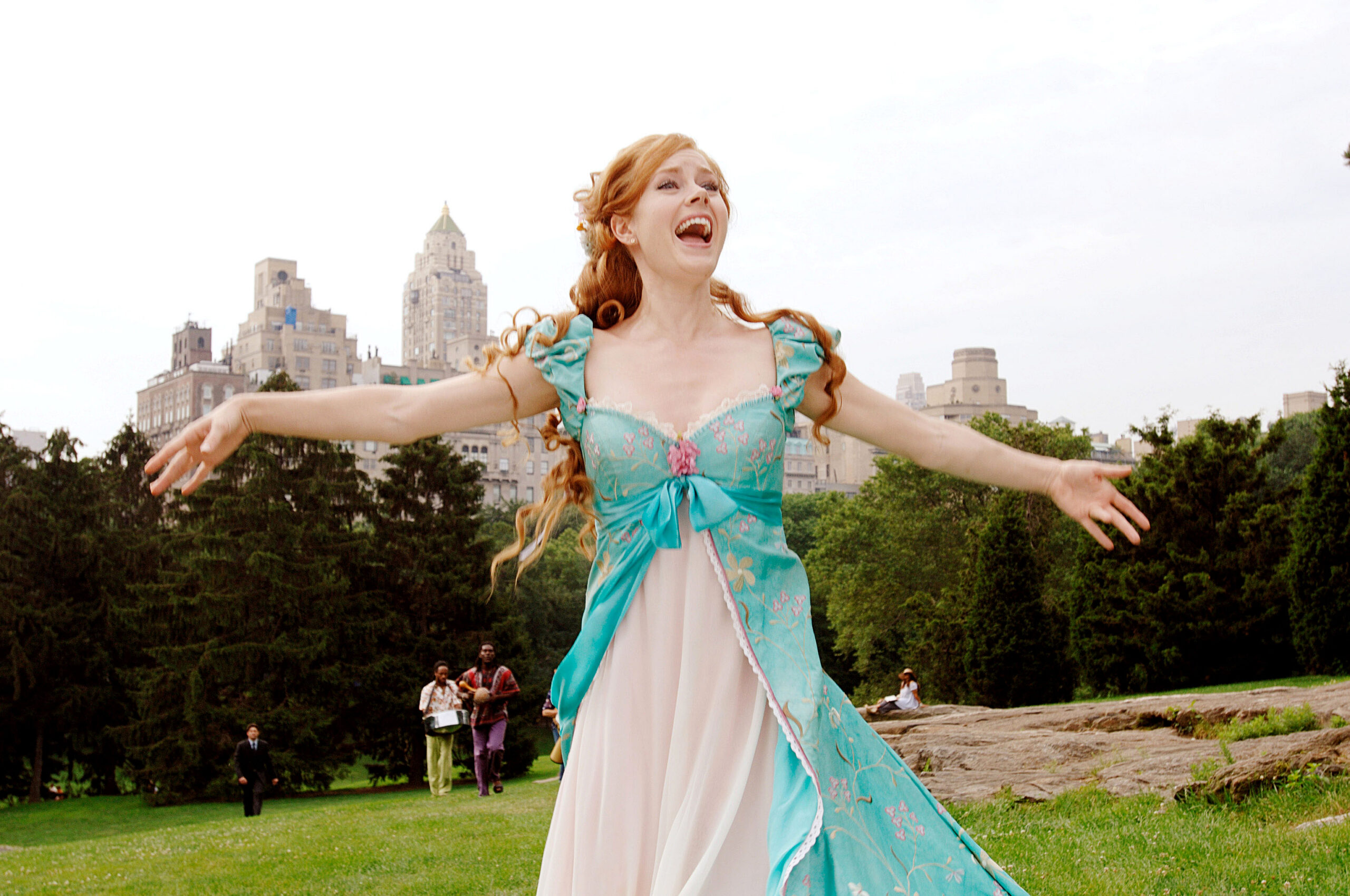
    Her portrayal of Giselle, an animated princess thrust into live-action New York City, was defined by its earnestness, innocence, and unwavering optimism. For a generation of young girls, Adams was not just an actress; she was the embodiment of a beloved archetype. This specific type of fame carries a unique burden. When an actor becomes synonymous with a character defined by pure innocence, the transition to other roles, especially those involving adult themes or humor, becomes a high-stakes tightrope walk.

    Adams was acutely aware of this dynamic. She knew that the young audience who had flocked to theaters to see Enchanted would likely be following her subsequent career moves. This awareness formed the foundation of her boundary-setting at SNL.

    The ‘SNL’ Environment: Pushing Boundaries vs. Protecting the Brand

    Saturday Night Live operates on a fundamentally different frequency than a Disney film. Since its inception in 1975, the late-night sketch show has built its reputation on irreverence, satire, and pushing the boundaries of acceptable television comedy. Hosts are often expected to shed their established personas and embrace the absurd, the provocative, and sometimes the vulgar.

    For many actors, hosting SNL is an opportunity to showcase versatility. It is a chance to prove they can handle raunchy humor or self-deprecation. However, for an actor whose recent success is tied to a fiercely loyal and highly impressionable demographic, the SNL stage presents a minefield.

    The Pitch and the Refusal

    During the pitch process, a notoriously grueling part of the SNL production week, writers present dozens of ideas to the host. It is an environment where the most outrageous concepts often float to the top. When Adams was presented with the “graphic” sketch in question, she recognized an immediate conflict.

    The specific details of the sketch remain undisclosed, but the nature of Adams’ objection is clear. The content crossed a line that she felt would be damaging or inappropriate for the young girls who viewed her through the lens of Enchanted. She chose to prioritize the emotional safety of that specific audience segment over the potential laughs the sketch might have generated.

    Her refusal was a calculated professional decision. It was an assertion of control over her own narrative and a refusal to let the machinery of late-night comedy dictate her public image.

    The Responsibility of the Family-Friendly Star

    Adams’ stance raises broader questions about the responsibility actors have toward their audiences, particularly when those audiences include children. When an actor signs on to a family-friendly project, do they implicitly agree to maintain a certain standard of behavior in their subsequent public appearances?

    The industry has seen countless examples of former child stars or actors associated with wholesome brands struggling to break free from those constraints. Some choose to shatter the image aggressively, taking on shocking roles or engaging in controversial behavior to signal their transition to adulthood. Others, like Adams in this instance, choose a more measured approach, carefully curating their choices to avoid alienating the audience that helped build their career.

    Adams’ decision at SNL suggests a belief that the connection forged with a young audience is not something to be discarded lightly. It requires a level of stewardship. By rejecting the graphic sketch, she demonstrated an understanding that her influence extended beyond the screen and into the living rooms of families who trusted her brand.

    Navigating the Transition: From Princess to Prestige Drama

    The SNL incident is a microcosm of the larger challenge Adams faced in the years following Enchanted. She needed to prove her range as an actress without completely alienating the fanbase that had embraced her as Giselle. Her subsequent career trajectory shows a masterful navigation of this challenge.

    She moved on to critically acclaimed roles in films like Doubt (2008), The Fighter (2010), and American Hustle (2013). These roles were complex, mature, and far removed from the innocence of a Disney princess. Yet, she managed this transition without resorting to cheap shock value. She built a reputation as a serious, versatile actress while maintaining a level of public dignity that respected her past work.

    The refusal at SNL was an early indicator of this strategic approach. It showed that she was willing to say no to projects or concepts that did not align with her long-term vision for her career and her relationship with her audience.

    The Enduring Legacy of ‘Enchanted’ and the Power of ‘No’

    Fifteen years after the release of Enchanted, Adams returned to the role of Giselle in the 2022 sequel, Disenchanted. The anticipation for the film demonstrated the enduring power of the character and the loyalty of the audience that had grown up with her.

    The fact that Adams could seamlessly step back into the role is a testament to the careful curation of her career. Had she chosen to participate in the graphic SNL sketch or pursued similar shock-value projects in the intervening years, the return to the wholesome world of Giselle might have felt jarring or inauthentic.

    Her ability to say “no” in the writers’ room at Studio 8H was not just about avoiding a momentary discomfort. It was an investment in the longevity of her career and the integrity of her relationship with her fans.

    The Industry Standard: Setting Boundaries in Comedy

    Adams’ story is not entirely unique, but it is notable for its clarity. Many actors face similar pressures when appearing on shows like SNL. The desire to be seen as a “good sport” and to play along with the writers’ vision can be overwhelming. However, Adams’ example shows that it is possible to participate in the comedy without compromising one’s core values or brand identity.

    It highlights the importance of agency for actors, particularly women, in environments that often prioritize the joke over the comfort of the performer. By drawing a line, Adams asserted her authority over her own image and demonstrated that an actor can be funny, versatile, and principled all at once.

    The decision reverberates beyond the specific incident. It serves as a reminder that the audience is always watching, and that the choices an actor makes off-screen or in unscripted moments can have a profound impact on their legacy.

    Writers pitched. Boundaries were tested. Adams held the line.

    Protection.

  • Margaret Kerry, the Real-Life Model for Tinker Bell, Dies at 97

    Margaret Kerry, the Real-Life Model for Tinker Bell, Dies at 97

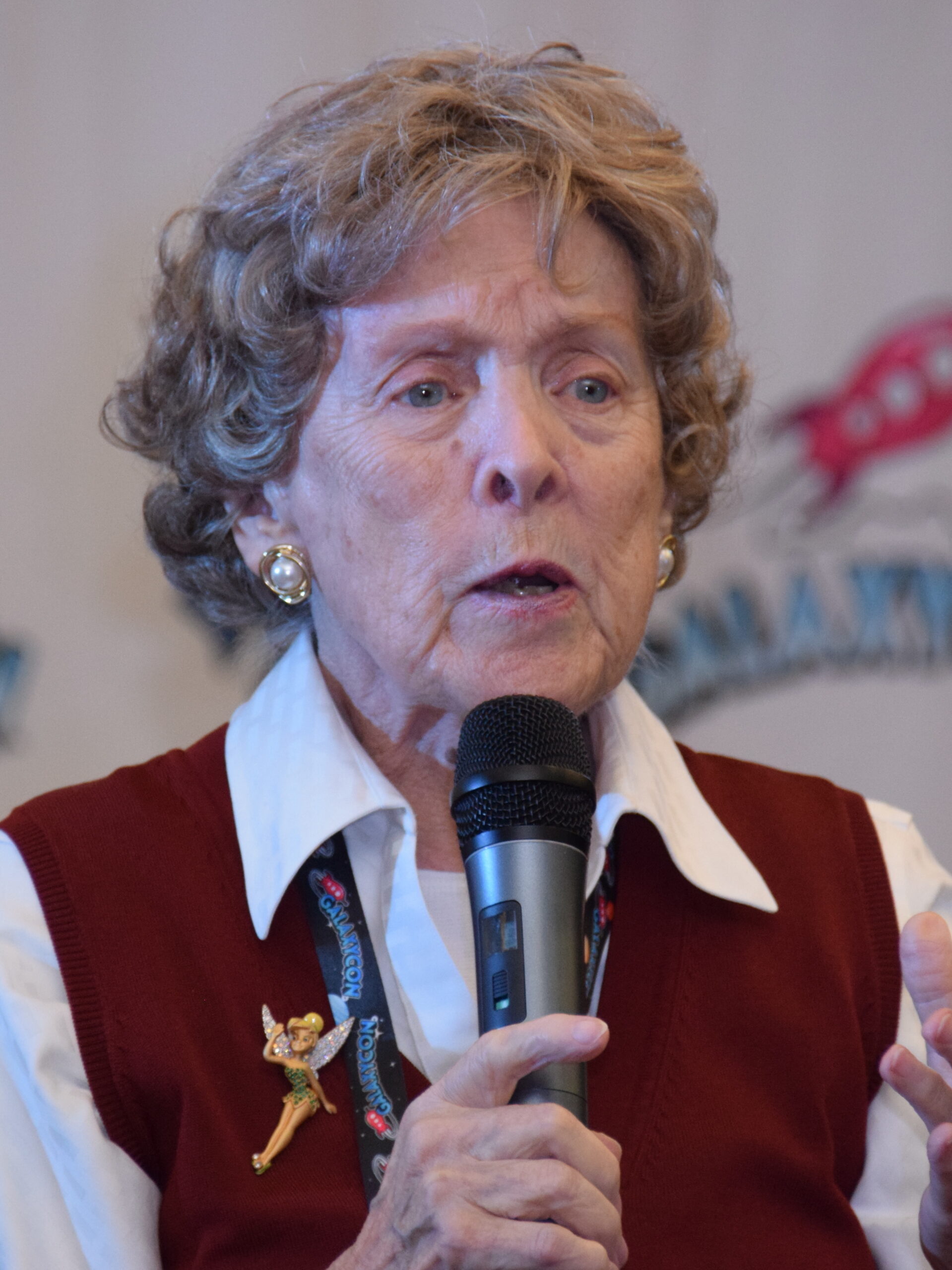
    Margaret Kerry, the veteran actress, radio performer, and dancer who served as the live-action reference model for Tinker Bell in Walt Disney’s 1953 animated feature Peter Pan, has died at the age of 97. Her pantomime work on a Burbank soundstage shaped the physical comedy, posture, and iconic pout of one of the most recognizable characters in animation history. Without speaking a single line of dialogue, Kerry gave a drawing a distinct, fiery psychology.

    For decades, an urban legend persisted across Hollywood. Whispers claimed that Marilyn Monroe had inspired the blonde, temperamental pixie. The timeline never aligned, but the rumor survived. The truth belonged entirely to Kerry.

    She did not just lend a face to an animator. She engineered a performance. Kerry translated human movement into fairy proportions, helping the studio solve a massive narrative problem: how to make a mute, glowing ball of light emote across an eighty-minute film.

    But the story of Margaret Kerry extends far beyond the borders of Neverland. From her early days in the Our Gang comedy shorts to pioneering early network television, her career tracked the evolution of 20th-century American entertainment. She was a working actor who accidentally became a permanent piece of global pop culture.

    The Myth of Marilyn and the Reality of Margaret

    The Marilyn Monroe rumor is one of Hollywood’s most enduring myths. It suggests that Walt Disney animators based Tinker Bell’s curves and blonde hair on the rising 20th Century Fox star. The reality of animation production dictates otherwise.

    Walt Disney acquired the animation rights to J.M. Barrie’s play Peter Pan in 1939. The studio began early visual development shortly after, but World War II forced the project into a decade-long hiatus. By the time production resumed in earnest in the late 1940s, Marilyn Monroe was still an unknown entity. When the final design for Tinker Bell was locked in 1951, Monroe had only just begun to gain national attention.

    The responsibility of bringing Tinker Bell to life fell to Marc Davis. Davis was one of Disney’s “Nine Old Men,” the core group of animators who defined the studio’s golden age. He had previously animated Cinderella and would go on to animate Maleficent and Cruella de Vil. Davis needed a live-action reference model to study how fabric moved, how weight shifted, and how a jealous fairy might physically express rage without uttering a sound.

    He did not want a movie star. He needed a dancer.

    In 1951, a 22-year-old Margaret Kerry received a call to audition at the Walt Disney Studios in Burbank, California. She prepared by listening to a phonograph record of the J.M. Barrie play. She choreographed a pantomime routine. During her audition, she pretended to make breakfast without using any real props. Davis watched her move. He hired her immediately.

    Six Months on a Burbank Soundstage

    Live-action reference was a standard practice at the Walt Disney Studios in the 1950s. Animators did not trace the actors, a process known as rotoscoping. Instead, they used the filmed footage as a dynamic anatomical guide. The actors provided the raw data. The animators provided the caricature.

    Kerry spent six months on an empty soundstage. Because Tinker Bell interacted with normal-sized human objects, the studio built oversized props for Kerry to navigate.

    • A giant wooden keyhole for her to squeeze through.
    • A massive pair of scissors.
    • An oversized hand mirror.

    The mirror scene remains one of the film’s most famous sequences. Tinker Bell lands on Wendy Darling’s vanity, catches her reflection in a mirror, and critically examines the width of her own hips. Kerry improvised the movement. She stood on the soundstage, placed her hands on her hips, measured the distance, and sighed in exasperation. Davis captured the exact shift in her posture.

    “Marc Davis was a genius. He didn’t just want my measurements. He wanted my attitude. Tinker Bell was a magical creature, but her emotions had to be entirely human. She was jealous. She was petty. She was fiercely loyal. I had to act all of that out with my shoulders and my chin.”

    Kerry wore a custom bathing suit during the shoot. The studio wardrobe department designed it to match Tinker Bell’s strapless, jagged-hemmed dress. This allowed Davis to study the exact muscle movements in Kerry’s legs and back as she leaped off giant spools of thread and pretended to fly across the room.

    High Stakes for the Mouse House

    When Kerry stepped onto the soundstage in 1951, the Walt Disney Company was operating under immense financial pressure.

    The studio had narrowly avoided bankruptcy with the massive success of Cinderella in 1950. However, their follow-up, Alice in Wonderland (1951), had disappointed at the box office. Peter Pan needed to be a commercial triumph. The budget swelled to $4 million, a staggering sum for an animated feature at the time.

    Tinker Bell was viewed as a major risk. In J.M. Barrie’s original stage productions, the fairy was depicted simply as a darting spotlight accompanied by the sound of a ringing bell. Audiences had never seen her face. Giving her a human form, a distinct personality, and a visible temper was a massive creative gamble.

    Kerry’s performance grounded the character. She made the fairy believable. When Peter Pan premiered in theaters on February 5, 1953, it grossed over $7 million in its initial run. It became the highest-grossing film of the year. Tinker Bell immediately transcended the film, becoming the unofficial mascot of the Walt Disney Company. She began flying over the sleeping castle in the studio’s television anthology series introductions, cementing her status as a global icon.

    Voices in the Water: The Mermaid Connection

    Kerry’s contribution to Peter Pan was not limited to silent pantomime. She also provided voice work for the film.

    In the Mermaid Lagoon sequence, Peter Pan and the Darling children encounter a group of vain, sunbathing mermaids. Kerry served as the live-action reference model for the redheaded mermaid. She also provided the character’s voice, delivering lines as the mermaids playfully torment Wendy Darling.

    Working alongside directors Gerry Geronimi, Hamilton Luske, and Wilfred Jackson, Kerry demonstrated her versatility. She could deliver the precise vocal inflection required for a snobby mermaid, and hours later, return to the soundstage to silently physically embody a jealous pixie.

    Before the Pixie Dust: Early Life and ‘Our Gang’

    Margaret Kerry was born Peggy Lynch on May 11, 1929, in Los Angeles, California. She was embedded in the entertainment industry from a remarkably young age.

    At the age of four, she appeared in the legendary Our Gang (later known as The Little Rascals) comedy shorts. She acted alongside George “Spanky” McFarland, learning the mechanics of film production before she could read.

    In 1935, she secured a small role in the Warner Bros. film adaptation of William Shakespeare’s A Midsummer Night’s Dream. In a stroke of massive historical irony, her role in the film was playing a fairy. She worked under the direction of Max Reinhardt, sharing the screen with Mickey Rooney and James Cagney.

    As she transitioned into her teenage years, she adopted the stage name Margaret Kerry. She worked consistently in film and radio, developing a reputation as a reliable, hard-working performer who understood comedic timing.

    Pioneering the Television Age

    While her legacy is forever tied to a 1953 animated film, Kerry was also a pioneer of early network television.

    From 1949 to 1952, she starred in The Ruggles, a family sitcom broadcast on the ABC network. The show starred veteran actor Charlie Ruggles. Kerry played his teenage daughter, Sharon. The Ruggles was one of the first network television series to be produced in Hollywood rather than New York, and it aired live to audiences across the country.

    Live television required immense discipline. There were no retakes. Kerry’s background in dance and radio prepared her perfectly for the high-wire act of live broadcasting.

    A Voice for Animation: Clutch Cargo and Beyond

    In 1959, Kerry took on a role that would secure her place in a completely different corner of animation history. She joined the cast of Clutch Cargo, an animated television series produced by Cambria Productions.

    Clutch Cargo utilized a bizarre, highly distinct animation technique called Syncro-Vox. To save money on animation costs, the studio filmed the actual lips of the voice actors and superimposed them onto the static drawings of the characters’ faces. The result was unsettling but undeniably memorable.

    Kerry provided the voices for multiple characters on the show, most notably Spinner, the young sidekick, and Paddlefoot, the pet dachshund. She worked alongside voice actor Hal Smith, who would later become famous as Otis the town drunk on The Andy Griffith Show. Kerry’s ability to manipulate her voice to sound like a young boy kept her in constant demand in the voice-over industry throughout the 1960s.

    The Legacy of a Working Actor

    In her later years, Margaret Kerry embraced her unique place in Hollywood history. She did not shy away from the Tinker Bell legacy; she championed it.

    She became a staple on the convention circuit, regularly attending Disneyana fan events and comic conventions across the globe. She was known for her boundless energy, often staying hours past her scheduled time to ensure every fan received an autograph and a story.

    In 2016, she published her autobiography, Tinker Bell Talks: Tales of a Pixie Dusted Life. The book detailed her early years in Hollywood, her experiences on the Disney lot, and her perspective on the industry’s evolution. It served as a vital primary source for animation historians, debunking myths and preserving the reality of mid-century film production.

    Kerry understood the distinction between the character and herself. She knew that Tinker Bell belonged to the world. But she also knew that the fairy’s soul, the hands on the hips, the tapping of the foot, the fierce loyalty, was born in a Burbank soundstage in 1951.

    She was the human anchor for a magical property.

    Animators drew lines. Audiences watched a screen. A company built an empire.

    But the spark belonged to a woman on an empty soundstage, pretending to be trapped in a keyhole.

    Margaret Kerry.

  • The Stalled Return of Tool Time – Why the Home Improvement Reboot is Stuck

    The Stalled Return of Tool Time – Why the Home Improvement Reboot is Stuck

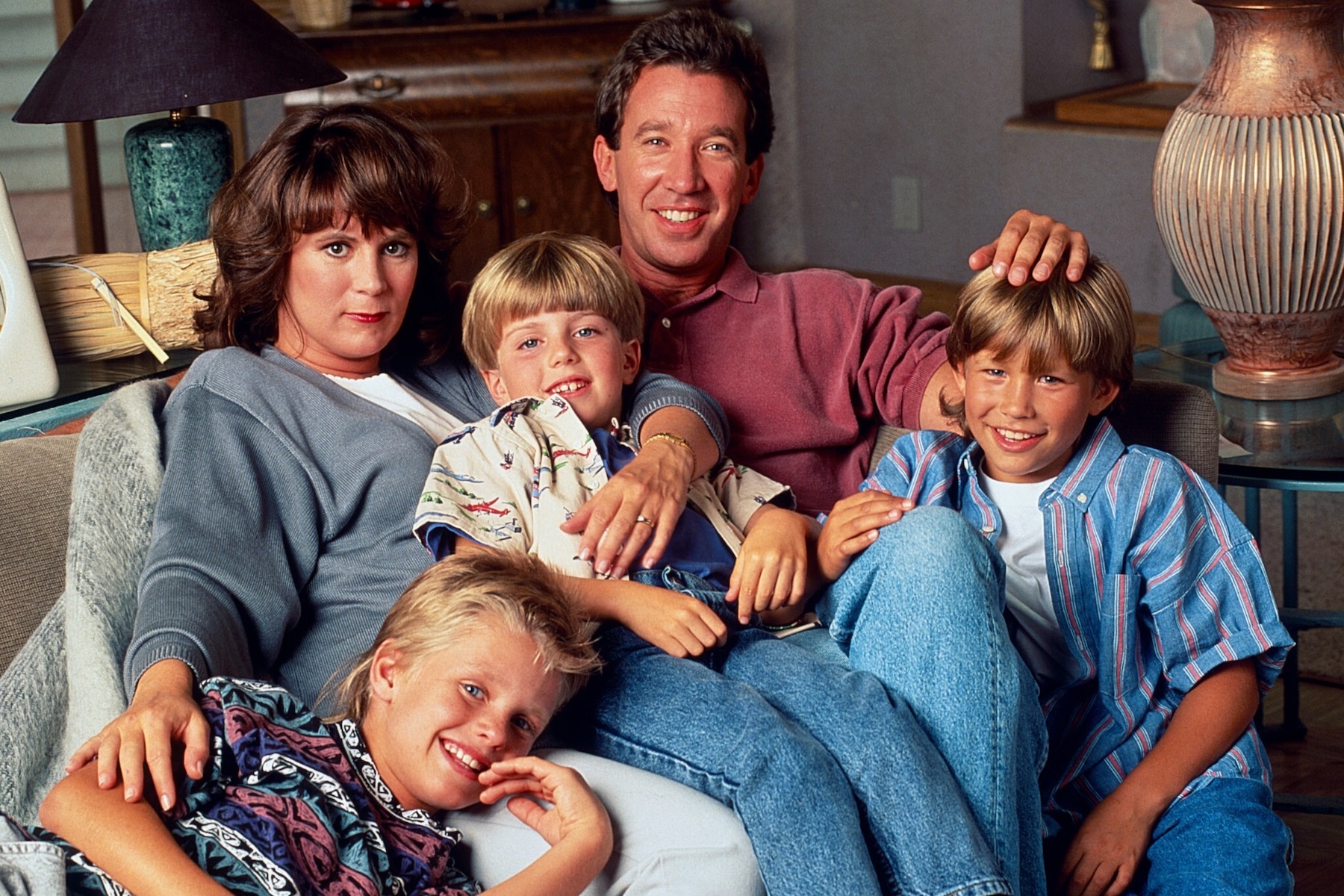
    A planned reboot of the 1990s ABC sitcom Home Improvement remains officially stalled because series star Tim Allen says his former on-screen sons, Zachery Ty Bryan, Jonathan Taylor Thomas, and Taran Noah Smith, are struggling with real-life personal issues. The 73-year-old actor and comedian confirmed to Variety that the project cannot move forward. The idealized family dynamic that anchored the show for eight seasons no longer aligns with the complex realities of the former child stars.

    Television networks rely on nostalgia. Reboots of classic sitcoms represent safe investments for streaming platforms looking for guaranteed audiences. Executives at The Walt Disney Company successfully revived Allen’s holiday franchise with The Santa Clauses on Disney+. A return to the Taylor household seemed inevitable.

    But the mechanics of a sitcom revival require a willing and available cast. The Taylor family is fractured. The actors who portrayed the three boys have navigated drastically different paths since the series concluded on May 25, 1999. Their current circumstances make a traditional family reunion impossible to film.

    The Weight of a 1990s Juggernaut

    To understand the demand for a reboot, one must measure the massive footprint of the original series. Home Improvement premiered on September 17, 1991. It anchored ABC’s Tuesday night lineup. It became a cultural touchstone.

    Created by Matt Williams, Carmen Finestra, and David McFadzean under Wind Dancer Productions, the show ran for 204 episodes. It dominated the Nielsen ratings. During its peak in the 1993-1994 season, it was the second most-watched program on American television, trailing only 60 Minutes.

    The premise was simple. Tim “The Toolman” Taylor hosted a fictional cable show called Tool Time, sponsored by the fictional Binford Tools. He was flanked by his mild-mannered assistant, Al Borland, played by Richard Karn. At home, Tim navigated suburban family life in Detroit, Michigan, alongside his wife Jill, played by Patricia Richardson, and their three sons. He received philosophical advice from his partially obscured neighbor, Wilson, played by Earl Hindman.

    The show generated billions in syndication revenue. It spawned a line of real-world tools and video games. By the final season, Allen was earning an unprecedented $1.25 million per episode. The three child actors grew up in front of a weekly audience of 30 million viewers. That level of exposure carries a cost.

    The Reality of the Taylor Boys Today

    Child stardom rarely transitions smoothly into adult stability. The three actors who played the Taylor boys serve as distinct case studies in post-sitcom life. Their current trajectories represent the “personality problems” Allen referenced.

    Zachery Ty Bryan and the Legal Labyrinth

    Zachery Ty Bryan played Brad, the athletic and often impulsive eldest son. Bryan’s post-show life has been marked by severe legal and personal turmoil.

    In October 2020, Bryan was arrested in Eugene, Oregon. He was charged with felony strangulation, fourth-degree assault, and interfering with making a report. He eventually pleaded guilty to two misdemeanor counts in a plea deal.

    The legal issues continued. In July 2023, Bryan was arrested again in Eugene on charges of felony assault in violation of the Abuse Prevention Act. Furthermore, multiple reports surfaced in 2023 detailing allegations of financial misconduct. Bryan was accused of running a cryptocurrency scheme connected to an agricultural startup called Producers Market, allegedly defrauding investors out of thousands of dollars.

    A family-friendly Disney reboot cannot absorb headlines involving domestic violence and financial fraud. Bryan’s involvement in any television project is currently a non-starter for network risk management.

    Jonathan Taylor Thomas and the Quiet Life

    Jonathan Taylor Thomas played Randy, the sarcastic middle child. Thomas was the breakout star of the series. He became a fixture on the covers of teen magazines like Tiger Beat and BOP. He voiced young Simba in Disney’s 1994 animated blockbuster The Lion King.

    Then, he walked away.

    Thomas left Home Improvement early in its eighth and final season. He cited a desire to focus on his education. He attended Harvard University, spent a year abroad at St. Andrews in Scotland, and eventually graduated from Columbia University in 2010.

    Unlike Bryan, Thomas has no legal troubles. His “issue” regarding a reboot is simply a profound disinterest in the Hollywood machine. He values his privacy. While he did make brief guest appearances on Allen’s later sitcom, Last Man Standing, and directed a few episodes, Thomas has shown zero inclination to return to a full-time acting schedule. He recently ran for a seat on the SAG-AFTRA national board, signaling an interest in the administrative side of the industry rather than the spotlight.

    Taran Noah Smith and the Escape from Hollywood

    Taran Noah Smith played Mark, the sensitive youngest son. Smith was just seven years old when the pilot was filmed. When the show wrapped in 1999, Smith was 17. He publicly declared he did not want to act anymore.

    His immediate post-show years were turbulent. At 17, he sued his parents for control of his $1.5 million trust fund, alleging they were mismanaging his earnings. He married a woman 16 years his senior when he was 18.

    Smith eventually found stability outside of entertainment. He founded a vegan cheese company called Playfood in California. He later learned to pilot submersibles and worked as an installation mechanic. Most recently, he worked as a technical manager for the Community Submersibles Project. Like Thomas, Smith has successfully extracted himself from the entertainment industry. Asking him to return to a soundstage to reprise a role he abandoned a quarter-century ago is a massive logistical leap.

    The Missing Matriarch and the Empty Fence

    The complications extend beyond the three sons. The adult cast members have their own reservations about returning to the Taylor household.

    Patricia Richardson earned four Emmy nominations for her portrayal of Jill Taylor. She was the emotional anchor of the series. In early 2024, rumors of a Home Improvement spinoff began circulating online. Richardson quickly shut them down on the “Back to the Best” podcast.

    She stated unequivocally that she had never been approached about a reboot. Furthermore, she expressed deep skepticism about the concept. Richardson noted that the show’s dynamic relied heavily on the entire ensemble.

    More importantly, she pointed to a glaring absence. Earl Hindman, who played the wise neighbor Wilson, died of lung cancer on December 29, 2003. Wilson was the philosophical counterweight to Tim Taylor’s impulsive masculinity. Richardson suggested that doing the show without Hindman would feel hollow.

    Richard Karn, who played Al Borland, remains close with Allen. The two recently co-hosted a reality competition series called Assembly Required on the History Channel. While Karn would likely participate in a revival, a show featuring only Tim and Al is not Home Improvement. It is simply a new project with old characters.

    The Nostalgia Economy Meets Reality

    The entertainment industry is currently fueled by intellectual property. Audiences crave the familiar. Networks crave the built-in marketing advantage of recognizable titles.

    This strategy has yielded massive successes. Fuller House ran for five successful seasons on Netflix. The Conners successfully spun out of the ashes of the canceled Roseanne revival. NBC brought back Night Court with Melissa Rauch and John Larroquette. Paramount+ resurrected Frasier with Kelsey Grammer.

    These shows worked because a critical mass of the original cast was willing and able to return. They worked because the actors’ real lives did not overshadow the fictional narratives.

    Home Improvement fails this test. The gap between the wholesome, problem-solving Taylor family and the messy reality of the actors’ lives is simply too wide to bridge. A reboot would require explaining why Brad is absent, why Randy is never around, and why Mark disappeared. It would require recasting or writing out the core family unit that made the show successful in the first place.

    The Evolution of Tim Allen

    Tim Allen has not struggled to find television work since 1999. He successfully launched a second long-running sitcom, Last Man Standing. That show ran for nine seasons across two networks, ABC and Fox, concluding in 2021.

    In Last Man Standing, Allen played Mike Baxter, a character heavily inspired by Tim Taylor but updated for the 21st century. Instead of a local cable show, Baxter ran a sporting goods store and recorded vlogs. Instead of three sons, he had three daughters. The show allowed Allen to explore similar themes of masculinity, family dynamics, and conservative-leaning comedy without the baggage of the Home Improvement legacy.

    With The Santa Clauses keeping him employed at Disney, Allen does not need a Home Improvement reboot for financial or career reasons. His comments to Variety suggest a man who would enjoy the nostalgia of a reunion but understands the practical impossibility of executing it.

    What Happens to the Tool Time Set Now?

    The demand for a revival will likely persist. Fan pages will continue to generate rumors. Clickbait articles will continue to tease impending announcements. But the logistics remain insurmountable.

    Television is a business of alignment. Schedules must align. Budgets must align. Public relations profiles must align.

    The legacy of Home Improvement is secure. It remains a defining artifact of 1990s television. It captured a specific moment in American culture, blending slapstick physical comedy with genuine family warmth. The 204 episodes exist in syndication and on streaming platforms. They serve as a time capsule.

    Attempting to pry that capsule open in 2026 reveals too much rust. The actors have moved on. The world has moved on. The idea of the Taylor family is far cleaner than the reality of the people who played them.

    Audiences wanted nostalgia. Executives wanted ratings. Allen wanted closure.

    Reality intervened.

  • The Weight of a Titan, Celine Dion Mourns the Loss of a Disney and Music Icon

    The Weight of a Titan, Celine Dion Mourns the Loss of a Disney and Music Icon

    Celine Dion publicly mourned the death of legendary music producer and 1994 Disney Legend Quincy Jones, who passed away on November 3, 2024, at his home in Bel Air, California, at the age of 91. In a carefully crafted public statement, the Canadian vocalist remembered the 28-time Grammy winner as a mentor, a visionary, and an architect of modern sound. Addressing his profound impact on her own career and the broader entertainment landscape, Dion provided a quote that immediately anchored the global mourning process: “He will remain a symbol of the joy music has brought to my life.”

    The intersection of these two musical titans represents a specific era of industry dominance. Both artists achieved the rare status of becoming synonymous with the Walt Disney Company’s musical golden ages, albeit in different decades and through different mediums. Their shared history reveals the inner workings of an industry that relies on a small, elite group of creators to shape the cultural zeitgeist.

    When a figure like Jones passes, the reverberations extend beyond a single genre. The loss demands a public accounting of legacy. For Dion, a vocalist whose career was built on the sweeping, orchestral pop arrangements that Jones helped pioneer, the tribute was both professional and deeply personal.

    The Day the Music Shifted

    The announcement of Quincy Jones’s death arrived on a quiet Sunday evening. Representatives confirmed he died peacefully, surrounded by his children and family members. The news immediately dominated global headlines. Networks interrupted broadcasts. Social media algorithms flooded with archival footage of studio sessions, award speeches, and historic performances.

    Within hours, the music industry’s elite began releasing statements. The responses were not standard public relations boilerplate. They were raw. They were specific. They detailed a man who possessed an encyclopedic knowledge of orchestration, jazz, pop, and film scoring.

    Celine Dion’s tribute stood out for its emotional clarity. She did not merely list his accomplishments. She focused on the emotional utility of his work. She focused on joy.

    “Quincy has touched my world as both a cherished mentor and as also as someone I looked up to for his profound impact on every form of American music. He will remain a symbol of the joy music has brought to my life.”

    For Dion, joy has become a heavily guarded resource. Over the past decade, she has endured the loss of her husband and manager, René Angélil, the loss of her mother, and her own severe diagnosis of Stiff Person Syndrome (SPS). Her public appearances have become rare. Her words are chosen with absolute precision. When she speaks, the industry listens.

    The Intersection of Two Disney Legends

    The headline “Disney Icon” is earned, not given. The Walt Disney Company tightly controls its legacy and the individuals permitted to represent it. Both Celine Dion and Quincy Jones hold permanent, foundational roles within the Disney musical canon.

    Celine Dion’s global breakthrough was engineered by Disney. In 1991, she recorded the title track for Beauty and the Beast alongside Peabo Bryson. The song, written by Alan Menken and Howard Ashman, won the Academy Award for Best Original Song. It won a Grammy. It charted worldwide. It transformed Dion from a Francophone star into a global pop commodity. The film grossed $424 million globally and fundamentally altered the trajectory of animated features.

    Quincy Jones’s relationship with Disney was longer, deeper, and more structural. He did not just perform for the studio; he shaped its musical identity across multiple generations.

    • The Mickey Mouse Club: Jones’s early career included appearances and musical contributions that intersected with Disney’s television dominance in the mid-20th century.
    • Fantasia 2000: Jones famously introduced the “Rhapsody in Blue” segment of the sequel to Walt Disney’s 1940 masterpiece. His presence lent immediate, undeniable musical authority to the ambitious project.
    • Duke Ellington Collaborations: Jones arranged and produced recordings that Disney utilized across various media properties, bridging the gap between high-art jazz and commercial animation.
    • The 1994 Disney Legend Induction: Jones was officially inducted as a Disney Legend in 1994. The award is the highest honor the company bestows, recognizing individuals who have made an extraordinary and integral contribution to the Disney legacy.

    When Dion mourns Jones, she is mourning a peer in the elite fraternity of artists who have permanently shaped the Disney vault.

    Inside the Jim Henson Studios

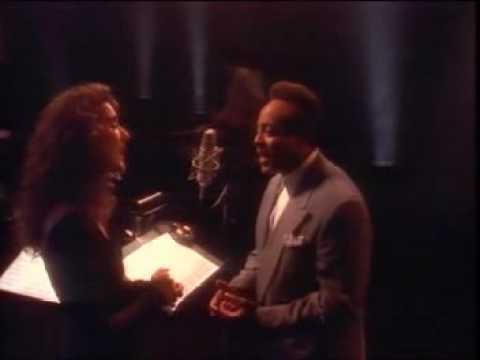
    The most visible collaboration between Dion and Jones occurred on February 1, 2010. The location was Jim Henson Studios in Hollywood, the exact site of the original A&M Studios where “We Are the World” was recorded in 1985.

    Following the devastating 7.0 magnitude earthquake in Port-au-Prince, Haiti, Jones and Lionel Richie organized a 25th-anniversary remake of the historic charity single. They needed the biggest voices on the planet. They needed undeniable vocal authority. They called Celine Dion.

    Jones served as the executive producer and conductor. He stood at the center of a room containing 85 of the world’s most famous musicians. The logistics were a nightmare. The egos were massive. The time constraints were brutal. Jones managed the room with the precise, quiet authority of a man who had produced Michael Jackson’s Thriller, an album that sold 70 million copies.

    During the session, Jones assigned Dion one of the most difficult and recognizable solos in the song: the soaring, impassioned bridge originally performed by Cyndi Lauper. Archival footage from the 2010 session shows Jones directing Dion from the podium. He points. She delivers. He nods in approval.

    It was a masterclass in mutual respect. Jones knew exactly what instrument he was working with when he directed Dion’s voice. Dion knew exactly whose hands she was placing her instrument into. The resulting track, “We Are the World 25 for Haiti,” raised millions of dollars for disaster relief and cemented a professional bond between the two artists.

    The Anatomy of Public Grief

    Celebrity accountability often demands that public figures process their grief in real-time, under the scrutiny of millions. For Celine Dion, this process has been documented relentlessly.

    The passing of Quincy Jones represents the fading of the old guard. The music industry of the 2020s is driven by algorithms, TikTok virality, and fragmented streaming metrics. The era of the monolithic producer, the singular visionary who could assemble a 60-piece orchestra, write the charts by hand, and command a room of global superstars without raising his voice, is ending.

    Jones was a bridge to a different time. He worked with Frank Sinatra. He worked with Count Basie. He worked with Ray Charles. He brought that mid-century discipline into the modern pop era, producing Off the Wall, Thriller, and Bad.

    When Dion writes that Jones “touched my world as both a cherished mentor and as also as someone I looked up to,” she is acknowledging this foundational shift. She is recognizing the loss of a safety net. The architects who built the stages she stands on are leaving.

    The Architecture of an Unrepeatable Era

    The modern entertainment landscape cannot produce another Quincy Jones. The economic structures that allowed a producer to spend months in a studio, experimenting with live brass sections and analog synthesizers, no longer exist. Budgets have contracted. Attention spans have shattered.

    Similarly, the industry is unlikely to produce another Celine Dion. The traditional path of the vocal powerhouse, cultivated through years of rigorous physical touring, blockbuster movie soundtracks, and massive physical album sales, has been replaced by decentralized digital fame.

    Their mutual status as Disney Legends underscores this reality. The Walt Disney Company of 1991, which bet heavily on a sweeping Broadway-style ballad for an animated feature, was operating on the same grand scale that Quincy Jones operated on. It was an era of big swings. Big budgets. Big voices.

    Dion’s mourning is not just for the man. It is for the methodology. It is for the pursuit of absolute, uncompromising musical excellence.

    In the weeks following his death, the tributes continued to pour in. The Grammy Museum announced special exhibits. The Walt Disney Archives released statements detailing his contributions to the parks and films. But the quiet, declarative statement from a vocalist in isolation carried a different kind of weight.

    She did not need to list his Grammy count. She did not need to mention his Oscar nominations. She distilled a 91-year life into a single, undeniable truth: he was a symbol of joy.

    The Final Note

    The history of recorded music is written by the people who stay in the room until the track is perfect. Quincy Jones lived in that room. Celine Dion understands that room.

    The loss of a mentor reshapes the landscape. The loss of an architect changes the skyline. The loss of a legend alters the history books.

    Singers remembered. Producers remembered. Audiences remembered.

  • The Peabody Rebellion: How Jimmy Kimmel and Tony Gilroy Turned an Award Show into a Political Battleground

    The Peabody Rebellion: How Jimmy Kimmel and Tony Gilroy Turned an Award Show into a Political Battleground

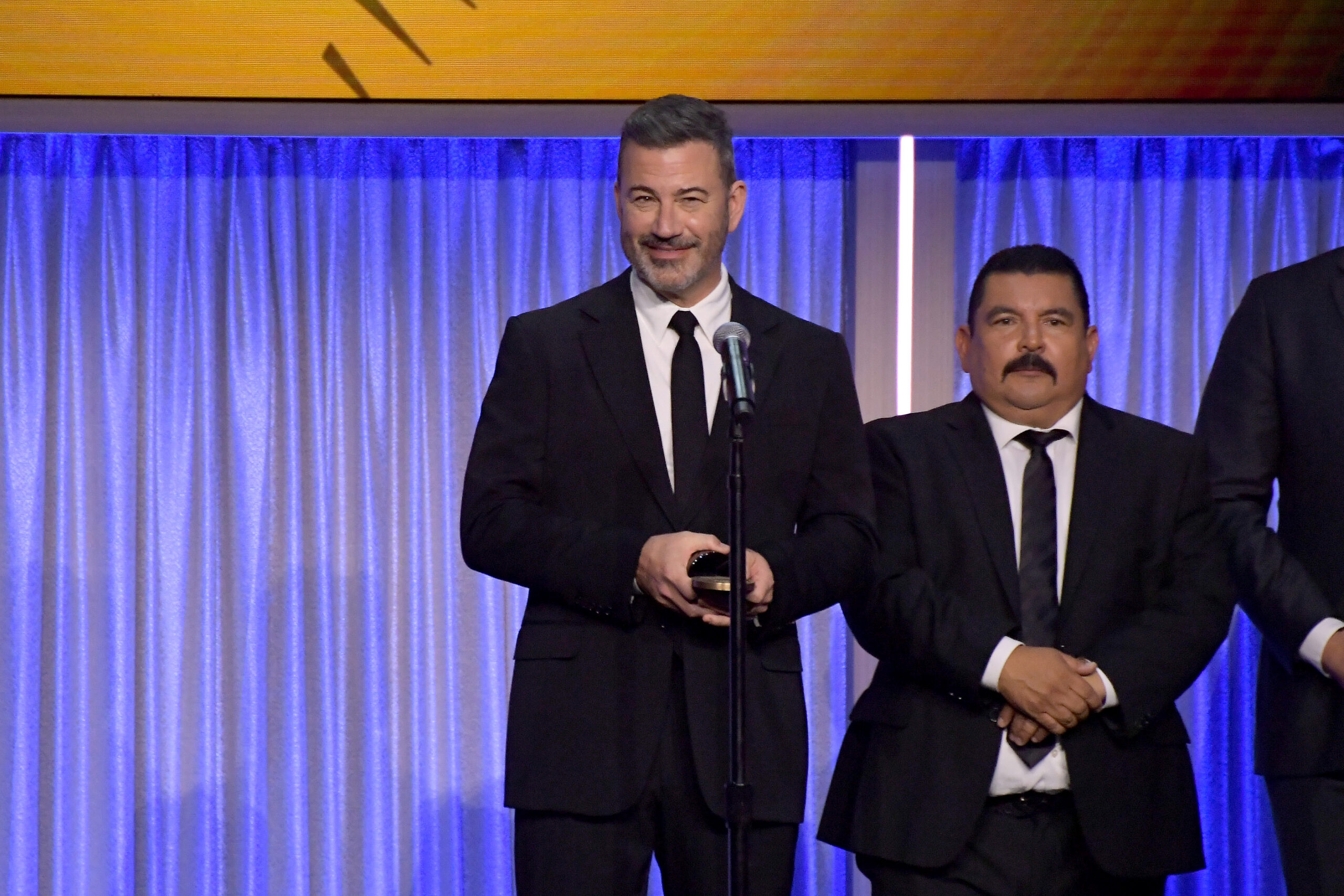
    Jimmy Kimmel accepted a Peabody Award by thanking Donald Trump, referring to the President as “Pumpkin McPornhumper,” while Andor creator Tony Gilroy used the exact same stage to urge the public to fight fascism, ending his speech with a blunt “F— the Empire.” The event transformed a traditional media ceremony into a dual-pronged political rally. The Beverly Wilshire Hotel ballroom became a broadcast tower for cultural defense. Two different genres of television—late-night comedy and prestige science fiction—collided in a shared warning about the state of American politics.

    The Intersection of Prestige and Politics

    The Peabody Awards do not operate like the Emmys or the Oscars. There are no technical categories. There are no awards for best lighting or best sound mixing. The Board of Jurors at the University of Georgia selects winners based entirely on cultural impact and storytelling excellence. Winning a Peabody signals that a piece of media has touched the nerve of the American public. When the winners take the podium, the expectations are different. The speeches are rarely about thanking agents or managers. The speeches are about the work. And in this era, the work is inherently political.

    The ceremony provided a unique platform. The audience consisted of journalists, showrunners, network executives, and cultural critics. The cameras captured the moments not for a live television broadcast, but for viral distribution. The speeches were engineered for the internet. They were designed to be clipped, shared, and debated across social media platforms. The strategy worked. Within hours, the quotes dominated entertainment news cycles and political commentary feeds.

    Jimmy Kimmel’s Late-Night Monologue Moves to the Podium

    Jimmy Kimmel did not pivot to politics by accident. The host of Jimmy Kimmel Live! spent the first decade of his late-night career avoiding partisan warfare. He focused on viral pranks, celebrity interviews, and pop culture commentary. That changed in May 2017. Kimmel delivered an emotional monologue about his newborn son, Billy, who required open-heart surgery at Cedars-Sinai Medical Center. That monologue transitioned into a plea for the Affordable Care Act. It marked a permanent shift in Kimmel’s public persona. He became a primary antagonist to the Republican party and, specifically, Donald Trump.

    At the Peabody Awards, Kimmel leaned into this established dynamic. He did not deliver a standard acceptance speech. He delivered a targeted strike. By thanking “Pumpkin McPornhumper” for his award, Kimmel achieved two objectives. First, he generated an immediate laugh from the room. Second, he guaranteed the quote would become a headline. The insult was highly specific. It referenced both Trump’s physical appearance and his ongoing legal entanglements involving adult film stars. It was a calculated piece of rhetoric designed to provoke a reaction from Truth Social and cable news networks.

    The Evolution of the Late-Night Desk

    Historically, late-night television served as neutral ground. Johnny Carson famously avoided revealing his political leanings on The Tonight Show. Carson believed that alienating half the country was bad for ratings and bad for business. That paradigm no longer exists. The fragmentation of the media landscape means that late-night hosts no longer need to appeal to a universal audience. They only need to appeal to a dedicated, passionate base. Jon Stewart pioneered this model on The Daily Show. Stephen Colbert perfected it on The Late Show. Kimmel has fully embraced it on ABC.

    This shift reflects broader changes in American consumer habits. Audiences now seek out media that aligns with their existing worldview. A late-night host who refuses to take a stand is often viewed as irrelevant. By attacking Trump at a prestigious event like the Peabody Awards, Kimmel reinforced his brand. He signaled to his audience that he remains on the front lines of the cultural conflict. The Disney-owned ABC network supports this strategy because it generates consistent engagement and reliable advertising revenue.

    Tony Gilroy and the Rebellion of ‘Andor’

    If Jimmy Kimmel provided the comedic attack, Tony Gilroy provided the dramatic warning. Gilroy is the creator and showrunner of Andor, a prequel series to the Star Wars film Rogue One. Under the umbrella of Lucasfilm and the Walt Disney Company, Star Wars is a $4 billion intellectual property traditionally focused on space wizards, laser swords, and toy sales. Gilroy changed the formula. He turned a $250 million streaming series into a gritty, methodical study of how authoritarian regimes take power, and how ordinary people are radicalized into rebellion.

    Gilroy’s Peabody speech reflected the core themes of his show. He did not speak in metaphors. He directly addressed the concept of creeping authoritarianism. He urged the crowd to take on fascism before it becomes too entrenched to defeat. The creator drew a straight line between the fictional Galactic Empire and modern political movements. He ended his speech with a clear, aggressive directive: “F— the Empire.”

    The Anatomy of a Sci-Fi Warning

    Andor resonates because it avoids the fantastical elements of its parent franchise. There are no Jedi in the first season. The villains are not masked monsters. They are mid-level bureaucrats working in the Imperial Security Bureau. They are concerned with quotas, jurisdictional disputes, and climbing the corporate ladder. The show illustrates how evil operates through mundane administrative processes. It shows how a society slowly loses its freedom not through a single catastrophic event, but through a series of small, unchecked compromises.

    The character of Cassian Andor, played by Diego Luna, begins as a cynical thief. He has no interest in politics. He only wants to survive. The narrative forces him to realize that neutrality is impossible under a fascist regime. The arc of the season, particularly the episodes set in the Narkina 5 prison labor camp, highlights the brutal reality of an unchecked state apparatus. When Gilroy stood at the Peabody podium and warned about fascism, he was speaking directly to the themes he spent two years writing and producing for Disney+.

    The Peabody Awards as a Cultural Barometer

    The George Foster Peabody Awards were established in 1940. They were created by a committee of broadcasters and the University of Georgia’s Henry W. Grady College of Journalism and Mass Communication. The original goal was to create a broadcasting equivalent to the Pulitzer Prize. Over the decades, the Peabody Board has consistently recognized programming that addresses pressing social issues. They awarded Edward R. Murrow. They awarded Sesame Street. They awarded The Wire.

    By honoring both Kimmel’s late-night commentary and Gilroy’s science fiction drama in the same year, the Peabody Board made a definitive statement. They signaled that the most vital storytelling currently happening on television is rooted in political resistance. The awards validate the creators’ choices to embed activism into their art. It provides academic and institutional backing to what might otherwise be dismissed as mere entertainment.

    The Mechanics of the Modern Viral Moment

    The speeches by Kimmel and Gilroy were not spontaneous outbursts. They were crafted moments of cultural defense. In the modern media ecosystem, an award show is merely a content generation engine. The actual presentation of the physical trophy is secondary. The primary goal is to create a moment that will be dissected by commentators, aggregated by news outlets, and shared by millions of users on smartphones.

    This requires a specific type of rhetoric. It requires soundbites. “Pumpkin McPornhumper” is a soundbite. “F— the Empire” is a soundbite. These phrases are easily digestible. They fit neatly into a headline. They trigger algorithms that prioritize high-emotion, high-engagement content. The creators know exactly what they are doing. They are using the machinery of the attention economy to broadcast their ideological warnings.

    The Echo Chamber vs. The Megaphone

    The impact of these moments remains a subject of debate among media analysts. Do political speeches at award shows change the minds of voters? The empirical evidence suggests they do not. Political polarization in the United States is deeply entrenched. A voter who supports Donald Trump is unlikely to be swayed by an insult from Jimmy Kimmel. A viewer who leans toward authoritarian policies is unlikely to reconsider their stance because of a speech by a Hollywood showrunner.

    However, changing minds is rarely the actual objective. The objective is mobilization. The objective is to energize the existing base. When Kimmel mocks Trump, he provides catharsis for his audience. When Gilroy warns about fascism, he provides validation for viewers who feel anxious about the political climate. These speeches act as a megaphone for the cultural defense of specific values. They remind the audience that they are not alone in their concerns.

    The Financial Realities of Political Art

    There is also a stark financial reality beneath the rhetoric. Controversy generates cash. When Jimmy Kimmel trends on social media, ABC benefits from the increased visibility. When clips of Tony Gilroy’s speech circulate online, they drive subscriptions and viewership to Disney+. The Walt Disney Company, which owns both ABC and Lucasfilm, profits directly from the cultural friction.

    This is the paradox of modern political entertainment. Anti-establishment messages are distributed by some of the largest corporate conglomerates on the planet. The rebellion is monetized. The resistance is sponsored. This does not invalidate the sincerity of the creators. Tony Gilroy is undoubtedly passionate about the themes of Andor. Jimmy Kimmel is undoubtedly sincere in his disdain for Donald Trump. But their messages are amplified because they align with the financial imperatives of their parent companies.

    The Future of the Broadcast Podium

    The Peabody Awards ceremony serves as a blueprint for the future of entertainment gatherings. The era of the apolitical celebrity is over. The expectation of silence has been replaced by the demand for advocacy. Creators, actors, and hosts are now expected to leverage their platforms for cultural defense. Those who refuse to participate risk being marginalized by an audience that demands ideological alignment.

    As the political climate remains volatile, the rhetoric will likely escalate. The insults will become sharper. The warnings will become more dire. The lines between entertainment, news, and political campaigning will continue to blur until they disappear entirely. The stage is no longer just a place to accept a trophy. It is a trench in a much larger conflict.

    The comedians joked. The writers warned. The cameras rolled. Broadcast.