
Tag: Democracy

  • The American Experiment Review: Netflix Doc Inspires and Irritates Viewers

    The American Experiment Review: Netflix Doc Inspires and Irritates Viewers

    Netflix’s documentary, ‘The American Experiment,’ produced by actor Tom Hanks, has elicited a divided response from audiences and critics. The film, which features interviews with former Secretary of State Hillary Clinton and former Vice President Mike Pence, explores various facets of American political life and governance. Its reception highlights the deep partisan divides within contemporary society.

    The Hollywood Reporter noted that the documentary is likely to provoke strong opinions. This reaction stems directly from the inclusion of two highly recognizable and often polarizing political figures. The film’s objective appears to be a broad examination of the American democratic process.

    The Production Team Behind ‘The American Experiment’

    Tom Hanks serves as a producer for ‘The American Experiment.’ His involvement brings a significant level of visibility to the project. Hanks is known for his work in historical and patriotic-themed productions, often lending a gravitas to his projects.

    The specific production company and directorial credits associated with the documentary contribute to its overall narrative framing. Details regarding the full creative team often influence the perceived objectivity and thematic emphasis of such a project. These elements shape how the content is presented to a global audience via Netflix.

    Tom Hanks’ Role in Documentary Production

    Hanks’ role as a producer typically involves oversight of creative direction and securing resources. His name often signifies a certain quality and mainstream appeal for a film. This association can draw in a wider audience than a politically focused documentary might otherwise attract.

    His previous producing credits span a variety of genres, including historical dramas and explorations of American life. This background provides context for his decision to back ‘The American Experiment.’ The project aligns with a perceived interest in national identity and historical reflection.

    Featured Political Figures: Hillary Clinton and Mike Pence

    The documentary prominently features Hillary Clinton and Mike Pence. Both individuals have held significant positions within the United States government. Their inclusion is a central factor in the film’s polarizing reception.

    Clinton served as the First Lady, a U.S. Senator representing New York, and the 67th United States Secretary of State. She was also the Democratic Party’s nominee for President in 2016.

    Pence served as the 50th Governor of Indiana and later as the 48th Vice President of the United States under President Donald Trump. His political career has been marked by strong conservative stances.

    Hillary Clinton’s Perspective in the Film

    Hillary Clinton’s participation offers a perspective shaped by decades in public service. Her insights likely touch upon themes of political polarization, challenges to democratic institutions, and the role of women in leadership. Her narrative often reflects the complexities of national political campaigns.

    Her segments within ‘The American Experiment’ likely draw from her experiences across multiple administrations and her own presidential bid. This provides a unique lens through which to view the evolution of American politics over the last quarter-century.

    Mike Pence’s Contribution to the Dialogue

    Mike Pence’s contributions to the documentary provide a conservative viewpoint. His commentary likely addresses issues such as faith in public life, constitutional principles, and the state of the Republican Party. His tenure as Vice President offers direct experience with executive power and inter-party dynamics.

    Pence’s interviews probably reflect his concerns regarding American values and the future trajectory of the nation. His presence ensures a representation of conservative thought within the documentary’s broader discussion of the American experiment.

    Thematic Exploration: American Democracy and Its Challenges

    ‘The American Experiment’ aims to delve into the foundational principles of American democracy. It explores how these principles are tested by contemporary political realities. The documentary likely examines issues such as:

    • Political polarization and partisan gridlock
    • The impact of social media on civic discourse
    • Challenges to electoral integrity
    • The role of media in shaping public opinion
    • The future of democratic institutions

    The film’s title itself suggests an inquiry into the ongoing nature of the United States as a political and social entity. It frames the nation’s history and present as an evolving process, subject to constant re-evaluation.

    Bipartisan Dialogue in a Divided Nation

    A key aspect of the documentary appears to be its attempt at fostering bipartisan dialogue. The inclusion of figures like Clinton and Pence, who represent different ends of the political spectrum, suggests this intention. The success of this endeavor is a point of contention among reviewers.

    Some critics may praise the effort to bring opposing voices together. Others might argue that the film either fails to achieve true balance or inadvertently reinforces existing divides. The nature of political discourse in 2026 often makes genuine bipartisan consensus difficult to portray or achieve in media.

    Reception and Review: Inspiring and Irritating

    The Hollywood Reporter’s review indicates a dual effect: the documentary inspires some viewers and irritates others. This outcome is predictable given the subject matter and the featured personalities. Political documentaries frequently elicit strong emotional responses.

    Inspiration may come from segments that highlight democratic ideals, civic engagement, or moments of national unity. Irritation might stem from perceived biases, the revisiting of contentious political moments, or the viewpoints expressed by certain participants.

    Critical Perspectives from The Hollywood Reporter

    The Hollywood Reporter’s analysis likely focuses on the film’s narrative structure, its editorial choices, and the effectiveness of its arguments. Reviews often comment on the documentary’s ability to engage, inform, or persuade its audience.

    The review’s title suggests that the film navigates a fine line between providing thoughtful insight and provoking partisan reactions. This balance is crucial for any project attempting to address deeply entrenched political issues.

    Netflix’s Role in Distributing Political Content

    Netflix, as a global streaming platform, plays a significant role in the distribution of political and social commentary. Its reach allows documentaries like ‘The American Experiment’ to access a vast international audience. This broad distribution can amplify the film’s impact and its potential for debate.

    The platform’s algorithms often recommend content based on viewing habits, which can either broaden or narrow a viewer’s exposure to diverse perspectives. This dynamic influences how widely and how critically a film like this is received.

    The Impact of Streaming on Political Discourse

    Streaming services have transformed how political content is consumed. They offer an alternative to traditional broadcast news and cable documentaries. This shift allows for more niche and in-depth explorations of topics, but also raises questions about echo chambers and content moderation.

    For ‘The American Experiment,’ Netflix provides a prominent stage. This stage ensures that the film’s discussion of American democracy reaches millions, potentially influencing public opinion or at least sparking conversation across various demographics.

    The Broader Context of American Political Documentaries

    ‘The American Experiment’ joins a long tradition of documentaries exploring the United States’ political landscape. These films often serve as historical records, social critiques, or calls to action. They reflect the prevailing anxieties and hopes of their respective eras.

    Previous documentaries have tackled topics ranging from presidential campaigns to civil rights movements. Each contributes to the ongoing national dialogue about identity, governance, and the pursuit of collective ideals.

    Historical Precedents and Contemporary Relevance

    The film’s themes resonate with historical precedents of national self-reflection. From Alexis de Tocqueville’s ‘Democracy in America’ to modern political analyses, the concept of the ‘American experiment’ has been a recurring motif. The documentary seeks to place current challenges within this enduring framework.

    In 2026, with ongoing debates about national unity and global leadership, a film addressing the state of American democracy holds particular relevance. It provides a platform for reflection on the nation’s past, present, and potential future.

    Filmmakers gathered. Politicians spoke. Audiences reacted. Discussion continued.

    America.

  • Venezuela’s Economic Collapse – A Firsthand Warning from Exile

    Venezuela’s Economic Collapse – A Firsthand Warning from Exile

    A Venezuelan exile has publicly articulated a warning concerning the potential consequences of certain economic and political policies, drawing directly from their experiences within Venezuela’s socialist system. This testimony underscores the severe economic collapse, widespread social disruption, and the gradual erosion of democratic freedoms that have defined Venezuela’s recent history.

    The individual’s account serves as a cautionary narrative. It emphasizes the tangible effects of government overreach, the nationalization of industries, and unchecked inflation on the daily lives of citizens. This firsthand perspective illuminates the profound challenges faced by millions who have either remained in Venezuela or sought refuge abroad.

    The Trajectory of Chavismo: From Promise to Crisis

    The modern trajectory of Venezuela’s socialist experiment commenced with the election of Hugo Chávez in December 1998. Chávez, a former military officer, campaigned on a platform promising social justice, anti-imperialism, and a significant redistribution of wealth. His political movement, known as Chavismo, rapidly consolidated power and began implementing substantial structural changes to the Venezuelan economy and its governance.

    Early Reforms and Nationalization

    Early in his presidency, Chávez initiated a series of land reforms and nationalization efforts. These targeted key industries, including oil, telecommunications, and electricity. Petróleos de Venezuela, S.A. (PDVSA), the state-owned oil company, transformed into a primary vehicle for funding extensive social programs and consolidating political control. During periods of high global oil prices, significant oil revenues financed initiatives in housing, healthcare, and education.

    The government also promulgated a new constitution in December 1999. This constitution expanded presidential powers and established a unicameral National Assembly. These changes were presented as mechanisms to empower the populace and dismantle what Chávez characterized as a corrupt oligarchy. However, critics argued that these actions progressively undermined democratic institutions and centralized authority within the executive branch.

    Consolidation of Power Under Chávez

    Chávez’s tenure saw the continuous expansion of state control over the economy and political landscape. His administration initiated various ‘missions’ (misiones), social programs designed to address poverty and inequality. While these programs initially garnered significant popular support, their long-term sustainability and efficiency were often questioned.

    The government also exerted increasing influence over the media and judiciary. This led to concerns about freedom of expression and the rule of law. By the time of his death in March 2013, Chávez had fundamentally reshaped Venezuela’s political and economic structures, setting the stage for the subsequent crisis.

    Economic Deterioration: Hyperinflation and Resource Depletion

    Despite possessing the world’s largest proven oil reserves, Venezuela’s economy began a precipitous decline in the mid-2010s. This downturn was severely exacerbated by a sharp drop in global oil prices and years of economic mismanagement. Under President Nicolás Maduro, who assumed office in April 2013 following Chávez’s death, the crisis intensified dramatically.

    The Onset of Hyperinflation

    Hyperinflation became a defining and devastating characteristic of the Venezuelan economy. By 2018, the International Monetary Fund (IMF) projected that inflation could reach 1,000,000 percent, a figure that was ultimately surpassed. The national currency, the Bolívar, underwent multiple devaluations and re-denominations, rendering it virtually worthless. Citizens increasingly resorted to using foreign currencies, primarily the U.S. dollar, for everyday transactions, or engaging in barter for goods and services.

    The economic policies implemented, such as excessive money printing and price controls, contributed significantly to this inflationary spiral. These measures failed to address fundamental economic imbalances and discouraged production, further deepening the crisis.

    Collapse of the Oil Industry

    The collapse of PDVSA, once a robust economic engine, played a critical role in the broader crisis. Mismanagement, widespread corruption, and a severe lack of investment led to a drastic reduction in oil production. Production plummeted from over 3 million barrels per day in 1998 to less than 500,000 barrels per day by 2020. This precipitous decline crippled the government’s primary source of revenue, severely limiting its ability to import essential goods and fund public services.

    The decline of PDVSA also had ripple effects throughout the Venezuelan economy, impacting employment, infrastructure, and the availability of foreign exchange. The country, once a major oil exporter, struggled to meet its own energy needs and lost its primary source of global economic leverage.

    Humanitarian Crisis: Scarcity and Social Breakdown

    The economic downturn precipitated widespread shortages of basic necessities across Venezuela. Food, medicine, and other essential goods became either unavailable or prohibitively expensive for the average Venezuelan. Supermarket shelves frequently remained empty, and hospitals lacked critical supplies, equipment, and even basic utilities.

    Food Insecurity and Malnutrition

    The humanitarian crisis deepened significantly, with malnutrition rates rising dramatically across all demographics. The United Nations and various international aid organizations reported a severe decline in public health indicators. Preventable diseases re-emerged or became more prevalent, and the healthcare system struggled to cope with the influx of patients and the severe scarcity of resources.

    Access to clean water, electricity, and reliable transportation also deteriorated nationwide. Frequent power outages, sometimes lasting for days or weeks, affected major cities and rural areas alike. These disruptions severely impacted daily life, hindered economic activity, and exacerbated public frustration.

    Social Unrest and Public Services

    These dire conditions fueled widespread social unrest and protests against the Maduro government. Citizens demonstrated regularly against food shortages, lack of public services, and the overall economic collapse. The government often responded with force, leading to further human rights concerns.

    The breakdown of public services extended to education, sanitation, and public safety. Schools faced teacher shortages and infrastructure decay, while crime rates escalated amidst the economic hardship and social fragmentation. The societal fabric began to fray under the relentless pressure of the crisis.

    Erosion of Democratic Institutions and Human Rights

    Beyond the economic sphere, the Venezuelan exile’s warning also details the systematic erosion of democratic institutions and fundamental human rights. Critics of the Venezuelan government, including international bodies such as the Organization of American States (OAS) and the United Nations, have meticulously documented numerous instances of political repression, arbitrary detentions, and severe restrictions on freedom of speech and assembly.

    Judicial Control and Electoral Irregularities

    The judiciary in Venezuela has been widely perceived as controlled by the executive branch, effectively undermining the separation of powers. Elections, particularly after 2013, have been extensively criticized by international observers for lacking transparency, fairness, and adherence to democratic standards. These criticisms have often led to the international community questioning the legitimacy of electoral outcomes.

    Political opposition leaders have faced persistent persecution, including imprisonment, politically motivated charges, and forced exile. These actions have further consolidated the ruling party’s grip on power and stifled political dissent within the country.

    Suppression of Media and Dissent

    Journalists and independent media outlets have also faced significant pressure and repression. This includes censorship, the closure of media organizations, and the harassment and intimidation of their staff. These actions have severely limited the flow of independent information to the Venezuelan populace. They have contributed to a climate of fear and self-censorship among those who remain in the country.

    Human rights organizations, both domestic and international, have consistently reported on extrajudicial killings, torture, and enforced disappearances. These reports paint a grim picture of the state of human rights in Venezuela, highlighting the severe risks faced by critics of the government and ordinary citizens alike.

    The Venezuelan Diaspora: A Global Displacement Crisis

    The severe and deteriorating conditions within Venezuela have triggered one of the largest displacement crises in recent global history. As of 2026, millions of Venezuelans have fled the country, seeking refuge and better living conditions in neighboring Latin American countries, the United States, and Europe.

    Regional Impact of Migration

    Colombia, Peru, Ecuador, and Chile have absorbed the largest numbers of Venezuelan migrants and refugees. This influx has placed significant strain on their social services, public infrastructure, and labor markets. Humanitarian agencies continue to work with host governments to provide assistance and integrate displaced Venezuelans into their new communities.

    The exodus includes not only economic migrants seeking better opportunities but also political asylum seekers fleeing persecution. All are searching for stability, security, and basic necessities that are largely unavailable in their homeland.

    The Voice of Exiles

    These exiles often carry with them vivid memories and direct experiences of Venezuela’s collapse. These personal narratives frequently motivate their public warnings. Their accounts serve as a powerful testament to the profound human cost of the crisis. Their collective voice offers a critical perspective on the potential dangers of unchecked political power and economic mismanagement, echoing the initial warning from the Venezuelan exile.

    The global community continues to grapple with the implications of this mass displacement. Efforts are ongoing to provide humanitarian aid to those still in Venezuela and to support the millions who have sought new lives elsewhere. The story of Venezuela remains a potent reminder of how quickly a nation’s fortunes can reverse.

  • Deepfake Political Ads: A Growing Concern for the 2026 Midterm Elections

    Deepfake Political Ads: A Growing Concern for the 2026 Midterm Elections

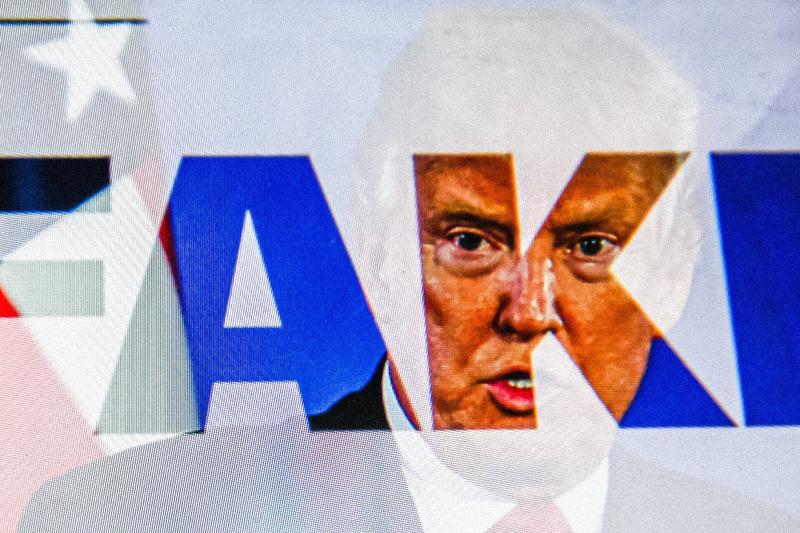
    The integrity of the 2026 midterm elections faces a significant challenge from the rise of AI-generated deepfake political advertisements. These sophisticated synthetic media pieces can manipulate public perception by presenting fabricated scenarios, statements, and endorsements, thereby undermining voter confidence and the democratic process.

    The technology allows for the creation of highly realistic audio and video content. This content can depict political figures saying or doing things they never did. The speed of dissemination through social media platforms exacerbates the problem.

    The Emergence of Deepfake Technology in Politics

    Deepfake technology, initially a niche concern, has rapidly evolved. Its origins trace back to academic research in generative artificial intelligence. Early iterations emerged in the late 2010s, primarily in entertainment and non-political contexts.

    The term “deepfake” combines “deep learning” with “fake.” This refers to the neural network architectures used to create the synthetic media. These networks are trained on vast datasets of images and audio. They learn to generate new content that closely resembles the original.

    By 2020, rudimentary political deepfakes began to appear. These early examples often featured noticeable glitches or inconsistencies. Public awareness of the technology grew. Its potential for misuse in political campaigns became a topic of discussion.

    The sophistication of deepfake algorithms has increased dramatically since then. Current AI models can produce highly convincing fakes. These are often indistinguishable from genuine media to the untrained eye.

    Impact on the 2026 Midterm Election Cycle

    The 2026 midterm elections represent a critical juncture for the deployment of deepfake technology. Campaigns are increasingly reliant on digital advertising. Social media platforms serve as primary conduits for political messaging.

    Deepfakes can be used to create attack ads that falsely portray opponents. They can also generate fake endorsements from prominent figures. This creates confusion among the electorate. It forces campaigns to spend resources debunking false narratives.

    One major concern is the potential for “October Surprises.” These are last-minute deepfakes released just before an election. They leave little time for factual corrections. This can sway undecided voters based on fabricated information.

    The rapid sharing capabilities of social media platforms amplify this risk. A deepfake can go viral within hours. Its impact can be irreversible even if later debunked.

    Voter Trust and Misinformation

    The spread of deepfake political ads directly impacts voter trust. When voters cannot reliably determine the authenticity of political content, cynicism increases. This erosion of trust can lead to decreased civic engagement.

    Misinformation campaigns leveraging deepfakes can target specific demographics. They can exploit existing societal divisions. This further polarizes the electorate. It makes reasoned political discourse more challenging.

    Fact-checking organizations face an uphill battle. The sheer volume of content makes verification difficult. The advanced nature of deepfakes makes detection complex. New tools are constantly needed to keep pace with the technology’s evolution.

    Legislative and Regulatory Responses

    Governments and regulatory bodies have begun to address the deepfake challenge. Several countries have enacted or proposed legislation. These measures aim to criminalize the creation or dissemination of malicious deepfakes.

    In the United States, some states have passed laws specifically targeting deepfakes in political campaigns. California’s AB 730, enacted in 2019, prohibits the distribution of deepfake videos of political candidates within 60 days of an election. Texas also passed a similar law, HB 3479, in the same year.

    At the federal level, discussions continue regarding comprehensive legislation. The DEEPFAKES Accountability Act and the Malicious Deepfake Prohibition Act have been introduced in Congress. These bills aim to establish federal standards and penalties. However, progress has been slow due to concerns about free speech and technical implementation.

    The European Union has taken a different approach. Its Digital Services Act (DSA), fully in effect as of February 2024, mandates platforms to take down illegal content, including certain types of deepfakes. It also requires transparency regarding AI-generated content.

    Challenges in Enforcement

    Enforcement of deepfake regulations faces significant hurdles. One challenge is the global nature of the internet. Deepfakes created in one country can easily spread across borders. This complicates jurisdiction and prosecution.

    Another issue is the technical difficulty of detection. AI models are constantly improving. Detection tools must evolve at an even faster pace. Watermarking and digital provenance technologies are being explored as potential solutions.

    The debate over intent also complicates legal action. Proving malicious intent behind a deepfake can be difficult. Distinguishing satire from deceptive content is another legal gray area.

    The Role of Technology Companies

    Technology companies, particularly social media platforms, play a crucial role. They are the primary distributors of political content. Their policies and actions directly influence the spread of deepfakes.

    Many platforms have updated their content policies. Meta, for example, prohibits misleading manipulated media. YouTube has similar policies against technically manipulated content that misleads users. X (formerly Twitter) also has rules against synthetic and manipulated media.

    These platforms employ AI-powered detection systems. They also rely on user reporting and third-party fact-checkers. However, the sheer volume of content makes complete moderation impossible.

    Calls for greater transparency are increasing. Advocates suggest platforms should label AI-generated content clearly. This would inform users about the synthetic nature of the media. It would empower them to make informed judgments.

    Developing Detection Tools

    Research into deepfake detection tools is ongoing. Several academic institutions and private companies are developing new algorithms. These tools analyze various digital artifacts. They look for inconsistencies in lighting, facial movements, and audio patterns.

    The Deepfake Detection Challenge, organized by Meta and other partners, spurred significant advancements. It encouraged researchers to develop robust detection methods. Progress has been made, but no perfect solution exists.

    The arms race between deepfake generators and detectors continues. As deepfake technology becomes more accessible, the need for effective detection becomes even more urgent.

    Ethical Considerations and Future Outlook

    The rise of deepfake political ads raises profound ethical questions. What constitutes acceptable political speech? How should society balance free expression with the need for factual accuracy?

    The potential for democratic subversion is clear. Deepfakes can be used to silence dissent. They can be employed to discredit legitimate journalists. This undermines the foundations of informed public discourse.

    Educating the public is a vital component of the response. Media literacy initiatives can help voters identify manipulated content. Critical thinking skills are essential in an era of abundant synthetic media.

    Looking ahead to the 2026 midterms and beyond, the deepfake challenge will intensify. Technological advancements will continue. The political landscape will remain contentious. A multi-faceted approach involving legislation, technology, and public education will be necessary.

    Policymakers debated. Technologists innovated. Citizens watched.

    Democracy.

    FAQ Section

    • What are AI deepfake political ads?
      AI deepfake political ads are synthetic media created using artificial intelligence that manipulate audio and video to depict political figures saying or doing things they never did. These ads are designed to mislead voters and spread misinformation during election campaigns.
    • Why are deepfakes a concern for the 2026 midterm elections?
      Deepfakes are a concern for the 2026 midterm elections because they can rapidly spread false information, manipulate voter perception, and erode public trust in political processes. Their high realism makes them difficult to distinguish from authentic content, posing a threat to electoral integrity.
    • How do deepfakes impact voter trust?
      Deepfakes impact voter trust by making it difficult for individuals to discern truth from falsehood in political communications. This uncertainty can lead to increased cynicism towards political figures and institutions, potentially reducing voter engagement and confidence in election outcomes.
    • What measures are being taken to combat deepfake political ads?
      Measures to combat deepfake political ads include legislative efforts at state and federal levels to criminalize malicious deepfakes, updated content policies by social media platforms, and ongoing research into advanced deepfake detection technologies. Public education on media literacy is also a crucial preventative measure.
    • Can deepfakes be reliably detected?
      While significant progress has been made in deepfake detection, no method is perfectly reliable. The technology for creating deepfakes is constantly evolving, leading to an ongoing “arms race” between creators and detectors. Researchers are developing new tools, but complete and instant detection remains a challenge.