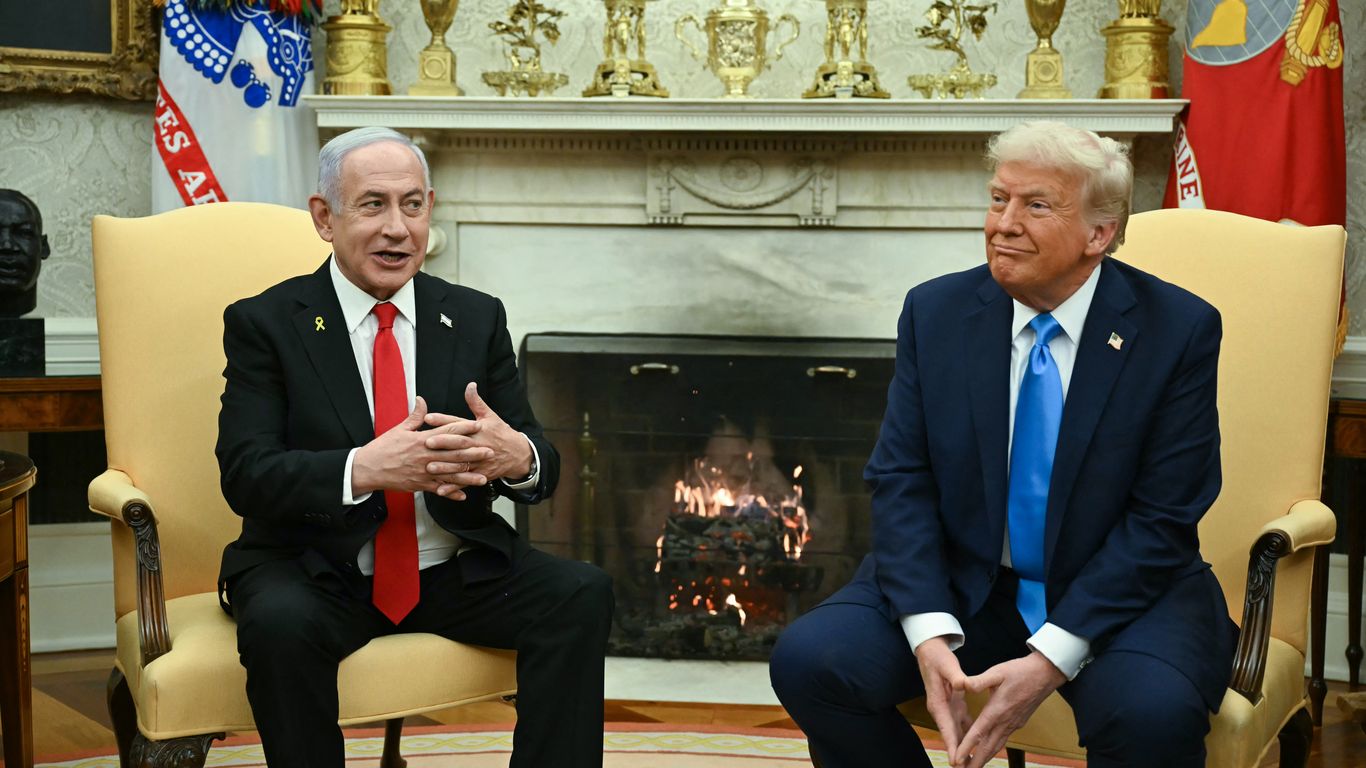
President Donald Trump convened separate meetings with Israeli Prime Minister Benjamin Netanyahu and Ukrainian President Volodymyr Zelenskyy at the White House on 2026-07-28. These high-profile diplomatic engagements addressed critical geopolitical challenges in the Middle East and Eastern Europe, underscoring the United States’ ongoing role in international affairs.
The two leaders arrived in Washington D.C. for a series of discussions. Their presence at the White House on the same day, albeit for distinct bilateral talks, drew significant international attention. Each meeting was anticipated to yield important outcomes for their respective regions.
The White House Diplomatic Calendar
The White House schedule on 2026-07-28 reflected a robust diplomatic agenda. President Trump engaged in extensive talks with both Prime Minister Netanyahu and President Zelenskyy.
These meetings were carefully orchestrated to allow for focused discussions on specific national and international priorities. The nature of these separate visits emphasized the unique challenges each nation faces.
Security protocols were heightened around the Executive Mansion. Preparations for the arrival of two heads of state are always extensive. The diplomatic corps worked to ensure smooth proceedings for both sets of talks.
Meeting with Prime Minister Benjamin Netanyahu
Prime Minister Benjamin Netanyahu’s visit focused on the intricate dynamics of the Middle East. His discussions with President Trump were expected to cover a range of topics.
These included regional security, the ongoing peace process with Palestinian authorities, and Iran’s nuclear program. The relationship between the United States and Israel remains a cornerstone of American foreign policy.
Netanyahu has a long history of engagement with American presidents. His current tenure as Prime Minister of Israel places him at the center of critical regional decisions. The talks likely included strategies for maintaining stability in a volatile area.
Middle East Peace Initiatives
Discussions surrounding Middle East peace initiatives were a primary agenda item. The Trump administration has historically pursued various approaches to this long-standing conflict.
Previous efforts by the United States have aimed to broker agreements between Israel and its Arab neighbors. The Abraham Accords, signed in 2020, represented a significant step in this direction. These accords normalized relations between Israel, the United Arab Emirates, Bahrain, Sudan, and Morocco.
The 2026 meeting likely explored avenues for further normalization. It also addressed the complexities of the Israeli-Palestinian conflict. Any potential progress in this area would have wide-ranging implications for global stability.
Regional Security Concerns
Regional security concerns also featured prominently. The proliferation of advanced weaponry in the Middle East continues to be a major worry. Iran’s activities in the region are a constant point of tension.
The United States and Israel share intelligence on various threats. These include state-sponsored terrorism and the actions of non-state actors. Protecting shipping lanes and vital infrastructure is another shared priority.
Cybersecurity threats, increasingly sophisticated, were also likely on the agenda. Both nations have invested heavily in defensive and offensive cyber capabilities. Collaboration in this domain is essential.
Meeting with President Volodymyr Zelenskyy
Following the meeting with Prime Minister Netanyahu, President Trump welcomed Ukrainian President Volodymyr Zelenskyy. Their discussions centered on Ukraine’s sovereignty and territorial integrity.
The conflict with Russia, which began in 2014 and escalated significantly in 2022, remains a critical international issue. Ukraine continues to rely on international support to defend its borders and citizens.
President Zelenskyy’s visits to Washington D.C. have consistently sought to reinforce this support. He has advocated for continued military aid, economic assistance, and diplomatic pressure against Russia.
Continued Support for Ukraine
The primary focus of the meeting was the continuation of support for Ukraine. This includes military hardware, financial aid, and humanitarian assistance.
The United States has been a leading provider of aid to Ukraine since the full-scale invasion. Billions of dollars in assistance have been allocated through various packages. This support is crucial for Ukraine’s defense capabilities.
Discussions likely included future aid packages and the long-term commitment of the United States. Ukraine’s ability to resist aggression depends heavily on a steady flow of resources from its allies.
Sanctions and Diplomatic Pressure
Sanctions against Russia were another key topic. The United States and its allies have implemented extensive sanctions targeting the Russian economy, its leadership, and its military industrial complex.
President Zelenskyy has consistently urged for stronger and more comprehensive sanctions. The goal is to further isolate Russia and diminish its capacity to wage war. Diplomatic pressure on Russia to withdraw its forces was also discussed.
International forums, such as the United Nations and the G7, have been venues for these diplomatic efforts. The United States plays a central role in coordinating these global responses.
The Broader Geopolitical Context of 2026
These White House meetings occur within a complex global environment. The year 2026 presents numerous challenges and opportunities for international diplomacy.
Economic shifts, technological advancements, and evolving alliances define the current landscape. The United States, as a global power, navigates these currents through its foreign policy.
The convergence of leaders from two different conflict zones highlights the interconnectedness of global security. Instability in one region can have ripple effects worldwide.
Shifting Alliances and Power Dynamics
Global power dynamics are continually shifting. The rise of new economic and military powers influences international relations. Traditional alliances are being re-evaluated and sometimes strengthened.
The United States maintains a network of alliances across continents. These alliances are vital for collective security and economic cooperation. The meetings with Netanyahu and Zelenskyy reinforce specific bilateral relationships.
Multilateral organizations also play a role. NATO, for example, remains a critical defense alliance for European security. The United States’ leadership within such bodies is often central to their effectiveness.
Economic Implications of Global Conflicts
The economic implications of global conflicts are significant. Supply chains can be disrupted, energy prices can fluctuate, and trade routes can be threatened.
The conflict in Ukraine, for instance, has had a profound impact on global food and energy markets. Inflationary pressures in many countries are partly attributable to these disruptions. Discussions in Washington D.C. likely touched upon these economic consequences.
International cooperation is often sought to mitigate these effects. Economic stability is a prerequisite for political stability. Both are intertwined in the current global order.
The Role of the United States in Global Security
The United States maintains its position as a key player in global security. Its diplomatic efforts often aim to de-escalate conflicts and promote peaceful resolutions.
The White House serves as a frequent venue for such high-stakes negotiations. Presidential leadership is critical in shaping international responses to crises. The meetings on 2026-07-28 exemplify this role.
American foreign policy seeks to protect national interests while also promoting democratic values and human rights. This dual objective often guides its engagement with diverse international partners.
Humanitarian Concerns and International Law
Humanitarian concerns are frequently part of diplomatic discussions. Conflicts often result in significant civilian displacement and suffering. International law provides a framework for addressing these issues.
The United States often provides substantial humanitarian aid to affected regions. This aid includes food, medical supplies, and shelter. Advocacy for compliance with international humanitarian law is also a consistent theme.
The protection of civilians and the accountability of those who commit war crimes are important aspects of American foreign policy. These principles were likely discussed in the context of both the Middle East and Ukraine.
Looking Ahead: Future Diplomatic Engagements
The meetings between President Trump, Prime Minister Netanyahu, and President Zelenskyy are part of an ongoing diplomatic process. They are not isolated events but rather milestones in broader international relations.
Follow-up discussions, technical meetings, and further diplomatic exchanges are anticipated. The outcomes of these summits will influence future policy decisions and international cooperation.
The United States will continue to engage with its allies and partners. It will also confront adversaries where necessary. The goal remains a more secure and stable global environment.
World leaders converged. Critical issues were debated. Alliances were reaffirmed. Washington D.C.