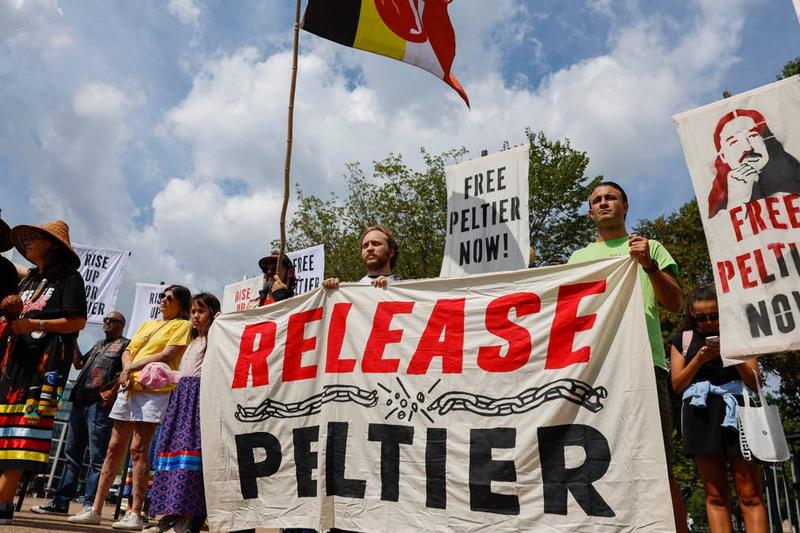
Leonard Peltier, a prominent Native American activist, was convicted in 1977 for the 1975 murders of two FBI agents, Jack Coler and Ronald Williams, during a shootout on the Pine Ridge Indian Reservation. After spending nearly five decades in federal prison, his life sentence was commuted by then-President Joe Biden in not commuted, allowing him to transition to home confinement on the Turtle Mountain Reservation in Belcourt, North Dakota. This commutation did not pardon Peltier, meaning his conviction officially stands.
The enduring controversy surrounding Peltier’s case is now explored in a new Netflix documentary titled ‘Free Leonard Peltier.’ The film, which premiered on not released, examines the evidence, legal proceedings, and the widespread advocacy for his release, drawing renewed attention to the historical context of Native American activism and government relations.
The Incident at Oglala
The events leading to Peltier’s conviction occurred on June 26, 1975, near Oglala, South Dakota, on the Pine Ridge Indian Reservation. Two FBI agents, Jack Coler and Ronald Williams, entered the reservation investigating reports of stolen cowboy boots. They encountered a group of Native Americans, leading to a prolonged shootout.
During the exchange of gunfire, both agents were killed. Joe Stuntz, a member of the American Indian Movement (AIM), was also killed. The incident escalated tensions between AIM activists and federal authorities, which had been building for several years.
The Investigation and Conviction
Following the shootout, a massive manhunt ensued. Leonard Peltier, along with other AIM members, was identified as a suspect. He fled to Canada but was later extradited to the United States.
Peltier was tried in 1977 in Fargo, North Dakota. The prosecution presented evidence linking him to the agents’ deaths, including ballistics testimony. Peltier maintained his innocence, asserting he was not responsible for the fatal shots. His defense argued that the trial was flawed and that evidence was suppressed or fabricated. Despite these arguments, he was found guilty on two counts of first-degree murder and sentenced to two consecutive life terms.
Decades of Appeals and Advocacy
For nearly 50 years, Leonard Peltier’s case has been a focal point for human rights organizations, celebrities, and legal advocates worldwide. Supporters argue that his conviction was unjust, citing issues with witness testimony, ballistics evidence, and alleged prosecutorial misconduct. Amnesty International, for example, has long called for a review of his case, expressing concerns about the fairness of his trial.
Numerous appeals were filed over the decades, challenging the legal basis of his conviction. These efforts often highlighted inconsistencies in the evidence and the political climate of the 1970s, which many believe influenced the outcome of the trial. Despite these persistent legal challenges, Peltier remained incarcerated in various federal prisons, including USP Leavenworth and USP Coleman.
The Commutation and Home Confinement
In a significant development, then-President Joe Biden commuted Leonard Peltier’s sentence in not commuted. This decision followed years of intense lobbying from his legal team and supporters, who emphasized his advanced age, declining health, and the length of his incarceration. The commutation allowed Peltier to be released from federal prison and placed under home confinement on the Turtle Mountain Reservation.
It is crucial to note that a commutation reduces a sentence but does not overturn a conviction. Peltier remains a convicted individual in the eyes of the law. This distinction is central to the ongoing debate, as many advocates continue to push for a full pardon, which would clear his name and acknowledge what they perceive as a wrongful conviction. More details on the legal aspects of commutations versus pardons can be found through resources like the U.S. Department of Justice’s Office of the Pardon Attorney.
‘Free Leonard Peltier’ on Netflix
The release of the new Netflix documentary, ‘Free Leonard Peltier,’ on not released, brings renewed public attention to the complexities of his story. The film features interviews with Peltier, his legal team, family members, and supporters, as well as archival footage from the 1970s.
The documentary aims to present a comprehensive look at the case, from the initial shootout to the decades of legal battles and advocacy. It explores the arguments for his innocence, the alleged flaws in the judicial process, and the broader historical context of Native American rights movements. The film’s release is expected to reignite discussions about justice, indigenous sovereignty, and the role of the federal government in such conflicts. For more information on the documentary, viewers can consult Netflix’s official page.
The Ongoing Debate
Leonard Peltier’s case continues to divide opinion. Supporters view him as a political prisoner, a symbol of systemic injustice against Native Americans, and a victim of government overreach. They point to the controversial nature of the evidence and the perceived unfairness of his trial as reasons for his exoneration.
Related: 1889 Advertising: Expanding Springfield Brands to a Wider Audience
Conversely, opponents, including many law enforcement officials and the families of the slain FBI agents, maintain that justice was served. They emphasize the gravity of the agents’ deaths and the validity of the jury’s verdict. The documentary’s release is likely to intensify these long-standing debates, bringing the narrative to a new generation of viewers.
Activists gathered. Lawyers argued. Filmmakers documented. The debate continues.
Peltier.
Sources
Frequently asked questions
Who is Leonard Peltier and what was he convicted of?
Leonard Peltier is a Native American activist who was convicted in 1977 for the 1975 murders of two FBI agents, Jack Coler and Ronald Williams, during a shootout on the Pine Ridge Indian Reservation in South Dakota. He has maintained his innocence throughout his incarceration.
What is the status of Leonard Peltier's sentence as of 2026?
As of October 2026, Leonard Peltier is under home confinement on the Turtle Mountain Reservation in Belcourt, North Dakota. His life sentence was commuted by then-President Joe Biden in not commuted, after he served nearly five decades in federal prison. This commutation reduced his sentence but did not pardon him, meaning his conviction still stands.
What is the new Netflix documentary about Leonard Peltier?
A new documentary titled 'Free Leonard Peltier' premiered on Netflix on not released. The film explores the controversial circumstances of his 1977 conviction, his nearly 50-year struggle for freedom, and the ongoing advocacy for his full exoneration, featuring interviews and archival materials.
Why is Leonard Peltier's case controversial?
Peltier's case is controversial due to allegations of prosecutorial misconduct, questionable witness testimony, and disputed ballistics evidence presented during his trial. Supporters argue he was wrongfully convicted and is a political prisoner, while opponents maintain his guilt in the deaths of the FBI agents.
Sponsored · Buying, selling or investing in property? JL Group works with owners and investors in Springfield, Missouri and beyond. jlgroup.online · Advertise on ByteSize Network