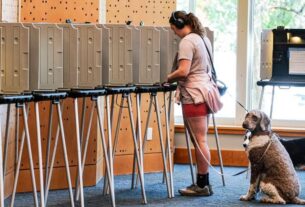
The Republican Party is currently engaged in a strategic balancing act regarding immigration policy as the 2026 midterm elections draw nearer. This political maneuver unfolds during President Donald Trump‘s second term, adding layers of complexity to the party’s messaging and policy positions.
The core challenge for the GOP involves satisfying its base, which often demands robust immigration enforcement, while simultaneously appealing to a wider electorate. This wider electorate includes swing voters who may hold more nuanced views on immigration reform and border security.
The Political Landscape of 2026
The upcoming 2026 midterm elections are scheduled for November 3, 2026. These elections will determine the composition of the 120th United States Congress, which is set to convene on January 3, 2027. All 435 seats in the U.S. House of Representatives will be contested. Additionally, 35 of the 100 seats in the U.S. Senate are up for election.
The political environment is shaped by the ongoing presidency of Donald Trump. His administration’s stance on immigration has consistently emphasized border security and stricter enforcement measures. This emphasis resonates strongly with a significant portion of the Republican voter base.
Enforcement vs. Electoral Strategy
Republican lawmakers often advocate for policies that include increased funding for border patrol, expanded wall construction, and more aggressive deportation efforts. These positions are frequently highlighted in campaign rhetoric, particularly in primary contests where candidates seek to demonstrate their commitment to conservative principles.
However, the party must also consider the broader implications of its immigration platform on national elections. Overly harsh rhetoric or policies perceived as extreme can alienate independent voters and certain demographic groups. This creates a tension between satisfying the base and securing broader electoral victories.
“The GOP’s challenge is to articulate an immigration policy that is both firm on enforcement and perceived as fair, a balance that has historically proven difficult to achieve.”
The Republican National Committee (RNC) and individual campaigns are working to craft messages that address these concerns. They aim to frame immigration as an issue of national security and economic stability, rather than solely a humanitarian concern. For more details on the RNC’s current platform, visit their official website.
Impact of Presidential Politics
President Trump’s direct involvement in immigration debates often sets the tone for the party. His public statements and executive actions frequently become focal points for both supporters and critics. This dynamic means that Republican candidates must often align their own positions with the President’s, or at least navigate them carefully.
The administration’s policies, such as those related to asylum seekers or family separations, have generated significant public discourse. These discussions influence how voters perceive the Republican Party‘s overall approach to immigration. The Department of Homeland Security provides official statistics and reports on current immigration enforcement actions.
Related: Rep. Landsman: AI Czar Insufficient for Comprehensive Oversight
Looking Ahead to the 120th Congress
The outcome of the 2026 midterms will significantly impact the legislative agenda of the 120th Congress. Should Republicans gain seats, particularly in the Senate, they may have a stronger mandate to pursue their immigration priorities. Conversely, losses could force a re-evaluation of current strategies.
The composition of Congress will determine the feasibility of passing new immigration legislation. Key debates are expected to revolve around border funding, pathways to legal status, and the future of programs like Deferred Action for Childhood Arrivals (DACA).
Voters will weigh these issues alongside economic concerns and other domestic policies. The Republican Party‘s ability to effectively communicate its immigration vision will be a critical factor in its electoral performance.
Candidates campaigned. Voters decided. Congress convened.
Washington.
Sources
Sponsored · Put your business in front of ByteSize Network's readers, with every click measured. See advertising packages · Advertise on ByteSize Network