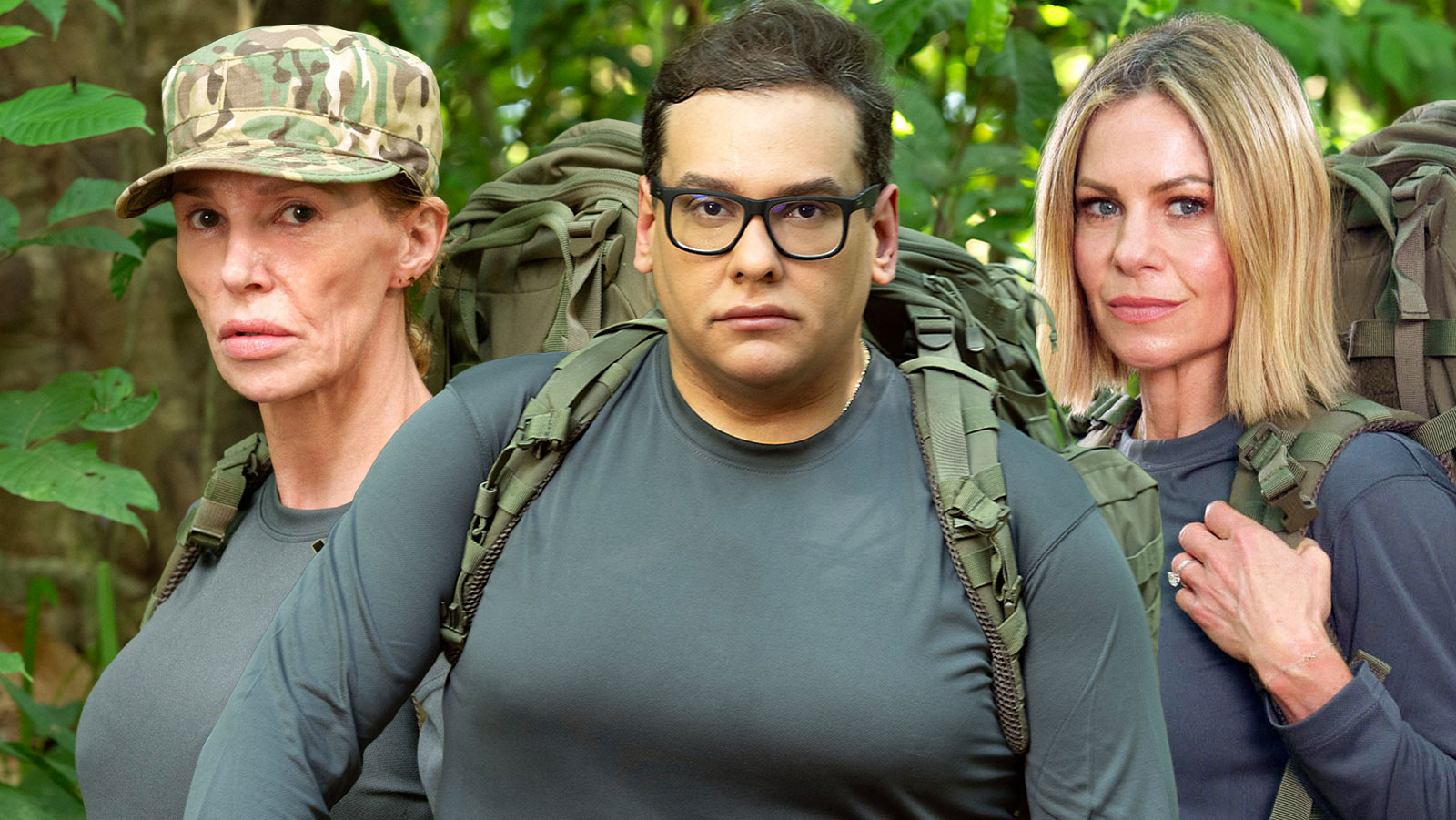
Former U.S. Representative George Santos has publicly addressed criticism leveled against his fellow cast members from the reality television series ‘Special Forces: World’s Toughest Test’, specifically defending Brandi Glanville and Candace Cameron Bure. Santos characterized those criticizing his co-stars as “haters,” emphasizing the unique pressures and demanding environment of the show. His comments have drawn attention to the dynamics between reality television personalities and public perception, particularly when controversies arise.
Santos’s statements came amidst ongoing public discourse regarding the conduct and portrayals of celebrities on reality programs. The former congressman’s own history of public scrutiny provides a backdrop to his recent remarks, offering insight into his perspective on media attention and public opinion.
The ‘Special Forces’ Experience
‘Special Forces: World’s Toughest Test’ is a reality competition series that subjects celebrity contestants to a simulated Special Forces selection process. The show is known for its extreme physical and mental challenges, designed to push participants beyond their perceived limits.
Santos, Glanville, and Bure were among the notable figures participating in a recent season. Their involvement brought a diverse range of public personalities into a high-pressure, unscripted environment.
The program aims to strip away celebrity personas, revealing the raw resilience and vulnerabilities of its contestants. This format often leads to intense emotional moments and interpersonal conflicts, which become subjects of public discussion.
Defense of Brandi Glanville
Brandi Glanville, a prominent figure from ‘The Real Housewives of Beverly Hills’, has frequently been a subject of media attention due to her outspoken nature and involvement in various reality television controversies. Her participation in ‘Special Forces’ placed her in a new context, away from her typical reality TV environment.
Santos’s defense of Glanville specifically addressed the negative commentary she has received. He implied that critics do not fully comprehend the demanding nature of the ‘Special Forces’ program.
His remarks suggested that Glanville’s actions and reactions on the show should be viewed through the lens of extreme stress and physical hardship. This perspective aims to reframe public judgment, urging empathy for contestants under duress.
Candace Cameron Bure and Public Scrutiny
Candace Cameron Bure, known for her roles in ‘Full House’ and ‘Fuller House’, as well as her work with Great American Family, has a public image often associated with family-friendly entertainment and conservative values. Her appearance on ‘Special Forces’ offered a different facet of her public persona.
Bure has faced various forms of public scrutiny throughout her career, particularly concerning her personal beliefs and professional choices. Santos’s defense extended to Bure, highlighting the unfairness of public judgment.
He underscored that the ‘Special Forces’ environment is designed to break down individuals, making them more susceptible to emotional responses. Santos argued that these moments should not define a person’s entire character.
George Santos’s Own Public Profile
George Santos gained widespread national attention during and after his tenure as a U.S. Representative for New York’s 3rd congressional district. His time in office was marked by numerous controversies, including allegations of misrepresenting his background and finances.
Santos was expelled from the House of Representatives in December 2023, following a House Ethics Committee report detailing significant ethical breaches. This expulsion made him only the sixth member in history to be removed by a vote of the House.
His post-congressional career has seen him engaging with media, including his participation in ‘Special Forces’. This move into reality television demonstrates a continued presence in the public eye, albeit in a different capacity.
Santos’s experience with intense public scrutiny, media sensationalism, and widespread criticism likely informs his perspective on the experiences of his co-stars. He has often spoken about the challenges of navigating public opinion.
The Nature of Reality Television
Reality television programs, particularly those involving celebrities, often generate significant public discussion and debate. Shows like ‘Special Forces’ are designed to create compelling narratives through challenging situations.
The editing process in reality television can shape perceptions of contestants, sometimes amplifying certain traits or behaviors. This can lead to public backlash against individuals portrayed in a negative light.
Participants often sign agreements that give producers extensive control over how their footage is used. This can create a disconnect between a contestant’s lived experience and their televised portrayal.
The public’s engagement with reality television often blurs the lines between entertainment and genuine personal assessment. Viewers form strong opinions based on edited content, which can then translate into real-world consequences for the celebrities involved.
Addressing the “Haters”
Santos’s use of the term “haters” to describe critics is a common idiom in contemporary celebrity culture. It frames negative commentary as unfounded animosity rather than legitimate critique.
This rhetorical strategy aims to delegitimize the source of criticism, positioning the celebrity and their defenders against a perceived hostile audience.
The former congressman’s defense aligns with a broader trend among public figures who push back against online negativity. Many celebrities now actively engage with their critics, often through social media platforms.
This direct engagement can sometimes escalate conflicts but also allows celebrities to present their own narratives, bypassing traditional media filters.
Solidarity Among Cast Members
The shared experience of participating in a high-intensity program like ‘Special Forces’ can forge strong bonds among contestants. These bonds can lead to mutual defense and support, even after the show concludes.
Santos’s public statements reflect a sense of camaraderie with Glanville and Bure. This solidarity is often a byproduct of enduring extreme conditions together.
Such alliances are not uncommon in reality television, where contestants often feel a unique understanding of each other’s experiences, distinct from the viewing public.
The shared trauma and triumph of the ‘Special Forces’ challenges can create a lasting connection, prompting participants to defend one another in the face of external criticism.
Impact on Public Perception
Santos’s defense of Glanville and Bure may influence public perception of both the individuals and the show. It offers an insider’s perspective on the challenges faced by contestants.
For Glanville and Bure, Santos’s comments could serve to humanize their portrayals, encouraging viewers to consider the context of their actions on the show.
For Santos, these statements maintain his public visibility and position him as a figure willing to speak out in defense of others. It adds another dimension to his evolving public persona.
The interplay between celebrity, reality television, and public opinion continues to be a complex and dynamic aspect of contemporary media culture. Public figures navigate this landscape with varying degrees of success, often relying on alliances and direct communication to shape their narratives.
Controversies emerge. Debates ignite. Personalities clash.
The public watches.
The cycle continues.
Santos speaks.