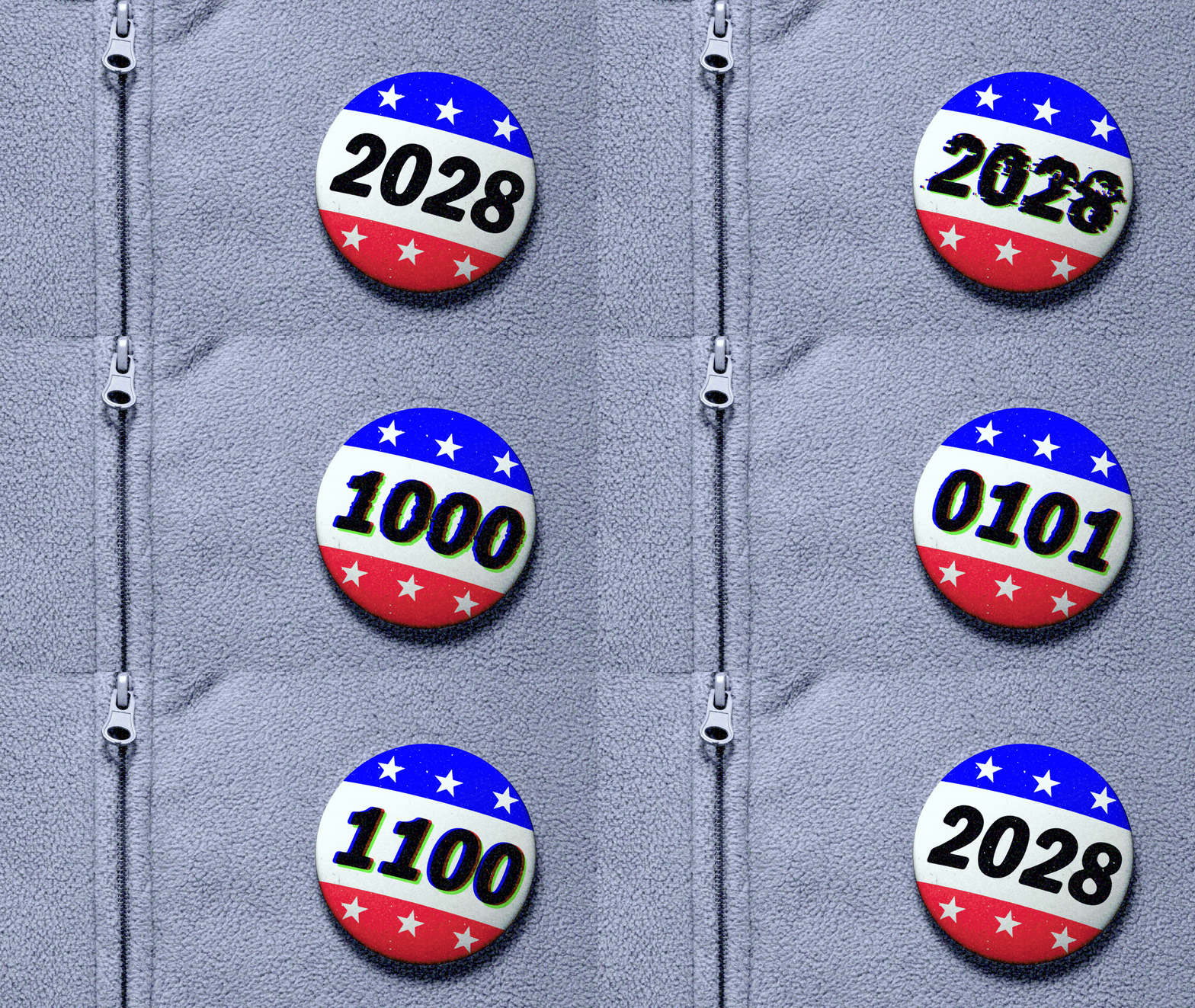
The Arrival of the AI Election
Artificial intelligence has officially crossed from an experimental campaign tool into the foundational infrastructure of modern politics. As campaigns gear up for the 2026 midterms and look ahead to 2028, political operatives are deploying autonomous agents, synthetic media, and generative persuasion engines at an unprecedented scale.
This is not merely the evolution of digital advertising. It represents a systemic overhaul of voter communication, policy testing, and electoral strategy.
Voters are no longer just consuming targeted ads. They are interacting with conversational bots designed to mimic human staffers, local organizers, and even candidates themselves.
Simulated Voters and Predictive Modeling
Behind closed doors, campaign war rooms have largely replaced traditional focus groups with digital simulations. These systems ingest vast amounts of demographic data, browsing histories, and voting records to generate thousands of synthetic constituents.
Before a candidate delivers a major policy speech on taxation or border security, the text is run through algorithmic panels to predict public sentiment down to the individual zip code.
- Synthetic focus groups evaluate messaging in real time.
- Algorithmic feedback loops optimize debate talking points.
- Predictive polling models simulate voter turnout under various crisis scenarios.
While these tools offer campaigns unprecedented precision, they also accelerate the detachment of political discourse from genuine human interaction.
The Threat to Authentic Reality
The proliferation of hyper-realistic deepfakes, automated social media swarms, and synthetic endorsements creates a profound crisis of verification. When every audio clip or video statement can be dismissed as fabricated—or manufactured to deceive—the baseline of shared civic reality begins to fracture.
Regulatory bodies in Washington, D.C., and state capitals across the United States have struggled to keep pace with the velocity of technological deployment. Federal Election Commission rulings and congressional hearings have debated disclosure requirements for AI-generated campaign materials, but enforcement remains reactive rather than preventive.
The preservation of democratic integrity now depends on the public’s ability to navigate an environment where artificial agents outnumber human participants on digital platforms.
Campaigns continue to push boundaries because the tactical advantage of automation is immense. Automated fundraising scripts, localized policy papers generated in seconds, and micro-targeted messaging channels ensure that traditional campaign models cannot compete on speed alone.
What Comes Next for Campaigns
The transition toward fully automated political ecosystems will accelerate over the next two election cycles. Technology firms, political consultants, and legal scholars are racing to establish guardrails before the 2028 presidential cycle exposes even deeper vulnerabilities in electoral infrastructure.
Voters face a complex landscape where discerning human authenticity from synthetic persuasion is the primary challenge of civic participation. Platforms shift. Algorithms adapt. Voters decide.
Leave a Reply