
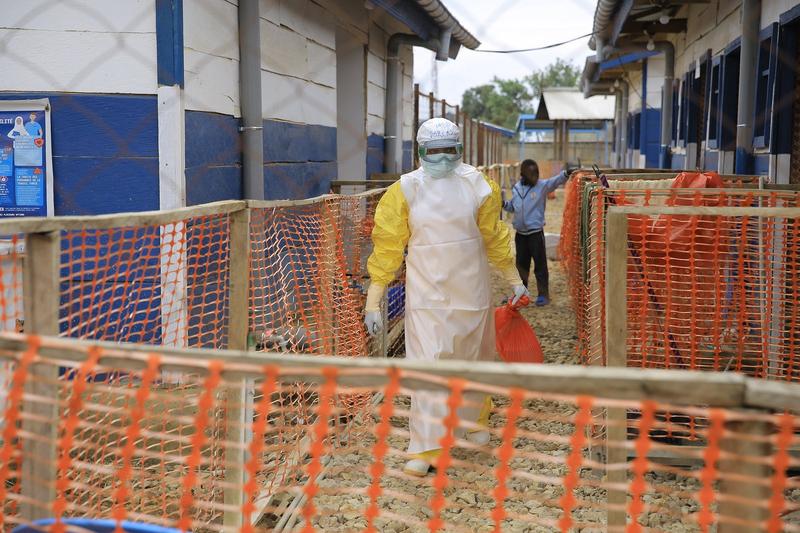
Congo Ebola Outbreak Spreads to Eighth Province
The Democratic Republic of Congo (DRC) is experiencing a fast-moving Ebola outbreak, with the Bundibugyo virus now confirmed in an eighth province. As of October 16, 2026, the DRC has reported 9,376 confirmed cases and 4,513 deaths. The outbreak began in May 2026 and has since spread across the country, prompting significant concern from international health organizations. The World Health Organization (WHO) declared the outbreak a Public Health Emergency of International Concern (PHEIC) on May 17, 2026.
Official Statements and Verified Reaction
The World Health Organization has been actively monitoring and responding to the situation. The WHO’s declaration of a Public Health Emergency of International Concern shows the severity and potential for international spread of the Bundibugyo virus. The Independent reported on the expanding crisis, noting the rapid progression of the disease across the DRC. Health officials continue to emphasize the importance of containment measures and public health interventions to curb the spread of the virus, especially given the absence of a licensed vaccine or specific treatment for this particular strain. Efforts are focused on contact tracing, isolation of cases, and safe burial practices to mitigate further transmission.
Auto-Enriched Background Context
The current Ebola outbreak in the Democratic Republic of Congo, caused by the Bundibugyo virus, represents a significant public health challenge. The outbreak commenced in May 2026, and by October 16, 2026, it had resulted in 9,376 confirmed cases and 4,513 deaths across eight provinces. These provinces include Ituri, North Kivu, South Kivu, Haut-Uélé, Tshopo, Bas-Uélé, Sud Ubangi, and North Ubangi. Ituri province remains the most severely affected region, accounting for 6,806 cases and 3,148 deaths.
Ebola virus disease (EVD) is a severe, often fatal illness in humans. The virus is transmitted to people from wild animals and spreads in the human population through direct contact with the blood, secretions, organs, or other bodily fluids of infected people, and with surfaces and materials contaminated with these fluids. The Bundibugyo virus is one of several species of Ebola virus that can cause EVD. Previous outbreaks of Ebola have occurred in various African nations, with the largest and most complex outbreak occurring in West Africa from 2014 to 2016.
The declaration of a Public Health Emergency of International Concern by the WHO on May 15, 2026, mobilizes international resources and coordination for the response. This designation is reserved for extraordinary events that constitute a public health risk to other states through the international spread of disease and that potentially require a coordinated international response. The lack of a licensed vaccine or specific treatment for the Bundibugyo virus complicates containment efforts, making public health measures such as surveillance, rapid diagnosis, isolation, and community engagement critically important.
Regional impacts of the outbreak have also been observed. Uganda, for instance, declared its Ebola outbreak over on July 28, 2026, after successfully containing its cases and observing 42 days without a new confirmed case. The WHO certified the declaration on August 26, 2026. However, the international spread remains a concern, as evidenced by Kenya confirming its first imported case of Ebola on October 6, 2026. This patient had traveled from the DRC, highlighting the risk of cross-border transmission and the need for robust screening and surveillance at international entry points. The ongoing efforts to manage and contain the outbreak are crucial for both the DRC and its neighboring countries.
Sources
Frequently asked questions
What is the current status of the Ebola outbreak in the Democratic Republic of Congo?
As of October 15, 2026, the Democratic Republic of Congo has reported 9,277 confirmed cases and 4,478 deaths from the Ebola outbreak caused by the Bundibugyo virus. The outbreak has spread to eight provinces.
Which provinces are affected by the Ebola outbreak in the DRC?
The outbreak has spread to eight provinces: Ituri, North Kivu, South Kivu, Haut-Uélé, Tshopo, Bas-Uélé, Sud Ubangi, and North Ubangi. Ituri province is the most affected.
When did the World Health Organization declare this a Public Health Emergency of International Concern?
The World Health Organization (WHO) declared the outbreak a Public Health Emergency of International Concern (PHEIC) on May 17, 2026.
Is there a vaccine or specific treatment for the Bundibugyo virus?
Currently, there is no licensed vaccine or specific treatment available for the Bundibugyo virus strain causing this outbreak.
Has the Ebola outbreak spread to neighboring countries?
Uganda declared its Ebola outbreak over on August 25, 2026. However, Kenya confirmed its first imported case of Ebola on October 6, 2026, from a patient who traveled from the DRC.
Sponsored · Buying, selling or investing in property? JL Group works with owners and investors in Springfield, Missouri and beyond. jlgroup.online · Advertise on ByteSize Network