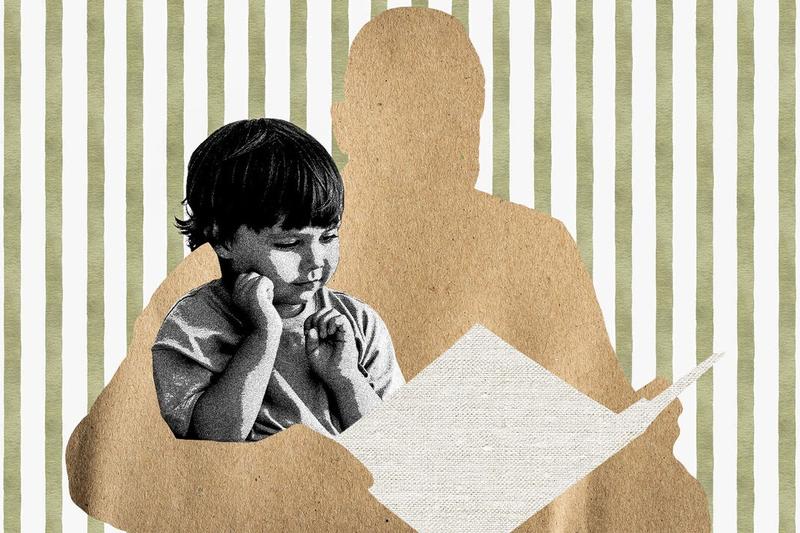
A San Francisco father went viral after letting a chatbot read to his baby, a clip that turned a private bedtime into a public fight over whether artificial intelligence now belongs in the family circle.
The scene was small. A room. A child. A generated voice doing the work a parent used to do with a book in a lap.
The caption traveled faster than the context. Parenting hits different when you work in AI.
What looks like a Silicon Valley curiosity is older than the model. Families have always handed pieces of childhood to machines. This time the machine talks back.
What the Clip Put on the Table
The internet did not pause on the gadget. It paused on the baby.
A father in San Francisco let an AI chatbot take a turn at storytime. The moment moved because it was domestic. Not a keynote. Not a demo day on Market Street. A nursery.
Fast Company put the line in lights. The phrase did the work of a confession and a shrug at the same time.
Parenting hits different when you work in AI.
Tech workers have been early adopters of every household machine for a century. Dishwashers. Baby monitors. White-noise apps. Sleep trackers. The chatbot is the first one that can invent the plot.
That is the difference. A speaker can play a lullaby. A model can make one up, in real time, in a voice that never tires and never asks to sit down.
Viewers did not need a product name to understand the stakes. Someone had given the bedtime hour to software.
Why an AI City Makes This Feel Inevitable
San Francisco is not a random backdrop. The city is the front porch of the American AI industry. Offices in SoMa. Demos in Mission Bay. Parents who spend daylight hours teaching machines to talk, then come home to children who are still learning how.
The joke writes itself. The unease does too.
If the people who build the models use them at bedtime, the country hears a forecast, not a one-off. What starts as a clever hack in a Victorian walk-up becomes a default setting in a million other houses.
That is how household technology actually spreads. Not from a press release. From a parent who is tired, proud, and online.
Work in AI and the tools are already open on the laptop. Voice mode is one tap. A bedtime request is a prompt. The friction that used to protect the nursery, finding the book, sitting down, staying in the room, drops to zero.
Zero friction is the product. It is also the cultural problem.
In 2026, the people closest to the models are often the most exhausted. Startup hours. Slack at midnight. A baby that does not care about a ship date. The pitch for AI in the home is always the same. Give parents back their time.
Time for what is the unasked part. Time to work more is not the lullaby on the box.
The labor the model is replacing
Reading to a baby is not content delivery. It is time, breath, and a lap.
The adult voice slows. The child maps sound to face. The room holds both of them. Decades of literacy research treat that loop as a foundation, not a nice extra.
When the voice becomes a chatbot, the loop breaks even if the words keep coming. The baby still hears language. The baby may not get the look, the pause, the hand on the back.
Parents already outsource pieces of care. Grandparents. Daycare. Audiobooks. A plastic night-light that plays the same three songs. The chatbot is a sharper tool aimed at the same fatigue.
Fatigue is not a moral failing. It is the opening the software walks through.
Between the Baby Monitor and the Model
The American nursery has been wired for a long time.
By the 1930s, radio sat in the living room and leaked into children’s hours. By the 1980s, a plastic monitor carried a cry down the hall. By the 2010s, a smartphone showed a crib on a lock screen from another city.
Each device promised watchfulness. Each one also trained parents to accept a machine in the intimate rooms of the house.
The chatbot is not a camera. It is a talker. That is a new category. Surveillance was one kind of intrusion. Conversation is another.
A monitor listens for distress. A story model fills silence. Silence used to be the parent’s cue to enter.
What Storytime Was For
Long before ChatGPT arrived in November 2022, American parents were told to read aloud. Pediatric waiting rooms stocked board books. Libraries ran lap-sit hours. The message was simple and repeated until it felt like weather.
Read. Every day. From birth.
The point was never only the plot of Goodnight Moon. The point was the relationship that formed around the plot. Vocabulary. Attention. The sense that language comes from a person who stays.
A generated story can be charming. It can also be empty calories, fluent, endless, and untethered from a human who will still be there in the morning.
There is a reason the old advice named the parent, not the device. The adult is the point. The book is the prop.
Researchers who study early language talk about quantity and quality. More words help. Words from a responsive adult help more. Studies on parentese, the sing-song, stretched vowels adults use with infants, found that the style, not just the word count, predicted later language skill.
A chatbot can be instructed to use simple words. It does not automatically do parentese. It does not see whether the baby’s eyes have glazed over. It does not drop the story and start a game of peekaboo.
Those pivots are the hidden curriculum of a human reader.
What a human reader still does
- A live adult voice tied to a face.
- A book that stays the same tomorrow.
- A lap that does not close an app.
- A pause when the child looks away.
- A decision to stop when the child is done.
The machine does not get tired, and that is the trap
Human readers get bored. They skip pages. They fall asleep in the chair. They do the voices badly.
Those flaws are the job. A child learns that people are finite. A chatbot is not finite. It will do another story, and another, until the household trains itself to hand over the hour because the hour is hard.
Convenience is not neutral when the thing being made convenient is love’s repetitive work.
What Doctors Already Said About Babies and Media
Long before this clip, the American Academy of Pediatrics drew a hard line on screens in early life. For children under 18 to 24 months, the group has urged families to avoid digital media except live video chat with real people. The concern was not etiquette. It was brain development, sleep, and the displacement of talk.
A chatbot reading aloud can be audio-only. That detail will be used as a defense. It is not a full defense.
The AAP’s larger point is interaction. Babies need serve-and-return, a sound, a face, a response that is contingent on the child, not on a prompt window. A model can simulate contingency. It cannot be a caregiver.
Sleep is the other land mine. Evening media, glowing or not, can push bedtime later and fragment night sleep. A parent who outsources storytime to a speaker may also outsource the wind-down that used to come with a shared book.
None of this requires panic. It requires honesty about what is being swapped.
The Protective Flinch
A large part of the audience did not watch the clip as a tech story. They watched it as a family story.
A chatbot reading to a baby feels, to many people, like the culture handing over the household. Not a gadget. A role.
That flinch is easy to mock from inside the industry. It is harder to dismiss from a kitchen table in a town that does not run on GPU clusters.
Parents have spent a decade being told to put the phone down. Now the phone talks to the infant. The contradiction is loud.
Protective defiance is not a war on tools. It is a boundary claim. Some work is not for the model. Bedtime is on that list for a lot of households that will never file a patent.
The viral energy is the boundary being tested in public.
Related: Oriam AI Institute Gives Missouri Firms a Plain-English Check on AI and Client Files
Who gets to experiment on childhood
Silicon Valley has a long habit of testing new defaults on its own kids, then exporting the default. Screen time. iPads in class. GPS trackers in backpacks. Each one arrived as a personal choice and left as a social norm.
AI storytime is early enough to still look like a choice. It will not stay that way if the people who build the stack treat it as normal.
Normal is how culture moves. Not through laws first. Through repetition until the person who still reads aloud feels old-fashioned.
What a Model Cannot Hold
A large language model does not know a particular child. It knows patterns.
It does not remember last Tuesday’s fear of the dark unless a parent pastes that fear into the prompt. It does not smell the shampoo. It does not feel the weight of a head on a shoulder.
Those sentences sound sentimental. They are also operational. Attachment is built from repeated, embodied cues. Software can narrate. It cannot attach.
There is another practical problem. Children’s data. A voice in a nursery can be recorded, transcribed, stored, used to train the next system. Families rarely read the settings panel at bedtime.
UNICEF and other child-rights groups have spent years warning that AI systems around children need extra brakes, privacy, safety, and a refusal to treat kids as just another user cohort. A viral bedtime clip skips that paperwork.
The model will not call a doctor if the story hour is covering a problem. It will keep talking.
The Line Between Help and Handoff
Some uses are easier to defend. A parent in the room, holding the child, letting a chatbot supply a story the adult then performs. That is a prompt as a library card.
The harder case is the one the internet thought it saw. The machine as the reader. The parent as the camera.
Help is a tool in a human loop. Handoff is a loop with the human removed.
Families will split on where the line sits. They already split on pacifiers, sleep training, and whether cartoons belong in the grocery cart. AI only raises the volume.
The honest question is not whether the software can generate a gentle tale about a rabbit. It can. The honest question is what the adult is doing while the tale runs.
If the answer is dishes, maybe. If the answer is filming, the clip already gave itself away.
After the Joke Cools
Viral parenting content has a half-life. The next clip will be funnier or worse. The underlying shift will not leave with the joke.
Voice assistants already live in millions of kitchens. Generative models now sit behind those speakers. The nursery is not a special technical problem. It is a special moral one.
Schools will face the same fork with homework. Churches with counseling. Grandparents with phone calls that an agent could return. Each institution will be told the tool is optional. Each will feel the pressure of people who never put it down.
Bedtime is simply the most intimate version of the same fork.
A father in San Francisco made the fork visible. Fast Company put it in a headline. The comments did the rest.
The culture can still choose. That window is open because the image still shocks. When it stops shocking, the choice will already have been made.
Cities will keep minting these clips. San Francisco first. Then Austin. Then every suburb with fiber and a tired commute.
Farmers used to read. Teachers used to read. Night-shift nurses used to read. The job did not belong to a profession. It belonged to whoever was home.
Parents watched. Pediatricians warned. Engineers shrugged. The baby listened.
Bedtime.
Frequently asked questions
Why did a San Francisco father go viral for letting a chatbot read to his baby?
In 2026, a San Francisco father shared a moment of an AI chatbot reading to his infant. The clip spread because it showed a machine doing a job families still treat as sacred — bedtime. Fast Company amplified the line that parenting hits different when you work in AI.
Is it safe to let a chatbot read to a baby?
Audio from a chatbot is not the same as a parent reading in the room. The American Academy of Pediatrics urges families to avoid digital media for children under 18 to 24 months except live video chat with real people. A generated voice also cannot watch a child, read a mood, or protect nursery privacy the way a caregiver can.
What do pediatricians say about screens and babies?
The American Academy of Pediatrics has long advised against screen media in early infancy, with an exception for video chat with real people. The core worry is displacement — less serve-and-return talk, worse sleep, and fewer live language exchanges that build the brain.
Why are people upset about a chatbot reading to a baby?
Many viewers did not see a productivity hack. They saw a cultural handoff. Bedtime reading is one of the last analog rituals of family life. Handing it to a model feels, to that audience, like handing over the household itself.
Can AI replace reading aloud with a parent?
A model can generate stories. It cannot replace the lap, the face, or the repeated presence that literacy and attachment research keep pointing to. Used as a prompt while a parent still holds the child, it is a library. Used as the reader, it is a substitute.
Sponsored · Want AI without handing over client files? Oriam AI installs private, on-premise AI for CPA firms, law firms, and insurance and title agencies. oriamai.online · Advertise on ByteSize Network