The Late-Night Verdict on Political Currency
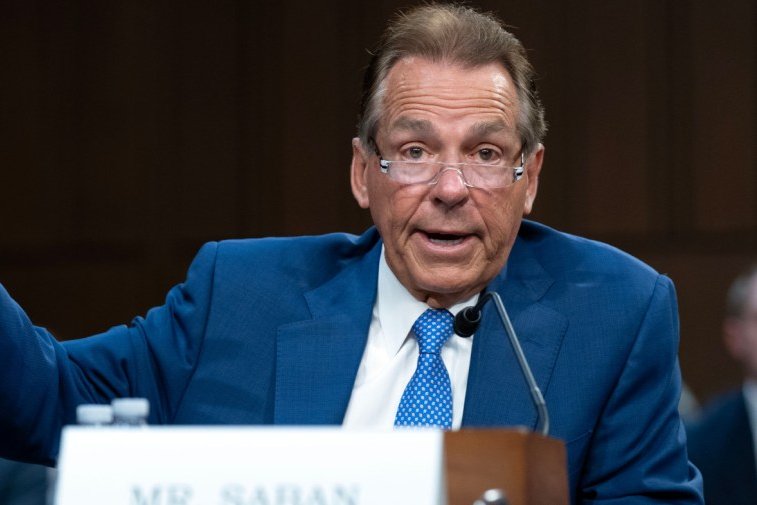
Jimmy Kimmel used his ABC late-night monologue to mock former President Donald Trump for selling a $12,000 commemorative UFC fight coin that holds absolutely no legal face value. The television host addressed his studio audience directly, breaking down the mechanics of the merchandise drop. He labeled the venture the work of a “special kind of con man” who intentionally sells his political supporters “money they cannot spend.”
The critique arrived during a crowded season of political merchandising. Presidential campaigns have historically relied on bumper stickers, yard signs, and lapel pins to generate grassroots revenue. The modern era operates on a different scale.
Trump has transformed the traditional campaign store into a high-ticket luxury boutique. The introduction of a five-figure commemorative coin tied to a mixed martial arts organization represents a new frontier in political fundraising and personal brand monetization.
Kimmel seized on the inherent contradiction of the product. It is marketed as a coin. It is priced like a rare precious metal. Yet, it possesses zero purchasing power at a traditional retail register.
The Mechanics of a $12,000 Token
The product in question is not legal tender. It is a commemorative token. The United States Mint produces official currency, which carries a designated face value backed by the federal government. Commemorative campaign coins carry no such backing.
Pricing a commemorative item at $12,000 places it in the realm of high-end numismatics or luxury jewelry. Buyers are not acquiring currency. They are acquiring a physical artifact of a political movement.
Kimmel highlighted this exact distinction on Jimmy Kimmel Live!.
“It takes a special kind of con man to sell people money they cannot spend,” Kimmel stated during his broadcast.
The host dismantled the value proposition of the coin. He questioned the financial wisdom of the target demographic. He framed the transaction not as a political donation, but as a direct transfer of wealth from working-class voters to a billionaire’s merchandising operation.
The lack of a face value is standard for private mint runs. Challenge coins, commemorative medallions, and novelty tokens rarely carry a legal denomination. The $12,000 price tag, however, shatters the traditional ceiling for novelty political memorabilia.
The UFC Alliance
The coin explicitly ties the Trump brand to the Ultimate Fighting Championship (UFC). This is not an accidental pairing. The relationship between Donald Trump and the premier mixed martial arts promotion spans decades.
In the early 2000s, when the UFC was struggling to secure athletic commission approvals and arena bookings, Trump hosted their events at the Trump Taj Mahal in Atlantic City. UFC CEO Dana White has repeatedly credited Trump with saving the company during its darkest financial period.
That business relationship evolved into a potent political alliance. White spoke at the Republican National Convention in 2016, 2020, and 2024. He formally introduced Trump to the stage in Milwaukee.
Trump frequently attends major UFC pay-per-view events. He sits courtside with White, often accompanied by cultural figures like Joe Rogan, Kid Rock, and Tucker Carlson. His arena walkouts are highly produced spectacles, designed to project strength and cultural dominance.
Minting a UFC-themed coin monetizes this exact demographic. It targets young, male combat sports fans who overlap with the MAGA political base. It bridges the gap between sports entertainment and political allegiance.
A History of High-Ticket Merchandising
Jimmy Kimmel’s monologue did not treat the UFC coin as an isolated incident. The late-night host framed it as the latest chapter in a long history of aggressive monetization.
Since leaving the White House in 2021, and throughout his 2024 campaign, Trump has consistently launched unconventional consumer products. Each drop targets a specific subset of his base.
- Digital Trading Cards (NFTs): Launched in December 2022 at $99 each, featuring artwork of Trump as a superhero, astronaut, and cowboy.
- The “Never Surrender” Gold Sneakers: Released in February 2024 at $399 a pair, introduced at Sneaker Con in Philadelphia.
- The “God Bless the USA” Bible: Promoted in March 2024 for $59.99, featuring the King James Version text alongside the U.S. Constitution and the lyrics to Lee Greenwood’s signature song.
- The Trump Victory Tourbillon Watch: Announced in late 2024 with a staggering price tag of $100,000, limited to 147 pieces and made of 18-karat gold.
The $12,000 UFC coin fits seamlessly into this portfolio. It operates on the same economic principle: leverage a highly devoted political following to move premium-priced consumer goods.
Critics like Kimmel view this as predatory. Supporters view it as savvy capitalism. The items frequently sell out, creating secondary markets on platforms like eBay where the products trade at massive markups.
The Late-Night Comedy War
The friction between Jimmy Kimmel and Donald Trump is a defining feature of modern late-night television. Kimmel has anchored the 11:35 p.m. time slot on ABC since 2003. His early career was defined by apolitical, frat-house humor on The Man Show.
The 2016 election altered his trajectory. Kimmel transitioned into one of the most vocal and persistent critics of the 45th president. His monologues routinely dissect Trump’s legal battles, campaign rallies, and business ventures.
The animosity is mutual. Trump frequently attacks Kimmel on his Truth Social platform. He has mocked Kimmel’s ratings. He famously criticized Kimmel’s performance as the host of the Academy Awards, prompting Kimmel to read the criticism live on stage during the Oscars broadcast.
The UFC coin provided Kimmel with ideal comedic material. It combined high finance, political devotion, and perceived absurdity. It allowed Kimmel to deploy his preferred narrative: framing Trump not just as a political opponent, but as a salesman operating a continuous grift.
The Economics of Political Memorabilia
The traditional political memorabilia market is driven by low-cost, high-volume items. A $30 t-shirt generates a small margin. A $15 coffee mug keeps the campaign logo visible in a voter’s home.
A $12,000 coin fundamentally alters the math. It requires a buyer with significant disposable income. It shifts the transaction from a casual show of support to a major financial investment.
Numismatists, experts in coin collecting, often warn against purchasing modern commemorative tokens as financial investments. The intrinsic value of a coin is tied to its precious metal weight. The numismatic value is tied to historical rarity and condition.
A newly minted political token relies entirely on the brand value of the politician. If the political movement wanes, the secondary market value of the token often collapses. The buyer is left with a piece of metal that cost $12,000 but holds no legal face value.
This was the core of Kimmel’s “money they cannot spend” argument. A consumer cannot take the UFC coin to a grocery store. They cannot deposit it into a standard checking account. Its value exists strictly within the ecosystem of Trump supporters and political collectors.
The Cultural Divide
The reaction to the UFC coin perfectly illustrates the current American cultural divide. The audiences consuming Kimmel’s monologue on ABC and the audiences purchasing the coin online exist in entirely separate realities.
For Kimmel’s viewers, the coin is a punchline. It is evidence of a political movement that has lost its moorings, willing to exchange real wealth for symbolic trinkets. The $12,000 price tag is viewed as an offensive cash grab during a time of widespread economic anxiety.
For the buyers, the coin is a status symbol. It is a tangible connection to a political leader they revere. It is a way to bypass traditional campaign finance structures and directly support the Trump brand. The mockery from late-night hosts like Kimmel only validates their purchase. It proves the item triggers the establishment.
This dynamic ensures that the merchandising will continue. Every joke on late-night television acts as earned media for the product. Every monologue generates headlines, which in turn generate awareness among the target demographic.
The cycle is self-sustaining. The politician releases the product. The comedian mocks the product. The supporters buy the product to spite the comedian. The ecosystem feeds itself.
The Legacy of the Grift Narrative
Kimmel’s use of the term “con man” taps into a specific, long-standing Democratic narrative regarding Donald Trump. Since his days in New York real estate, critics have accused Trump of prioritizing promotion over substance.
They point to Trump University. They point to Trump Steaks. They point to Trump Vodka. The narrative suggests that the political campaign is simply the latest, most lucrative iteration of a lifelong branding exercise.
The $12,000 UFC coin fits perfectly into this established framework. It allows critics to bypass complex policy debates and focus on consumer protection. It frames the political base not as ideological opponents, but as victims of a sophisticated sales funnel.
Whether this narrative actually changes voting behavior remains unproven. Decades of similar attacks have done little to erode Trump’s core support. The buyers of the gold sneakers, the Bibles, and the digital trading cards remain fiercely loyal.
They do not view themselves as marks. They view themselves as investors in a movement. The lack of a face value on the coin is irrelevant to them. The face on the coin is the only value that matters.
A Market Without Limits
As the campaign cycle progresses, the boundaries of political merchandising continue to expand. The success of high-ticket items guarantees that more will follow. The infrastructure is already in place. The audience is primed.
Late-night television will continue to document the phenomenon. Hosts like Jimmy Kimmel will continue to serve as the opposition research wing of the cultural elite, translating the latest merchandise drops into nightly punchlines.
The $12,000 UFC coin will eventually be replaced by a newer, potentially more expensive item. The outrage will reset. The monologues will be rewritten. The credit cards will be charged.
The cameras cut. The audience laughed. The late-night monologue ended. The merchandise continued to sell.
Retail politics.