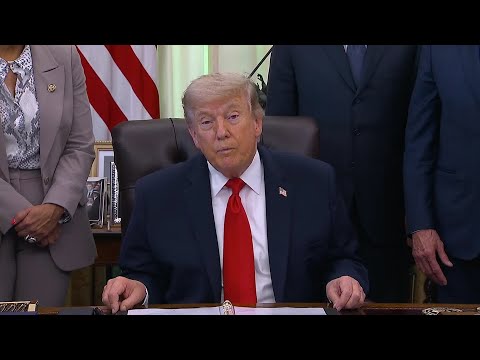
Former President Donald Trump has repeatedly characterized the de-escalation of military hostilities between the United States and the Islamic Republic of Iran in early 2020 as a “great settlement.” This framing refers specifically to the tense period following the January 3, 2020, targeted assassination of Iranian Major General Qasem Soleimani and Iran’s subsequent retaliatory missile strikes on the Al Asad Airbase in Iraq. Instead of spiraling into a full-scale theater war, both nations stepped back from the brink. The administration positioned this abrupt halt to kinetic military action, combined with a suffocating regime of economic sanctions, as a definitive diplomatic and strategic victory.
The concept of a settlement in geopolitics usually implies a signed treaty. It implies diplomats sitting across a mahogany table in Geneva or Vienna. The US-Iran dynamic of 2020 featured none of those things. It was a settlement engineered through high-stakes military brinkmanship and severe economic isolation. It was a standoff that ended in silence rather than signatures.
To understand the architecture of this perceived victory, one must examine the timeline that brought Washington and Tehran to the edge of war. The story does not begin with a drone strike in Baghdad. It begins two years earlier, in the diplomatic corridors of Washington D.C., with the dismantling of a legacy agreement.
The End of the JCPOA and the Rise of Maximum Pressure
On May 8, 2018, the United States officially withdrew from the Joint Comprehensive Plan of Action. The JCPOA, negotiated in 2015 under the Obama administration, had lifted key economic sanctions on Iran in exchange for strict limitations on its nuclear program. The Trump administration viewed the deal as fundamentally flawed. They argued it enriched a hostile regime while failing to address Iran’s ballistic missile program or its funding of proxy militias across the Middle East.
Withdrawal triggered the implementation of the “Maximum Pressure” campaign. The strategy was straightforward. The United States would use its dominance over the global financial system to choke off the Iranian economy. The primary target was Iran’s lifeblood: crude oil exports.
Before the US withdrawal from the JCPOA, Iran exported approximately 2.5 million barrels of oil per day. By late 2019, under the weight of secondary sanctions that penalized any foreign entity doing business with Tehran, those exports had plummeted. Estimates placed the new export volume at under 300,000 barrels per day. The Iranian rial collapsed in value. Inflation soared. The economic architecture of the Islamic Republic was placed under unprecedented stress.
This economic vise is the foundation of what Trump refers to as the settlement. The administration believed that bankrupting the regime would force it to the negotiating table on American terms. However, Tehran did not capitulate. Instead, the Iranian government chose a strategy of calculated escalation. If Iran could not export its oil, it would ensure the broader region felt the pain.
The Summer of Escalation in the Persian Gulf
The summer of 2019 transformed the Persian Gulf into a flashpoint. The economic pressure from Washington yielded kinetic responses from Tehran. In May and June of 2019, a series of mysterious explosions damaged commercial oil tankers operating near the Strait of Hormuz. The United States military released video footage allegedly showing the Islamic Revolutionary Guard Corps removing unexploded limpet mines from the hull of a Japanese-owned tanker.
The tension escalated dramatically on June 20, 2019. Iranian forces shot down an American RQ-4A Global Hawk surveillance drone operating over the Strait of Hormuz. The drone, valued at over $130 million, was destroyed by an Iranian surface-to-air missile. The destruction of a high-value American military asset pushed the two nations to the absolute edge of armed conflict.
Military planners in the Pentagon drafted retaliatory strike options. Targets within Iran were selected. Fighter jets were reportedly readied. Yet, at the last minute, President Trump called off the strikes. He later cited the projected casualty count of 150 Iranians as disproportionate to the loss of an unmanned drone. This decision was the first major indicator of the administration’s broader strategy: apply maximum economic pressure, but avoid a ground war at all costs. It was the precursor to the ultimate “settlement” narrative.
The Road to the Baghdad Airport
The avoidance of war in June 2019 did not stabilize the region. The shadow war simply shifted from the waters of the Persian Gulf to the deserts of Iraq. Iranian-backed proxy militias, operating under the umbrella of the Popular Mobilization Forces, began a sustained campaign of rocket attacks against Iraqi military bases housing American personnel.
On December 27, 2019, the shadow war claimed an American life. A rocket attack on the K-1 Air Base in Kirkuk province killed Nawres Hamid, an Iraqi-American civilian contractor working for the US military. Several American and Iraqi service members were also injured. The red line had been crossed.
Two days later, the United States retaliated. American forces launched precision airstrikes against five facilities controlled by Kata’ib Hezbollah, an Iranian-backed militia operating in Iraq and Syria. The strikes killed at least 25 militia members. The response from Tehran was immediate. On December 31, thousands of protesters and militia supporters breached the outer perimeter of the United States Embassy in Baghdad. They set fires, smashed security cameras, and trapped American diplomatic personnel inside the compound.
For the administration in Washington, the images of the besieged embassy evoked the traumatic memory of the 1979 Iran hostage crisis and the 2012 attack in Benghazi, Libya. A decisive, overwhelming response was deemed necessary to re-establish deterrence. The target selected was the architect of Iran’s proxy war strategy.
The Strike on Qasem Soleimani
Major General Qasem Soleimani was the commander of the Quds Force, the elite extraterritorial operations branch of the Islamic Revolutionary Guard Corps. He was widely considered the second most powerful man in Iran, answering only to Supreme Leader Ayatollah Ali Khamenei. Soleimani was the mastermind behind Iran’s network of proxy militias across Lebanon, Syria, Iraq, and Yemen. The United States considered him a terrorist responsible for the deaths of hundreds of American troops during the Iraq War.
On the night of January 3, 2020, Soleimani arrived at Baghdad International Airport. He was met on the tarmac by Abu Mahdi al-Muhandis, the deputy commander of Iraq’s Popular Mobilization Forces. As their two-vehicle convoy departed the airport, an American MQ-9 Reaper drone fired AGM-114 Hellfire missiles. Both vehicles were obliterated. Soleimani and al-Muhandis were killed instantly.
The assassination of a sovereign nation’s top military commander on foreign soil was an unprecedented escalation. The global community braced for a massive regional war. The Iranian government vowed “severe revenge.” The price of crude oil spiked. American military installations across the Middle East went on high alert. The narrative of a “great settlement” seemed impossible in the face of imminent conflict.
Operation Martyr Soleimani and the Stand-Down
The Iranian retaliation came in the early hours of January 8, 2020. Iran launched Operation Martyr Soleimani, firing more than a dozen ballistic missiles from its own territory directly at two Iraqi military bases housing American troops. The primary target was the Al Asad Airbase in western Iraq.
The missile barrage was massive. The munitions carried warheads weighing up to 2,000 pounds. They destroyed aircraft hangars, living quarters, and maintenance facilities. Yet, when the dust settled and the sun rose over the Iraqi desert, a crucial fact emerged. No American or Iraqi personnel had been killed. Early warning systems had provided enough time for troops to seek shelter in hardened bunkers. While over 100 American service members were later diagnosed with traumatic brain injuries from the concussive blasts, the lack of immediate fatalities provided a narrow window for diplomacy.
This was the critical juncture. The United States had eliminated Iran’s top general. Iran had demonstrated its capability to strike American bases with precision ballistic missiles. Both sides had satisfied their domestic political requirements for projecting strength. The question was whether the cycle of retaliation would continue.
It did not. In a televised address from the Grand Foyer of the White House later that morning, President Trump announced that Iran appeared to be “standing down.” He stated that the United States would impose additional punishing economic sanctions on the Iranian regime, but he did not announce further military strikes. The crisis was abruptly defused.
Defining the Great Settlement
This mutual step back from the abyss is the foundation of the “great settlement” narrative. From the perspective of the administration, the United States achieved its primary objectives without committing to a protracted, costly war in the Middle East. The top architect of Iranian proxy violence had been eliminated. The Iranian economy remained crushed under the weight of the Maximum Pressure campaign. And, crucially for a political base wary of foreign entanglements, no new ground troops were deployed to fight a regional conflict.
The settlement was not a document. It was a newly established boundary of deterrence. The United States demonstrated it was willing to target the highest echelons of the Iranian military leadership. Iran demonstrated its ballistic missile capabilities but calibrated its response to avoid forcing an overwhelming American counter-attack.
This dynamic allowed the administration to claim a definitive victory. The framing of a “great settlement” resonates because it speaks to the dual desires of the American electorate: the projection of undeniable global strength and the avoidance of endless overseas wars. The administration argued that true peace is achieved through strength, and that the economic devastation of Iran combined with the targeted elimination of Soleimani forced Tehran into a de facto submission.
The Legacy of the Standoff
The geopolitical reality of the Middle East remains complex. The Islamic Republic of Iran did not collapse under the weight of economic sanctions. The proxy militias in Iraq, Syria, and Yemen continued to operate, albeit without the centralized, charismatic leadership of Qasem Soleimani. Iran’s nuclear program, freed from the constraints of the JCPOA, advanced significantly in the years following the American withdrawal.
Yet, the specific framing of the 2020 de-escalation as a settlement endures in political discourse. It serves as a stark contrast to previous diplomatic approaches. Where previous administrations utilized pallets of cash and complex multinational treaties to manage Iranian behavior, the Trump administration utilized drone strikes and unilateral financial blockades.
The events of January 2020 fundamentally altered the rules of engagement between Washington and Tehran. The shadow war came into the light, reached a terrifying crescendo, and then abruptly paused. The term “settlement” may stretch the traditional diplomatic definition, but it accurately describes the sudden, deliberate cessation of kinetic hostilities.
The architecture of this outcome was built on calculated risk. It relied on the assumption that the Iranian regime valued its own survival above the pursuit of immediate, catastrophic revenge. It relied on the power of the American dollar to isolate a nation state. It relied on the precision of a Hellfire missile to remove a specific battlefield commander without triggering a broader mobilization.
The rhetoric of victory requires a defined endpoint. In the complex, generational struggle between the United States and Iran, definitive endpoints are rare. The events of early 2020 provided a moment of stark clarity. A line was drawn in the desert. A response was delivered. A pause was initiated.
Diplomats watched the skies. Generals calculated the payloads. Politicians weighed the polls. Stand-down.