
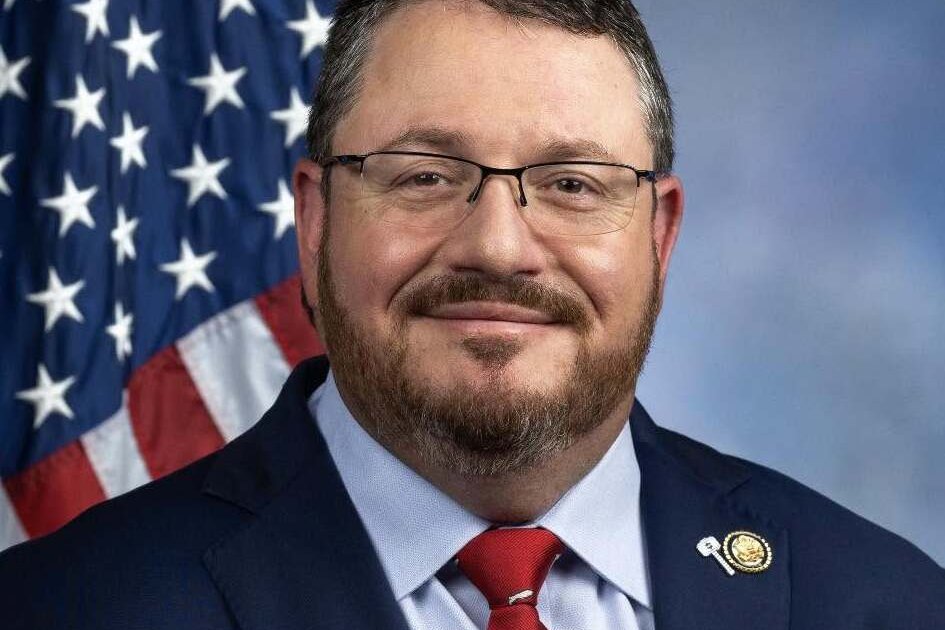
U.S. Representative Randy Fine recently characterized politicians who offer rhetorical support to Hamas as ‘terrorists.’ This assertion was made during an exclusive interview, drawing a clear line in the ongoing debate surrounding Middle Eastern geopolitics and its influence on American political discourse.
Fine’s comments underscore a growing tension within political circles regarding the interpretation and response to international conflicts. His direct language aims to define the boundaries of acceptable political rhetoric concerning groups designated as terrorist organizations.
The Representative’s Political Trajectory
Randy Fine currently serves as the U.S. Representative for Florida’s 6th congressional district. He assumed this office on April 2, 2025. His entry into the U.S. House of Representatives followed the resignation of Mike Waltz, who departed Congress in 2025 to take on the role of U.S. national security advisor.
Fine’s political career began in the Florida House of Representatives, where he served from 2016 to 2024. He then transitioned to the Florida Senate, serving a term from 2024 to 2025. This progression through state legislative bodies provided him with a platform to develop his political positions and build a constituent base.
As of September 3, 2026, Fine is actively campaigning for re-election to the U.S. House. He is seeking to retain his seat representing Florida’s 6th Congressional District in the general election scheduled for November 3, 2026. He successfully advanced from the Republican primary on August 18, 2026.
Defining ‘Terrorist’ Rhetoric
The term ‘terrorist’ carries significant weight in political and international contexts. Fine’s application of this label to U.S. politicians who rhetorically support Hamas suggests a belief that such support crosses a critical threshold. Hamas is recognized as a terrorist organization by the United States and several other nations.
Rhetorical support can manifest in various forms. This includes statements that legitimize Hamas’s actions, downplay its designation as a terrorist group, or align with its political objectives. Fine’s stance indicates a zero-tolerance policy for such expressions within the American political landscape.
“When you rhetorically support a terrorist organization, you are, in essence, providing aid and comfort to those who seek to harm our allies and undermine global stability. That makes you a terrorist, too.”
This perspective frames rhetorical backing as a form of complicity. It elevates the discussion beyond mere political disagreement to one of national security and moral alignment.
Implications for Political Discourse
Fine’s strong statements are likely to intensify the debate surrounding free speech and political responsibility. Critics may argue that such labels stifle legitimate political dissent or discussion of complex international issues. Supporters, however, will likely view his comments as a necessary defense against extremism.
The use of such charged language can also influence public perception. It can solidify support among those who share Fine’s views while alienating others who believe in a more nuanced approach to foreign policy and domestic political expression.
The upcoming general election on November 3, 2026, will serve as a barometer for the public’s reception of Fine’s assertive political posture. His re-election campaign will test whether voters in Florida’s 6th Congressional District endorse his confrontational approach to political rhetoric.
Hamas and International Designations
Hamas, an acronym for Harakat al-Muqawamah al-Islamiyyah (Islamic Resistance Movement), is a Palestinian Sunni-Islamist fundamentalist organization. It has governed the Gaza Strip since 2007. The group’s military wing, the Izz ad-Din al-Qassam Brigades, has been involved in numerous conflicts with Israel.
The United States, the European Union, Israel, and several other countries have designated Hamas as a terrorist organization. This designation is primarily due to its armed resistance against Israel, including attacks targeting civilians. Other nations, however, do not classify Hamas as a terrorist group, viewing it as a legitimate resistance movement or a political party.
This divergence in international classification contributes to the complexity of discussions surrounding Hamas. It also highlights the differing geopolitical perspectives that inform political rhetoric globally and domestically.
The debate over rhetorical support for Hamas reflects broader ideological divides. It touches upon issues of national interest, human rights, and the role of the United States in global conflicts. Fine’s direct challenge to politicians he perceives as sympathetic to Hamas adds another layer to this intricate discussion.
Politicians speak. Debates ignite. Voters observe.
Florida.
Buying, Selling, or Investing in the Ozarks?
JL Group specializes in direct property acquisitions, wealth transfer, and hassle-free real estate transactions across Springfield.