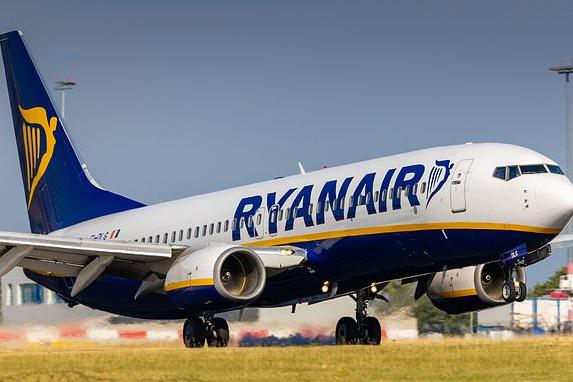
A Ryanair flight, FR3418, declared a Mayday emergency on October 3, 2025, after the Boeing 737-800 came within minutes of running out of fuel during severe weather conditions caused by Storm Amy. The flight, operated by Malta Air on behalf of Ryanair, was en route from Pisa, Italy, to Glasgow, Scotland, when it encountered winds up to 100 mph, leading to multiple failed landing attempts at Glasgow Prestwick International Airport and Edinburgh Airport.
The aircraft, carrying 171 passengers and six crew members, eventually diverted and landed safely at Manchester Airport. Upon landing, the plane had only 220kg of fuel remaining, which is approximately enough for five to six minutes of flight. The UK’s Air Accidents Investigation Branch (AAIB) has launched an investigation into this serious incident, as reported by Mail Online.
Official Statements and Verified Reaction
The Air Accidents Investigation Branch (AAIB) confirmed an ongoing investigation into the Ryanair FR3418 incident. An initial report from the AAIB revealed a “breakdown in communication” within Air Traffic Control during the event. The report also noted that the pilots did not consider diverting to a nearer airport due to the stress of the situation. This communication failure and pilot decision-making under duress are central to the ongoing inquiry.
Ryanair has stated its full cooperation with the AAIB investigation, emphasizing that the safety of its passengers and crew is its highest priority. The airline has not released further details pending the outcome of the official inquiry. Aviation experts have highlighted the critical nature of such low fuel reserves, especially during adverse weather, underscoring the importance of robust contingency planning and communication protocols in air traffic management.
Auto-Enriched Background Context
The incident involving Ryanair flight FR3418 on October 3, 2025, highlights the critical importance of fuel management and air traffic control coordination, particularly during challenging weather conditions. Storm Amy, which impacted the UK with winds up to 100 mph, created significant operational difficulties for air travel across the region. Such severe weather events are not uncommon, with previous incidents like the Nor’easter threatening the East Coast demonstrating the widespread disruption and safety concerns that can arise.
Ryanair, headquartered in Swords, Dublin, Ireland, is Europe’s largest airline group, operating over 2,500 flights daily across 40 countries. Founded in 1984, the airline has grown significantly, primarily through its low-cost model. Its fleet largely consists of Boeing 737 aircraft, including the 737-800 model involved in this incident. The airline has a generally strong safety record, but incidents involving fuel levels and diversions are taken seriously by aviation authorities globally. The European Union Aviation Safety Agency (EASA) and national bodies like the UK’s Civil Aviation Authority (CAA) set stringent regulations for fuel reserves and operational procedures to prevent such occurrences.
The Air Accidents Investigation Branch (AAIB) is the UK’s national agency responsible for investigating civil aircraft accidents and serious incidents within the United Kingdom. Its primary purpose is to improve aviation safety by determining the causes of accidents and making recommendations to prevent future occurrences, not to apportion blame. The AAIB’s investigations are thorough, often involving detailed analysis of flight data recorders, cockpit voice recorders, and interviews with crew and air traffic controllers. Previous investigations have led to significant changes in aviation protocols and technology, contributing to enhanced safety standards worldwide. For more information on aviation safety regulations, the UK Civil Aviation Authority website provides comprehensive details.
This event also brings into focus the challenges faced by pilots and air traffic controllers when confronted with rapidly deteriorating weather. Decision-making under stress, as noted in the AAIB’s preliminary findings, is a critical factor in aviation safety. Training protocols and communication systems are continuously refined to support crews in making optimal decisions during emergencies. The aviation industry consistently reviews and updates its procedures based on lessons learned from incidents like FR3418, aiming to mitigate risks and ensure passenger safety.
Brands that want to grow their audience can work with 1889 Advertising.