Bond Market Turmoil Signals Deeper Economic Woes
The global bond market is experiencing a substantial selloff as of September 2026. This market movement has driven bond yields to their highest levels since the 2008 financial crisis. The increase in yields reflects investor concerns over persistent inflation, higher-for-longer interest rates, and the growing pressure from government borrowing.
Central banks worldwide face complex decisions. They must balance efforts to curb inflation with the risk of stifling economic growth. The current bond market conditions complicate monetary policy, making it challenging to predict future interest rate trajectories.
Geopolitical Flashpoint: The Strait of Hormuz
Simultaneously, geopolitical tensions have dramatically escalated in the Strait of Hormuz. This vital waterway, through which a significant portion of the world’s oil supply passes, has become a hotbed of conflict. On August 31, 2026, Iran launched ballistic missiles at a US base in Jordan. This action followed American strikes on Larak Island, located near the Strait of Hormuz.
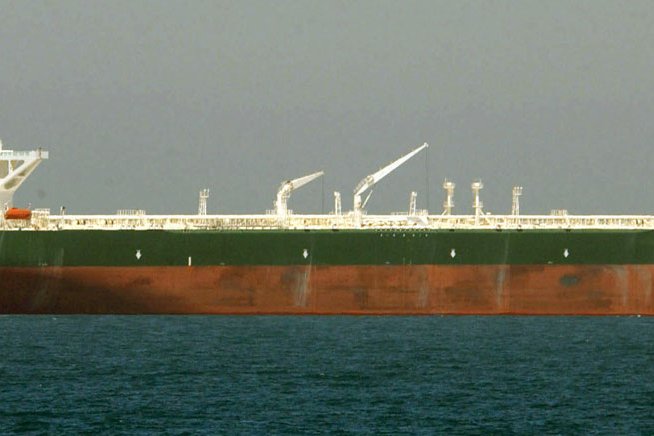
Further exacerbating the situation, a tanker was struck by three unknown projectiles on September 1, 2026, while transiting the Strait of Hormuz. These incidents underscore the extreme volatility in the Middle East. They pose a direct threat to global energy security and international trade routes.
A History of Escalation in the Region
The recent attacks are part of a broader pattern of escalating hostilities between the US and Iran. The United States had previously conducted strikes against Iran in July and August 2026. These operations targeted Iranian missile and air defense systems, as well as paramilitary Islamic Revolutionary Guard Corps boats.
The Strait of Hormuz has long been a strategic flashpoint. Its narrow passage makes it vulnerable to disruptions, which can have immediate and far-reaching effects on global oil prices and supply chains. Past incidents have demonstrated the sensitivity of the region to military actions and political rhetoric.
Global Economic Outlook Under Threat
The confluence of bond market instability and escalating geopolitical conflict casts a long shadow over the global economic outlook for 2026. Experts project global growth to slow to 2.5 percent. This forecast carries significant downside risks.
Renewed hostilities in the Middle East threaten to disrupt commodity markets, particularly oil. Volatile oil prices can fuel inflation, erode consumer purchasing power, and increase operational costs for businesses. Policy uncertainty, stemming from both economic and geopolitical factors, further complicates the global financial landscape.
The Interconnectedness of Finance and Geopolitics
The current situation highlights the deep interconnectedness of global finance and geopolitics. Events in one sphere quickly reverberate through the other. A bond selloff can be exacerbated by geopolitical instability, while geopolitical tensions can be fueled by economic pressures.
Investors and policymakers alike are navigating an environment of unprecedented uncertainty. The decisions made in the coming months will have lasting implications for global economic stability and international relations. The world watches as financial markets react to military actions and political pronouncements.
The Path Forward Remains Unclear
The immediate future presents significant challenges. Governments must address mounting debt. Central banks must manage inflation without triggering recession. International diplomacy must work to de-escalate tensions in critical regions.
The global economy stands at a precarious juncture. Financial markets signal distress. Geopolitical events demand attention. The path forward remains unclear.
- What is causing the current bond selloff? The current bond selloff is primarily driven by investor concerns over higher-for-longer interest rates, persistent inflation, and increased government borrowing, pushing yields to levels not seen since 2008.
- Why are the Strait of Hormuz attacks significant? The Strait of Hormuz is a critical chokepoint for global oil shipments. Escalating attacks there threaten to disrupt oil supplies, leading to volatile oil prices and impacting global energy security and trade.
- What is the projected global growth for 2026? Global growth is projected to slow to 2.5 percent in 2026. This forecast is subject to significant downside risks due to escalating hostilities, commodity disruptions, and policy uncertainty.
- How do geopolitical events affect the global economy? Geopolitical events, such as the escalating attacks in the Strait of Hormuz, can directly impact the global economy by disrupting supply chains, increasing commodity prices, fueling inflation, and creating policy uncertainty, which in turn affects financial markets.
Powered by Phyllis Ann Data, Enterprise Data as a Service. Premium insights for businesses.