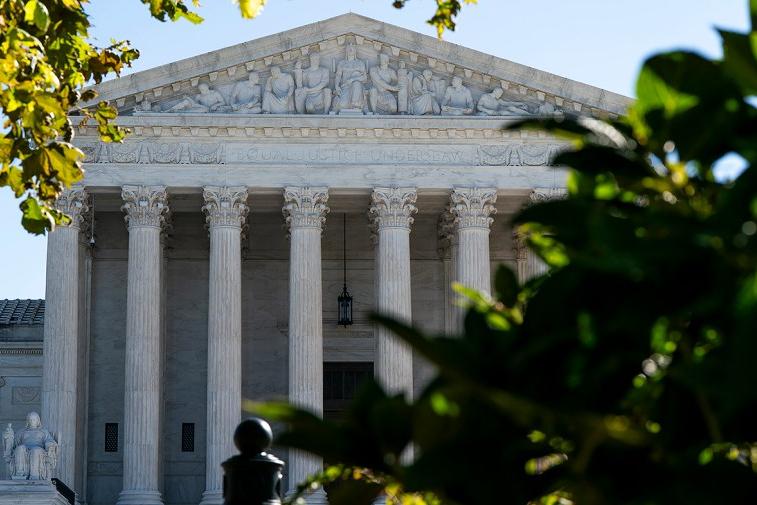
The U.S. Supreme Court is facing a new challenge regarding immigration policy. A coalition of cities and an advocacy group have formally requested the Court to halt a federal court judgment that invalidated certain immigration regulations. This move comes after a settlement between the State of Texas and the U.S. Department of Justice.
The core of the dispute centers on 2024 regulations related to administrative closure in immigration proceedings. These regulations, designed to manage caseloads and provide discretion in certain immigration cases, were vacated by a federal district court in the Northern District of Texas in June 2026.
The Texas-DOJ Settlement and Its Impact
The settlement in question arose from the case Texas v. U.S. Department of Justice. This legal action led to an agreement that effectively nullified the 2024 administrative closure rules. Administrative closure allows immigration judges to temporarily remove cases from their active dockets, often when an individual has applied for another form of relief or when other factors suggest a pause is appropriate.
Critics of the settlement argue that vacating these regulations removes a crucial tool for managing the immense backlog in immigration courts. It also limits the discretion of immigration judges to handle cases efficiently and equitably. The State of Texas, under Governor Greg Abbott, has consistently pursued policies aimed at stricter immigration enforcement.
Cities Seek Supreme Court Intervention
The cities of Baltimore, Maryland; Columbus, Ohio; and New Haven, Connecticut, along with the immigrant advocacy organization Centro Legal de la Raza, filed the application with the Supreme Court. They contend that the settlement was reached without proper consideration for the interests of cities that host large immigrant populations. These municipalities often bear the direct impact of federal immigration policy changes.
Their application argues that the vacating of the 2024 regulations will lead to increased uncertainty and instability for immigrant communities within their jurisdictions. It could also strain local resources as more cases proceed without the option of administrative closure. The cities assert that they have a direct interest in the stability and predictability of immigration law.
Legal Arguments and Broader Implications
The applicants are asking the Supreme Court to issue a stay, which would temporarily block the federal district court’s judgment while the Supreme Court considers the merits of their challenge. This would effectively reinstate the 2024 regulations on administrative closure pending further review. The Supreme Court’s new term began on Monday, October 6, 2026, and already includes two significant immigration cases on its docket, signaling the Court’s active role in this policy area.
The U.S. Department of Justice, led by Attorney General Merrick Garland, had reached the settlement with Texas. The cities’ challenge effectively pits these municipal interests against the federal government’s agreement with a state. This highlights the complex interplay between federal, state, and local entities in shaping immigration enforcement and policy.
“The ability for immigration judges to manage their dockets through administrative closure is a vital tool for efficiency and fairness,” stated a representative for Centro Legal de la Raza in their filing. “Removing this tool creates unnecessary burdens on individuals and the court system alike.”
The outcome of this application could have far-reaching implications for immigration proceedings across the United States. If the Supreme Court grants the stay, it would signal a potential willingness to review the settlement’s impact on broader stakeholders. If the stay is denied, the vacating of the 2024 regulations will remain in effect, potentially altering how thousands of immigration cases are processed.
The Supreme Court’s Immigration Docket
The Supreme Court is already engaged with significant immigration issues this term. On October 1, 2026, the Court agreed to hear a case challenging the Trump administration’s policy of indefinite detention for undocumented immigrants. This indicates a period of intense judicial scrutiny over various aspects of U.S. immigration law and enforcement practices. The current application from the cities adds another layer to this complex legal landscape, underscoring the ongoing national debate.
The Court’s decision on the cities’ application is anticipated in the coming weeks. This ruling will determine whether the 2024 administrative closure regulations are temporarily reinstated or if the Texas-DOJ settlement’s effects continue unimpeded. The legal arguments presented by Baltimore, Columbus, New Haven, and Centro Legal de la Raza emphasize the local impact of federal immigration policy decisions. Their intervention seeks to ensure that municipal interests are considered in national legal agreements.
Related: Hurricane Isaias Prompts Tornado Watch for Florida, Georgia, Alabama
Cities across the nation watch. Immigrant advocates watch. The Supreme Court watches.
The decision.
Sources
Frequently asked questions
What is the core issue in the cities' Supreme Court request?
The cities of Baltimore, Columbus, and New Haven, along with Centro Legal de la Raza, are asking the Supreme Court to block a federal court judgment. This judgment approved a settlement between Texas and the U.S. Department of Justice that vacated 2024 regulations concerning administrative closure in immigration cases.
What are administrative closure regulations in immigration?
Administrative closure regulations allow immigration judges to temporarily remove cases from their active dockets. This tool is often used when an individual is pursuing other forms of relief or when other factors make a temporary pause in proceedings appropriate, helping to manage court backlogs.
Which cities are involved in challenging the Texas-DOJ deal?
The cities involved in the application to the Supreme Court are Baltimore, Maryland; Columbus, Ohio; and New Haven, Connecticut. They are joined by the immigrant advocacy organization Centro Legal de la Raza.
When did the federal court approve the Texas-DOJ settlement?
A federal district court in the Northern District of Texas approved the settlement in *Texas v. U.S. Department of Justice* in June 2026. This settlement led to the vacating of the 2024 regulations on administrative closure.
Sponsored · Put your business in front of ByteSize Network's readers, with every click measured. See advertising packages · Advertise on ByteSize Network