- Student protests began in September 2026 in deprived suburbs of Paris, France.
- The protests are primarily against overcrowded classrooms, understaffing, and crumbling school infrastructure.
- French Prime Minister Sébastien Lecornu reported 215 injured teenagers and 85 injured school staff.
- Demonstrations have spread to multiple French cities including Lille, Lyon, Marseille, and Toulouse.
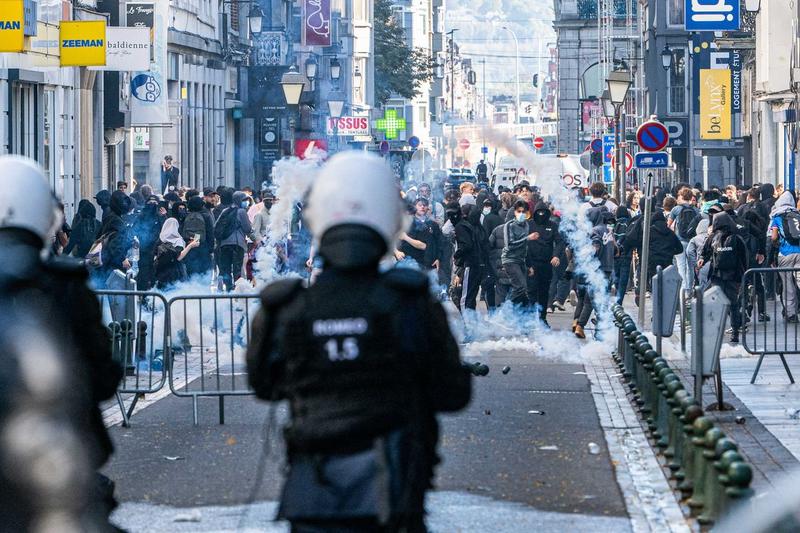
- A recent clash between police and protesters occurred in Liège, Belgium, indicating potential international spread.
Student protests are currently widespread across France. These demonstrations, which began in September 2026 in the deprived suburbs of Paris, have since spread nationwide. The unrest highlights significant concerns regarding the state of the French education system and broader governmental policies.
Students are protesting against issues such as overcrowded classrooms, understaffing, crumbling school infrastructure, and inequalities within the education system. These grievances have fueled a movement that has seen clashes with police and numerous arrests.
The protests have also tapped into broader public discontent in France. Austerity measures and the government’s financial policies contribute to the widespread dissatisfaction. What began as specific educational complaints has evolved into a larger expression of societal unease.
Concerns are growing about the protests spilling over into other European countries. A recent clash between police and protesters in Liège, Belgium, suggests this possibility is already materializing. The situation indicates a potential for wider regional instability.
The Genesis of Discontent in France
The initial spark for the student protests ignited in September 2026. Deprived suburbs of Paris became the epicenter of early demonstrations. Students voiced immediate concerns over their learning environments.
Overcrowded classrooms were a primary complaint. Many educational facilities suffer from understaffing. The physical infrastructure of schools is also a significant issue, with reports of crumbling buildings. These conditions contribute to a perception of systemic inequality within the French education system.
The movement quickly gained momentum beyond its initial Parisian roots. Demonstrations spread rapidly to major cities across France. Paris, Lille, Lyon, Marseille, and Toulouse have all witnessed significant student activity. Axios reported on October 7, 2026, the widespread nature of these protests.
Clashes between protesters and police have become a recurring feature. Reports indicate the use of tear gas by authorities. Numerous arrests have been made during these confrontations. The intensity of these encounters underscores the deep frustration felt by the students.
Government Response and Broader Implications
French Prime Minister Sébastien Lecornu has addressed the escalating situation. He stated that at least 215 teenagers have been injured since the protests began. Additionally, 85 school staff members have also sustained injuries. These figures highlight the physical toll of the ongoing unrest.
French Education Minister Édouard Geffray has acknowledged the students’ concerns. He has indicated that the government is implementing a plan of action. The specifics of this plan are under scrutiny as the protests continue. The government faces pressure to demonstrate tangible improvements.
The student protests are not isolated to educational grievances. They have intersected with broader public discontent in France. Austerity measures implemented by the government are a significant factor. The government’s financial policies are also a source of public frustration. The official website of the French government provides details on current policies and ministerial statements.
This confluence of issues suggests a deeper societal challenge. The protests reflect a population grappling with economic pressures and perceived governmental neglect. The student movement has become a visible manifestation of these wider concerns.
The European Ripple Effect
Concerns are mounting regarding the potential for these protests to spread beyond France’s borders. The interconnectedness of European nations means that social unrest in one country can quickly influence others. This phenomenon is a key aspect of contemporary European politics.
Evidence of this potential spread emerged recently in Belgium. A clash between police and protesters was reported in Liège. This incident suggests that the grievances and methods of protest seen in France may resonate with student populations elsewhere. The specific triggers in Belgium may vary, but the underlying sentiment of discontent could be similar.
The European Union faces a complex challenge. Member states are often subject to similar economic pressures and policy debates. The spread of protests could indicate a shared sense of frustration among younger generations across the continent. This situation demands careful observation from European leaders.
The future trajectory of these protests remains uncertain. Their ability to sustain momentum and influence policy will be critical. The potential for further internationalization adds another layer of complexity to the unfolding situation.
Related: Disgraced CIA Agent Forfeits $194 Million in Florida Properties After Gold Plot
The Unfolding Narrative
Students gathered. Police gathered. Ministers gathered. Europe.
What are the main reasons for the student protests in France?
The main reasons for the student protests in France include overcrowded classrooms, understaffing in schools, crumbling school infrastructure, and general inequalities within the education system. These issues began sparking widespread demonstrations in September 2026.
Which cities in France are experiencing student protests?
Student protests are widespread across France, with demonstrations occurring in multiple major cities. These include Paris, Lille, Lyon, Marseille, and Toulouse, among others, indicating a nationwide movement.
Has the French government responded to the student protests?
Yes, the French government has responded. French Prime Minister Sébastien Lecornu has reported on injuries sustained during the protests, and Education Minister Édouard Geffray has acknowledged student concerns, stating that the government is implementing a plan of action to address the issues.
Are the protests limited to France, or have they spread to other countries?
While primarily centered in France, there are concerns about the protests spreading to other European countries. A recent clash between police and protesters in Liège, Belgium, indicates that the unrest may be beginning to spill over internationally.