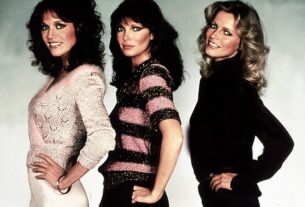
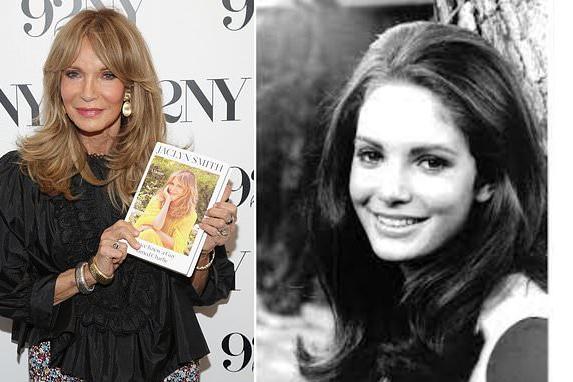
Jaclyn Smith spent decades as America’s sweetheart.
The face of Charlie’s Angels. The epitome of grace under pressure. The actress who seemed to glide through Hollywood without a scratch.
But behind the camera-ready smile lived a reality few knew.
Since age 12, Smith has battled an unusual form of obsessive-compulsive disorder. In 2026, at 81, she’s finally talking about it.
The Revelation That Broke Decades of Silence
Smith disclosed her OCD diagnosis in September 2026 during an interview that quickly made headlines across entertainment and mental health communities.
She described the condition as “unusual”, a form of OCD that doesn’t fit the stereotypical hand-washing or counting behaviors most people associate with the disorder.
The actress did not specify the exact manifestation of her symptoms. But she made clear the condition has been a constant companion since childhood.
Twelve years old. That’s when it started. The same year most girls were navigating middle school and first crushes, Smith was learning to navigate intrusive thoughts and compulsive patterns that would follow her into adulthood.
What Makes OCD “Unusual”
Obsessive-compulsive disorder affects roughly 2 to 3 percent of the global population, according to the National Institute of Mental Health.
But the disorder presents in wildly different ways. Some people experience contamination fears. Others engage in repetitive checking or counting rituals. Still others suffer from intrusive violent or sexual thoughts that cause profound distress.
When Smith called her OCD “unusual,” she likely referred to a presentation that doesn’t match the Hollywood shorthand, the neat freak, the germaphobe, the person who flips light switches in patterns.
Many forms of OCD are invisible. Pure-O (purely obsessional OCD) involves intrusive thoughts without visible compulsions. Harm OCD involves fears of causing injury. Relationship OCD involves obsessive doubt about romantic partners.
These subtypes rarely make it into pop culture. They don’t photograph well. They don’t fit a punchline.
But they shape lives just as powerfully as the more visible forms.
The Charlie’s Angels Years, Performing Through the Noise
Smith joined Charlie’s Angels in 1976 as Kelly Garrett, the smart, compassionate detective who became the show’s longest-running cast member.
She stayed with the series for all five seasons, from 1976 to 1981. While co-stars Farrah Fawcett and Kate Jackson left after shorter stints, Smith remained the constant.
During those years, she was managing OCD in silence. No public discussion. No accommodation requests. No mental health days written into her contract.
The 1970s offered little space for mental health disclosure. Therapy was whispered about. Psychiatric medication carried stigma. Celebrities who spoke openly about mental illness risked career damage.
Smith kept working. Kept smiling. Kept the intrusive thoughts and compulsive patterns locked away from the press, the producers, the fans who saw her as the embodiment of effortless beauty.
Why Public Figures Are Finally Talking
Smith’s 2026 revelation arrives in a different cultural moment.
In the past decade, public figures have increasingly disclosed mental health struggles. Dwayne “The Rock” Johnson discussed depression. Kristen Bell spoke about anxiety medication. Simone Biles withdrew from Olympic events to protect her mental health.
The stigma hasn’t vanished. But the cost of disclosure has dropped.
According to the World Health Organization, mental health conditions affect one in eight people globally. Anxiety and depression alone account for hundreds of millions of cases.
When celebrities speak, they normalize the conversation. They give permission to millions of people who suffer in silence.
Smith’s disclosure does exactly that. It tells a generation of fans that the woman they admired on screen was fighting a battle they couldn’t see.
And she survived it. Thrived, even.
The Cost of the Mask
Living with untreated or undisclosed OCD exacts a toll.
The disorder consumes time. Compulsions can take hours each day. Intrusive thoughts create constant background noise. Avoidance behaviors limit career opportunities, relationships, daily routines.
Smith managed a decades-long acting career, a business empire (her Kmart clothing line launched in 1985 and became one of the most successful celebrity brands in retail history), and a public image as one of Hollywood’s most graceful stars.
All while managing a condition that began in childhood.
The mask she wore wasn’t just makeup and wardrobe. It was the performance of normalcy. The concealment of struggle. The daily choice to show up despite the noise in her head.
That performance is exhausting. It’s also common.
Millions of people with OCD, anxiety, depression, and other mental health conditions perform the same act every day. They go to work. They smile at colleagues. They post cheerful photos on social media.
And they carry the weight in private.
What Happens Next
Smith’s revelation won’t cure OCD. It won’t erase the decades she spent managing the condition in silence.
But it does something else. It creates a historical record. It tells future generations that even the most celebrated figures struggled. That mental illness doesn’t disqualify someone from success, beauty, or a long career.
It also invites conversation. Fans who grew up watching Charlie’s Angels may now recognize their own struggles in Smith’s story. Parents of children with OCD may find hope in her longevity and resilience.
The actress continues to work in 2026. She remains active in business and advocacy. She has not let OCD define her, but she’s no longer hiding it, either.
That shift matters.
The Broader Picture, Mental Health in Hollywood
Smith joins a growing list of actors, musicians, and public figures who have disclosed mental health conditions later in life.
Some waited until retirement. Others spoke out during active careers, risking typecasting or lost roles.
The entertainment industry has historically punished vulnerability. Actors who disclosed mental illness were labeled “difficult” or “unreliable.” Insurance companies refused to cover productions featuring talent with psychiatric diagnoses.
That landscape is shifting. Slowly. Unevenly. But shifting.
Smith’s disclosure in 2026 would have been career suicide in 1976. Today, it’s a headline, but not a scandal.
That difference is progress.
Fans gathered online. Mental health advocates gathered. Journalists gathered.
All watching the woman who once played a detective now solve a different kind of mystery.
The mystery of living fully while carrying an invisible burden.
Charlie’s Angels.
Enterprise Data as a Service
Premium insights and data pipelines for businesses. Secure a competitive edge with high-fidelity market intelligence and automated data flows.